
Quick Conversion Table
| Brand | Equivalent | Match |
|---|---|---|
| Anchor | 362 | exact |
| Madeira | 2012 | close |
| Cosmo ⚠ | 307 | close |
| Sullivans | 45098 | close |
| J&P Coats | 5942 | close |
| Dimensions | 15942 | close |
| Bucilla | 924 | close |
| Candamar | 6097 | close |
Tree Stump Rings and Natural Textures
Saw a tree in half and count the rings. The youngest wood — the pale sapwood near the bark — is almost exactly DMC 437. This light, warm tan is the color of new growth, of fresh-cut pine before it oxidizes, of the lightest layers in plywood when you look at the cross-grain. It's a color that speaks of natural surfaces and organic textures, the kind of brown that belongs in sunlight rather than shadow.
For stitching an actual tree cross-section — growth rings radiating outward from the heartwood — 437 handles the outer sapwood zone. Build inward with DMC 436 (Tan) for the mature outer heartwood, DMC 435 (Very Light Brown) for the intermediate rings, DMC 434 (Light Brown) for the deeper heartwood, and DMC 433 (Medium Brown) or DMC 801 (Dark Coffee Brown) for the oldest, darkest wood at the center. Each ring is a row of stitches in its appropriate shade, and the even spacing of the 433-437 family creates the kind of smooth, natural gradient that makes the rings look real. The bark itself is a different story — darker, rougher, a textural frame around the smooth inner wood.
The Caramel Zone
437 lives in what confectioners might call the caramel zone — that range where sugar has cooked past golden and into a true light brown, but hasn't yet darkened to toffee or butterscotch. It's the color of caramel sauce drizzled across a dessert, of dulce de leche spread on toast, of a butter cookie just pulled from the oven. In food-themed cross-stitch, 437 shows up constantly as the base tone for baked goods, golden pastries, and sweet brown things that need to look appetizing rather than dark and heavy.
For a cross-stitched cookie or pastry design, 437 provides the main body color of the baked item. The darker, caramelized edges get DMC 435 or DMC 434. The lightest areas — where flour dusts the surface or where the dough barely colored — use DMC 738 (Very Light Tan) or DMC 739 (Ultra Very Light Tan). The result is a gradient that mimics the way baking actually works: darkest at the edges and thinnest parts, palest at the thick center, with 437 as the satisfying in-between that reads as "perfectly golden brown."
Teddy Bear Highlights and Stuffed Animal Plush
In the world of teddy bear and stuffed animal cross-stitch patterns, DMC 437 is the highlight and belly color. While darker browns handle the main body and shadow areas, 437 captures the lighter plush — the tummy, the inner ears, the muzzle, the paw pads of a classic golden teddy. Its softness comes from its warmth: this isn't a stark, bleached tan but a gentle, buttery one that reads as cuddly on fabric.
Build a teddy bear from three or four values: DMC 433 or DMC 434 for the darkest shadow areas (under the arms, behind the ears, between the legs), DMC 435 or DMC 436 for the main body, and DMC 437 for the highlight areas. For the muzzle and inner ears, you might step up to DMC 738 or even DMC 739 for the palest plush. The key is keeping all the browns in the same warm, neutral family — if you mix in a pink-toned brown for the belly and a golden brown for the body, the teddy bear looks assembled from different fabrics rather than covered in one consistent fur.
On 14-count Aida, two strands of 437 give you clean, even coverage with a warm, soft appearance. The thread behaves well — minimal knotting, good tension consistency, pleasant to stitch with over long sessions. On 18-count, railroad your stitches to keep the surface smooth and maximize the warm, even glow. Because 437 is light enough to show fabric texture through the stitches on higher-count fabrics, your fabric choice matters: white Aida gives maximum warmth, cream Aida softens it slightly, and linen can either complement or compete depending on its own color.
Light Tan, Specifically
At this value — light, warm, clearly tan — the risk isn't finding a match that's completely wrong so much as finding one that's subtly shifted. A slightly too yellow substitute looks like straw instead of wood. A slightly too pink one looks like skin instead of tan. You need that balanced, warm, neutral light brown.
Anchor 362 is exact and reliable — a clean match that maintains the warm neutral character. Madeira 2012, also exact, works well and integrates smoothly if you're mixing brands. At this light value, thread sheen differences between brands are minimally visible, which makes cross-brand substitution somewhat easier than it is with darker, more saturated threads.
Cosmo 307 is close and generally acceptable, with the usual caveat that subtle warmth differences can emerge when stitched in large areas. For small accents or scattered uses of 437, Cosmo's version is fine. For a full teddy bear body or a large background area in this color, stitch a small test to confirm the color reads the way you expect. Sullivans 45098 is similarly close — daylight testing against your project fabric is always the safest approach.
Within DMC, 437's nearest neighbor is DMC 436 (Tan), just one step darker. If 437 is unavailable and your pattern uses it as a highlight above 436, switching to DMC 738 (Very Light Tan) is a reasonable alternative that maintains the lightness. DMC 738 is slightly more golden, so it won't be identical, but in a highlight role it serves the same compositional function. Avoid substituting with DMC 842 (Very Light Beige Brown), which is similarly pale but has a greyish, cooler undertone that would introduce a temperature shift in a warm brown palette.
Reference quality
How We Validate This Color Record
Use this page as a reference card for DMC 437: the structured data, quick conversions, and long-form copy are all tied back to the same stored color record.
- Methodology
- This page renders DMC 437, its hex value, and every brand equivalent from the site's source-of-truth color record, then checks long-form body copy against those same stored fields.
- Verification status
- Source-field checked. The page content is audited against the stored DMC number, brand equivalents, and match-quality labels before publishing.
- Last reviewed
- 2026-04-20
- Approximation warning
- Screen hex values, thread photos, and cross-brand conversions are reference aids. Dye lots, thread sheen, and fabric color can still shift the result in hand.
Decision guide
When to use the DMC 437 reference page
This page should help you decide faster between palette planning, brand substitution, and shade comparison without turning the color record into a thin lookup page.
Best for
- + Palette planning when you want the stored DMC 437 Light Tan record, hex value #E4BB8E, and linked brand equivalents in one place.
- + Checking the quickest cross-brand shortlist before you buy floss, compare stash substitutes, or route into a more specific conversion page.
- + Finding nearby shades in the browns family before you commit to accents, shading, or background blends.
Watch for
- ! Screen previews are only reference aids. Light Tan can shift on real fabric because thread sheen, stitch coverage, and room lighting change how the color reads.
- ! A stored equivalent is still a shortlist, not a guarantee that two brands will disappear into each other in the same stitched motif.
- ! Older charts, discontinued kit floss, and dye-lot variation can all introduce small but visible differences that the page cannot detect for you.
Before you commit
- Confirm the role of DMC 437 Light Tan: decide whether you need an exact hero shade, a forgiving background, or a rough stash substitute.
- Compare on project fabric: view the skein or stitched sample on the same fabric count and color you will actually use.
- Use the linked conversion pages next: open the brand-specific pages when you need match-quality caveats before substituting away from the DMC reference.
DMC 437 FAQ
These questions appear on the page so the FAQ schema stays aligned with what visitors can actually read.
What is the Anchor equivalent of DMC 437?+
The closest Anchor equivalent to DMC 437 (Light Tan) is Anchor 362. This is an exact match.
What color is DMC 437?+
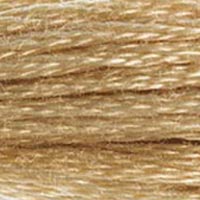
DMC 437 is called "Light Tan" and has a hex color value of #E4BB8E. It belongs to the browns color family.
What is the Madeira equivalent of DMC 437?+
The closest Madeira equivalent to DMC 437 (Light Tan) is Madeira 2012. This is a close match.
How DMC 437 Looks on Fabric
The same thread appears different depending on your fabric. Always test on your project fabric.
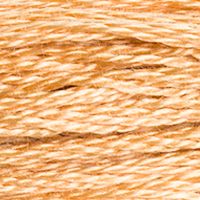
White Aida
Cream / Ecru
Black Aida
Pairs Well With
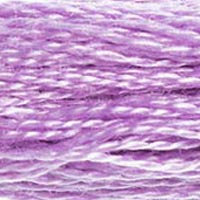
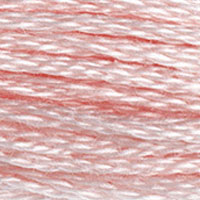
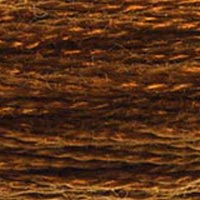
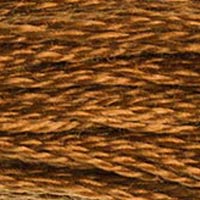
DMC colors commonly used alongside 437 Light Tan.
Vintage & Antique
Rustic Country
Shading Companions
Detailed Conversions
Where to Buy DMC 437
This section contains affiliate links. We may earn a small commission at no cost to you.
Related Guides
Free Printable Thread Conversion Chart
Pick a brand, enter your email, and we'll send you a printable chart mapping all 552 DMC colors to that brand's equivalents. Zero spam, one chart.
Thanks! Here's your free chart:
Download Your ChartOpens in a new tab. Use your browser's Print → Save as PDF.
No spam. Your email is stored securely and never shared.