
Quick Conversion Table
| Brand | Equivalent | Match |
|---|---|---|
| Anchor | 365 | exact |
| Madeira | 2010 | close |
| Cosmo ⚠ | 308 | close |
| Sullivans | 45096 | close |
| J&P Coats | 5365 | close |
| Dimensions | 15347 | close |
| Bucilla | 435 | close |
| Candamar | 6223 | close |
Brown Paired with Gold: The Antique Effect
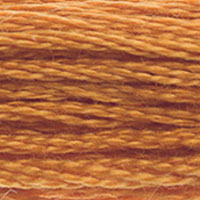
Somewhere between brown and gold, in the territory where caramel cools into toffee and honey darkens toward amber, you'll find DMC 435. It's called "Very Light Brown," which technically it is, but that name undersells the quiet golden warmth this thread carries. Where its darker sibling DMC 434 is firmly, unambiguously brown, 435 has drifted toward the golden — not far enough to be a gold, but far enough that it glows when the light hits it right. It's the color of a well-loved leather journal, the faded gilt on the spine of a Victorian novel, or the mellow surface of an unvarnished pine board that's been handled for decades.
That golden warmth makes 435 a natural partner for metallic gold threads and genuine gold-colored flosses. When stitchers talk about creating an "antique" look — warm, mellow, rich without being garish — the combination of brown with gold is usually what they mean. A border design alternating DMC 435 with DMC 783 (Medium Topaz) or DMC 729 (Medium Old Gold) creates the visual impression of aged gilding on dark wood. The brown grounds the gold, prevents it from looking cheap or overly bright, while the gold elevates the brown beyond mere utility into something with real presence.
Tobacco and Traditional Masculine Motifs
Cross-stitch isn't exclusively a feminine craft — never has been, despite what the popular imagination suggests — and certain thread colors have long associations with traditionally masculine design motifs. DMC 435 is one of them. It's the color of pipe tobacco, the warm brown of a leather desk blotter, the burnished surface of a wooden cigar box, the body of a bourbon in a glass. Designs for men's accessories — pocket watch cases, desk sets, bookmarks with hunting or fishing themes — lean heavily on this part of the brown spectrum.
For a gentleman's study-themed piece, 435 provides the warm mid-tone for leather-bound books, wooden shelving, and furniture surfaces. Pair it with DMC 433 (Medium Brown) for deeper shadows and DMC 436 (Tan) for the lighter surfaces where light catches the wood grain. Add DMC 3371 (Black Brown) for the shadows between books on a shelf, and DMC 3045 (Dark Yellow Beige) for the pages visible between leather covers, and you have a palette that evokes that particular warmth of a room full of old wood and older books.
The Neutral Brown Gradient's Sweet Spot
In the 433-434-435-436-437 neutral brown gradient — perhaps the most frequently used sequence in all of cross-stitch — 435 occupies the pivot point where dark-to-medium transitions into medium-to-light. It's the value that makes the gradient work, because it bridges the gap between the clearly dark browns below it and the clearly light tans above it. Without 435, you'd have an awkward jump from 434's medium-dark to 436's medium-light, and shading sequences that depend on this family would lose their smooth progression.
For tree bark textures, 435 is typically the main body color of the trunk — the face of the bark that's catching ambient light but isn't in direct sun. DMC 434 handles the shadow side, DMC 433 handles the deep fissures, and 436 provides the highlights where sun strikes the bark directly. One strand of 435 blended with one strand of 434 in a blended needle creates a beautiful half-step that's useful for the transition zone between lit and shadowed bark — the kind of nuance that makes a tree trunk look cylindrical rather than flat.
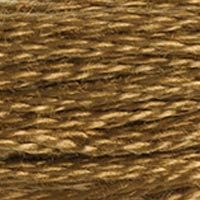
On fabric, 435 has good coverage on 14-count with two strands and works well on 18-count with proper railroading. The warm, slightly golden character is more visible on white fabric than on cream — cream Aida absorbs some of the golden warmth, making 435 look more neutrally brown. If you specifically want the gold glow, stitch on white. If you want the brown to stay brown, cream or natural linen will keep it grounded. This is worth a test swatch if the distinction matters to your project, especially for large areas of fill stitching where the cumulative color impression is more important than any single stitch.
The Warmth Must Come Through
DMC 435 is warm enough that a cool or neutral substitute will read differently, especially in large fill areas. You need a medium-light brown with golden undertones — not ochre, not orange, but that particular warm amber-brown that keeps 435 from being just another plain tan.
Anchor 365 is an exact match that captures the warm quality well. Madeira 2010, also exact, maintains the golden-brown balance faithfully and blends seamlessly in projects that use 435 alongside other members of the 433-437 family. Both substitutes are safe, reliable choices.
Cosmo 308 is rated close and typically works well in practice, though some stitchers note a very slight difference in saturation — Cosmo's version can appear marginally more muted than the DMC. In a standalone context this is invisible, but if you're building a gradient from 433 through 437 and switching brands only for the 435 position, verify that the step between 434 and your Cosmo 435 substitute looks proportional to the step between your substitute and 436. Sullivans 45096 is in the right zone — check it against your fabric in daylight.
Within DMC, the nearest alternative is DMC 436 (Tan), one step lighter and slightly less golden. In some patterns, especially those using only 434 and 435, you could use 436 in place of 435 if you accept the palette will be slightly lighter overall. DMC 3045 (Dark Yellow Beige) is another option that shares the warm-gold character, though it comes from a different color family and may not blend identically into a neutral brown gradient. Avoid DMC 422 (Light Hazelnut Brown) — it's similar in value but from the hazelnut family, with a different type of warmth that can clash in brown-gradient contexts.
Reference quality
How We Validate This Color Record
Use this page as a reference card for DMC 435: the structured data, quick conversions, and long-form copy are all tied back to the same stored color record.
- Methodology
- This page renders DMC 435, its hex value, and every brand equivalent from the site's source-of-truth color record, then checks long-form body copy against those same stored fields.
- Verification status
- Source-field checked. The page content is audited against the stored DMC number, brand equivalents, and match-quality labels before publishing.
- Last reviewed
- 2026-04-20
- Approximation warning
- Screen hex values, thread photos, and cross-brand conversions are reference aids. Dye lots, thread sheen, and fabric color can still shift the result in hand.
Decision guide
When to use the DMC 435 reference page
This page should help you decide faster between palette planning, brand substitution, and shade comparison without turning the color record into a thin lookup page.
Best for
- + Palette planning when you want the stored DMC 435 Very Light Brown record, hex value #B87748, and linked brand equivalents in one place.
- + Checking the quickest cross-brand shortlist before you buy floss, compare stash substitutes, or route into a more specific conversion page.
- + Finding nearby shades in the browns family before you commit to accents, shading, or background blends.
Watch for
- ! Screen previews are only reference aids. Very Light Brown can shift on real fabric because thread sheen, stitch coverage, and room lighting change how the color reads.
- ! A stored equivalent is still a shortlist, not a guarantee that two brands will disappear into each other in the same stitched motif.
- ! Older charts, discontinued kit floss, and dye-lot variation can all introduce small but visible differences that the page cannot detect for you.
Before you commit
- Confirm the role of DMC 435 Very Light Brown: decide whether you need an exact hero shade, a forgiving background, or a rough stash substitute.
- Compare on project fabric: view the skein or stitched sample on the same fabric count and color you will actually use.
- Use the linked conversion pages next: open the brand-specific pages when you need match-quality caveats before substituting away from the DMC reference.
DMC 435 FAQ
These questions appear on the page so the FAQ schema stays aligned with what visitors can actually read.
What is the Anchor equivalent of DMC 435?+
The closest Anchor equivalent to DMC 435 (Very Light Brown) is Anchor 365. This is an exact match.
What color is DMC 435?+
DMC 435 is called "Very Light Brown" and has a hex color value of #B87748. It belongs to the browns color family.
What is the Madeira equivalent of DMC 435?+
The closest Madeira equivalent to DMC 435 (Very Light Brown) is Madeira 2010. This is a close match.
How DMC 435 Looks on Fabric
The same thread appears different depending on your fabric. Always test on your project fabric.
White Aida
Cream / Ecru
Black Aida
Pairs Well With
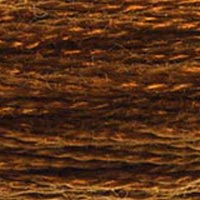
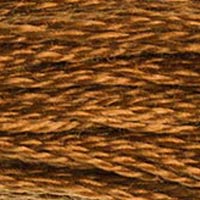
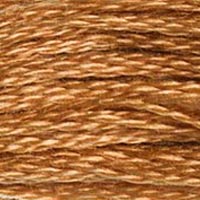
DMC colors commonly used alongside 435 Very Light Brown.
Rustic Country
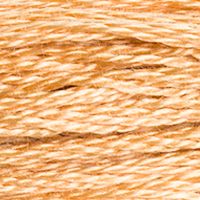
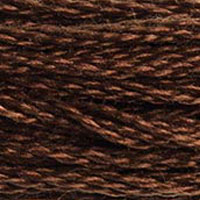
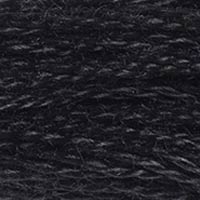
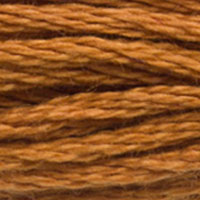
Shading Companions

Detailed Conversions
Where to Buy DMC 435
This section contains affiliate links. We may earn a small commission at no cost to you.
Related Guides
Free Printable Thread Conversion Chart
Pick a brand, enter your email, and we'll send you a printable chart mapping all 552 DMC colors to that brand's equivalents. Zero spam, one chart.
Thanks! Here's your free chart:
Download Your ChartOpens in a new tab. Use your browser's Print → Save as PDF.
No spam. Your email is stored securely and never shared.