
Quick Conversion Table
| Brand | Equivalent | Match |
|---|---|---|
| Anchor | 278 | close |
| Madeira | 1414 | close |
| Cosmo ⚠ | 971 | close |
| Sullivans | 45480 | close |
| J&P Coats | 6253 | close |
Not Quite Yellow, Not Quite Green — And That's the Point
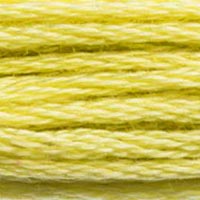
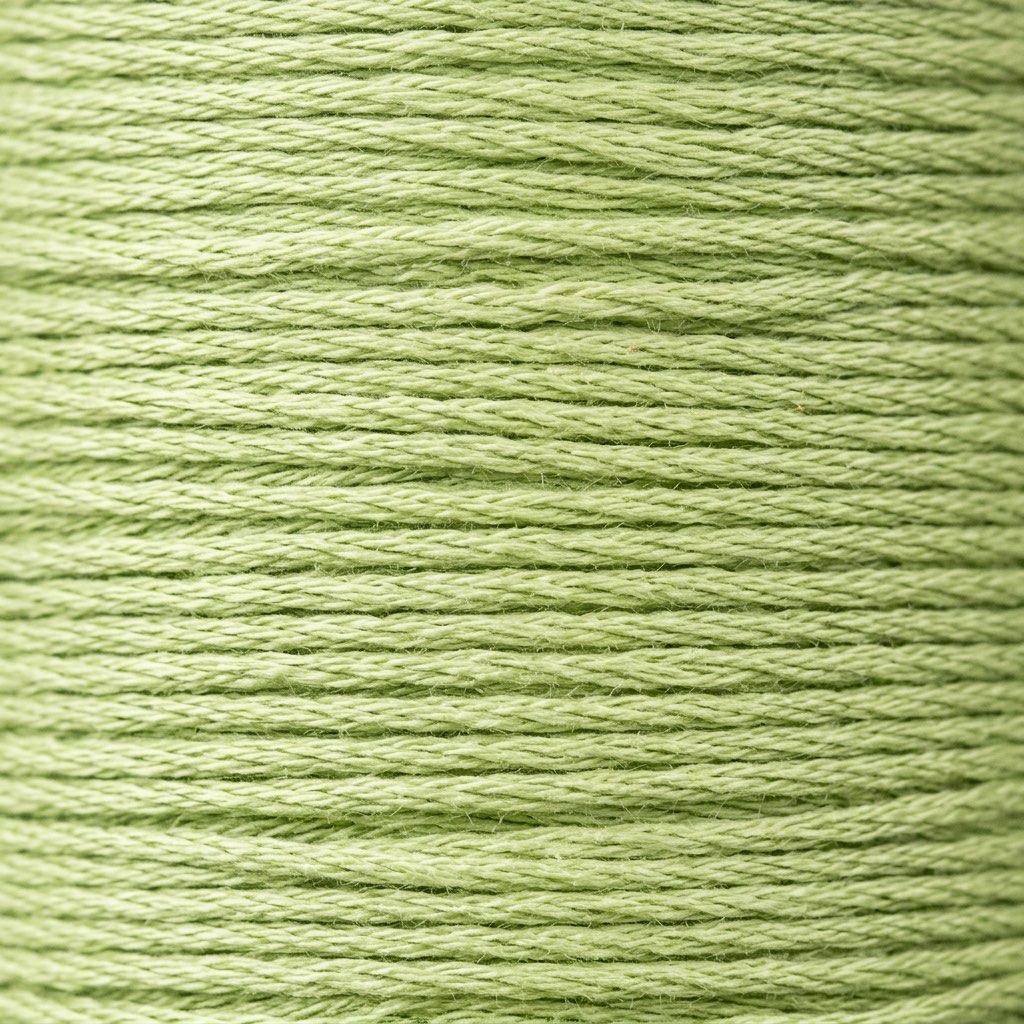
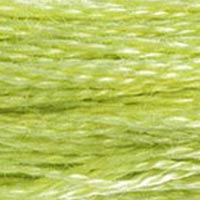
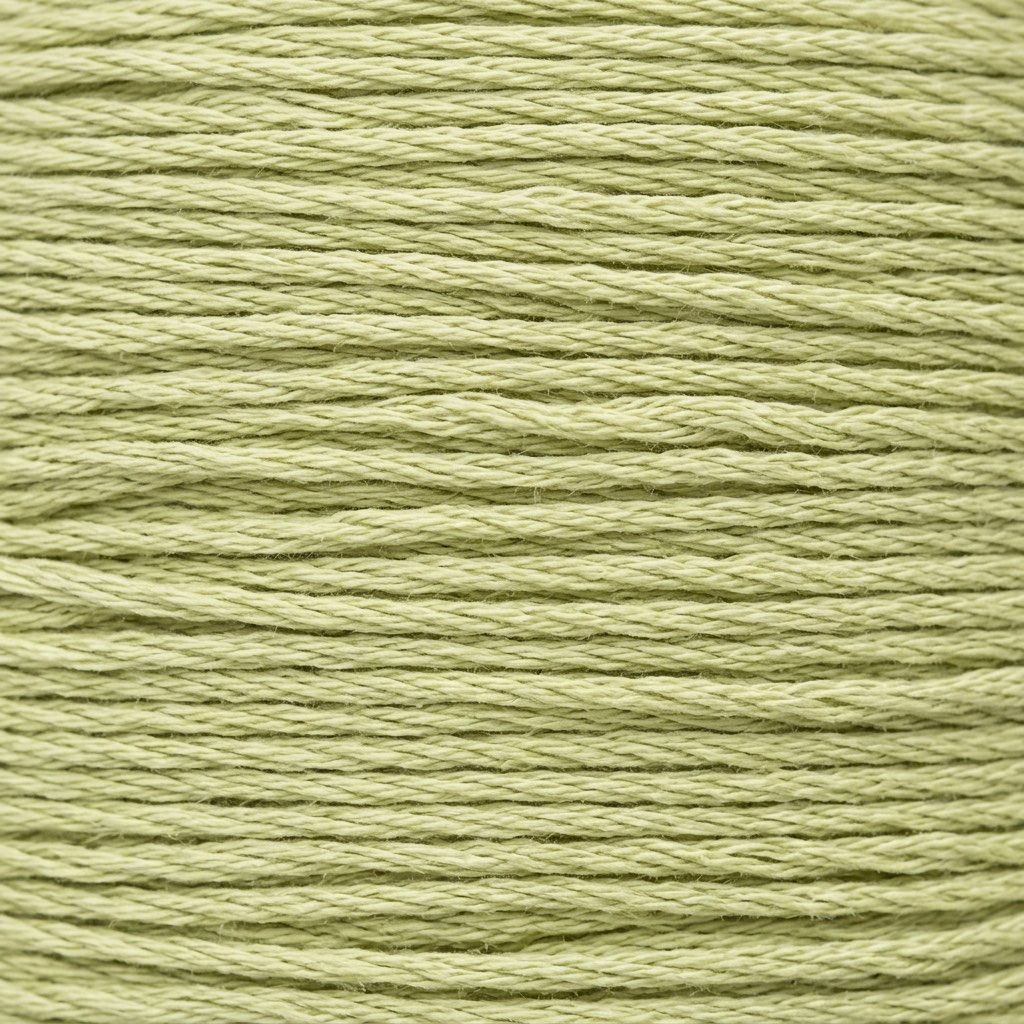
DMC 165 is one of those threads that starts arguments. Is it green? Is it yellow? Hand it to five stitchers and you'll get three who file it under green, one who insists it's yellow, and one who refuses to categorize it at all. The hex value tells the story: heavy on the yellow, substantial green, almost no blue. This is a yellow-green so light and bright that it practically vibrates, and it sits in that fascinating perceptual borderland where color categories start to break down.
The "moss" in the name is somewhat misleading if you're picturing the deep, velvety green of actual forest moss. Real-world equivalents for 165 are more like the pale undersides of new fern fronds, the flesh of a green grape held up to sunlight, or — perhaps most accurately — the neon chartreuse of a tennis ball. It's an electric, attention-grabbing shade that has no interest in being subtle.
Working with High-Energy Yellow-Greens
Colors this bright and light demand careful handling in a design palette. DMC 165 will visually advance — it jumps forward from the fabric, drawing the eye immediately. On white Aida, the effect is almost fluorescent. This makes it powerful for highlights and accents but potentially overwhelming as a large fill color. A few well-placed stitches of 165 at the centers of flowers or the tips of new leaves can add convincing sunlit sparkle. An entire background stitched in 165 will give everyone who looks at it a headache.
Color theory helps here. The complementary color for this yellow-green sits in the blue-violet range — think DMC 3746 (Dark Blue Violet) or DMC 155 (Medium Dark Blue Violet). Small touches of 165 next to these deep purples create genuinely striking contrast that neither color achieves alone. Tropical bird patterns exploit this combination constantly, and it's equally effective for bold floral designs where you want a contemporary rather than traditional feel.
For more harmonious combinations, 165 plays naturally with its value neighbors in the moss-green gradient. Step down through DMC 166 (Medium Light Moss Green) and DMC 3819 (Light Moss Green) — though 3819 is very close in value to 165, so use them adjacently only when you want a subtle shift rather than clear contrast. For actual depth in a chartreuse-to-olive gradient, jump further to DMC 471 (Very Light Avocado Green) and then DMC 469 (Avocado Green).
The Fabric Factor: Why 165 Changes More Than Most
Light, bright yellow-greens are among the most fabric-sensitive colors in any thread range. On white fabric, 165 reads as cheerful and slightly acidic. On cream fabric, the warmth of the base pushes it further toward yellow — it can read almost as a pale gold-green. On black fabric, it glows with genuine neon intensity that's spectacular for modern, graphic designs. On grey or dark blue fabric, it softens into something more sophisticated and muted, losing its tennis-ball quality and becoming genuinely elegant.
If your WIP calls for 165 on dark Aida or hand-dyed fabric, you'll want full two-strand coverage. Light, bright threads show every gap and inconsistency against dark backgrounds. Railroad your stitches, maintain even tension, and don't try to stretch your thread by using thinner coverage — the result will look patchy rather than textured. On white or light fabric, you have more latitude because minor coverage gaps simply blend with the background.
Matching the Chartreuse Edge
At this extreme of the green spectrum — where green slides hard toward yellow — brand differences can be more pronounced than in the middle of the range. The exact ratio of yellow to green pigment varies between manufacturers, and a tiny shift changes whether a thread reads as "bright green" or "greenish yellow." Your eyes are unusually sensitive to distinctions in this part of the spectrum (evolutionary biology at work — our primate ancestors needed to spot ripe fruit against green foliage), so differences that would be invisible in a mid-green become obvious here.
Anchor 278 is a close match and generally reliable, though some dye lots push slightly more green and less yellow than DMC 165. For a single small project this rarely matters. For a large piece or a SAL where multiple stitchers need color consistency, batch-test your Anchor purchase against a DMC reference skein.
Madeira 1414 captures the general brightness and warmth. Madeira's slightly glossier finish on a yellow-green this light can add a citrus-candy quality that some stitchers love and others find too sweet. Context matters here — in a whimsical design it enhances the playfulness, in a naturalistic landscape it can feel out of place.
Within DMC's own range, don't mistake DMC 3819 (Light Moss Green) for an exact substitute — they're close in value but 3819 carries a touch more green depth. Similarly, DMC 472 (Ultra Light Avocado Green) is a near neighbor but leans slightly more muted and olive-toned. For a true substitute at 165's exact bright, yellow-leaning point, the cross-brand matches are your best option.
Reference quality
How We Validate This Color Record
Use this page as a reference card for DMC 165: the structured data, quick conversions, and long-form copy are all tied back to the same stored color record.
- Methodology
- This page renders DMC 165, its hex value, and every brand equivalent from the site's source-of-truth color record, then checks long-form body copy against those same stored fields.
- Verification status
- Source-field checked. The page content is audited against the stored DMC number, brand equivalents, and match-quality labels before publishing.
- Last reviewed
- 2026-04-20
- Approximation warning
- Screen hex values, thread photos, and cross-brand conversions are reference aids. Dye lots, thread sheen, and fabric color can still shift the result in hand.
Decision guide
When to use the DMC 165 reference page
This page should help you decide faster between palette planning, brand substitution, and shade comparison without turning the color record into a thin lookup page.
Best for
- + Palette planning when you want the stored DMC 165 Very Light Moss Green record, hex value #EFF4A4, and linked brand equivalents in one place.
- + Checking the quickest cross-brand shortlist before you buy floss, compare stash substitutes, or route into a more specific conversion page.
- + Finding nearby shades in the greens family before you commit to accents, shading, or background blends.
Watch for
- ! Screen previews are only reference aids. Very Light Moss Green can shift on real fabric because thread sheen, stitch coverage, and room lighting change how the color reads.
- ! A stored equivalent is still a shortlist, not a guarantee that two brands will disappear into each other in the same stitched motif.
- ! Older charts, discontinued kit floss, and dye-lot variation can all introduce small but visible differences that the page cannot detect for you.
Before you commit
- Confirm the role of DMC 165 Very Light Moss Green: decide whether you need an exact hero shade, a forgiving background, or a rough stash substitute.
- Compare on project fabric: view the skein or stitched sample on the same fabric count and color you will actually use.
- Use the linked conversion pages next: open the brand-specific pages when you need match-quality caveats before substituting away from the DMC reference.
DMC 165 FAQ
These questions appear on the page so the FAQ schema stays aligned with what visitors can actually read.
What is the Anchor equivalent of DMC 165?+
The closest Anchor equivalent to DMC 165 (Very Light Moss Green) is Anchor 278. This is a close match.
What color is DMC 165?+
DMC 165 is called "Very Light Moss Green" and has a hex color value of #EFF4A4. It belongs to the greens color family.
What is the Madeira equivalent of DMC 165?+
The closest Madeira equivalent to DMC 165 (Very Light Moss Green) is Madeira 1414. This is a close match.
How DMC 165 Looks on Fabric
The same thread appears different depending on your fabric. Always test on your project fabric.
White Aida
Cream / Ecru
Black Aida
Pairs Well With
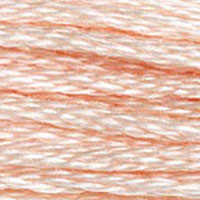
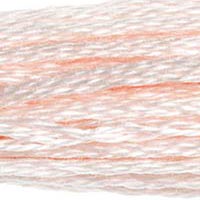
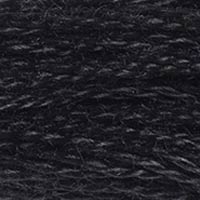
DMC colors commonly used alongside 165 Very Light Moss Green.
Suggested Palette
Detailed Conversions
Where to Buy DMC 165
This section contains affiliate links. We may earn a small commission at no cost to you.
Related Guides
Free Printable Thread Conversion Chart
Pick a brand, enter your email, and we'll send you a printable chart mapping all 552 DMC colors to that brand's equivalents. Zero spam, one chart.
Thanks! Here's your free chart:
Download Your ChartOpens in a new tab. Use your browser's Print → Save as PDF.
No spam. Your email is stored securely and never shared.