
Quick Conversion Table
| Brand | Equivalent | Match |
|---|---|---|
| Anchor | 1011 | exact |
| Madeira | 0306 | close |
| Cosmo ⚠ | 340 | close |
| Sullivans | 45286 | close |
| J&P Coats | 2331 | close |
| Dimensions | 12331 | close |
| Bucilla | 1948 | close |
| Candamar | 6032 | close |
The Palest Blush: Why Ultra-Light Colors Matter
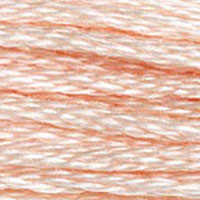
DMC 948 Very Light Peach is almost shockingly pale. On the skein it barely reads as pink at all — it's closer to an extremely subtle warmth applied to white, a ghost of color rather than a committed one. On the bolt of Aida fabric, it can seem like it might simply disappear into the ground. These qualities make new stitchers uncertain about when and why to use it, which is a shame, because DMC 948 is genuinely indispensable for anyone who works on portraits, figures, or delicate floral designs.
The key insight is that DMC 948 is never meant to read as a color in isolation. It functions as the topmost highlight in a skin tone or floral progression — the lightest visible value before the thread vanishes against a white ground. When you see a portrait design that makes the cheekbones glow, the nose bridge shimmer, or the forehead catch light convincingly, it's almost certainly DMC 948 or a similarly pale thread doing that work in combination with slightly darker values beneath it.
Skin Tone Palette Context
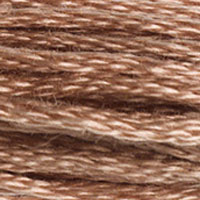
For lighter complexion palettes, the typical ascending progression from shadow to highlight might run: DMC 3856 (Ultra Very Light Mahogany) through DMC 3779 (Ultra Very Light Terra Cotta) to DMC 950 (Light Desert Sand) to DMC 945 (Tawny) to DMC 951 (Light Tawny) and finally DMC 948 as the highlight. The exact sequence varies by design and the specific skin tone being represented, but 948 almost always appears at or near the top.
What makes DMC 948 work in these progressions is its undertone. It's warm — barely perceptibly peach — rather than cool or bluish. This warmth prevents the highlighted areas from reading as washed-out or chalky. Instead, they suggest the warm luminosity of skin catching light, which feels anatomically correct in a way that a cooler pale thread would not.
Floral and Fabric Applications
Petal highlights are another natural home for DMC 948. Light pink roses, white flowers with warm-tinted petals, peonies, and magnolias all benefit from this color for their lightest highlight areas. Against DMC 818 (Baby Pink) or DMC 3716 (Very Light Dusty Rose), 948 creates the illusion of petal curvature — the lightest possible value suggesting where the petal faces the light source most directly.
In fabric texture effects — depicting white linen, pale silk, or cream fabric in a still-life design — DMC 948 handles the highlighted areas of folds and surfaces, creating dimensionality without introducing actual color that would suggest the fabric isn't white.
For stitchers who work in blackwork or voided embroidery, 948 occasionally turns up as the background fill in areas where the design calls for a barely-there warmth in the ground rather than pure white. This is subtle but effective for creating a sense of depth in a largely monochromatic design.
Anchor 1011 is an exact match, and this is one of the conversions where stitchers consistently report high satisfaction — the thread not only matches in hue but behaves similarly on fabric. At this end of the pale spectrum, thread consistency and lack of variation between skeins matters more than with darker colors, and both DMC and Anchor deliver well here.
Madeira 0306 also matches exactly. Madeira's slightly higher sheen adds a subtle luminosity to this already very light color that actually works well for skin highlight applications, where a touch of sheen suggests the glow of light on skin without being obviously metallic.
Cosmo 340 is close. At these very pale values, even slight formulation differences can show up as the thread appearing slightly warmer or cooler, or marginally different in value. Test against your skin tone progression before substituting Cosmo for DMC 948 in portrait work, where the exact position of the highlight value in your progression is important.
The most common mistake stitchers make is skipping this thread entirely — deciding it's too pale to do anything useful and just leaving those stitches out or replacing them with the next-darker color in the sequence. Don't. The palest value does work that nothing else can: it creates the illusion of light. Remove it and the dimensional shading collapses into a flatter, less convincing result.
- On cream or natural linen backgrounds, DMC 948 may almost completely disappear — test with a single stitch before stitching large areas on non-white fabric.
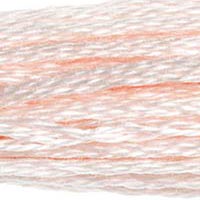
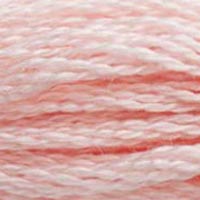
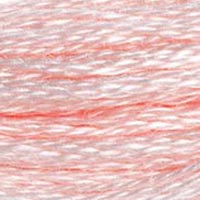
- For floral highlight work, pair with DMC 818 (Baby Pink) and DMC 963 (Ultra Very Light Dusty Rose) for a complete pale pink palette progression.
Reference quality
How We Validate This Color Record
Use this page as a reference card for DMC 948: the structured data, quick conversions, and long-form copy are all tied back to the same stored color record.
- Methodology
- This page renders DMC 948, its hex value, and every brand equivalent from the site's source-of-truth color record, then checks long-form body copy against those same stored fields.
- Verification status
- Source-field checked. The page content is audited against the stored DMC number, brand equivalents, and match-quality labels before publishing.
- Last reviewed
- 2026-04-20
- Approximation warning
- Screen hex values, thread photos, and cross-brand conversions are reference aids. Dye lots, thread sheen, and fabric color can still shift the result in hand.
Decision guide
When to use the DMC 948 reference page
This page should help you decide faster between palette planning, brand substitution, and shade comparison without turning the color record into a thin lookup page.
Best for
- + Palette planning when you want the stored DMC 948 Very Light Peach record, hex value #FEE7DA, and linked brand equivalents in one place.
- + Checking the quickest cross-brand shortlist before you buy floss, compare stash substitutes, or route into a more specific conversion page.
- + Finding nearby shades in the pinks family before you commit to accents, shading, or background blends.
Watch for
- ! Screen previews are only reference aids. Very Light Peach can shift on real fabric because thread sheen, stitch coverage, and room lighting change how the color reads.
- ! A stored equivalent is still a shortlist, not a guarantee that two brands will disappear into each other in the same stitched motif.
- ! Older charts, discontinued kit floss, and dye-lot variation can all introduce small but visible differences that the page cannot detect for you.
Before you commit
- Confirm the role of DMC 948 Very Light Peach: decide whether you need an exact hero shade, a forgiving background, or a rough stash substitute.
- Compare on project fabric: view the skein or stitched sample on the same fabric count and color you will actually use.
- Use the linked conversion pages next: open the brand-specific pages when you need match-quality caveats before substituting away from the DMC reference.
DMC 948 FAQ
These questions appear on the page so the FAQ schema stays aligned with what visitors can actually read.
What is the Anchor equivalent of DMC 948?+
The closest Anchor equivalent to DMC 948 (Very Light Peach) is Anchor 1011. This is an exact match.
What color is DMC 948?+
DMC 948 is called "Very Light Peach" and has a hex color value of #FEE7DA. It belongs to the pinks color family.
What is the Madeira equivalent of DMC 948?+
The closest Madeira equivalent to DMC 948 (Very Light Peach) is Madeira 0306. This is a close match.
How DMC 948 Looks on Fabric
The same thread appears different depending on your fabric. Always test on your project fabric.
White Aida
Cream / Ecru
Black Aida
Pairs Well With
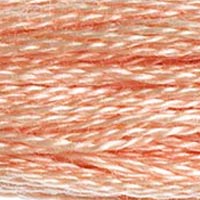
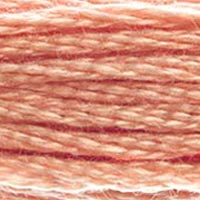
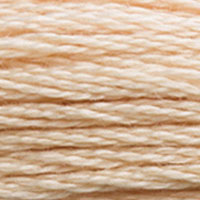
DMC colors commonly used alongside 948 Very Light Peach.
Light Skin Tones

Shading Companions
Detailed Conversions
Where to Buy DMC 948
This section contains affiliate links. We may earn a small commission at no cost to you.
Related Guides
Free Printable Thread Conversion Chart
Pick a brand, enter your email, and we'll send you a printable chart mapping all 552 DMC colors to that brand's equivalents. Zero spam, one chart.
Thanks! Here's your free chart:
Download Your ChartOpens in a new tab. Use your browser's Print → Save as PDF.
No spam. Your email is stored securely and never shared.