
DMC 3866 — Ultra Very Light Mocha Brown
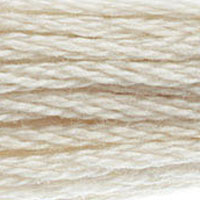
Browns family · Hex #FAF6F0
Quick Conversion Table
| Brand | Equivalent | Match |
|---|---|---|
| Anchor | 936 | close |
| Madeira | 1908 | close |
| Cosmo ⚠ | 711 | close |
| Sullivans | 45464 | close |
| J&P Coats | 5933 | close |
The Thread That Solves the "Blanc Too Bright" Problem
Every stitcher who works on linen eventually discovers the issue: pure white thread on cream or antique fabric looks wrong. The stark contrast between DMC Blanc and a warm-toned ground creates a jarring brightness that pulls the eye away from the design. DMC 3866 Ultra Very Light Mocha Brown exists precisely to solve this problem. At #FAF6F0, it's a near-white with a barely perceptible warm, creamy cast — the kind of "white" that looks right on aged fabric, on natural linen, and in designs where the effect should feel like lace or old silk rather than bleached cotton.
The irony of this color is that it's classified as a brown — the lightest extreme of the mocha brown family — yet it reads as white in nearly every practical context. The difference between 3866 and Blanc is subtle in the skein but meaningful in use: Blanc is cool and bright, 3866 is warm and soft. On white 14-count Aida, the difference is almost undetectable from viewing distance. On any warm-toned fabric, the superiority of 3866 is immediately apparent.
Where This Color Actually Gets Used
The most common use case for DMC 3866 is as a substitute for white in designs stitched on non-white fabric. If you're working on 28-count antique white evenweave, cream Belfast linen, or oatmeal Zweigart, using 3866 instead of Blanc for white elements prevents the "floating" effect where stitched white reads as completely disconnected from the surrounding fabric tone. 3866 on these grounds sits harmoniously with the fabric while still reading as the lightest value in the design.
Portrait stitchers use 3866 as the ultimate highlight in skin tone gradients — the point where the lightest value approaches white but needs to retain warmth. A single strand of 3866 on a light-colored face in a portrait provides the bright highlight that gives the face its three-dimensional quality without introducing the cold snap of pure white. This specific technique — using 3866 rather than white for the lightest skin highlight — is a common recommendation in portrait stitching communities.
In thread painting and needle painting, 3866 blended with DMC 3864 (Light Mocha Beige) or DMC 3865 creates a smooth near-white transition layer that's particularly useful for rendering the lit edges of warm-toned subjects. The blended combination has a depth that pure white can't achieve — it reads as light reflected off a warm surface rather than as the absence of color.
One community debate that occasionally surfaces: when to use 3866 versus DMC 3865 (Ultra Very Light Mocha Brown, a companion in the near-white warm neutral zone). The two are very close in value, with 3865 being very slightly warmer and 3866 being the lighter of the two. Many stitchers keep both on hand and select based on whether they need "basically white" (3866) or "definitely very pale warm" (3865).
Near-white warm neutrals like 3866 are among the hardest colors to match across brands because very small hue and value differences are maximally visible at near-white values.
Anchor 936 is close. Anchor's near-white warm neutral equivalent may read as slightly more yellow-warm or slightly cooler than 3866, depending on the specific lot. For the specific purpose of replacing Blanc with a warmer near-white on antique fabric, it's worth testing Anchor 936 against your specific ground before committing — the warm-neutral effect can vary meaningfully from one production batch to another.
Madeira 1908 is close. Madeira's near-white warm neutrals are generally reliable, and 1908 performs adequately as a 3866 substitute. Some stitchers find it reads as very slightly more cream (less pure near-white) than 3866, which is usually not a problem and occasionally an advantage in vintage linen contexts.
Cosmo 711 is close. Cosmo's ultra-light mocha brown equivalent works for most applications where 3866 would be used. The slight saturation differences common to Cosmo substitutions are less visible at near-white values.
Sullivans 45464 is close. As with all very light thread colors, confirming lot consistency is especially important — dye variations are most visible at very high values.
- The most important substitution context for 3866 is when you need it specifically as a Blanc alternative. In that case, Anchor 2 (White) and Madeira White are both cooler — neither replicates the warm-neutral quality that makes 3866 valuable for linen work. DMC 3866 is genuinely difficult to replicate if the specific warm quality is needed.
- For an even warmer near-white, DMC 712 (Cream) is slightly more distinctly cream and less near-white than 3866, providing a meaningful step up in warmth for very warm-fabric applications.
Reference quality
How We Validate This Color Record
Use this page as a reference card for DMC 3866: the structured data, quick conversions, and long-form copy are all tied back to the same stored color record.
- Methodology
- This page renders DMC 3866, its hex value, and every brand equivalent from the site's source-of-truth color record, then checks long-form body copy against those same stored fields.
- Verification status
- Source-field checked. The page content is audited against the stored DMC number, brand equivalents, and match-quality labels before publishing.
- Last reviewed
- 2026-04-20
- Approximation warning
- Screen hex values, thread photos, and cross-brand conversions are reference aids. Dye lots, thread sheen, and fabric color can still shift the result in hand.
Decision guide
When to use the DMC 3866 reference page
This page should help you decide faster between palette planning, brand substitution, and shade comparison without turning the color record into a thin lookup page.
Best for
- + Palette planning when you want the stored DMC 3866 Ultra Very Light Mocha Brown record, hex value #FAF6F0, and linked brand equivalents in one place.
- + Checking the quickest cross-brand shortlist before you buy floss, compare stash substitutes, or route into a more specific conversion page.
- + Finding nearby shades in the browns family before you commit to accents, shading, or background blends.
Watch for
- ! Screen previews are only reference aids. Ultra Very Light Mocha Brown can shift on real fabric because thread sheen, stitch coverage, and room lighting change how the color reads.
- ! A stored equivalent is still a shortlist, not a guarantee that two brands will disappear into each other in the same stitched motif.
- ! Older charts, discontinued kit floss, and dye-lot variation can all introduce small but visible differences that the page cannot detect for you.
Before you commit
- Confirm the role of DMC 3866 Ultra Very Light Mocha Brown: decide whether you need an exact hero shade, a forgiving background, or a rough stash substitute.
- Compare on project fabric: view the skein or stitched sample on the same fabric count and color you will actually use.
- Use the linked conversion pages next: open the brand-specific pages when you need match-quality caveats before substituting away from the DMC reference.
DMC 3866 FAQ
These questions appear on the page so the FAQ schema stays aligned with what visitors can actually read.
What is the Anchor equivalent of DMC 3866?+
The closest Anchor equivalent to DMC 3866 (Ultra Very Light Mocha Brown) is Anchor 936. This is a close match.
What color is DMC 3866?+
DMC 3866 is called "Ultra Very Light Mocha Brown" and has a hex color value of #FAF6F0. It belongs to the browns color family.
What is the Madeira equivalent of DMC 3866?+
The closest Madeira equivalent to DMC 3866 (Ultra Very Light Mocha Brown) is Madeira 1908. This is a close match.
When to Reach for 3866 Instead of White
Ultra Very Light Mocha Brown earns its place through very specific use cases where no other color quite does the job:
- Linen and evenweave projects: Any project stitched on cream, oatmeal, antique white, or natural linen benefits from using 3866 wherever the pattern calls for white highlights. The warm ground and warm thread work together; stark white on warm linen creates a jarring brightness that breaks the visual harmony. This is the single most impactful practical use of 3866.
- Portrait and figure work: As the ultimate light highlight in skin tone gradients — particularly for fair-complexioned subjects with warm undertones — 3866 provides the luminous near-white of a lit cheekbone or forehead without the cold snap of Blanc. Portrait stitchers who've discovered this use tend to keep 3866 on hand permanently.
- Antique and reproduction samplers: Stitchers working from historical patterns or creating designs meant to evoke an aged original use 3866 in place of white to approximate the yellowed, warm quality of old needlework. It's not a perfect substitute for actual age, but it's one of the better approximations available in thread form.
- Winter and snow scenes: Counterintuitively, 3866 can be more effective than Blanc for snow highlights in certain lighting conditions — particularly candlelight or golden-hour scenes where the snow would have a warm quality. A snow scene stitched entirely in cold white can read as clinical; introducing 3866 for the lighter snow areas adds subtle warmth that makes the scene feel more naturally illuminated.
How DMC 3866 Looks on Fabric
The same thread appears different depending on your fabric. Always test on your project fabric.
White Aida
Cream / Ecru
Black Aida
Pairs Well With
DMC colors commonly used alongside 3866 Ultra Very Light Mocha Brown.
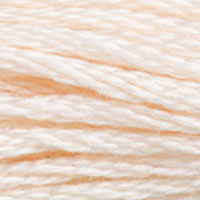
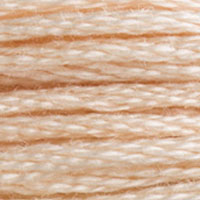
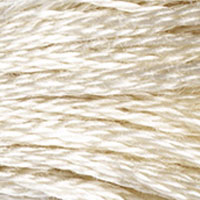
Suggested Palette
Detailed Conversions
Where to Buy DMC 3866
This section contains affiliate links. We may earn a small commission at no cost to you.
Related Guides
Free Printable Thread Conversion Chart
Pick a brand, enter your email, and we'll send you a printable chart mapping all 552 DMC colors to that brand's equivalents. Zero spam, one chart.
Thanks! Here's your free chart:
Download Your ChartOpens in a new tab. Use your browser's Print → Save as PDF.
No spam. Your email is stored securely and never shared.