
DMC 3033 — Very Light Mocha Brown
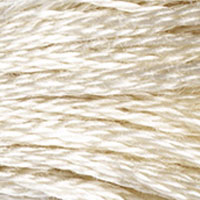
Browns family · Hex #E3D8CC
Quick Conversion Table
| Brand | Equivalent | Match |
|---|---|---|
| Anchor | 387 | close |
| Madeira | 2001 | close |
| Cosmo ⚠ | 380 | close |
| Sullivans | 45325 | close |
| J&P Coats | 5387 | close |
| Bucilla | 2752 | close |
| Candamar | 6106 | close |
Parchment, Vellum, and the Color of Written History
Unroll an old parchment — not the bright, craft-store kind, but the genuine article, sheepskin or calfskin that's been scraped and stretched and dried and has sat in a library for three centuries. That warm, slightly yellow-tinged cream, darker than paper but lighter than leather, with a quality that reads as unmistakably organic? That's DMC 3033. Very Light Mocha Brown occupies the pale end of the mocha family, but calling it "light brown" undersells its character. This is the color of written history, of illuminated manuscripts, of maps that led to new worlds.
What distinguishes 3033 from the dozens of other light beiges and creams in the DMC range is its specific warmth. Compare it to DMC Ecru, which is a yellowish off-white, or DMC 822 (Light Beige Grey), which has a cool, ashy quality. 3033 falls between them — warmer than the grays, earthier than the yellowed whites, with enough brown in its DNA to read as a definite color rather than a tinted neutral. Your eye registers it as a pale, warm brown, not as a slightly impure white. That distinction matters enormously when you're using it as a background or fill color.
In the mocha gradient, 3033 handles the second-lightest position, between DMC 3782 (Light Mocha Brown) above it in value and DMC 3866 (Ultra Very Light Mocha Brown) below it — or above it, depending on whether you're counting from dark to light. With DMC 3032 (Medium Mocha Brown) at the midpoint and DMC 3031 (Very Dark Mocha Brown) anchoring the dark end, you have a gradient family that spans nearly the entire value range with consistent mocha warmth throughout.
Backgrounds That Breathe
One of the most practical uses for 3033 is as a stitched background. Not every design calls for one — plenty of patterns leave the fabric to speak for itself — but when a pattern does fill its background, the thread choice sets the entire tone of the piece. White makes everything look clinical. Pale gray makes everything look modern. DMC 3033 makes everything look timeless. The warm, parchment quality creates an atmosphere of age and authenticity without being dark enough to compete with the foreground elements.
For historical samplers and reproduction pieces, a 3033 background suggests aged linen without requiring you to actually stitch on tinted fabric. This is useful when you want the clean, even stitches that white Aida provides but the visual warmth of a vintage ground. Stitch the entire background in 3033, then work the sampler motifs over it in the darker threads (3032, 3781, 3021 for the browns; period-appropriate faded greens and reds for color accents), and the finished piece looks like it was stitched a century ago.
For book and scroll designs — a popular motif in fantasy and literary cross-stitch — 3033 is the page color. Not white (too modern, too bright), not ecru (too yellow), but this specific warm, slightly tanned cream that says "this paper has been read by many hands." Pair it with DMC 3021 (Very Dark Brown Gray) for the text lines, DMC 3031 for the book binding, and DMC 3781 for the page edges darkened by handling.
Skin Tones and the Lighter End of the Spectrum
Cross-stitch skin tone palettes are notoriously tricky, and 3033 plays a role that many stitchers discover only after considerable experimentation: it works as a light skin shadow or highlight depending on the overall complexion palette. For very fair skin, 3033 serves as the primary shadow tone — the areas under the chin, beside the nose, at the temples. For medium skin tones, it can serve as a transition between the lighter facial areas and the deeper shadows.
The mocha warmth keeps it from looking gray or ashy against skin, which is the common failure mode when stitchers use cool-toned light browns for skin shadows. Pair 3033 with DMC 3770 (Very Light Tawny) for highlights and DMC 3064 (Desert Sand) for mid-tones, and you have the start of a warm, natural-looking skin palette. The key is ensuring all your skin-tone threads share the same warm base — mixing warm and cool tones in skin reads as uneven lighting rather than natural variation.
For the hands and faces in period samplers — those stylized but charming figures that populate so many historical designs — 3033 works well as the entire skin color for lighter-skinned figures, providing enough color to be visible against a white or ecru ground without the darkness that would overwhelm the small-scale features typical of sampler figures.
Light, Warm, and Distinctly Mocha
At this light value, plenty of threads from every brand look similar at first glance. The mistake is grabbing any pale beige and assuming it will work. DMC 3033's specific quality — that warm, slightly tanned parchment character — requires a substitute that matches not just the lightness but the particular kind of warmth. A pale yellow-beige is wrong. A pale gray-beige is wrong. You need pale mocha-beige.
Anchor 387 is close and captures the warm character, though you may notice a subtle shift in the yellow-to-brown balance compared to the DMC original. For background fills where thousands of stitches in 3033 create a large, uniform field, even small differences become visible. Stitch a test area under your display lighting before committing a week of background stitching to a substitute that might not match your expectations.
Madeira 2001 is an exact match and reliably reproduces the parchment quality. For any application where 3033's specific warmth matters — backgrounds, skin tones, mocha family gradients — Madeira 2001 is the substitute to reach for first.
Within DMC, the threads most easily confused with 3033 are DMC 3047 (Light Yellow Beige) and DMC 822 (Light Beige Grey). Neither is a true substitute: 3047 has more yellow and less brown, reading as sandy rather than parchment. 822 has more gray and less warmth, reading as cloudy rather than aged. If 3033 is genuinely unavailable and you must stay within DMC, DMC 842 (Very Light Beige Brown) is probably the closest in character — slightly different in undertone but from a similar warm, muted family.
Reference quality
How We Validate This Color Record
Use this page as a reference card for DMC 3033: the structured data, quick conversions, and long-form copy are all tied back to the same stored color record.
- Methodology
- This page renders DMC 3033, its hex value, and every brand equivalent from the site's source-of-truth color record, then checks long-form body copy against those same stored fields.
- Verification status
- Source-field checked. The page content is audited against the stored DMC number, brand equivalents, and match-quality labels before publishing.
- Last reviewed
- 2026-04-20
- Approximation warning
- Screen hex values, thread photos, and cross-brand conversions are reference aids. Dye lots, thread sheen, and fabric color can still shift the result in hand.
Decision guide
When to use the DMC 3033 reference page
This page should help you decide faster between palette planning, brand substitution, and shade comparison without turning the color record into a thin lookup page.
Best for
- + Palette planning when you want the stored DMC 3033 Very Light Mocha Brown record, hex value #E3D8CC, and linked brand equivalents in one place.
- + Checking the quickest cross-brand shortlist before you buy floss, compare stash substitutes, or route into a more specific conversion page.
- + Finding nearby shades in the browns family before you commit to accents, shading, or background blends.
Watch for
- ! Screen previews are only reference aids. Very Light Mocha Brown can shift on real fabric because thread sheen, stitch coverage, and room lighting change how the color reads.
- ! A stored equivalent is still a shortlist, not a guarantee that two brands will disappear into each other in the same stitched motif.
- ! Older charts, discontinued kit floss, and dye-lot variation can all introduce small but visible differences that the page cannot detect for you.
Before you commit
- Confirm the role of DMC 3033 Very Light Mocha Brown: decide whether you need an exact hero shade, a forgiving background, or a rough stash substitute.
- Compare on project fabric: view the skein or stitched sample on the same fabric count and color you will actually use.
- Use the linked conversion pages next: open the brand-specific pages when you need match-quality caveats before substituting away from the DMC reference.
DMC 3033 FAQ
These questions appear on the page so the FAQ schema stays aligned with what visitors can actually read.
What is the Anchor equivalent of DMC 3033?+
The closest Anchor equivalent to DMC 3033 (Very Light Mocha Brown) is Anchor 387. This is a close match.
What color is DMC 3033?+
DMC 3033 is called "Very Light Mocha Brown" and has a hex color value of #E3D8CC. It belongs to the browns color family.
What is the Madeira equivalent of DMC 3033?+
The closest Madeira equivalent to DMC 3033 (Very Light Mocha Brown) is Madeira 2001. This is a close match.
How DMC 3033 Looks on Fabric
The same thread appears different depending on your fabric. Always test on your project fabric.
White Aida
Cream / Ecru
Black Aida
Pairs Well With
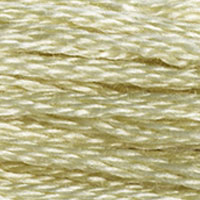
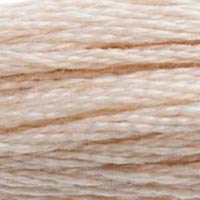
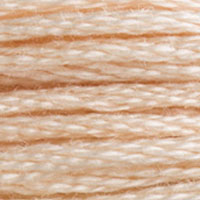
DMC colors commonly used alongside 3033 Very Light Mocha Brown.
Detailed Conversions
Where to Buy DMC 3033
This section contains affiliate links. We may earn a small commission at no cost to you.
Related Guides
Free Printable Thread Conversion Chart
Pick a brand, enter your email, and we'll send you a printable chart mapping all 552 DMC colors to that brand's equivalents. Zero spam, one chart.
Thanks! Here's your free chart:
Download Your ChartOpens in a new tab. Use your browser's Print → Save as PDF.
No spam. Your email is stored securely and never shared.