
Quick Conversion Table
| Brand | Equivalent | Match |
|---|---|---|
| Anchor | 852 | close |
| Madeira | 2205 | close |
| Cosmo ⚠ | 771 | close |
| Sullivans | 45330 | close |
| J&P Coats | 2300 | close |
| Dimensions | 12300 | close |
| Bucilla | 3047 | close |
Some colors in the DMC range generate endless discussion in stitching communities. Others just quietly do their job without fanfare — and DMC 3047 Light Yellow Beige is firmly in the second category. It appears in stash drawers everywhere, gets used constantly, and rarely gets mentioned by name. It's the color of cream linen, of aged paper, of autumn grasses in a meadow, of dried straw. It's a workhorse color that earns its place in hundreds of design categories without ever being the star of the show.
The Background Color That Isn't Background
The reflexive assumption about a color called "Light Yellow Beige" is that it's a background fill — the thread you use to render the sky or ground in a landscape, or the neutral that fills in around the real design elements. DMC 3047 certainly does that job. But reducing it to background work misses the thread's versatility. In realistic rendering, it's the color of aged wood grain, of cat and dog fur at the lightest highlights, of golden-yellow seed heads in botanical wildflower designs, of candle-glow in a dark scene.
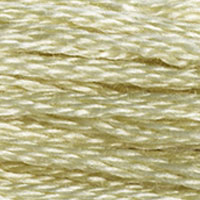
The yellow warmth that distinguishes DMC 3047 from a plain beige or cream is its key characteristic. Most beige-family threads in the DMC range have a neutral gray-beige or pink-beige cast. DMC 3047's yellow bias makes it distinctly warmer — it reads as sunlit rather than shadowed, as naturally warm rather than artificially neutral.
Shading Context: The 3046-3047 Pair
DMC 3047 pairs naturally with DMC 3046 (Medium Yellow Beige) as a lighter companion in the same family. Together, they provide a two-value yellow-beige shading sequence that's useful in a surprising range of applications. Bread and food illustrations, wheat and grain designs, straw and thatch textures, honey and amber effects — all of these can be built from the 3046/3047 pair with additional threads from neighboring families as needed.
For light-colored animal fur (golden retriever, lion, rabbit), the two-value yellow-beige pair works especially well at the mid-to-light tonal range, combined with DMC 677 (Very Light Old Gold) or DMC 3822 (Light Straw) for the very brightest highlights, and DMC 3045 (Dark Yellow Beige) or DMC 422 (Light Hazelnut Brown) for medium-dark areas.
Seasonal and Thematic Associations
Autumn and harvest designs use DMC 3047 extensively — it's the color of ripened grains, dry grasses, and the general warm-gold pallor of late summer fields. Combine it with DMC 729 (Medium Old Gold), DMC 921 (Copper), and DMC 3826 (Golden Brown) for a rich harvest palette. Spring designs use it differently — as the warm neutral ground against which brighter colors (pinks, greens, yellows) read more vibrantly.
Cottage and farmhouse aesthetic designs, which are consistently popular in cross-stitch communities, make heavy use of this thread in combination with muted, dusty colors like DMC 3042 (Light Antique Violet), DMC 3013 (Light Khaki Green), and DMC 3051 (Dark Green Gray). The yellow-warmth of DMC 3047 prevents these muted palette combinations from reading as cold or bleak — it contributes the sunny, gentle quality that makes the aesthetic feel welcoming rather than austere.
All four brand equivalents for DMC 3047 are listed as close rather than exact — a reminder that this specific yellow-beige warmth is harder to match precisely than it might appear. Anchor 852, Madeira 2205, Cosmo 771, and Sullivans 45330 are all in the correct general territory, but the exact balance of yellow, beige, and warmth varies enough that comparison under natural daylight before substituting is worthwhile.
Within the DMC range itself, DMC 676 (Light Old Gold) and DMC 677 (Very Light Old Gold) are neighbors that approach 3047's warm-yellow-beige character from a slightly more golden, less beige direction. DMC 3823 (Ultra Pale Yellow) goes lighter and warmer still, while DMC 746 (Off White) goes lighter but cooler. None of these is a direct replacement, but each can approximate specific uses of 3047 depending on context.
For stitchers building from stash: if DMC 3047 is unavailable, the most common workaround is using DMC 3046 (Medium Yellow Beige) alone and accepting a slightly richer, less pale result. In backgrounds and large fill areas where subtlety matters less, this usually works without compromising the design significantly. In fine detail work where DMC 3047's paleness is the point — the brightest highlights in hair or fur, the lightest areas of a golden surface — there's no perfect substitute and sourcing the actual thread is worth the effort.
Reference quality
How We Validate This Color Record
Use this page as a reference card for DMC 3047: the structured data, quick conversions, and long-form copy are all tied back to the same stored color record.
- Methodology
- This page renders DMC 3047, its hex value, and every brand equivalent from the site's source-of-truth color record, then checks long-form body copy against those same stored fields.
- Verification status
- Source-field checked. The page content is audited against the stored DMC number, brand equivalents, and match-quality labels before publishing.
- Last reviewed
- 2026-04-20
- Approximation warning
- Screen hex values, thread photos, and cross-brand conversions are reference aids. Dye lots, thread sheen, and fabric color can still shift the result in hand.
Decision guide
When to use the DMC 3047 reference page
This page should help you decide faster between palette planning, brand substitution, and shade comparison without turning the color record into a thin lookup page.
Best for
- + Palette planning when you want the stored DMC 3047 Light Yellow Beige record, hex value #E7D6C1, and linked brand equivalents in one place.
- + Checking the quickest cross-brand shortlist before you buy floss, compare stash substitutes, or route into a more specific conversion page.
- + Finding nearby shades in the browns family before you commit to accents, shading, or background blends.
Watch for
- ! Screen previews are only reference aids. Light Yellow Beige can shift on real fabric because thread sheen, stitch coverage, and room lighting change how the color reads.
- ! A stored equivalent is still a shortlist, not a guarantee that two brands will disappear into each other in the same stitched motif.
- ! Older charts, discontinued kit floss, and dye-lot variation can all introduce small but visible differences that the page cannot detect for you.
Before you commit
- Confirm the role of DMC 3047 Light Yellow Beige: decide whether you need an exact hero shade, a forgiving background, or a rough stash substitute.
- Compare on project fabric: view the skein or stitched sample on the same fabric count and color you will actually use.
- Use the linked conversion pages next: open the brand-specific pages when you need match-quality caveats before substituting away from the DMC reference.
DMC 3047 FAQ
These questions appear on the page so the FAQ schema stays aligned with what visitors can actually read.
What is the Anchor equivalent of DMC 3047?+
The closest Anchor equivalent to DMC 3047 (Light Yellow Beige) is Anchor 852. This is a close match.
What color is DMC 3047?+
DMC 3047 is called "Light Yellow Beige" and has a hex color value of #E7D6C1. It belongs to the browns color family.
What is the Madeira equivalent of DMC 3047?+
The closest Madeira equivalent to DMC 3047 (Light Yellow Beige) is Madeira 2205. This is a close match.
DMC 3047 Light Yellow Beige turns up in a remarkable range of project types, and knowing where it shines helps you make better use of the skeins already in your stash. Its most visible role is in full-coverage nature and landscape designs: the thread renders dry grasses, sand, straw, ripe wheat, and sun-bleached wood with convincing naturalism. Seasonal wall hangings and samplers — particularly autumn harvest and summer meadow themes — almost always include 3047 in the foliage or ground textures.
Animal and pet portrait designs depend on DMC 3047 heavily. It's foundational for golden retriever coloring, tabby cat highlights, lion manes, and warm-toned rabbit fur. Birth samplers and nursery designs with animal motifs — teddy bears, bunnies, chicks — use the thread for the warm, gentle coloring that makes these subjects feel soft and welcoming. Christmas ornaments with a naturalistic rather than saturated palette (dried citrus, wheat bundles, woodland animals) also call for 3047's warm neutral tones. The thread's versatility across project types explains why it's one of those colors that long-time stitchers buy by the multiple-skein lot rather than one at a time.
How DMC 3047 Looks on Fabric
The same thread appears different depending on your fabric. Always test on your project fabric.
White Aida
Cream / Ecru
Black Aida
Pairs Well With
DMC colors commonly used alongside 3047 Light Yellow Beige.
Suggested Palette
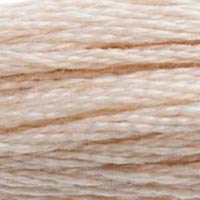
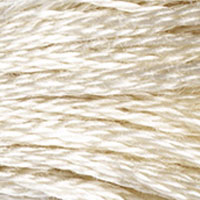
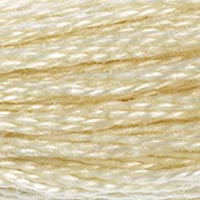
Detailed Conversions
Where to Buy DMC 3047
This section contains affiliate links. We may earn a small commission at no cost to you.
Related Guides
Free Printable Thread Conversion Chart
Pick a brand, enter your email, and we'll send you a printable chart mapping all 552 DMC colors to that brand's equivalents. Zero spam, one chart.
Thanks! Here's your free chart:
Download Your ChartOpens in a new tab. Use your browser's Print → Save as PDF.
No spam. Your email is stored securely and never shared.