
Quick Conversion Table
| Brand | Equivalent | Match |
|---|---|---|
| Anchor | 366 | exact |
| Madeira | 2001 | close |
| Cosmo ⚠ | 306 | close |
| Sullivans | 45180 | close |
| J&P Coats | 5369 | close |
| Dimensions | 6098 | close |
| Bucilla | 739 | close |
| Candamar | 6098 | close |
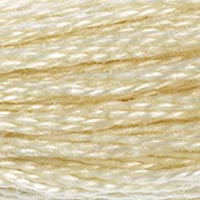
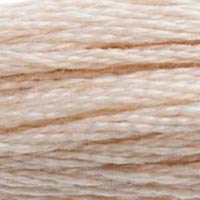
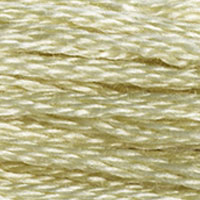
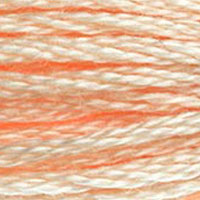
Thread naming conventions occasionally produce something memorable, and "Ultra Very Light Tan" is one of those cases — it's doing a lot of adjectival work to say "extremely pale warm beige." The "ultra" designation in DMC naming typically means a step beyond "very," placing 739 as the palest member of the tan family. At hex #F8E4C8, it reads as warm cream with a definite tan undertone — lighter and more neutral than 738, darker and warmer than DMC 712 Cream. It occupies a specific and genuinely useful position at the warm, pale end of the brown family.
The Ultra-Light Designation and What It Means
In DMC's naming system, the progression from "Light" to "Very Light" to "Ultra Very Light" represents meaningful steps in the value scale, particularly at the pale end where each incremental lightening changes the thread's behavior significantly. DMC 739's extreme lightness means it approaches the near-white zone while retaining clear warmth and tan character. On white Aida, it reads as a pale warm tan; on natural linen, it approaches the value of the ground fabric, creating a near-invisible effect that some designers use deliberately for subtle texture.
This fabric-dependent behavior is one of 739's most interesting characteristics. On white fabric, it asserts itself as a visible near-highlight. On warm or cream fabric, it nearly merges with the ground. This sensitivity to the fabric ground makes it a thoughtful choice rather than a default option — knowing how it will read on your specific fabric before you commit to using it as a highlight is important, and a test stitch on the actual fabric pays dividends.
Animal Portrait Highlights
In the most detailed animal portrait work — the kind of full-coverage needlepainting that aims for photographic accuracy — 739 serves as the palest highlight on light-colored fur, feathers, or skin. For a golden retriever portrait, the sequence might run from DMC 434 Light Brown at the deepest shadow through 436, 437, 738, and finally 739 for the brow, muzzle, and coat highlights where direct light creates maximum brightness. The full five-to-six value sequence creates the roundness and depth that separates documentary embroidery from decorative illustration.
White and cream-colored animals use 739 extensively in areas that should read as highlights rather than pure white. A polar bear's shadow-free highlights, the lit shoulder of a cream-colored horse, the sunlit breast of a barn owl — all of these use 739 as the warm near-highlight before stepping further into DMC 3865 Ultra White for the absolute brightest points. This layering creates the specific warmth that distinguishes real cream-white animals from the sterile white of fabric grounds.
Background and Base Cloth Effects
Stitched backgrounds in pale tan — for antique map effects, aged paper textures, weathered wood surfaces, sandy landscape grounds — often use 739 to create a subtle full-coverage fill that reads as a toned ground rather than bare white fabric. Worked over-two on natural linen in the stab method for maximum regularity, 739 creates backgrounds that look like the piece was stitched on tan fabric rather than white — the difference is subtle but the effect is cohesive and deliberate. This technique appeared frequently in the mid-century antique reproduction needlepoint tradition and has influenced contemporary cross stitch designers who value the warmth it provides to overall compositions.
Anchor 366 and Madeira 2001 are both exact matches for DMC 739, providing reliable cross-brand equivalents for this pale but characterful thread. At this light value, the exact match rating is particularly useful because tiny color differences at the pale end of the scale can affect the visual relationship with adjacent threads more than the same differences would at mid-range values.
Cosmo 306 and Sullivans 45180 are close. Cosmo 306 can read slightly more golden than 739 — the warmth tilts slightly toward the yellow-gold end of the pale-tan spectrum rather than the neutral warm-cream character of DMC's version. Sullivans 45180 is generally a reliable close match. For highlight work in animal portraits where 739 is the palest warm tone before moving to Blanc or 3865, the slight differences in these substitutes can be noticeable against surrounding colors; test in context before proceeding.
Within the DMC range, DMC 738 Very Light Tan is the natural darker step and is the most common substitute when 739 is unavailable — you lose the final highlight step but maintain the family character. For even lighter options that stay warm, DMC 3865 Ultra White is considerably lighter but significantly cooler and less tan in character, serving a different role. DMC 3047 Light Yellow Beige and DMC 677 Very Light Old Gold are both in the pale-warm zone but each carries different undertones. If you need something between 738 and 739 in value, a blended needle with one strand of each creates a seamless intermediate tone for the transition zone in fine shading work.
Reference quality
How We Validate This Color Record
Use this page as a reference card for DMC 739: the structured data, quick conversions, and long-form copy are all tied back to the same stored color record.
- Methodology
- This page renders DMC 739, its hex value, and every brand equivalent from the site's source-of-truth color record, then checks long-form body copy against those same stored fields.
- Verification status
- Source-field checked. The page content is audited against the stored DMC number, brand equivalents, and match-quality labels before publishing.
- Last reviewed
- 2026-04-20
- Approximation warning
- Screen hex values, thread photos, and cross-brand conversions are reference aids. Dye lots, thread sheen, and fabric color can still shift the result in hand.
Decision guide
When to use the DMC 739 reference page
This page should help you decide faster between palette planning, brand substitution, and shade comparison without turning the color record into a thin lookup page.
Best for
- + Palette planning when you want the stored DMC 739 Ultra Very Light Tan record, hex value #F8E4C8, and linked brand equivalents in one place.
- + Checking the quickest cross-brand shortlist before you buy floss, compare stash substitutes, or route into a more specific conversion page.
- + Finding nearby shades in the browns family before you commit to accents, shading, or background blends.
Watch for
- ! Screen previews are only reference aids. Ultra Very Light Tan can shift on real fabric because thread sheen, stitch coverage, and room lighting change how the color reads.
- ! A stored equivalent is still a shortlist, not a guarantee that two brands will disappear into each other in the same stitched motif.
- ! Older charts, discontinued kit floss, and dye-lot variation can all introduce small but visible differences that the page cannot detect for you.
Before you commit
- Confirm the role of DMC 739 Ultra Very Light Tan: decide whether you need an exact hero shade, a forgiving background, or a rough stash substitute.
- Compare on project fabric: view the skein or stitched sample on the same fabric count and color you will actually use.
- Use the linked conversion pages next: open the brand-specific pages when you need match-quality caveats before substituting away from the DMC reference.
DMC 739 FAQ
These questions appear on the page so the FAQ schema stays aligned with what visitors can actually read.
What is the Anchor equivalent of DMC 739?+
The closest Anchor equivalent to DMC 739 (Ultra Very Light Tan) is Anchor 366. This is an exact match.
What color is DMC 739?+
DMC 739 is called "Ultra Very Light Tan" and has a hex color value of #F8E4C8. It belongs to the browns color family.
What is the Madeira equivalent of DMC 739?+
The closest Madeira equivalent to DMC 739 (Ultra Very Light Tan) is Madeira 2001. This is a close match.
How DMC 739 Looks on Fabric
The same thread appears different depending on your fabric. Always test on your project fabric.
White Aida
Cream / Ecru
Black Aida
Pairs Well With
DMC colors commonly used alongside 739 Ultra Very Light Tan.
Suggested Palette
Shading Companions
Detailed Conversions
Where to Buy DMC 739
This section contains affiliate links. We may earn a small commission at no cost to you.
Related Guides
Free Printable Thread Conversion Chart
Pick a brand, enter your email, and we'll send you a printable chart mapping all 552 DMC colors to that brand's equivalents. Zero spam, one chart.
Thanks! Here's your free chart:
Download Your ChartOpens in a new tab. Use your browser's Print → Save as PDF.
No spam. Your email is stored securely and never shared.