
DMC 118 — Variegated Blue Violet
Purples family · Hex #9080B8
Quick Conversion Table
| Brand | Equivalent | Match |
|---|---|---|
| Anchor | 110 | close |
| Madeira | 0910 | close |
| Cosmo ⚠ | 2626 | close |
| Sullivans | 45428 | close |
Twilight on a Bobbin
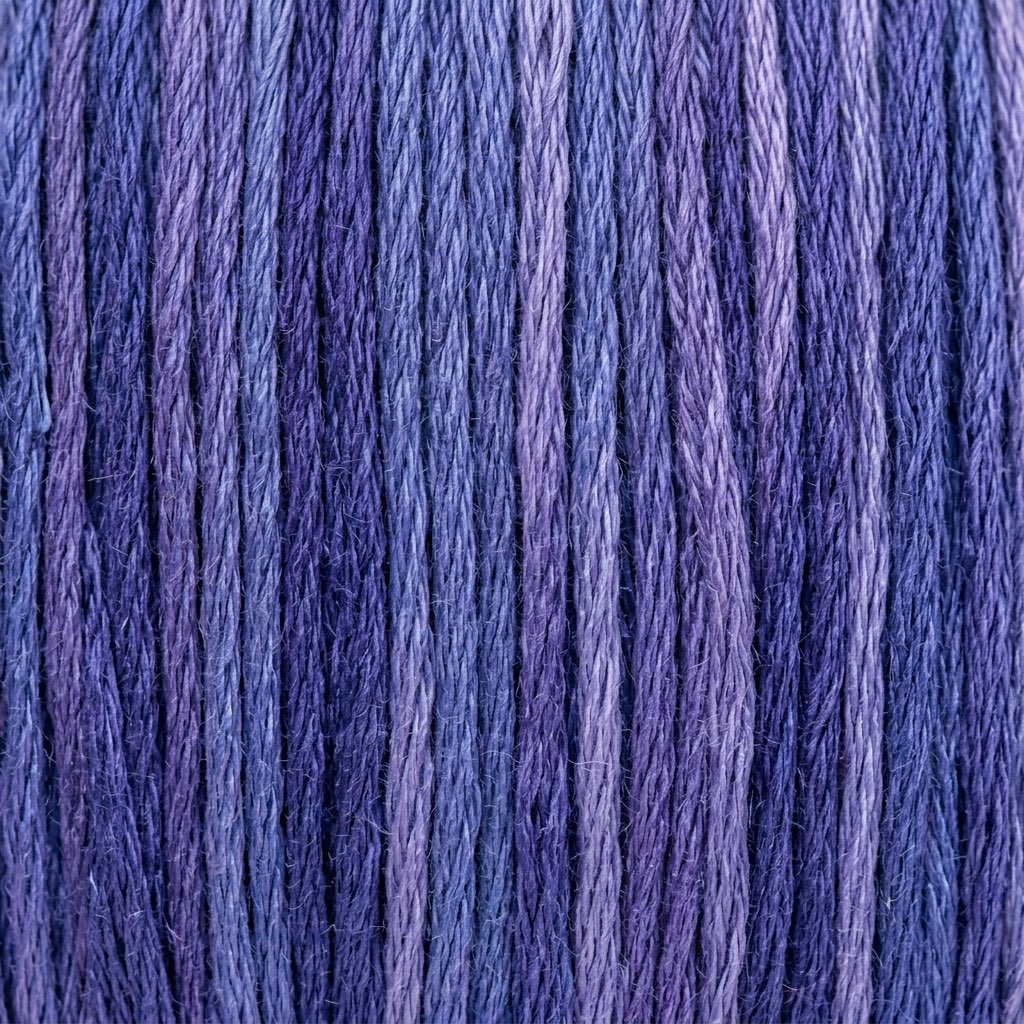
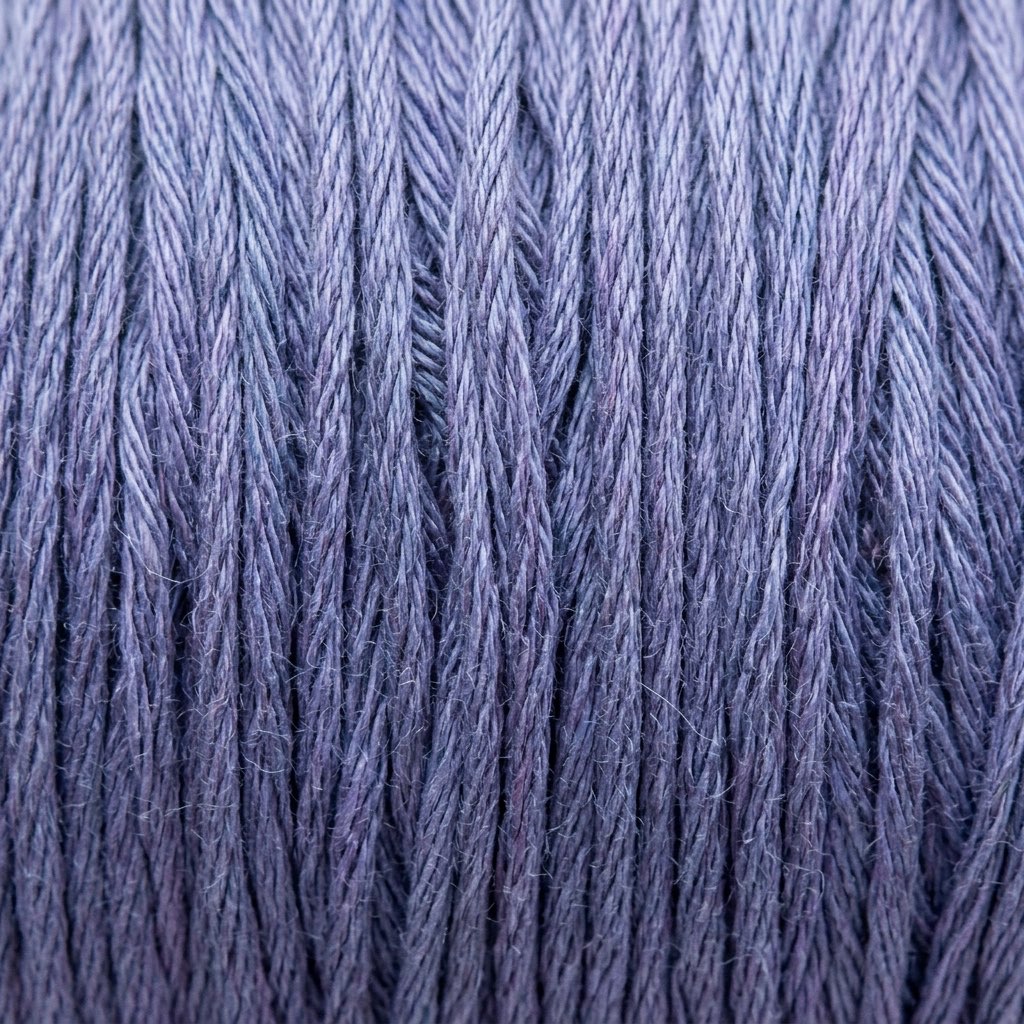
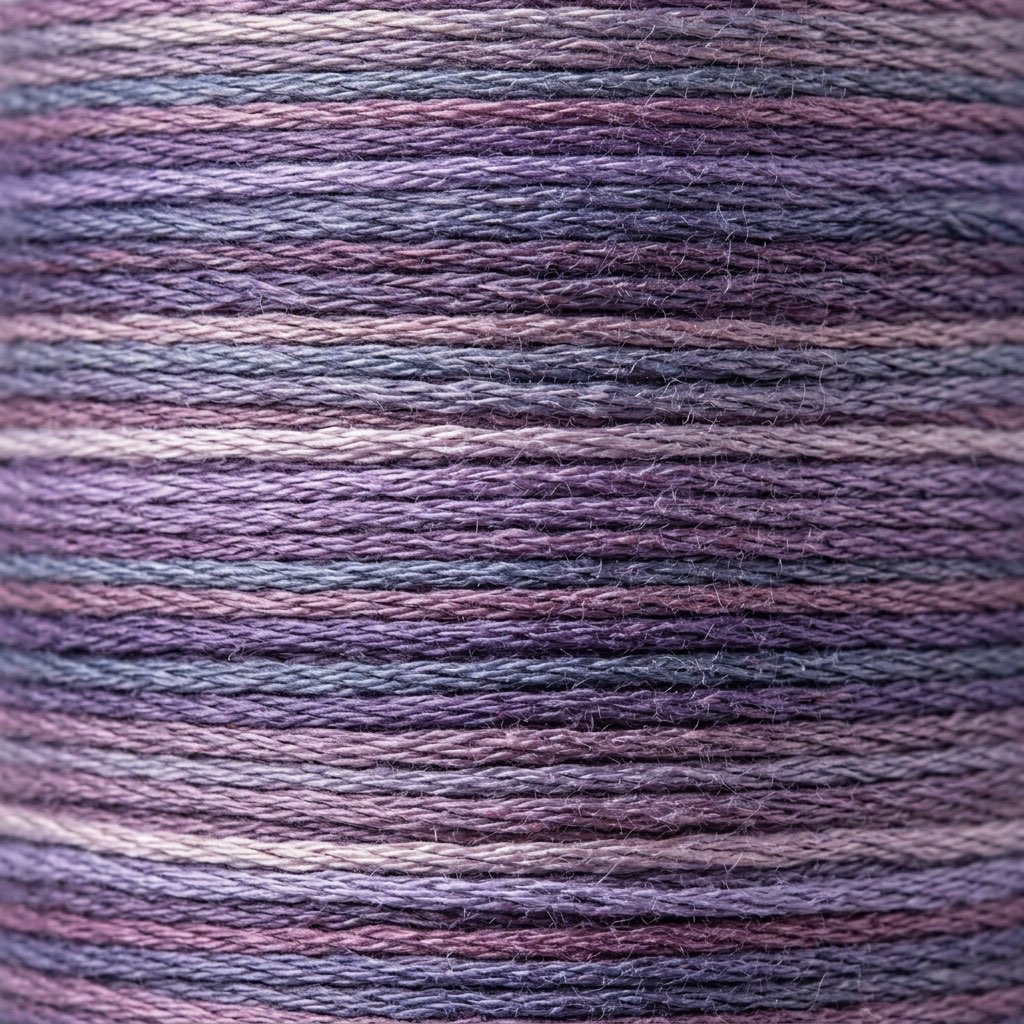
There is a ten-minute window every evening when the sky does something extraordinary. The sun has dropped below the horizon, the last orange and pink have faded from the west, and what remains is a wash of color that is neither blue nor purple but both simultaneously — the purple hour, photographers call it, or the blue hour if they lean toward the cooler end. DMC 118 Variegated Blue Violet lives in exactly that moment. Its color range, shifting through medium blue-violets and deeper purple tones around a midpoint of #9080B8, captures the transitional quality of twilight with uncanny accuracy.
What makes this thread distinctive among DMC's variegated purples is its comparative warmth within the blue-violet range. It is bluer than DMC 108 (Variegated Lavender) but warmer than DMC 104 (Variegated Lavender Blue), occupying a middle ground that avoids the coldness some blue-violets can take on. The result is a thread that reads as atmospheric rather than clinical — the purple of a real sky rather than the purple of a color chart.
Stained Glass and the Case for Variegated Filling
Cross-stitch patterns based on stained glass windows are perennial favorites, and DMC 118 makes a strong case for itself in these designs. Real stained glass is rarely uniform in color — the handmade glass sheets used in medieval and Renaissance windows contain streaks, bubbles, and variations in thickness that cause the transmitted light to shift in value across each pane. A solid thread fills a stained glass section cleanly, but 118 fills it with the kind of internal variation that makes stitched stained glass look genuinely luminous rather than simply colored.
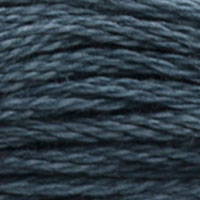
For stained glass designs, the key pairing partners are the thread colors used for the leading — the dark lines that separate the colored panes. DMC 310 (Black) is the traditional choice and creates the sharpest contrast. But for a more period-appropriate look, DMC 3799 (Very Dark Pewter Gray) softens the leading slightly and feels more authentic to aged lead came. Against either dark outline, 118's blue-violet variegation catches the eye the way real glass catches light: imperfectly, beautifully, alive.
Building Twilight Scenes
If you are stitching a twilight landscape, DMC 118 can serve as the transition zone between the deeper blues of the upper sky and the warmer tones near the horizon. Place DMC 3838 (Dark Lavender Blue) or DMC 791 (Very Dark Cornflower Blue) above, blend into 118 through the middle sky, and transition to DMC 3042 (Light Antique Violet) or DMC 3743 (Very Light Antique Violet) near the horizon where the light lingers. The variegation in 118 disguises the boundary between sky zones, creating a gradient effect that avoids the hard banding that can make cross-stitch skies look striped rather than atmospheric.
This thread also excels in water reflection scenes. Twilight reflected in calm water displays exactly the same blue-violet ambiguity as the sky itself, but with additional value variation from ripples and surface movement. Using 118 for the water surface — particularly in horizontal rows stitched with the Danish method to create visible banding — suggests gentle wave motion. Alternate with shorter runs of DMC 156 (Medium Light Blue Violet) for lighter ripple highlights and DMC 3746 (Dark Blue Violet) for deeper shadow troughs to complete the effect.
For the practical-minded: 118 requires the same careful tension management as any variegated thread. Inconsistent tension creates uneven stitch sizes, which are more visible with variegated threads because the color shifts highlight any variation in coverage. Keep your tension steady, railroad your stitches when using two strands to keep them from twisting, and your crosses will display the color transitions cleanly rather than in a tangled muddle.
Finding Another Twilight Thread
Anchor 110 is listed as a close match, but note that this same Anchor number also appears as a match for DMC 112 (Variegated Wildflowers). If your pattern calls for both DMC 112 and DMC 118, converting to Anchor creates a collision — two different DMC threads mapped to one Anchor number. In that case, you will need to substitute one of them with a different Anchor shade. Anchor 110 is closer in character to 118 than to 112, so keep 110 for the 118 conversion and find an alternative for 112.
Madeira 0910 is a close match that shares the same mapping overlap issue — it is also listed for DMC 112. Madeira's version has a slightly more saturated quality that can enhance the twilight character of the thread. For designs where 118 is used atmospherically in sky or water areas, the extra saturation may actually improve the result.
Cosmo 2626 offers a close match without the overlap problem. Cosmo variegated threads handle transitions smoothly, and their softer twist can produce a more blended look on the fabric surface. For impressionistic designs — landscapes, watercolor-style florals — this gentler transition may be an advantage.
To approximate with solids, DMC 155 (Medium Blue Violet) captures the thread's midpoint well. Blending one strand of DMC 155 with one strand of DMC 3746 (Dark Blue Violet) gives a heathered blue-violet that carries some visual texture, though without the true value-shifting quality of variegation. For sky backgrounds where 118 would be used as a wash, consider alternating rows between DMC 340 (Medium Blue Violet) and DMC 155 to create manual value variation that echoes the variegated effect.
Reference quality
How We Validate This Color Record
Use this page as a reference card for DMC 118: the structured data, quick conversions, and long-form copy are all tied back to the same stored color record.
- Methodology
- This page renders DMC 118, its hex value, and every brand equivalent from the site's source-of-truth color record, then checks long-form body copy against those same stored fields.
- Verification status
- Source-field checked. The page content is audited against the stored DMC number, brand equivalents, and match-quality labels before publishing.
- Last reviewed
- 2026-04-20
- Approximation warning
- Screen hex values, thread photos, and cross-brand conversions are reference aids. Dye lots, thread sheen, and fabric color can still shift the result in hand.
Decision guide
When to use the DMC 118 reference page
This page should help you decide faster between palette planning, brand substitution, and shade comparison without turning the color record into a thin lookup page.
Best for
- + Palette planning when you want the stored DMC 118 Variegated Blue Violet record, hex value #9080B8, and linked brand equivalents in one place.
- + Checking the quickest cross-brand shortlist before you buy floss, compare stash substitutes, or route into a more specific conversion page.
- + Finding nearby shades in the purples family before you commit to accents, shading, or background blends.
Watch for
- ! Screen previews are only reference aids. Variegated Blue Violet can shift on real fabric because thread sheen, stitch coverage, and room lighting change how the color reads.
- ! A stored equivalent is still a shortlist, not a guarantee that two brands will disappear into each other in the same stitched motif.
- ! Older charts, discontinued kit floss, and dye-lot variation can all introduce small but visible differences that the page cannot detect for you.
Before you commit
- Confirm the role of DMC 118 Variegated Blue Violet: decide whether you need an exact hero shade, a forgiving background, or a rough stash substitute.
- Compare on project fabric: view the skein or stitched sample on the same fabric count and color you will actually use.
- Use the linked conversion pages next: open the brand-specific pages when you need match-quality caveats before substituting away from the DMC reference.
DMC 118 FAQ
These questions appear on the page so the FAQ schema stays aligned with what visitors can actually read.
What is the Anchor equivalent of DMC 118?+
The closest Anchor equivalent to DMC 118 (Variegated Blue Violet) is Anchor 110. This is a close match.
What color is DMC 118?+
DMC 118 is called "Variegated Blue Violet" and has a hex color value of #9080B8. It belongs to the purples color family.
What is the Madeira equivalent of DMC 118?+
The closest Madeira equivalent to DMC 118 (Variegated Blue Violet) is Madeira 0910. This is a close match.
How DMC 118 Looks on Fabric
The same thread appears different depending on your fabric. Always test on your project fabric.
White Aida
Cream / Ecru
Black Aida
Pairs Well With
DMC colors commonly used alongside 118 Variegated Blue Violet.
Suggested Palette
Detailed Conversions
Where to Buy DMC 118
This section contains affiliate links. We may earn a small commission at no cost to you.
Related Guides
Free Printable Thread Conversion Chart
Pick a brand, enter your email, and we'll send you a printable chart mapping all 552 DMC colors to that brand's equivalents. Zero spam, one chart.
Thanks! Here's your free chart:
Download Your ChartOpens in a new tab. Use your browser's Print → Save as PDF.
No spam. Your email is stored securely and never shared.