
DMC 112 — Variegated Wildflowers
Purples family · Hex #8878B8
Quick Conversion Table
| Brand | Equivalent | Match |
|---|---|---|
| Anchor | 110 | close |
| Madeira | 0910 | close |
| Cosmo ⚠ | 2586 | close |
| Sullivans | 45423 | close |
A Name That Tells You Exactly Where It Belongs
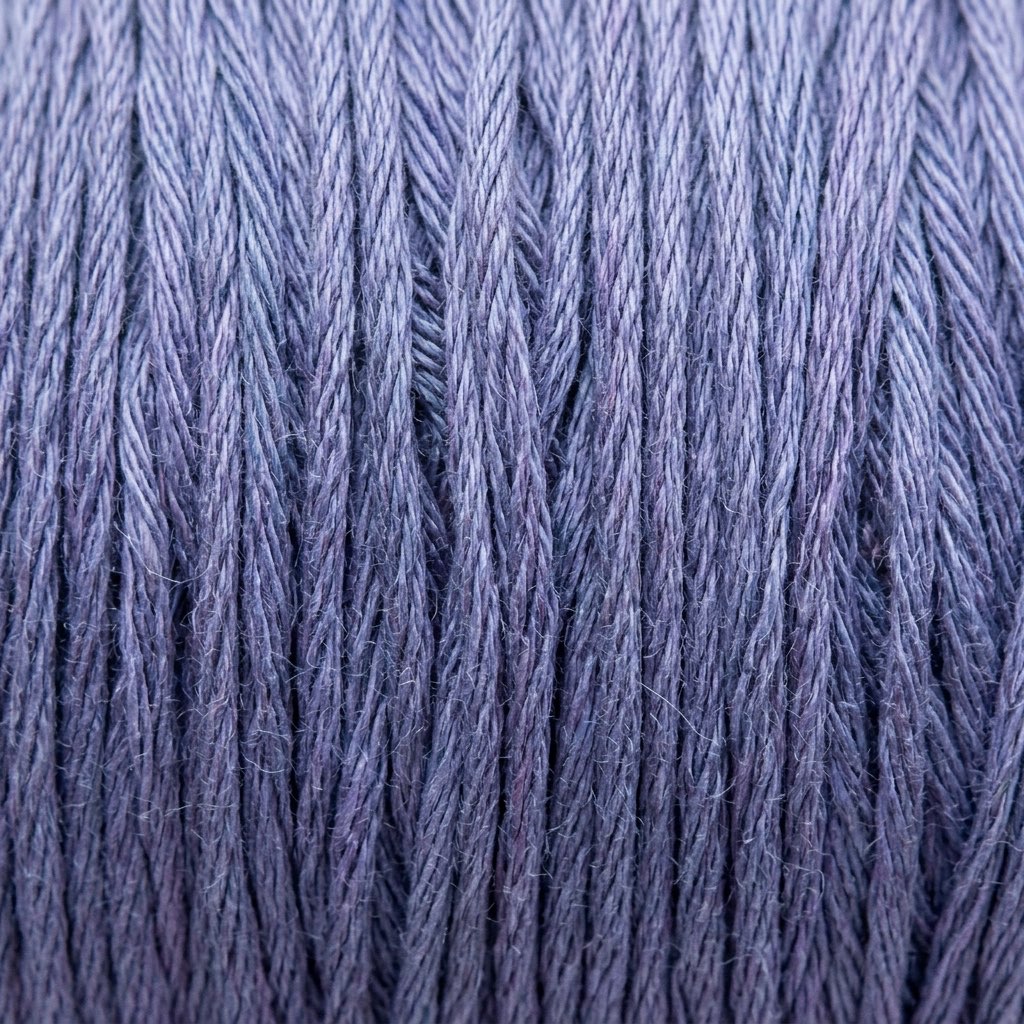
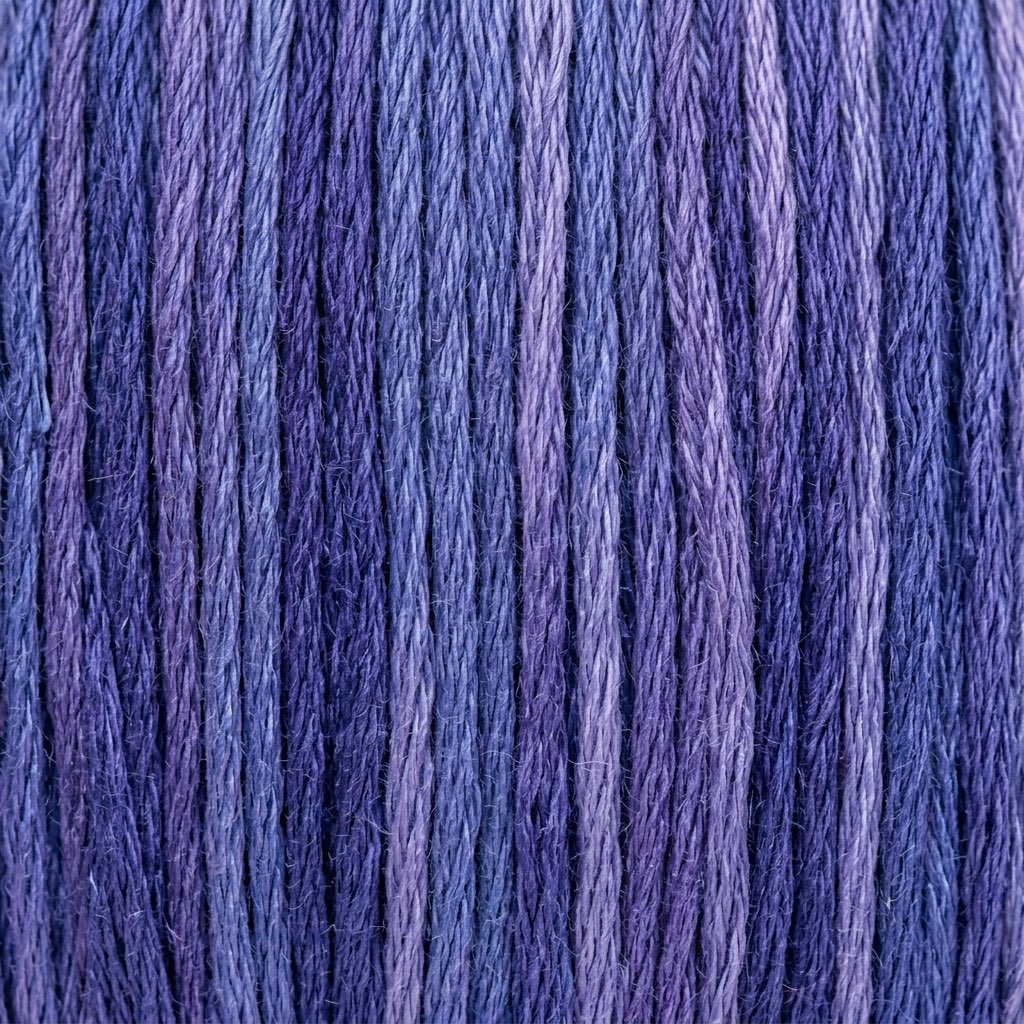
DMC named this thread Variegated Wildflowers, and for once, the marketing department got it exactly right. The color range this thread moves through — from a deeper blue-violet through a medium purple to a lighter, almost periwinkle tone — maps precisely onto the palette you see in a wildflower meadow where purple prevails. Bellflowers, wild hyacinths, cranesbill geraniums, and meadow sage all occupy this family of blues and violets that shift and intermingle when you see them massed together. A solid thread gives you one of those flowers. DMC 112 gives you the whole meadow.
The hex midpoint #8878B8 reads as a medium blue-violet with slightly cool undertones, placing 112 firmly in the blue-leaning quadrant of the purple spectrum. Compared to DMC 108 (Variegated Lavender), which trends warmer and pinker, 112 stays cooler and more assertively violet. This distinction matters when you are choosing between the two for a specific design — if your reference image shows flowers with pink undertones, 108 is your thread. If the flowers lean toward blue-violet, as most true wildflower purples do, 112 is the better call.
Fantasy, Fairy Tales, and the Magic of Shifting Color
Beyond botanicals, DMC 112 has found a devoted following among stitchers working on fantasy and fairy tale designs. Wizard robes, dragon scales, enchanted forests, mystical portals — any element that suggests magical energy benefits from thread that refuses to sit still. A wizard's cloak stitched in a solid purple looks like a costume. The same cloak stitched in 112 looks like something that was woven from twilight itself, the colors shifting as the wizard moves through candlelit corridors.
This is not fanciful thinking — it reflects how our eyes actually process variegated stitching. When each cross in a stitched area is a slightly different value, our visual system interprets it as dimensional, as if the surface is curving or the light is uneven. This is the same principle that makes pointillist paintings work from a distance. DMC 112 exploits this effect naturally, giving flat stitchwork an illusion of depth and movement that solid threads cannot provide without complex shading techniques.
For stitch-along (SAL) mystery projects that ask you to choose your own colorway, 112 is a strong wildcard choice for the primary fill color. It provides visual interest on its own, reduces the number of thread changes needed, and plays well with a wide range of accent colors. Gold metallics (DMC E3852) look stunning against it, as do deep greens like DMC 3345 (Dark Hunter Green) and warm neutrals like DMC 642 (Dark Beige Gray).
Getting the Best from a Wildflower Thread
On 14-count Aida with two strands, 112 produces color transitions that fall every few stitches, creating a natural, meadow-like distribution. On 18-count, each cross uses less thread, so transitions happen slightly less often within the same stitch count — but the smaller scale means the overall effect is subtler, more like a watercolor wash than a patchy field. Both can be effective depending on the design intent.
One technique worth trying: use DMC 112 for the bulk of a purple floral mass, then add specific accents with solid threads to define individual blooms within the mass. A few crosses of DMC 208 (Very Dark Lavender) for shadowed petals and DMC 3747 (Very Light Blue Violet) for highlighted edges will give the composition structure while the variegated fill provides texture and life. This is how watercolor painters work — an overall wash for the mass, then deliberate strokes for specific details — and it translates beautifully to cross stitch.
Backstitching over areas filled with 112 can be tricky. A very dark outline — DMC 550 (Very Dark Violet) or even DMC 310 (Black) — works well to define shapes against the shifting background. But lighter backstitching colors can get lost in the variegation, appearing and disappearing as the fill thread's value shifts. If you need subtle outlining, test it on your actual fabric with your actual thread before committing to the full project. What looks fine in theory can vanish into the color shifts in practice.
Wildflower Colors and the Substitution Question
The name Variegated Wildflowers suggests a certain freedom — wildflowers do not have to match precisely, so perhaps the substitute does not either. There is some truth to this. If you are using 112 as an impressionistic fill for a meadow or garden scene, any variegated thread in the blue-violet range will likely produce a convincing result, even if the specific value range differs from DMC's version.
Anchor 110 is a close match that captures the cool blue-violet character of 112. Anchor's version may transition through its value range at a slightly different rate, which affects banding patterns in larger stitched areas but is unlikely to matter for small motifs or scattered fill sections.
Madeira 0910 offers a close match. Madeira's thread has a slightly silkier quality that can enhance the watercolor effect of the variegation, particularly on evenweave fabrics where the thread lies more smoothly than on the nubby surface of Aida. Cosmo 2586 is another close option, with Cosmo's characteristically soft hand producing slightly flatter stitches that some stitchers prefer for floral work.
If you need to approximate 112's effect with solid threads, the combination of DMC 155 (Medium Blue Violet) and DMC 3746 (Dark Blue Violet) in alternating sections captures the value range, though you will lose the gradual transitions. A blended needle — one strand of each — creates a tweedy compromise that carries some of the visual interest of variegation without the true color-shifting effect. For designs where 112 is used as a background wash, this blended approach may actually be preferable, giving subtle variation without the risk of distracting color banding in large filled areas.
Reference quality
How We Validate This Color Record
Use this page as a reference card for DMC 112: the structured data, quick conversions, and long-form copy are all tied back to the same stored color record.
- Methodology
- This page renders DMC 112, its hex value, and every brand equivalent from the site's source-of-truth color record, then checks long-form body copy against those same stored fields.
- Verification status
- Source-field checked. The page content is audited against the stored DMC number, brand equivalents, and match-quality labels before publishing.
- Last reviewed
- 2026-04-20
- Approximation warning
- Screen hex values, thread photos, and cross-brand conversions are reference aids. Dye lots, thread sheen, and fabric color can still shift the result in hand.
Decision guide
When to use the DMC 112 reference page
This page should help you decide faster between palette planning, brand substitution, and shade comparison without turning the color record into a thin lookup page.
Best for
- + Palette planning when you want the stored DMC 112 Variegated Wildflowers record, hex value #8878B8, and linked brand equivalents in one place.
- + Checking the quickest cross-brand shortlist before you buy floss, compare stash substitutes, or route into a more specific conversion page.
- + Finding nearby shades in the purples family before you commit to accents, shading, or background blends.
Watch for
- ! Screen previews are only reference aids. Variegated Wildflowers can shift on real fabric because thread sheen, stitch coverage, and room lighting change how the color reads.
- ! A stored equivalent is still a shortlist, not a guarantee that two brands will disappear into each other in the same stitched motif.
- ! Older charts, discontinued kit floss, and dye-lot variation can all introduce small but visible differences that the page cannot detect for you.
Before you commit
- Confirm the role of DMC 112 Variegated Wildflowers: decide whether you need an exact hero shade, a forgiving background, or a rough stash substitute.
- Compare on project fabric: view the skein or stitched sample on the same fabric count and color you will actually use.
- Use the linked conversion pages next: open the brand-specific pages when you need match-quality caveats before substituting away from the DMC reference.
DMC 112 FAQ
These questions appear on the page so the FAQ schema stays aligned with what visitors can actually read.
What is the Anchor equivalent of DMC 112?+
The closest Anchor equivalent to DMC 112 (Variegated Wildflowers) is Anchor 110. This is a close match.
What color is DMC 112?+
DMC 112 is called "Variegated Wildflowers" and has a hex color value of #8878B8. It belongs to the purples color family.
What is the Madeira equivalent of DMC 112?+
The closest Madeira equivalent to DMC 112 (Variegated Wildflowers) is Madeira 0910. This is a close match.
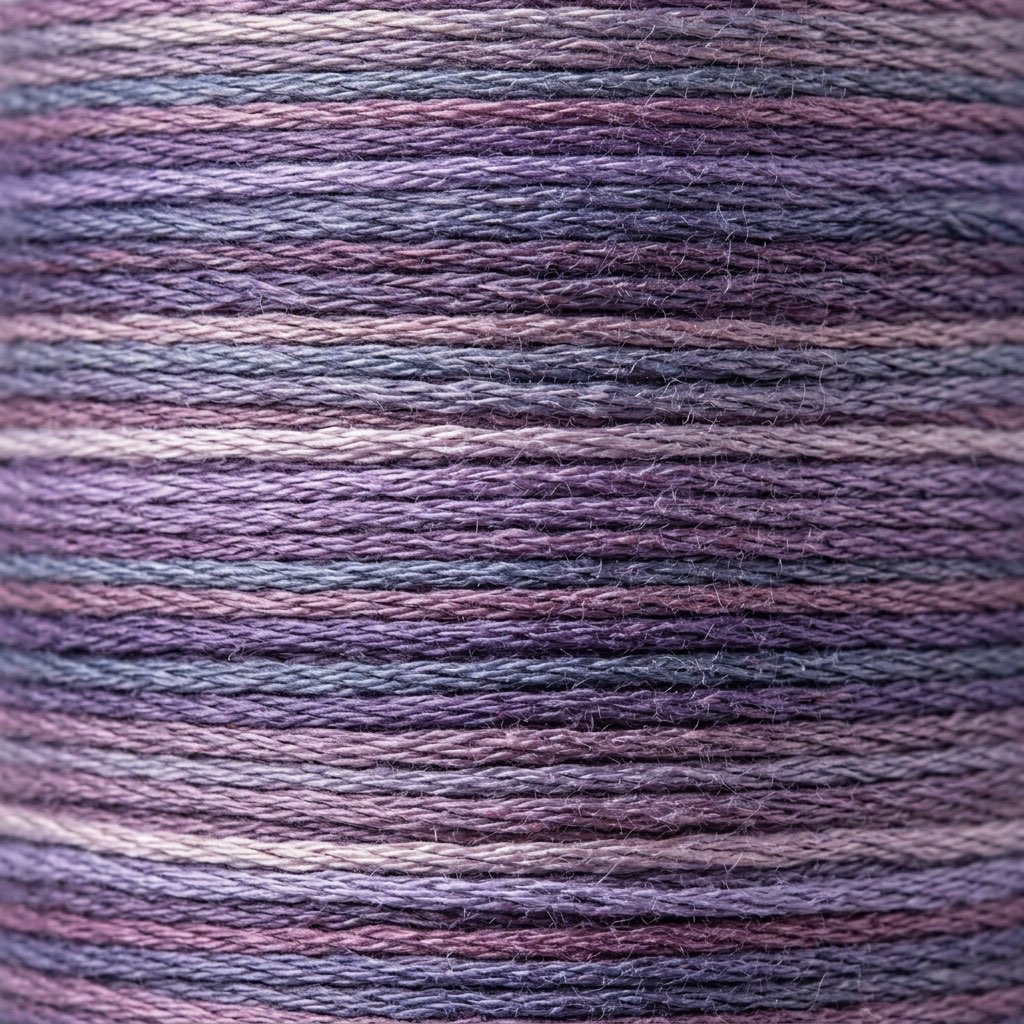
How DMC 112 Looks on Fabric
The same thread appears different depending on your fabric. Always test on your project fabric.
White Aida
Cream / Ecru
Black Aida
Pairs Well With
DMC colors commonly used alongside 112 Variegated Wildflowers.
Suggested Palette
Detailed Conversions
Where to Buy DMC 112
This section contains affiliate links. We may earn a small commission at no cost to you.
Related Guides
Free Printable Thread Conversion Chart
Pick a brand, enter your email, and we'll send you a printable chart mapping all 552 DMC colors to that brand's equivalents. Zero spam, one chart.
Thanks! Here's your free chart:
Download Your ChartOpens in a new tab. Use your browser's Print → Save as PDF.
No spam. Your email is stored securely and never shared.