
Quick Conversion Table
| Brand | Equivalent | Match |
|---|---|---|
| Anchor | 109 | exact |
| Madeira | 0803 | close |
| Cosmo ⚠ | 263 | close |
| Sullivans | 45041 | close |
| J&P Coats | 4302 | close |
| Dimensions | 14302 | close |
| Bucilla | 209 | close |
| Candamar | 6337 | close |
The Wine Pour: Purple at Its Most Sociable
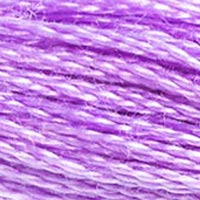
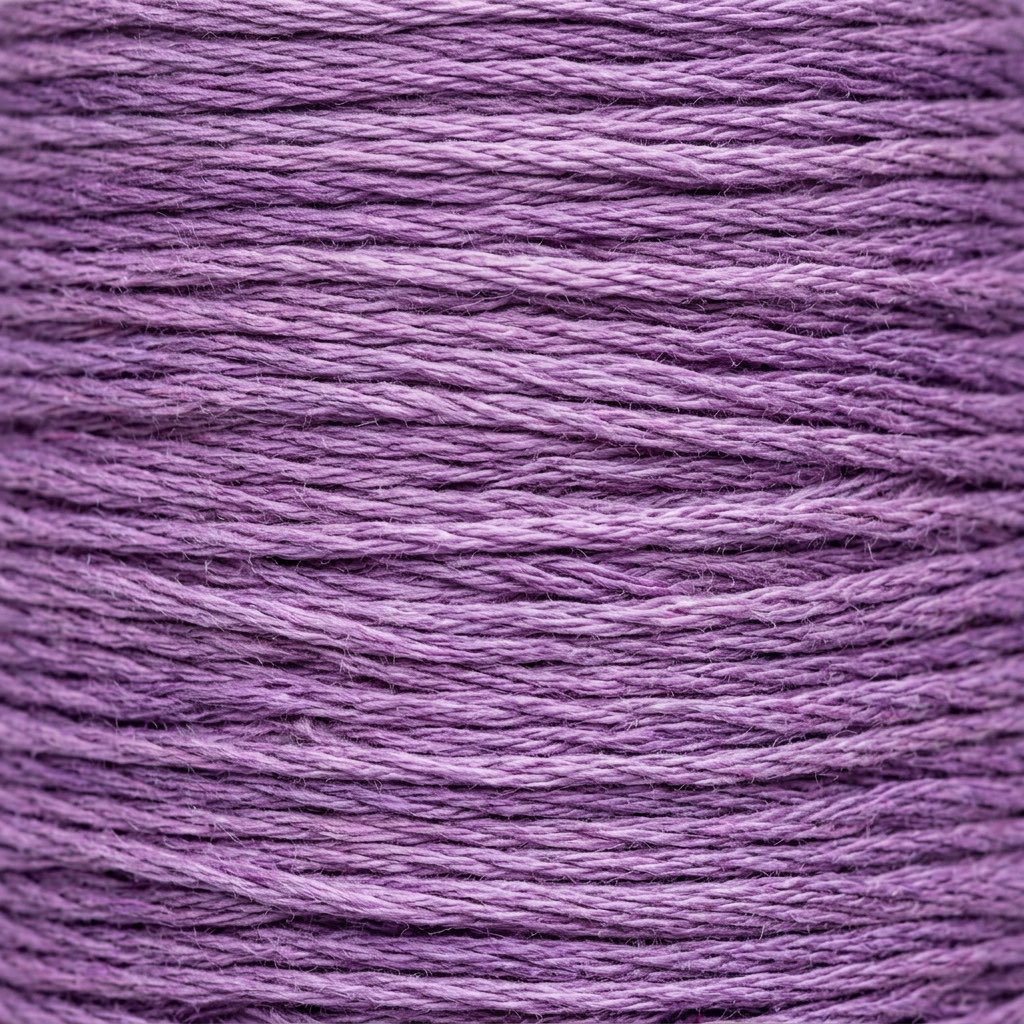
Pour a glass of young Beaujolais and hold it up to a window. That translucent, vibrant purple — not as dark as Cabernet, not as light as rose, but the confident middle ground of a wine that wants to be enjoyed rather than analyzed — that is DMC 209 Dark Lavender. At #A37BA7, it is saturated and warm, with enough red in the mix to evoke grape skins and enough blue to keep it firmly in the purple camp rather than sliding toward magenta.
The wine analogy is not just poetic license. DMC 209 is genuinely one of the most-used threads in wine-themed cross-stitch designs. Wine bottles, filled glasses, grape clusters, vineyard scenes — they all call for exactly this kind of rich, medium-dark purple that reads as luscious rather than somber. Unlike DMC 208 (Very Dark Lavender), which is dark enough to suggest shadow and depth, 209 has the medium value and saturation that suggest the body of the color — the sunlit skin of a grape, the translucent middle of a wine glass where light passes through the liquid, the awning of a Provencal wine bar.
The Second Step in a Four-Part Story
Within the 208-209-210-211 lavender family, DMC 209 serves as the dark-medium transition. It is lighter than the shadow tone (208) but darker than the mid-light body (210), making it the thread that does the most work in creating dimension. In shading terms, 209 covers the areas where light is present but indirect — the sides of rounded objects, the lower petals of flowers, the folds of fabric that catch some ambient light but are not directly illuminated.
This transitional role makes 209 the shade you will use the most thread of in any lavender-shaded project. Shadow areas (208) are typically small, highlights (211) are smaller still, and the mid-light body color (210) covers a moderate area. But the dark-medium zone that 209 occupies is typically the largest area in any shaded object. Buy accordingly — if your pattern calls for one skein each of 208, 210, and 211, you probably need two skeins of 209.
Purple in Portrait Work
DMC 209 has an underappreciated role in portrait stitching. Skin shadows — particularly in fair skin — carry more purple than most people realize. The shadow under a chin, the hollows of eye sockets, the crease beside a nose — these areas are not simply darker versions of the skin tone. They shift toward purple because the blood vessels below the skin surface contribute a violet cast to the shadow color. DMC 209 is too saturated to use straight for skin shadow, but blended one strand of 209 with one strand of a skin tone like DMC 950 (Light Desert Sand) or DMC 3774 (Very Light Desert Sand), and you get a warm shadow that reads as natural and dimensional rather than dirty or muddy.
This is a technique borrowed from oil painting, where portrait artists have been mixing purple into shadow tones for centuries. In cross stitch, the blended needle approach achieves a similar effect — the solid strand provides the base flesh tone while the purple strand shifts the shadow cooler and deeper. The result is significantly more convincing than simply using a darker version of the skin color, which tends to make shadows look like smudges rather than areas of reduced light.
For clothing in portrait pieces, 209 works as a standalone color for garments — a medieval gown, a wizard's robe, a Victorian day dress in fashionable purple. It has enough saturation to look intentionally colored (not faded or aged) and enough warmth to complement flesh tones without creating an uncomfortable temperature clash between skin and fabric. Pair with DMC 208 for the deep folds and DMC 210 for light-catching creases, and you have a three-shade garment that looks genuinely three-dimensional.
A Strong Substitution Position
DMC 209 enjoys exact matches in both Anchor and Madeira, which simplifies cross-brand conversion considerably. Anchor 109 captures the warm, medium-dark lavender accurately, and in side-by-side comparison the two threads are functionally identical in both hue and value. Madeira 0803 is also exact, with Madeira's silkier finish adding a subtle sheen that can enhance the wine-like quality of the color.
Cosmo 263 is a close match. Cosmo's version tends to lie slightly flatter in the stitch, which can affect the depth of the color — flatter stitches expose more thread surface to light, potentially making the purple appear fractionally lighter than DMC's more textured stitch surface. For most practical purposes, this difference is invisible. Sullivans 45041 is close as well, with good coverage at this medium-dark value.
Within the DMC range, the nearest neighbor is DMC 553 (Violet). These two threads are close in value but differ in undertone — 553 is a cleaner, cooler violet while 209 carries the warm, slightly pink lavender quality that defines its family. If your project uses 209 within the 208-211 lavender gradient, substituting 553 will introduce a visible temperature shift that breaks the gradient's cohesion. If 209 is used independently, 553 provides a comparable medium purple that serves similar design functions.
For wine-themed designs specifically, the warm undertone of 209 is part of what makes it convincing as a grape or wine color. A cooler substitute might read as more of a floral violet and less like something you would want to drink. In these thematic contexts, prioritize the cross-brand exact matches over within-DMC alternatives.
Reference quality
How We Validate This Color Record
Use this page as a reference card for DMC 209: the structured data, quick conversions, and long-form copy are all tied back to the same stored color record.
- Methodology
- This page renders DMC 209, its hex value, and every brand equivalent from the site's source-of-truth color record, then checks long-form body copy against those same stored fields.
- Verification status
- Source-field checked. The page content is audited against the stored DMC number, brand equivalents, and match-quality labels before publishing.
- Last reviewed
- 2026-04-20
- Approximation warning
- Screen hex values, thread photos, and cross-brand conversions are reference aids. Dye lots, thread sheen, and fabric color can still shift the result in hand.
Decision guide
When to use the DMC 209 reference page
This page should help you decide faster between palette planning, brand substitution, and shade comparison without turning the color record into a thin lookup page.
Best for
- + Palette planning when you want the stored DMC 209 Dark Lavender record, hex value #A37BA7, and linked brand equivalents in one place.
- + Checking the quickest cross-brand shortlist before you buy floss, compare stash substitutes, or route into a more specific conversion page.
- + Finding nearby shades in the purples family before you commit to accents, shading, or background blends.
Watch for
- ! Screen previews are only reference aids. Dark Lavender can shift on real fabric because thread sheen, stitch coverage, and room lighting change how the color reads.
- ! A stored equivalent is still a shortlist, not a guarantee that two brands will disappear into each other in the same stitched motif.
- ! Older charts, discontinued kit floss, and dye-lot variation can all introduce small but visible differences that the page cannot detect for you.
Before you commit
- Confirm the role of DMC 209 Dark Lavender: decide whether you need an exact hero shade, a forgiving background, or a rough stash substitute.
- Compare on project fabric: view the skein or stitched sample on the same fabric count and color you will actually use.
- Use the linked conversion pages next: open the brand-specific pages when you need match-quality caveats before substituting away from the DMC reference.
DMC 209 FAQ
These questions appear on the page so the FAQ schema stays aligned with what visitors can actually read.
What is the Anchor equivalent of DMC 209?+
The closest Anchor equivalent to DMC 209 (Dark Lavender) is Anchor 109. This is an exact match.
What color is DMC 209?+
DMC 209 is called "Dark Lavender" and has a hex color value of #A37BA7. It belongs to the purples color family.
What is the Madeira equivalent of DMC 209?+
The closest Madeira equivalent to DMC 209 (Dark Lavender) is Madeira 0803. This is a close match.
How DMC 209 Looks on Fabric
The same thread appears different depending on your fabric. Always test on your project fabric.
White Aida
Cream / Ecru
Black Aida
Pairs Well With
DMC colors commonly used alongside 209 Dark Lavender.
Suggested Palette
Shading Companions
Detailed Conversions
Where to Buy DMC 209
This section contains affiliate links. We may earn a small commission at no cost to you.
Related Guides
Free Printable Thread Conversion Chart
Pick a brand, enter your email, and we'll send you a printable chart mapping all 552 DMC colors to that brand's equivalents. Zero spam, one chart.
Thanks! Here's your free chart:
Download Your ChartOpens in a new tab. Use your browser's Print → Save as PDF.
No spam. Your email is stored securely and never shared.