
Quick Conversion Table
| Brand | Equivalent | Match |
|---|---|---|
| Anchor | 4146 | exact |
| Madeira | 2309 | close |
| Cosmo ⚠ | 126 | close |
| Sullivans | 45287 | close |
| J&P Coats | 2331 | close |
| Bucilla | 3950 | close |
| Candamar | 6102 | close |
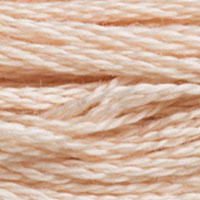
Fabric interacts with its own ground color in ways that most stitchers only start thinking about after they've frogged a section that looked wrong and couldn't immediately say why. DMC 950 Light Desert Sand is one of those colors where the relationship between thread and fabric ground is especially worth understanding. On white 14-count Aida, it reads as a warm, light tan. On natural or antique-white linen, it barely separates from the background at all — the thread and fabric merge into a single warm-neutral zone that can either be exactly what you want (for subtle, blended background work) or a frustrating disappearing act.
This isn't a criticism of DMC 950 — it's an observation about how to use it effectively. For stitchers who work on lighter evenweave or natural linen, understanding that 950 functions differently on warm-toned grounds changes how you plan designs that use it.
The Skin Tone Role
DMC 950 is probably most commonly bought for skin tone work, and with good reason. In the warm-light skin palette range, 950 sits in an important midtone position — lighter than DMC 945 (Tawny), darker than DMC 951 (Light Tawny), with a slightly more neutral warmth than either of those slightly more orange-toned neighbors. That neutral quality makes 950 particularly useful for transitions: it bridges more saturated warm tones below it and the near-white values above it without introducing a jarring undertone shift.
For medium-light complexion palettes, a common progression runs: DMC 3826 (Golden Brown) for the warmest shadows, DMC 945 (Tawny) as the lower midtone, DMC 950 (Light Desert Sand) as the upper midtone, and DMC 951 (Light Tawny) for the lighter areas. The sequence feels smooth and convincing because each step shares enough warmth with its neighbors to transition naturally.
Desert, Architecture, and Natural Materials
The name is telling: desert sand. Specifically, the color of sun-warmed sandstone, adobe walls, desert clay, and pale wood in dry climates. This makes 950 genuinely useful beyond just skin tones — it appears in architectural subjects (sandstone columns, terracotta building details, historical ruin scenes), in desert landscape designs (sand dunes, rocky outcroppings), and in depictions of natural materials like burlap, unbleached linen, raw leather, and aged parchment.
In sampler and historical reproduction work, DMC 950 often handles backgrounds and negative-space areas where the design calls for a warm, slightly aged quality without using deep color. It's the thread equivalent of an antique white — present enough to read as color, neutral enough not to compete.
Companion colors from across the palette that pair naturally with 950: DMC 739 (Ultra Very Light Tan) for a lighter, slightly yellow-warm version of the same neutrality; DMC 3033 (Very Light Mocha Brown) for a slightly darker, cooler alternative; and DMC 3779 (Ultra Very Light Terra Cotta) for when you need a warm light tone with a touch more pink. All of these occupy adjacent territory to 950 and share its character as fundamentally neutral-warm rather than clearly brown or clearly orange.
Anchor 4146 is an exact match for DMC 950, and this is one of the conversions that stitchers consistently trust for portrait and skin-tone work. The hue is very closely matched, which matters significantly for this color family where slight shifts in undertone are visible in complex complexion progressions. If you switch mid-project from DMC 950 to Anchor 4146 you're unlikely to see a problematic difference.
Madeira 2309 is also exact and offers Madeira's characteristic slight sheen. In skin tone work, some stitchers find this sheen works against them (skin should look matte in most cross-stitch interpretations) while others find it adds a healthy luminosity. It's a matter of personal preference and design style.
Cosmo 126 is close. The color family is right but Cosmo's version may read slightly warmer in undertone — more clearly peach rather than the more neutral sand of DMC 950. For skin tone progressions where 950's neutrality is specifically what you need, test before substituting.
Sullivans 45287 is listed as close. For casual projects where precise color matching isn't critical, this should be perfectly serviceable. For portrait work or any project where 950's specific neutral-warm quality is load-bearing, confirm with a test skein.
- Never substitute a cooler-toned light tan for DMC 950 in skin tone work — the undertone shift will make the skin area read as gray or ashy, particularly in lighter complexion palettes.
- On natural linen, consider jumping to DMC 951 (Light Tawny) or even DMC 945 (Tawny) as your lightest skin tone, since 950 may not read distinctly enough against the warm ground.
Reference quality
How We Validate This Color Record
Use this page as a reference card for DMC 950: the structured data, quick conversions, and long-form copy are all tied back to the same stored color record.
- Methodology
- This page renders DMC 950, its hex value, and every brand equivalent from the site's source-of-truth color record, then checks long-form body copy against those same stored fields.
- Verification status
- Source-field checked. The page content is audited against the stored DMC number, brand equivalents, and match-quality labels before publishing.
- Last reviewed
- 2026-04-20
- Approximation warning
- Screen hex values, thread photos, and cross-brand conversions are reference aids. Dye lots, thread sheen, and fabric color can still shift the result in hand.
Decision guide
When to use the DMC 950 reference page
This page should help you decide faster between palette planning, brand substitution, and shade comparison without turning the color record into a thin lookup page.
Best for
- + Palette planning when you want the stored DMC 950 Light Desert Sand record, hex value #EED3C4, and linked brand equivalents in one place.
- + Checking the quickest cross-brand shortlist before you buy floss, compare stash substitutes, or route into a more specific conversion page.
- + Finding nearby shades in the browns family before you commit to accents, shading, or background blends.
Watch for
- ! Screen previews are only reference aids. Light Desert Sand can shift on real fabric because thread sheen, stitch coverage, and room lighting change how the color reads.
- ! A stored equivalent is still a shortlist, not a guarantee that two brands will disappear into each other in the same stitched motif.
- ! Older charts, discontinued kit floss, and dye-lot variation can all introduce small but visible differences that the page cannot detect for you.
Before you commit
- Confirm the role of DMC 950 Light Desert Sand: decide whether you need an exact hero shade, a forgiving background, or a rough stash substitute.
- Compare on project fabric: view the skein or stitched sample on the same fabric count and color you will actually use.
- Use the linked conversion pages next: open the brand-specific pages when you need match-quality caveats before substituting away from the DMC reference.
DMC 950 FAQ
These questions appear on the page so the FAQ schema stays aligned with what visitors can actually read.
What is the Anchor equivalent of DMC 950?+
The closest Anchor equivalent to DMC 950 (Light Desert Sand) is Anchor 4146. This is an exact match.
What color is DMC 950?+
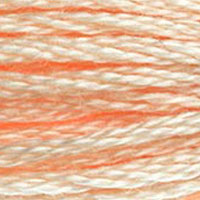
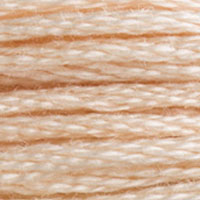
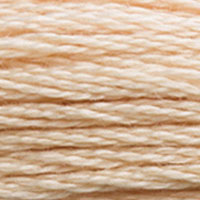
DMC 950 is called "Light Desert Sand" and has a hex color value of #EED3C4. It belongs to the browns color family.
What is the Madeira equivalent of DMC 950?+
The closest Madeira equivalent to DMC 950 (Light Desert Sand) is Madeira 2309. This is a close match.
How DMC 950 Looks on Fabric
The same thread appears different depending on your fabric. Always test on your project fabric.
White Aida
Cream / Ecru
Black Aida
Pairs Well With
DMC colors commonly used alongside 950 Light Desert Sand.
Suggested Palette
Shading Companions
Detailed Conversions
Where to Buy DMC 950
This section contains affiliate links. We may earn a small commission at no cost to you.
Related Guides
Free Printable Thread Conversion Chart
Pick a brand, enter your email, and we'll send you a printable chart mapping all 552 DMC colors to that brand's equivalents. Zero spam, one chart.
Thanks! Here's your free chart:
Download Your ChartOpens in a new tab. Use your browser's Print → Save as PDF.
No spam. Your email is stored securely and never shared.