
Quick Conversion Table
| Brand | Equivalent | Match |
|---|---|---|
| Anchor | 1012 | exact |
| Madeira | 0305 | close |
| Cosmo ⚠ | 341 | close |
| Sullivans | 45189 | close |
| J&P Coats | 2331 | close |
| Dimensions | 6754 | close |
| Bucilla | 754 | close |
| Candamar | 6175 | close |
Skin tones in cross-stitch are one of the craft's genuinely difficult challenges — too pink and faces look flushed, too beige and they look pallid, too orange and you're in uncanny valley territory. DMC 754 Light Peach has earned its reputation as a reliable starting point for fair to medium skin tones precisely because its balance of warmth and softness reads as natural under a wide range of lighting conditions.
The Skin Tone Building Block
Most cross-stitch patterns that include human figures will specify 754 or a near neighbor for the base skin tone in lighter complexion ranges. The peach family — DMC 353 (Peach), DMC 352 (Coral), and the lighter 754 — provides the warm, pinkish-tan tones that read as fair skin in stitched form. DMC 754 specifically sits at the lighter end: pale enough to serve as the highlight on cheeks or brow, warm enough to read as skin rather than pink.
For multi-value skin shading in portrait or figure work, 754 typically occupies the lighter value position, with DMC 758 (Very Light Terra Cotta) or DMC 353 (Peach) stepping in for shadow areas. The contrast between 754 and 758 is subtle enough that the transition looks smooth, but distinct enough to create convincing facial modeling even at small scales. On 18-count Aida or 28-count evenweave over-two, where individual stitches are small enough to blend visually, this kind of close-value skin work produces remarkably realistic results.
Peach Florals: The Design Counterpart
Beyond skin work, DMC 754 appears extensively in peach-colored flower designs. Peach roses, blush peonies, apricot dahlias, and soft pink-orange tulips all benefit from 754 as a highlight or lighter petal value. The warmth keeps these flowers from looking coolly pink, while the lightness provides the brightness needed for petal edges and lit surfaces.
In a peach rose gradient, a typical sequence might run from DMC 948 (Very Light Peach) through 754, then into DMC 353 (Peach), and down to DMC 352 (Coral) for the deepest petal folds. This four-value gradient produces a convincing sense of depth in rose designs from simple motifs to large botanical panels. Adding DMC 351 (Coral) for the very deepest shadows extends the range further if the design calls for high contrast.
Seasonal Use: Spring and Baby Themes
Light Peach is a staple color in spring-themed and baby-themed cross-stitch. Birth samplers, baby shower gifts, and nursery pieces regularly include DMC 754 in their palettes alongside other pastels — DMC 3756 (Ultra Very Light Baby Blue), DMC 3761 (Light Sky Blue), and DMC 776 (Medium Pink) form a classic gender-neutral pastel palette when combined with 754's soft warmth.
Easter designs with chick motifs sometimes use 754 for the beak and leg areas. Bunny ears and light-colored rabbit fur also commonly reach for 754 as a warm, light fill. The color reads as soft and domestic — comforting associations that make it almost inevitable in any work meant to convey gentleness and welcome.
Photography and Finishing Considerations
Light peach threads photograph particularly sensitively — camera white balance and lighting temperature can shift them toward pink or toward cream, sometimes in ways that don't match how the piece looks in person. If you're photographing work that relies on 754 for skin tones and the results look off, adjusting the white balance toward daylight (cooler) settings usually helps the peach read more accurately. LED lighting in particular can push warm colors toward orange in photographs.
Both Anchor 1012 and Madeira 0305 are exact-rated equivalencies for DMC 754, and both perform reliably in practice — if you need to switch brands for this color, either is a safe choice. Cosmo 341 and Sullivans 45189 are close-rated; Cosmo 341 may read slightly more coral in some batches, while Sullivans 45189 is typically a good warm peach equivalent.
Within the DMC range, DMC 948 (Very Light Peach) is one step lighter and cooler — useful as a substitute if you need 754 to function as a highlight in a design where it currently sits in the mid-value range. DMC 353 (Peach) is the step deeper and more saturated, suitable as a substitute in shaded or shadow areas.
For skin tone work specifically, if you find DMC 754 reading too pink in your specific design and lighting context, DMC 3774 (Very Light Desert Sand) offers a similar light value with less pink and more beige — some stitchers prefer the 3774 family for skin tones that need to look more tan or less flushed. The choice between 754 and its desert sand neighbors is genuinely context-dependent and worth testing on a fabric scrap before committing to a large area.
Reference quality
How We Validate This Color Record
Use this page as a reference card for DMC 754: the structured data, quick conversions, and long-form copy are all tied back to the same stored color record.
- Methodology
- This page renders DMC 754, its hex value, and every brand equivalent from the site's source-of-truth color record, then checks long-form body copy against those same stored fields.
- Verification status
- Source-field checked. The page content is audited against the stored DMC number, brand equivalents, and match-quality labels before publishing.
- Last reviewed
- 2026-04-20
- Approximation warning
- Screen hex values, thread photos, and cross-brand conversions are reference aids. Dye lots, thread sheen, and fabric color can still shift the result in hand.
Decision guide
When to use the DMC 754 reference page
This page should help you decide faster between palette planning, brand substitution, and shade comparison without turning the color record into a thin lookup page.
Best for
- + Palette planning when you want the stored DMC 754 Light Peach record, hex value #F7CBBF, and linked brand equivalents in one place.
- + Checking the quickest cross-brand shortlist before you buy floss, compare stash substitutes, or route into a more specific conversion page.
- + Finding nearby shades in the pinks family before you commit to accents, shading, or background blends.
Watch for
- ! Screen previews are only reference aids. Light Peach can shift on real fabric because thread sheen, stitch coverage, and room lighting change how the color reads.
- ! A stored equivalent is still a shortlist, not a guarantee that two brands will disappear into each other in the same stitched motif.
- ! Older charts, discontinued kit floss, and dye-lot variation can all introduce small but visible differences that the page cannot detect for you.
Before you commit
- Confirm the role of DMC 754 Light Peach: decide whether you need an exact hero shade, a forgiving background, or a rough stash substitute.
- Compare on project fabric: view the skein or stitched sample on the same fabric count and color you will actually use.
- Use the linked conversion pages next: open the brand-specific pages when you need match-quality caveats before substituting away from the DMC reference.
DMC 754 FAQ
These questions appear on the page so the FAQ schema stays aligned with what visitors can actually read.
What is the Anchor equivalent of DMC 754?+
The closest Anchor equivalent to DMC 754 (Light Peach) is Anchor 1012. This is an exact match.
What color is DMC 754?+
DMC 754 is called "Light Peach" and has a hex color value of #F7CBBF. It belongs to the pinks color family.
What is the Madeira equivalent of DMC 754?+
The closest Madeira equivalent to DMC 754 (Light Peach) is Madeira 0305. This is a close match.
How DMC 754 Looks on Fabric
The same thread appears different depending on your fabric. Always test on your project fabric.
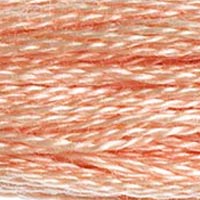
White Aida
Cream / Ecru
Black Aida
Pairs Well With
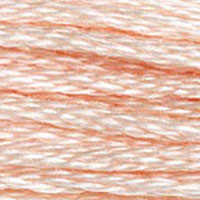
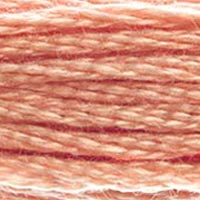
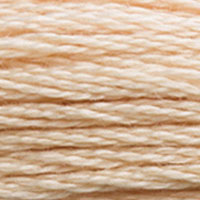
DMC colors commonly used alongside 754 Light Peach.
Light Skin Tones
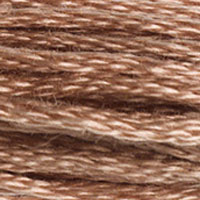

Shading Companions
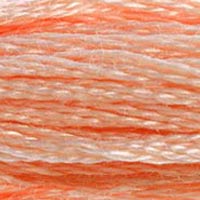
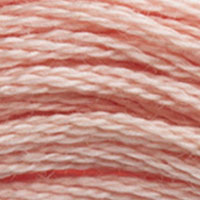
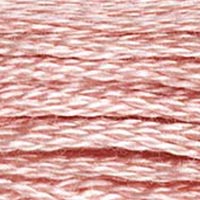
Detailed Conversions
Where to Buy DMC 754
This section contains affiliate links. We may earn a small commission at no cost to you.
Related Guides
Free Printable Thread Conversion Chart
Pick a brand, enter your email, and we'll send you a printable chart mapping all 552 DMC colors to that brand's equivalents. Zero spam, one chart.
Thanks! Here's your free chart:
Download Your ChartOpens in a new tab. Use your browser's Print → Save as PDF.
No spam. Your email is stored securely and never shared.