
DMC 869 — Very Dark Hazelnut Brown
Browns family · Hex #835E39
Quick Conversion Table
| Brand | Equivalent | Match |
|---|---|---|
| Anchor | 375 | exact |
| Madeira | 2113 | close |
| Cosmo ⚠ | 575 | close |
| Sullivans | 45242 | close |
| J&P Coats | 5374 | close |
| Bucilla | 869 | close |
| Candamar | 6093 | close |
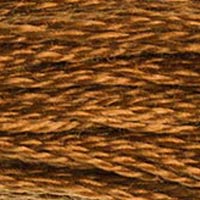
Crack open a hazelnut and examine the color of the shell at its darkest point — the deep, warm brown that's redder than walnut and richer than simple dark brown. That's the reference point for DMC 869, Very Dark Hazelnut Brown at hex #835E39. It's a brown with genuine warmth and a hint of orange in its depths, more complex and characterful than neutral dark brown, warm enough to feel alive rather than simply dark. This is one of those colors that earns its specific name rather than just being filed under "dark brown."
Hazelnut Versus Other Dark Browns
The DMC brown families offer multiple dark-brown options, and understanding how they differ from 869 helps clarify where each belongs. DMC 838 (Very Dark Beige Brown) is darker and more neutral-beige in character — earthier and less warm. DMC 3371 (Black Brown) is near-black and extremely dark, nearly beyond the brown family into near-neutral. DMC 433 (Medium Brown) is actually lighter than 869 but sits in a similarly warm territory. DMC 869's distinctive quality is its specific combination of darkness and red-orange warmth — it reads as a medium-dark warm brown rather than a deep earthy brown or near-black brown.
This specific character makes 869 particularly valuable for subjects where warmth is intrinsic to the color's identity: wood grain with red undertones, autumn leaves in their most saturated state, certain animal fur colors, and any subject referencing red-brown materials like mahogany, redwood, or cinnamon.
Autumn Foliage and Woodland Subjects
Autumn cross-stitch — leaves, berries, seasonal botanical designs — frequently reaches for 869 when the design needs the deepest, most saturated warm-brown moment. A red-turning maple leaf in cross-stitch might use DMC 817 (Very Dark Coral Red) or DMC 349 (Dark Coral) for the fully red portions, but the brownish-red of the leaf's most aged or shadowed areas corresponds closely to 869. The color bridges the gap between red-orange and brown that represents the transition state of autumn leaves.
Acorns, chestnuts, and other seed cases that appear in autumn botanical designs use 869 for their body color — the specific warm brown of a perfectly mature acorn cap or chestnut shell. These natural forms appear in seasonal sampler borders, cottage-style designs, and forest-themed pieces constantly, and 869's specific hazelnut warmth is usually correct where a more generic dark brown would look flat.
Wood Grain and Rustic Textures
Cherry wood, mahogany, and red-toned walnut have a warmth in their darker grain areas that 869 captures. For cross-stitch designs featuring antique furniture, wooden picture frames, or rustic country subjects, 869 provides the warm, red-brown shadow tone that reads as the specific character of warm-toned wood rather than generic brown. Combined with DMC 840 (Medium Beige Brown) or DMC 839 (Dark Beige Brown) for the more neutral wood areas, 869 accents the warmest, most characterful parts of the wood rendering.
For stitchers working on pieces that include tree bark — oak, cherry, pine in their more orange-brown forms — 869 handles the darker warm bark zones while leaving the cooler or lighter bark areas to other brown family members. The result is bark texture that reads as genuinely natural and varied rather than uniformly brown.
Anchor 375 earns an exact match — one of the more useful exact matches in the brown family, as warm browns with specific orange-red character are among the harder shades to approximate across brands. Madeira 2113 earns a close rating; Madeira's warm-brown equivalents in this range sometimes read slightly different in orange-red content, which affects how hazelnut-versus-generic-dark-brown the color appears.
Cosmo 575 and Sullivans 45242 are close matches. Cosmo's thread finish gives their warm browns a slightly different visual character — slightly more luminous in person, which can actually enhance the warmth of a hazelnut-type brown. Worth testing in your specific design context before committing to a full substitution.
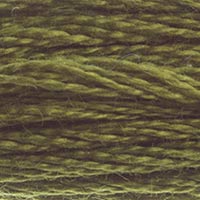
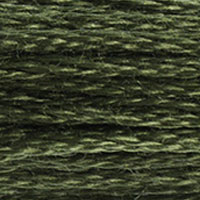
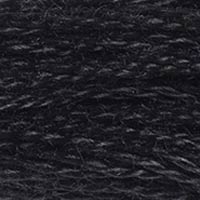
Within DMC, the warm brown zone around 869 is populated by several options, none of which are identical but several of which can substitute depending on what role 869 is playing. DMC 433 (Medium Brown) is warmer and slightly lighter — still in the warm-brown territory but not as dark. DMC 434 (Light Brown) is warmer still and clearly lighter, useful if the design needs the hazelnut character without 869's depth. For designs where 869 functions as a warm dark accent in a beige-brown gradient, DMC 839 (Dark Beige Brown) is cooler but fills a similar role at a similar value.
If the specific orange-red warmth of 869 is important to your design — in autumn leaf work or warm-wood rendering — none of the close substitutes fully replaces it. In those cases, waiting for a restock or ordering online is preferable to substituting with a cooler dark brown that doesn't serve the same design purpose.
Reference quality
How We Validate This Color Record
Use this page as a reference card for DMC 869: the structured data, quick conversions, and long-form copy are all tied back to the same stored color record.
- Methodology
- This page renders DMC 869, its hex value, and every brand equivalent from the site's source-of-truth color record, then checks long-form body copy against those same stored fields.
- Verification status
- Source-field checked. The page content is audited against the stored DMC number, brand equivalents, and match-quality labels before publishing.
- Last reviewed
- 2026-04-20
- Approximation warning
- Screen hex values, thread photos, and cross-brand conversions are reference aids. Dye lots, thread sheen, and fabric color can still shift the result in hand.
Decision guide
When to use the DMC 869 reference page
This page should help you decide faster between palette planning, brand substitution, and shade comparison without turning the color record into a thin lookup page.
Best for
- + Palette planning when you want the stored DMC 869 Very Dark Hazelnut Brown record, hex value #835E39, and linked brand equivalents in one place.
- + Checking the quickest cross-brand shortlist before you buy floss, compare stash substitutes, or route into a more specific conversion page.
- + Finding nearby shades in the browns family before you commit to accents, shading, or background blends.
Watch for
- ! Screen previews are only reference aids. Very Dark Hazelnut Brown can shift on real fabric because thread sheen, stitch coverage, and room lighting change how the color reads.
- ! A stored equivalent is still a shortlist, not a guarantee that two brands will disappear into each other in the same stitched motif.
- ! Older charts, discontinued kit floss, and dye-lot variation can all introduce small but visible differences that the page cannot detect for you.
Before you commit
- Confirm the role of DMC 869 Very Dark Hazelnut Brown: decide whether you need an exact hero shade, a forgiving background, or a rough stash substitute.
- Compare on project fabric: view the skein or stitched sample on the same fabric count and color you will actually use.
- Use the linked conversion pages next: open the brand-specific pages when you need match-quality caveats before substituting away from the DMC reference.
DMC 869 FAQ
These questions appear on the page so the FAQ schema stays aligned with what visitors can actually read.
What is the Anchor equivalent of DMC 869?+
The closest Anchor equivalent to DMC 869 (Very Dark Hazelnut Brown) is Anchor 375. This is an exact match.
What color is DMC 869?+
DMC 869 is called "Very Dark Hazelnut Brown" and has a hex color value of #835E39. It belongs to the browns color family.
What is the Madeira equivalent of DMC 869?+
The closest Madeira equivalent to DMC 869 (Very Dark Hazelnut Brown) is Madeira 2113. This is a close match.
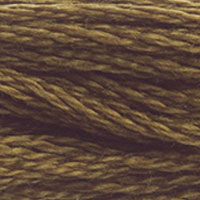
How DMC 869 Looks on Fabric
The same thread appears different depending on your fabric. Always test on your project fabric.
White Aida
Cream / Ecru
Black Aida
Pairs Well With
DMC colors commonly used alongside 869 Very Dark Hazelnut Brown.
Suggested Palette
Shading Companions
Detailed Conversions
Where to Buy DMC 869
This section contains affiliate links. We may earn a small commission at no cost to you.
Related Guides
Free Printable Thread Conversion Chart
Pick a brand, enter your email, and we'll send you a printable chart mapping all 552 DMC colors to that brand's equivalents. Zero spam, one chart.
Thanks! Here's your free chart:
Download Your ChartOpens in a new tab. Use your browser's Print → Save as PDF.
No spam. Your email is stored securely and never shared.