
DMC 632 — Ultra Very Dark Desert Sand
Browns family · Hex #875539
Quick Conversion Table
| Brand | Equivalent | Match |
|---|---|---|
| Anchor | 936 | exact |
| Madeira | 2311 | close |
| Cosmo ⚠ | 427 | close |
| Sullivans | 45147 | close |
| J&P Coats | 5936 | close |
| Dimensions | 15936 | close |
| Bucilla | 632 | close |
| Candamar | 6241 | close |
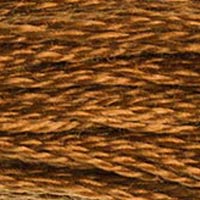
Pull a skein of DMC 632 off the shelf and you might wonder what makes it "desert sand" — it looks more like dark terracotta or dried clay than anything you'd find on a beach. That's the desert part: not ocean shore, but sun-baked earth, adobe walls, the ochre-red soil of canyon country. It's a rich, deep reddish-brown with just enough warmth to glow, and it's one of the most versatile dark skin tones in the entire DMC lineup.
The Skin Tone Workhorse
Portrait embroidery has a shortage of genuinely good dark skin tones at the deeper end of the value range, and DMC 632 fills that gap. It's dark enough to serve as shadow in medium-to-deep complexions, warm enough to avoid the grayness that makes some browns look lifeless on skin, and distinct enough from DMC 300 and DMC 3371 to offer real palette flexibility. In threadpainting and needle painting projects, it often appears alongside DMC 356 Medium Terra Cotta and DMC 407 Medium Desert Sand to build shadow depth in portrait work.
It's equally at home in animal portraits — the deep, reddish-brown fur of foxes, the warm coat of a chestnut horse, the rust-tipped feathers of a hawk. When working over-two on linen, the slight texture of the fabric interacts with 632's richness in a way that reads almost like actual fur or feather texture without any additional technique required.
Architectural and Object Applications
Beyond portraiture, 632 pulls serious weight in architectural and decorative pieces. Aged terracotta pots, brick detail, roof tiles, and earthenware ceramics all benefit from 632's warm-dark presence. In sampler work, it creates a convincing aged-wood effect for furniture, frames, or decorative borders. Pair it with DMC 3826 Golden Brown and DMC 729 Medium Old Gold to build a complete aged-wood palette that reads as genuinely three-dimensional.
Stitchers working historical or vintage reproduction pieces find 632 useful for replicating the look of rust-dyed or madder-dyed cloth, common in period textiles. Its depth means it can hold its own against background fabrics — it doesn't get swallowed by darker linens the way lighter desert sand tones sometimes do.
Technique Considerations
Because 632 is so dark and warm, it can dominate adjacent colors if used without care in shading sequences. When backstitching over lighter areas worked in DMC 407 or DMC 3773 Medium Desert Sand, a single strand of 632 rather than two is often enough — even at full weight it can push the outline too prominently. Some stitchers prefer DMC 3790 Ultra Dark Beige Gray for outlining in portrait work precisely because it's neutral where 632 is warm.
Frogging 632 can be a minor frustration because the dark, richly dyed thread can occasionally leave a ghost of color behind on lighter fabrics, particularly white Aida. Test on a spare corner before committing if you're working on a pale ground. On cream or natural linen, this is rarely an issue.
In terms of stash building, 632 tends to disappear faster than you expect if you work portraiture regularly. Portrait pieces in particular consume dark skin tones at a rate that surprises newcomers — the shadow areas are often larger than they look on the chart. Buying two skeins rather than one when you stock 632 is a reasonable precaution. Dye lot variation in this range is relatively stable, but documenting your lot number is still good practice for large pieces.
Both Anchor 936 and Madeira 2311 earn exact match ratings for DMC 632, which is reassuring — the reddish-brown is apparently distinctive enough that these brands have it well-calibrated. Anchor 936 in particular is frequently cited by stitchers as an excellent swap, with consistent sheen and colorfastness that match DMC's quality at this depth of color.
Cosmo 427 and Sullivans 45147 rate as close. Cosmo 427 leans slightly more orange-red; Sullivans 45147 is marginally cooler and more chocolatey. In skin tone work or detailed shading sequences, those shifts may be noticeable. In rustic or architectural applications where the color reads as "dark warm brown" rather than a precise value, either substitution will serve you well.
Within the DMC range, there's no perfect drop-in replacement for 632 — its specific reddish-terracotta darkness is fairly unique. DMC 300 Very Dark Mahogany goes more red-purple; DMC 3371 Black Brown goes dark almost to the point of reading as near-black. If you're specifically after 632's skin-tone utility, DMC 3858 Medium Rosewood can work for lighter applications, but it won't have the same shadow-weight at standard two-strand coverage.
One additional consideration for portrait stitchers: some patterns that use DMC 632 as a skin tone are designed around a specific fabric color — typically white or cream Aida. If you substitute to a slightly different reddish-brown and then also stitch on a different ground fabric than the designer used, the cumulative effect of two small differences can shift the skin tone reading more than either change would on its own. Testing the substitute on your actual fabric before committing to a full portrait is particularly important with skin tones, where the human eye is especially sensitive to subtle color shifts.
Reference quality
How We Validate This Color Record
Use this page as a reference card for DMC 632: the structured data, quick conversions, and long-form copy are all tied back to the same stored color record.
- Methodology
- This page renders DMC 632, its hex value, and every brand equivalent from the site's source-of-truth color record, then checks long-form body copy against those same stored fields.
- Verification status
- Source-field checked. The page content is audited against the stored DMC number, brand equivalents, and match-quality labels before publishing.
- Last reviewed
- 2026-04-20
- Approximation warning
- Screen hex values, thread photos, and cross-brand conversions are reference aids. Dye lots, thread sheen, and fabric color can still shift the result in hand.
Decision guide
When to use the DMC 632 reference page
This page should help you decide faster between palette planning, brand substitution, and shade comparison without turning the color record into a thin lookup page.
Best for
- + Palette planning when you want the stored DMC 632 Ultra Very Dark Desert Sand record, hex value #875539, and linked brand equivalents in one place.
- + Checking the quickest cross-brand shortlist before you buy floss, compare stash substitutes, or route into a more specific conversion page.
- + Finding nearby shades in the browns family before you commit to accents, shading, or background blends.
Watch for
- ! Screen previews are only reference aids. Ultra Very Dark Desert Sand can shift on real fabric because thread sheen, stitch coverage, and room lighting change how the color reads.
- ! A stored equivalent is still a shortlist, not a guarantee that two brands will disappear into each other in the same stitched motif.
- ! Older charts, discontinued kit floss, and dye-lot variation can all introduce small but visible differences that the page cannot detect for you.
Before you commit
- Confirm the role of DMC 632 Ultra Very Dark Desert Sand: decide whether you need an exact hero shade, a forgiving background, or a rough stash substitute.
- Compare on project fabric: view the skein or stitched sample on the same fabric count and color you will actually use.
- Use the linked conversion pages next: open the brand-specific pages when you need match-quality caveats before substituting away from the DMC reference.
DMC 632 FAQ
These questions appear on the page so the FAQ schema stays aligned with what visitors can actually read.
What is the Anchor equivalent of DMC 632?+
The closest Anchor equivalent to DMC 632 (Ultra Very Dark Desert Sand) is Anchor 936. This is an exact match.
What color is DMC 632?+
DMC 632 is called "Ultra Very Dark Desert Sand" and has a hex color value of #875539. It belongs to the browns color family.
What is the Madeira equivalent of DMC 632?+
The closest Madeira equivalent to DMC 632 (Ultra Very Dark Desert Sand) is Madeira 2311. This is a close match.
How DMC 632 Looks on Fabric
The same thread appears different depending on your fabric. Always test on your project fabric.
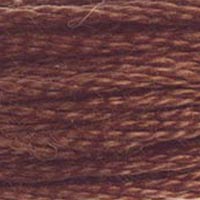
White Aida
Cream / Ecru
Black Aida
Pairs Well With
DMC colors commonly used alongside 632 Ultra Very Dark Desert Sand.
Suggested Palette
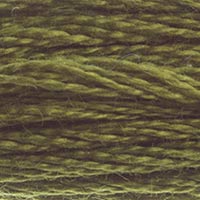
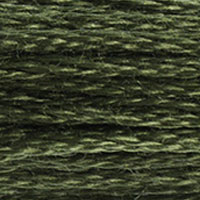
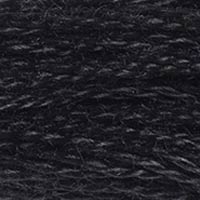
Shading Companions
Detailed Conversions
Where to Buy DMC 632
This section contains affiliate links. We may earn a small commission at no cost to you.
Related Guides
Free Printable Thread Conversion Chart
Pick a brand, enter your email, and we'll send you a printable chart mapping all 552 DMC colors to that brand's equivalents. Zero spam, one chart.
Thanks! Here's your free chart:
Download Your ChartOpens in a new tab. Use your browser's Print → Save as PDF.
No spam. Your email is stored securely and never shared.