
Quick Conversion Table
| Brand | Equivalent | Match |
|---|---|---|
| Anchor | 132 | close |
| Madeira | 1004 | close |
| Cosmo ⚠ | 141 | close |
| Sullivans | 45207 | close |
When two DMC colors share the same name — and DMC 804 and DMC 798 are both called "Dark Delft Blue" — it creates a reasonable amount of confusion in pattern databases, conversion charts, and online discussions. Understanding what distinguishes these two colors, and where each sits in the broader Delft family, is practical knowledge for anyone working from historical patterns or building Delft-inspired palettes.
The Naming Overlap: 798 vs 804
DMC 798 (Dark Delft Blue, hex #3878C0) and DMC 804 (Dark Delft Blue, hex #2060A0) are distinct colors despite sharing a name in some sources. DMC 804 is notably darker and more saturated — its lower hex values across all channels put it at a deeper, richer blue than 798. In practice, 804 reads as a deep, fairly saturated Delft blue that sits between 798's medium-dark quality and the deeper navy end of the blue spectrum.
This naming situation is worth knowing if you encounter old patterns or reference sources that list "Dark Delft Blue" without a number — it's worth verifying which specific thread number was intended. The two colors are not interchangeable in designs where Delft blue shading is carefully specified.
Position in the Extended Delft Range
The full extended DMC Delft family — including 798, 804, 805, 809, and 800 — offers more shading steps than most standard five-color shading sequences. DMC 804 occupies a position in the deeper part of this range, providing the heavier blue needed for design elements that require a dark-but-clearly-blue tone: the shadow side of a Dutch windmill silhouette, the deep blue fill of a Delftware ship motif, the darkest areas of a Dutch costume design.
In contexts where a three-value Delft palette is needed, a common arrangement uses 798 for the mid-value primary fill, 804 for the deeper shadow areas, and 800 (Pale Delft Blue) for the lightest highlights. This three-value approach covers the full Delft blue range with manageable palette complexity.
Historical Design Accuracy
Authentic Delftware pottery used cobalt oxide for its blue pigment, applied in a range of concentrations that produced everything from the palest blue washes to deep, rich cobalt areas. DMC 804's depth captures the heavier applications of cobalt pigment — the solid dark blue areas that appear in traditional Delft painting as strong outlines, solid filled shapes, and the darkest zones of shaded motifs.
For stitchers working on reproduction European textile designs — particularly those inspired by Dutch, German, or Flemish traditions where Delft blue was a culturally significant color — 804 provides the correct depth reference for the darker design elements. Band samplers and geometric sampler designs from these traditions often use the full Delft range from dark to light, and 804 as the deep end gives the design the same kind of contrast ratios seen in historical originals.
Contemporary and General Blue Uses
Beyond strictly Delft-inspired work, 804's particular deep-medium blue position makes it useful in any design needing a clean, medium-dark blue without the navy darkness of DMC 336 (Navy Blue) or the purple undertone of DMC 792 (Dark Cornflower Blue). Denim shading at the deeper indigo end, dark blue botanical elements, and water scenes with deep blue sections all find 804 a useful palette member that holds between the clearer, lighter Delft tones and the truly dark blues.
All four brand equivalencies for DMC 804 are rated close — there's no exact match available across the major brands, which reflects the unusual position this color occupies in the Delft naming overlap situation. Anchor 132 and Madeira 1004 are both also mapped to DMC 797 (Royal Blue) and potentially to 798 in some sources, which creates conversion chart ambiguity in this zone. Verify any substitution in hand rather than trusting a single chart source.
Cosmo 141 and Sullivans 45207 are close-rated. The Sullivans number 45207 also appears as a match for DMC 797 in some references — the same overlap caveat applies.
Within DMC, DMC 798 (Dark Delft Blue) is the closest relative in name and character, sitting slightly lighter and less saturated than 804. DMC 809 (Delft Blue) is another step lighter toward the medium-clear Delft zone. For designs where 804 serves as the darkest Delft value, DMC 336 (Navy Blue) is notably darker and cooler — a significant character change rather than a close substitute. If working a Delft-inspired piece and 804 is unavailable, using 798 in those areas and adjusting the overall value range slightly darker across the piece is often preferable to a character-changing substitution.
Reference quality
How We Validate This Color Record
Use this page as a reference card for DMC 804: the structured data, quick conversions, and long-form copy are all tied back to the same stored color record.
- Methodology
- This page renders DMC 804, its hex value, and every brand equivalent from the site's source-of-truth color record, then checks long-form body copy against those same stored fields.
- Verification status
- Source-field checked. The page content is audited against the stored DMC number, brand equivalents, and match-quality labels before publishing.
- Last reviewed
- 2026-04-20
- Approximation warning
- Screen hex values, thread photos, and cross-brand conversions are reference aids. Dye lots, thread sheen, and fabric color can still shift the result in hand.
Decision guide
When to use the DMC 804 reference page
This page should help you decide faster between palette planning, brand substitution, and shade comparison without turning the color record into a thin lookup page.
Best for
- + Palette planning when you want the stored DMC 804 Dark Delft Blue record, hex value #2060A0, and linked brand equivalents in one place.
- + Checking the quickest cross-brand shortlist before you buy floss, compare stash substitutes, or route into a more specific conversion page.
- + Finding nearby shades in the blues family before you commit to accents, shading, or background blends.
Watch for
- ! Screen previews are only reference aids. Dark Delft Blue can shift on real fabric because thread sheen, stitch coverage, and room lighting change how the color reads.
- ! A stored equivalent is still a shortlist, not a guarantee that two brands will disappear into each other in the same stitched motif.
- ! Older charts, discontinued kit floss, and dye-lot variation can all introduce small but visible differences that the page cannot detect for you.
Before you commit
- Confirm the role of DMC 804 Dark Delft Blue: decide whether you need an exact hero shade, a forgiving background, or a rough stash substitute.
- Compare on project fabric: view the skein or stitched sample on the same fabric count and color you will actually use.
- Use the linked conversion pages next: open the brand-specific pages when you need match-quality caveats before substituting away from the DMC reference.
DMC 804 FAQ
These questions appear on the page so the FAQ schema stays aligned with what visitors can actually read.
What is the Anchor equivalent of DMC 804?+
The closest Anchor equivalent to DMC 804 (Dark Delft Blue) is Anchor 132. This is a close match.
What color is DMC 804?+
DMC 804 is called "Dark Delft Blue" and has a hex color value of #2060A0. It belongs to the blues color family.
What is the Madeira equivalent of DMC 804?+
The closest Madeira equivalent to DMC 804 (Dark Delft Blue) is Madeira 1004. This is a close match.
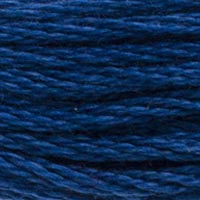
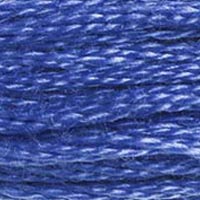
How DMC 804 Looks on Fabric
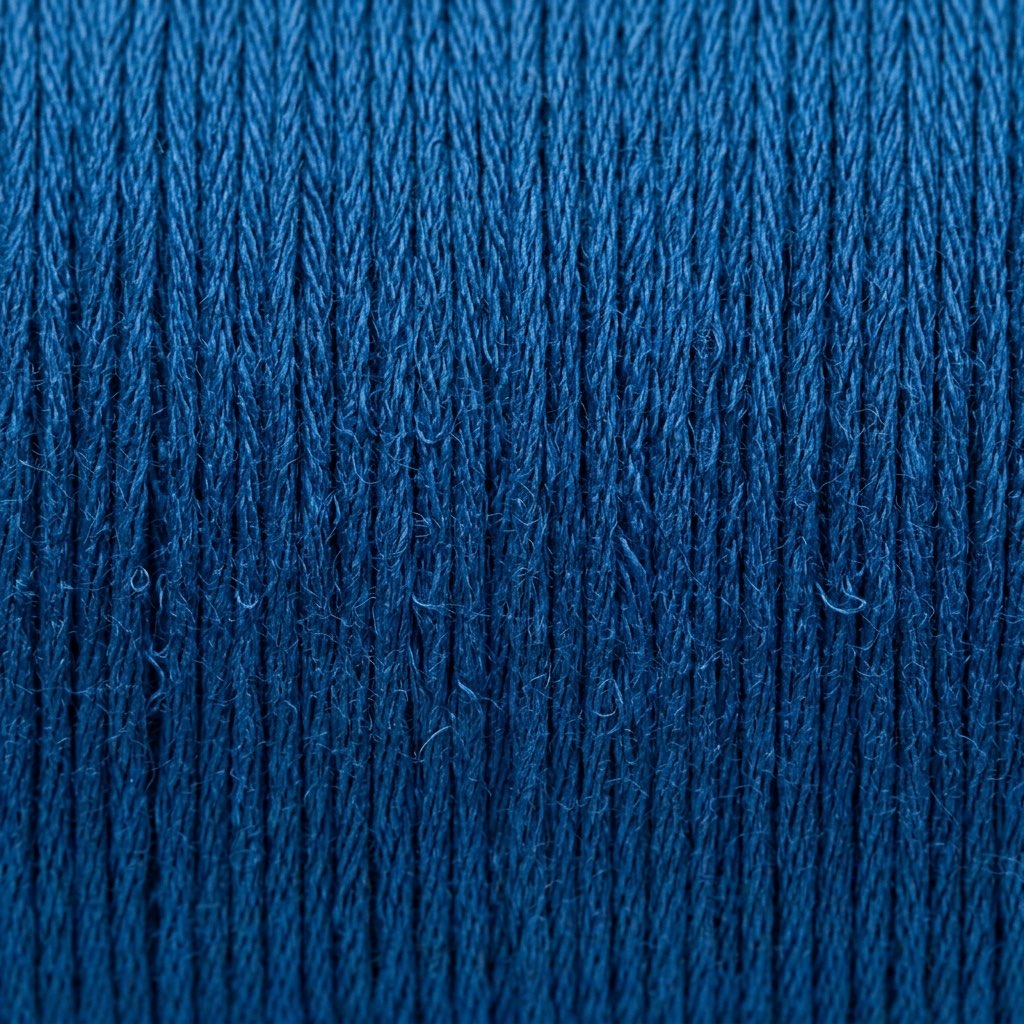
The same thread appears different depending on your fabric. Always test on your project fabric.
White Aida
Cream / Ecru
Black Aida
Pairs Well With
DMC colors commonly used alongside 804 Dark Delft Blue.
Suggested Palette
Shading Companions
Detailed Conversions
Where to Buy DMC 804
This section contains affiliate links. We may earn a small commission at no cost to you.
Related Guides
Free Printable Thread Conversion Chart
Pick a brand, enter your email, and we'll send you a printable chart mapping all 552 DMC colors to that brand's equivalents. Zero spam, one chart.
Thanks! Here's your free chart:
Download Your ChartOpens in a new tab. Use your browser's Print → Save as PDF.
No spam. Your email is stored securely and never shared.