
Quick Conversion Table
| Brand | Equivalent | Match |
|---|---|---|
| Anchor | 146 | exact |
| Madeira | 0911 | close |
| Cosmo ⚠ | 214 | close |
| Sullivans | 45208 | close |
| J&P Coats | 7022 | close |
| Dimensions | 6798 | close |
| Bucilla | 798 | close |
| Candamar | 6244 | close |
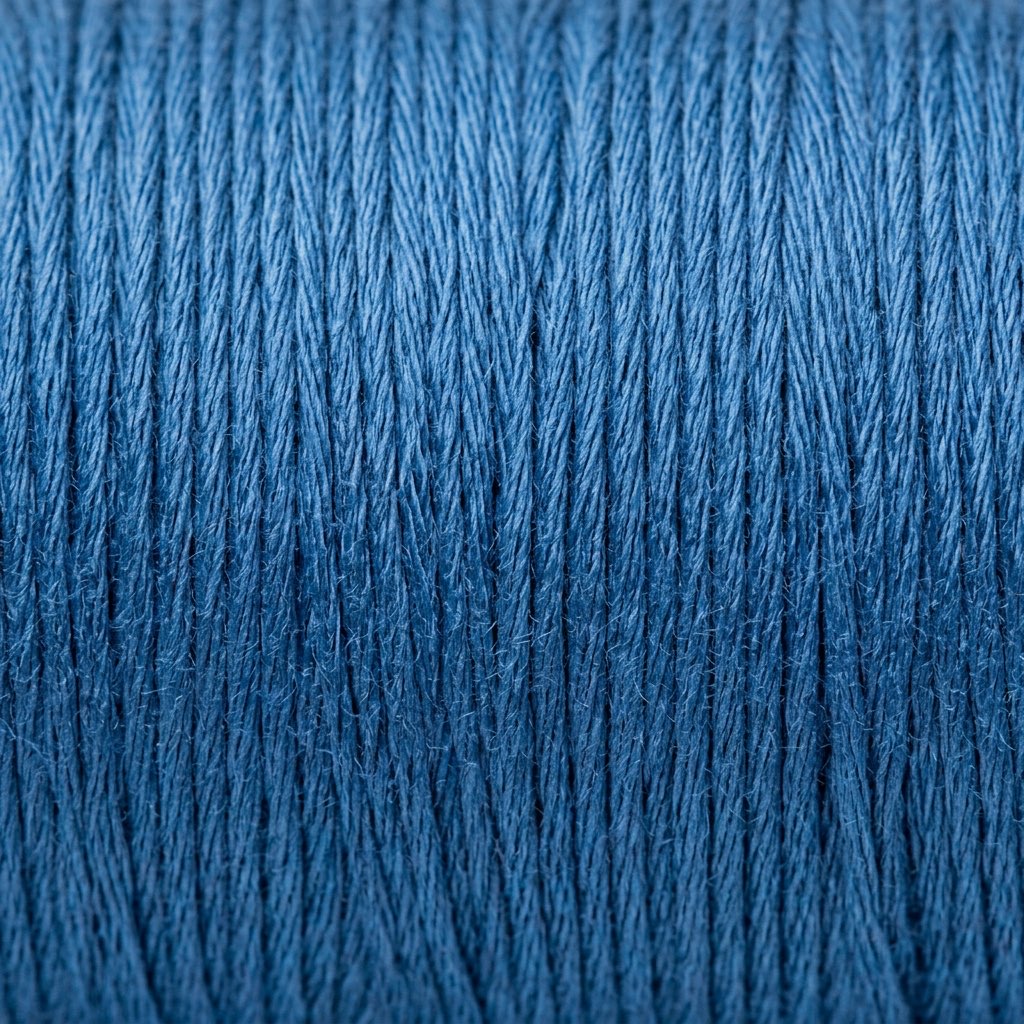
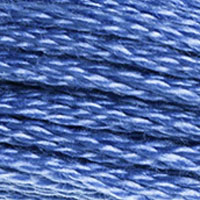
Delft blue is one of the most recognizable color identities in decorative arts history — the distinctive cobalt-on-white pattern of Dutch Delftware pottery, introduced in the 17th century and imitated across Europe for centuries afterward. The blue of Delft isn't quite royal blue, isn't quite navy, isn't quite cornflower: it's a medium-to-dark, clear, slightly grayed blue that reads as sophisticated and traditional. DMC 798 Dark Delft Blue captures the deeper end of this particular blue.
The Delft Family in Cross-Stitch
DMC's Delft family — 798 (Dark Delft Blue), DMC 805 (Medium Delft Blue), DMC 809 (Delft Blue), and DMC 800 (Pale Delft Blue) — provides a complete, coordinated set of this historically significant blue for reproduction and Delft-inspired design work. DMC 798 anchors the darkest end, appearing in the most shadowed areas of Delft patterns: the deep blue of windmill silhouettes, the dark fill of Dutch scene interiors, the heavy outlines of the characteristic Delftware motifs.
Cross-stitch patterns directly inspired by Delftware are a consistent niche in the hobby — tulip motifs, windmill scenes, canal scenes, and the flowing floral patterns of authentic Delft pottery all translate naturally into counted thread work. For stitchers working in this genre, the Delft family is essential palette knowledge.
Traditional Sampler Traditions
Beyond strictly Delft-inspired patterns, DMC 798 appears in many traditional sampler designs as a deep, non-threatening blue that works in the background without feeling heavy or dark. Its medium-to-dark value is deep enough to serve as an outline or primary fill without requiring a separate darker outline thread, but not so dark that it reads as navy and overpowers lighter elements.
American colonial-style samplers and their reproduction counterparts often use blues in the Delft range — the historical dyes available for 18th-century American needlework produced blues in this clear-but-not-navy territory, and modern reproduction patterns respect this palette reality. If you're working a reproduction sampler, Delft blues like 798 are often more historically appropriate than the very dark or very saturated blues that weren't achievable with period dyes.
Shading Context and Companion Colors
In multi-value blue shading work, 798 typically serves as the deep shadow position in Delft-family sequences. The characteristic clear quality of Delft blue means the shadow value needs to be clearly darker without shifting to a different hue — 798 delivers this by staying in the same blue family while providing the darker value needed for shadow depth.
Paired with DMC 797 (Royal Blue) for saturated comparison, 798's slightly grayed, less saturated quality becomes apparent — it reads as the more traditional, less assertive blue, making it better for designs that want depth without the bold graphic quality of royal blue. Combined with DMC 809 (Delft Blue) and 800 (Pale Delft Blue), 798 creates the full Delft gradient from deep to light.
Anchor 146 and Madeira 0911 are both exact-rated for DMC 798, providing reliable substitutions. Both brands match the Delft blue range well. Cosmo 214 and Sullivans 45208 are close-rated.
Within DMC, DMC 809 (Delft Blue) is one step lighter in the same family — a natural substitute in areas where slightly less depth is acceptable. DMC 805 (Medium Delft Blue) fills the gap between 798 and 809 if your design includes that intermediate value. Going deeper, DMC 336 (Navy Blue) or DMC 796 (Dark Royal Blue) both take you to a decidedly darker territory — meaningful changes rather than close substitutes.
For anyone working Delftware-inspired designs, using the DMC Delft family specifically — rather than substituting from other blue families — provides the authentic color impression that makes these pieces recognizable as Delft-influenced. The specific gray-blue character of Delft blue is distinct from royal blue, cornflower blue, or navy, and the DMC family names signal this distinction clearly.
Reference quality
How We Validate This Color Record
Use this page as a reference card for DMC 798: the structured data, quick conversions, and long-form copy are all tied back to the same stored color record.
- Methodology
- This page renders DMC 798, its hex value, and every brand equivalent from the site's source-of-truth color record, then checks long-form body copy against those same stored fields.
- Verification status
- Source-field checked. The page content is audited against the stored DMC number, brand equivalents, and match-quality labels before publishing.
- Last reviewed
- 2026-04-20
- Approximation warning
- Screen hex values, thread photos, and cross-brand conversions are reference aids. Dye lots, thread sheen, and fabric color can still shift the result in hand.
Decision guide
When to use the DMC 798 reference page
This page should help you decide faster between palette planning, brand substitution, and shade comparison without turning the color record into a thin lookup page.
Best for
- + Palette planning when you want the stored DMC 798 Dark Delft Blue record, hex value #466A8E, and linked brand equivalents in one place.
- + Checking the quickest cross-brand shortlist before you buy floss, compare stash substitutes, or route into a more specific conversion page.
- + Finding nearby shades in the blues family before you commit to accents, shading, or background blends.
Watch for
- ! Screen previews are only reference aids. Dark Delft Blue can shift on real fabric because thread sheen, stitch coverage, and room lighting change how the color reads.
- ! A stored equivalent is still a shortlist, not a guarantee that two brands will disappear into each other in the same stitched motif.
- ! Older charts, discontinued kit floss, and dye-lot variation can all introduce small but visible differences that the page cannot detect for you.
Before you commit
- Confirm the role of DMC 798 Dark Delft Blue: decide whether you need an exact hero shade, a forgiving background, or a rough stash substitute.
- Compare on project fabric: view the skein or stitched sample on the same fabric count and color you will actually use.
- Use the linked conversion pages next: open the brand-specific pages when you need match-quality caveats before substituting away from the DMC reference.
DMC 798 FAQ
These questions appear on the page so the FAQ schema stays aligned with what visitors can actually read.
What is the Anchor equivalent of DMC 798?+
The closest Anchor equivalent to DMC 798 (Dark Delft Blue) is Anchor 146. This is an exact match.
What color is DMC 798?+
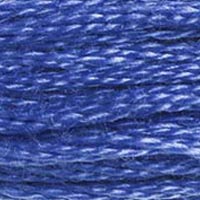
DMC 798 is called "Dark Delft Blue" and has a hex color value of #466A8E. It belongs to the blues color family.
What is the Madeira equivalent of DMC 798?+
The closest Madeira equivalent to DMC 798 (Dark Delft Blue) is Madeira 0911. This is a close match.
How DMC 798 Looks on Fabric
The same thread appears different depending on your fabric. Always test on your project fabric.
White Aida
Cream / Ecru
Black Aida
Pairs Well With
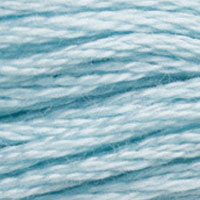
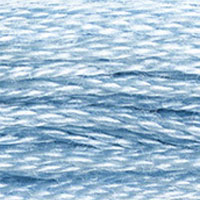
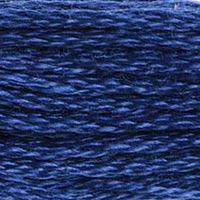
DMC colors commonly used alongside 798 Dark Delft Blue.

Detailed Conversions
Where to Buy DMC 798
This section contains affiliate links. We may earn a small commission at no cost to you.
Related Guides
Free Printable Thread Conversion Chart
Pick a brand, enter your email, and we'll send you a printable chart mapping all 552 DMC colors to that brand's equivalents. Zero spam, one chart.
Thanks! Here's your free chart:
Download Your ChartOpens in a new tab. Use your browser's Print → Save as PDF.
No spam. Your email is stored securely and never shared.