
Quick Conversion Table
| Brand | Equivalent | Match |
|---|---|---|
| Anchor | 1209 | close |
| Madeira | 0711 | close |
| Cosmo ⚠ | 2631 | close |
| Sullivans | 45429 | close |
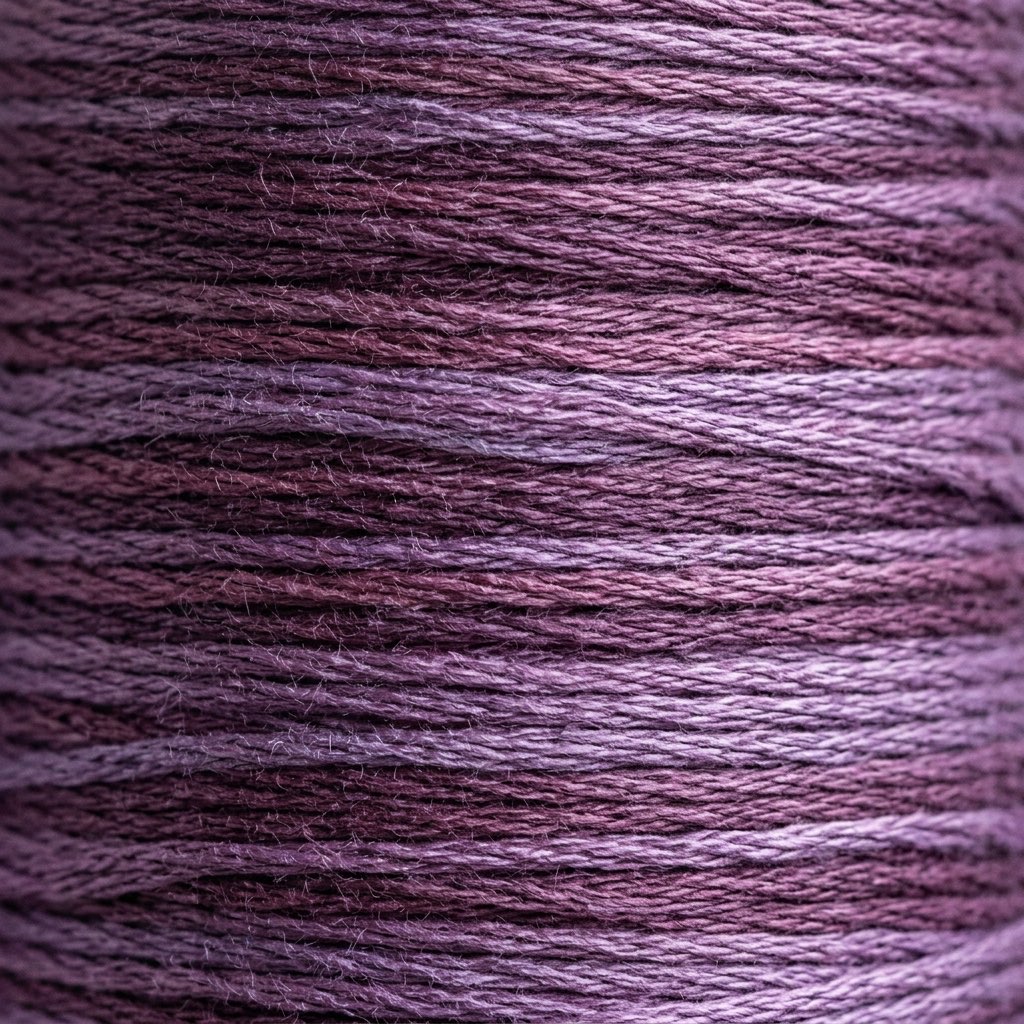
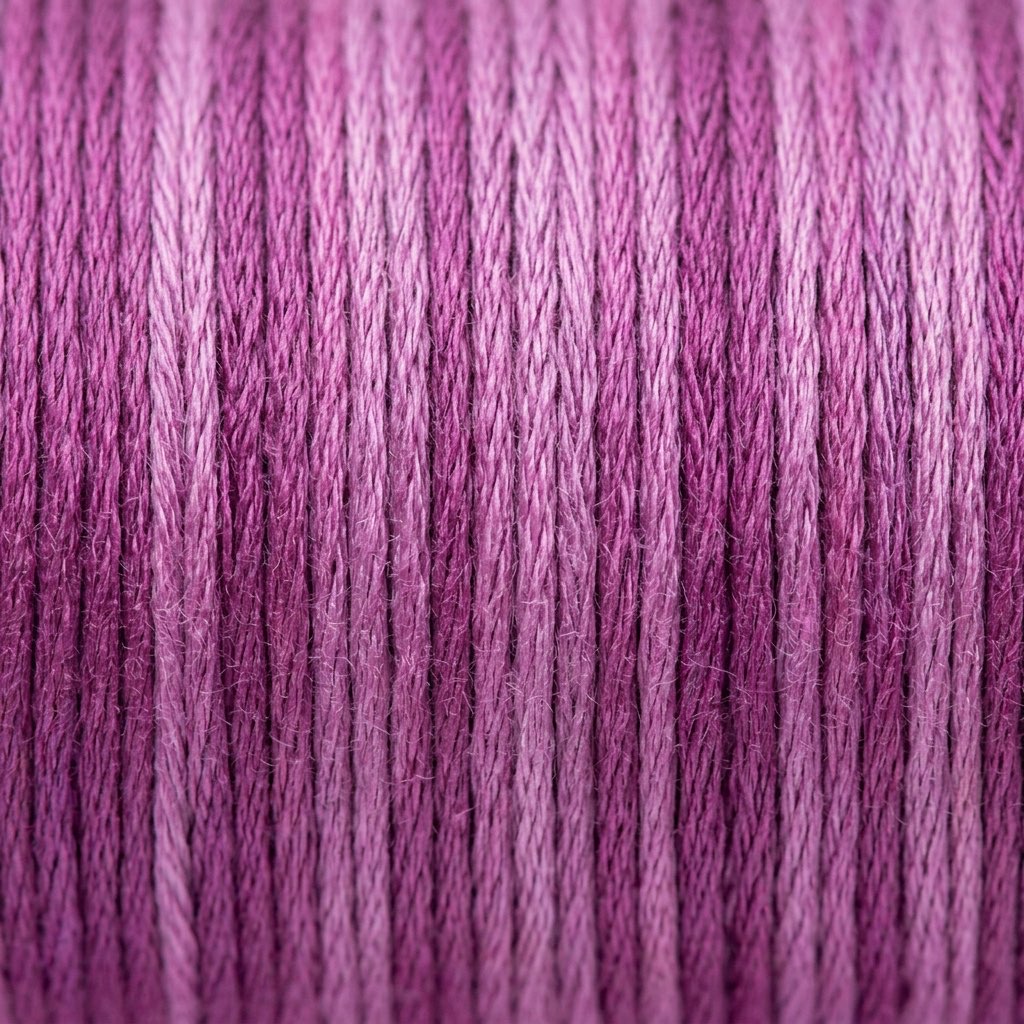
Variegated threads occupy their own category in cross-stitch, with their own set of passionate advocates and principled objectors. The advocates argue that the way a well-designed variegated thread moves through value and hue as you stitch creates organic depth that no combination of solid threads can fully replicate. The objectors counter that the stitched result is unpredictable and hard to control. DMC 52 Variegated Violet sits right at the center of this debate: it's one of the more dramatic variegated threads in the DMC lineup, cycling through a range of violet values from deep purple through medium violet to lighter lavender tones in a single skein.
How DMC Variegated Threads Work
DMC's variegated threads are dyed in sequence along the thread length — color transitions happen gradually, creating sections of deep color interrupted by lighter sections, all within the same strand. The critical variable is how long each color segment is relative to your stitch size: on 14-count Aida with relatively large crosses, you might get one color change per few stitches; on 18-count or higher, the transitions become more frequent and the effect more complex.
This means the visual result depends heavily on stitch size, project size, and stitching method. Cross-country stitching with 52 will produce a different pattern of color distribution than working the same design one row at a time. Parking individual stitches in a specific sequence can give more control over where the light and dark sections fall, though this requires careful planning. Many stitchers simply let the variegated thread do what it wants and enjoy the organic results — which is often the right approach for designs where perfect color control is less important than visual texture.
Design Applications for Variegated Violet
The violet cycling in DMC 52 suggests specific design contexts. Purple flowers — especially irises, lavender, wisteria, and certain clematis varieties — have natural variation across their petals that variegated thread suggests more convincingly than solid thread. A stitched wisteria with 52 as the primary flower color, paired with DMC 553 (Violet) for any solid backstitch outlining, can achieve a soft, naturalistic quality that appeals to designs in the botanical illustration style.
Abstract and geometric designs that want to incorporate variegated effects without being explicitly floral use 52 for its interesting color movement across geometric shapes. As a single diagonal stripe or chevron element in a patchwork-style design, the way 52 moves through its color range creates a gradient-in-motion that can be genuinely beautiful. SAL communities working large-scale geometric designs occasionally build entire sections around a single variegated thread for exactly this effect.
Novelty projects — bookmarks, ornaments, small decorative pieces — are well-suited to variegated threads because the smaller stitch count means the full range of the variegation is visible in the finished piece. A bookmark stitched entirely in 52 shows the full violet spectrum from deep to light and creates a lively, varied result from a single thread choice.
Practical Considerations
One important note for stitchers new to variegated thread: don't cut working lengths as long as you would for solid thread. Because the color transitions along the thread's length, short cuts of 12–15 inches give you more control over where transitions fall and prevent the color from cycling too many times through short sections of design. Working with shorter lengths and planning the starting point of each cut to control which color falls where is the approach experienced variegated thread users recommend.
Substituting variegated threads is genuinely different from substituting solid threads, because the character of a variegated thread is inherently brand-specific — a different brand's variegated violet will cycle through different value ranges at different rates. Anchor 1209 is a solid violet (not variegated) that approximates the medium value of DMC 52's range, making it a substitute only if you're willing to trade the variegated effect for a solid color. This is sometimes the right call if you want more color control, but it's a different design choice, not a like-for-like substitute.
Madeira's variegated range includes violet options, and their 0711 reference is noted as a close match. Madeira's variegated threads use a different dye spacing system than DMC, producing their own characteristic transition pattern. Stitchers who have used both generally agree that Madeira's variegated threads are well-made and produce attractive results, but they're not interchangeable with DMC's in terms of how the color moves — expect a different visual outcome.
Cosmo 2631 is worth sourcing a skein of to compare directly. Cosmo has a dedicated variegated range that has received positive attention from FlossTube stitchers, and their color transitions are generally smooth and well-designed. Whether Cosmo 2631 specifically matches the visual effect of DMC 52 requires a direct comparison test rather than relying on published color charts.
Sullivans 45429 is a reasonable option for projects where the variegated violet effect is wanted but the precise DMC color profile isn't critical. For any piece where the variegated quality is a major design feature and the finished work is intended as a keepsake or display piece, the DMC original is worth the investment.
Reference quality
How We Validate This Color Record
Use this page as a reference card for DMC 52: the structured data, quick conversions, and long-form copy are all tied back to the same stored color record.
- Methodology
- This page renders DMC 52, its hex value, and every brand equivalent from the site's source-of-truth color record, then checks long-form body copy against those same stored fields.
- Verification status
- Source-field checked. The page content is audited against the stored DMC number, brand equivalents, and match-quality labels before publishing.
- Last reviewed
- 2026-04-20
- Approximation warning
- Screen hex values, thread photos, and cross-brand conversions are reference aids. Dye lots, thread sheen, and fabric color can still shift the result in hand.
Decision guide
When to use the DMC 52 reference page
This page should help you decide faster between palette planning, brand substitution, and shade comparison without turning the color record into a thin lookup page.
Best for
- + Palette planning when you want the stored DMC 52 Variegated Violet record, hex value #9060B0, and linked brand equivalents in one place.
- + Checking the quickest cross-brand shortlist before you buy floss, compare stash substitutes, or route into a more specific conversion page.
- + Finding nearby shades in the purples family before you commit to accents, shading, or background blends.
Watch for
- ! Screen previews are only reference aids. Variegated Violet can shift on real fabric because thread sheen, stitch coverage, and room lighting change how the color reads.
- ! A stored equivalent is still a shortlist, not a guarantee that two brands will disappear into each other in the same stitched motif.
- ! Older charts, discontinued kit floss, and dye-lot variation can all introduce small but visible differences that the page cannot detect for you.
Before you commit
- Confirm the role of DMC 52 Variegated Violet: decide whether you need an exact hero shade, a forgiving background, or a rough stash substitute.
- Compare on project fabric: view the skein or stitched sample on the same fabric count and color you will actually use.
- Use the linked conversion pages next: open the brand-specific pages when you need match-quality caveats before substituting away from the DMC reference.
DMC 52 FAQ
These questions appear on the page so the FAQ schema stays aligned with what visitors can actually read.
What is the Anchor equivalent of DMC 52?+
The closest Anchor equivalent to DMC 52 (Variegated Violet) is Anchor 1209. This is a close match.
What color is DMC 52?+
DMC 52 is called "Variegated Violet" and has a hex color value of #9060B0. It belongs to the purples color family.
What is the Madeira equivalent of DMC 52?+
The closest Madeira equivalent to DMC 52 (Variegated Violet) is Madeira 0711. This is a close match.
How DMC 52 Looks on Fabric
The same thread appears different depending on your fabric. Always test on your project fabric.
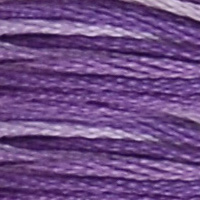
White Aida
Cream / Ecru
Black Aida
Pairs Well With
DMC colors commonly used alongside 52 Variegated Violet.
Suggested Palette
Shading Companions
Detailed Conversions
Where to Buy DMC 52
This section contains affiliate links. We may earn a small commission at no cost to you.
Related Guides
Free Printable Thread Conversion Chart
Pick a brand, enter your email, and we'll send you a printable chart mapping all 552 DMC colors to that brand's equivalents. Zero spam, one chart.
Thanks! Here's your free chart:
Download Your ChartOpens in a new tab. Use your browser's Print → Save as PDF.
No spam. Your email is stored securely and never shared.