
Quick Conversion Table
| Brand | Equivalent | Match |
|---|---|---|
| Anchor | 1217 | close |
| Madeira | 0711 | close |
| Cosmo ⚠ | 2648 | close |
| Sullivans | 45433 | close |
A Variegated Thread That Knows When to Whisper
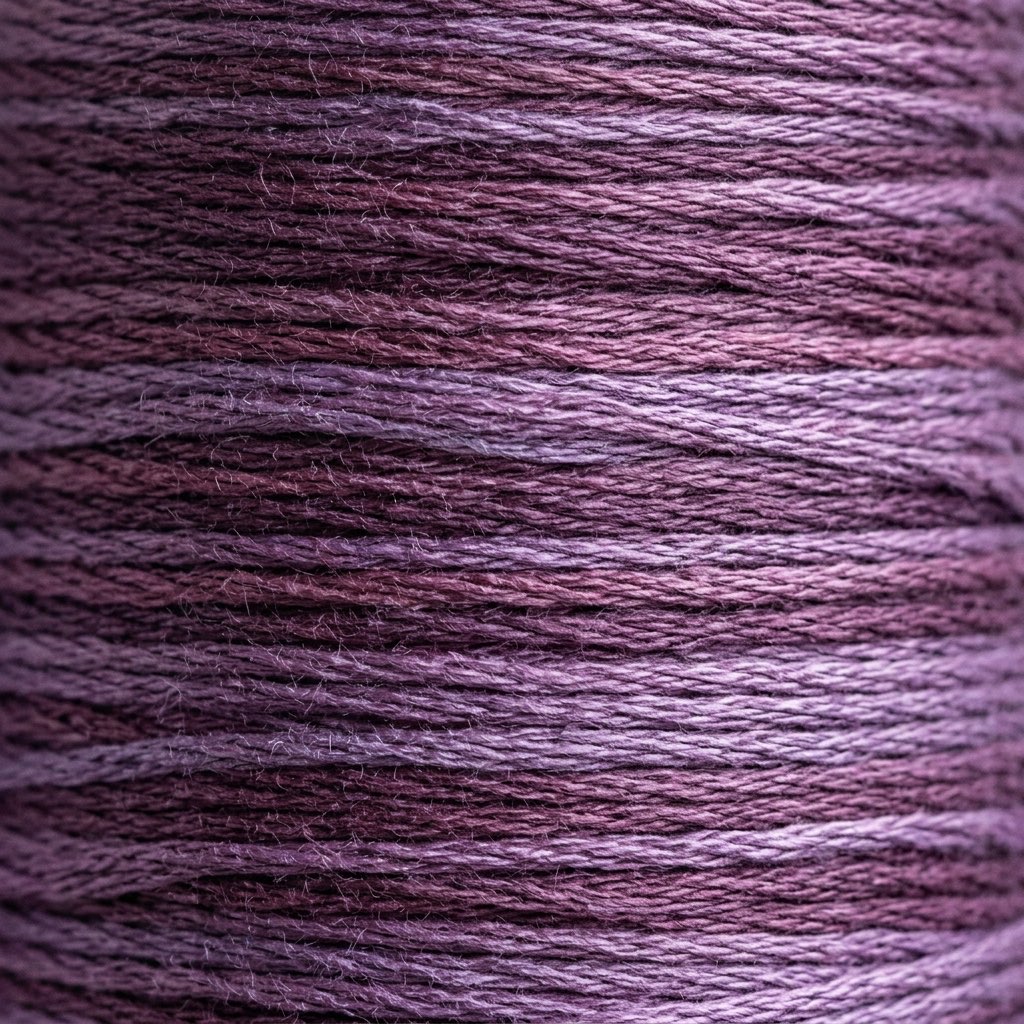
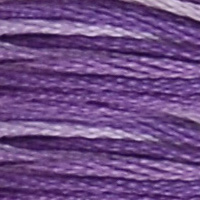
Not all variegated threads announce themselves with fireworks. DMC 103 Variegated Plum moves through a range of dusty, muted purple values — from a deeper plum-violet down through a softer mauve — with a restraint that makes it unusually versatile for a variegated thread. Where some color-shifting flosses demand to be the star of the piece, 103 is perfectly happy playing a supporting role, adding subtle movement and organic variation without screaming for attention.
The midpoint of its color range lands around #906098, a grayed-down purple with enough warmth to avoid looking cold or clinical. This places it solidly in the dusty plum territory — think dried lavender rather than fresh, old velvet rather than new silk. It's the purple of Victorian upholstery that's been sitting in afternoon light for a decade, richly colored but no longer sharp. That quality makes it excellent for antique-themed samplers, heritage designs, and anything where you want purple presence without modern vibrancy.
Technique and the Variegation Question
Like all variegated threads, DMC 103 behaves differently depending on how you stitch with it. Cross-country stitching distributes the color shifts randomly across your work, creating a dappled, impressionistic texture that mimics the way light falls unevenly across wisteria clusters or lilac bushes. Danish method stitching — completing rows of half-stitches and returning — produces more visible diagonal color banding, which can create an almost watercolor-wash effect across larger areas.
The question of which technique to use is not just academic here. For floral designs where you want each petal to look slightly different from its neighbors, cross-country with 103 produces beautiful, naturalistic variation. For backgrounds or fills where you want a gentler, more atmospheric shift, Danish method keeps the transitions smoother and more predictable. Some stitchers even alternate techniques within a single project — cross-country for the subject, Danish for the background — to create different visual textures from the same thread.
On 14-count Aida with two strands, the color transitions happen frequently enough to be visible within small motifs. On higher counts, each cross uses less thread, which means you'll see more uniform color within individual stitches but more abrupt changes between them. If you're working over one on 28-count or higher, consider whether that staccato effect serves your design. For delicate work, one strand of 103 blended with one strand of a solid — DMC 3835 (Medium Grape) works beautifully here — tames the variegation into subtle shading that reads as depth rather than color change.
Pairing and Palette Building
The dusty, grayed quality of 103 means it pairs exceptionally well with other muted tones. Think DMC 3042 (Light Antique Violet) for a lighter companion, DMC 3740 (Dark Antique Violet) for shadow depth, and DMC 524 (Very Light Fern Green) for a complementary accent that stays in the same subdued register. Bright, saturated colors will make 103 look muddy by comparison — this thread belongs in palettes where restraint is the point.
For garden-themed samplers, 103 makes a convincing wisteria or lilac flower cluster when combined with a few solid purples in adjacent values. The variegation supplies the natural variation that real flower clusters display — no two blooms in a lilac panicle are exactly the same shade, and 103 captures that organically without requiring you to manage eight different thread colors. Add DMC 3013 (Light Khaki Green) or DMC 3053 (Green Gray) for stems and leaves that match the thread's vintage aesthetic, and you have a cohesive, understated floral palette.
It's worth noting that DMC 103 shifts under different lighting more dramatically than you might expect. Under warm incandescent light, the plum tones warm up and the thread reads as almost rosy. Under cool daylight or fluorescent lighting, the blue undertones in the purple become more apparent and the thread can look decidedly cooler. If you're stitching something intended as a gift, consider what kind of lighting the recipient's home typically uses. And always make your color decisions under the lighting conditions where the finished piece will be displayed — stitching under warm lamplight and then hanging the result in a fluorescent-lit office can produce surprises.
Matching a Moving Target: Substituting DMC 103
Substituting variegated threads is always harder than swapping solids, and 103 is no exception. You're not trying to match a single color — you're trying to match a range of values, a transition speed, and an overall character. Two threads can share similar endpoint colors and still produce completely different effects depending on how quickly they shift and how many intermediate shades they pass through.
Anchor 1217 is listed as a close match. Anchor's variegated threads tend to have slightly different repeat lengths than DMC, so even if the color range is comparable, the banding pattern will differ. For small projects — ornaments, bookmarks, individual motifs — this rarely matters. For larger fill areas where repeat patterns become visible, stitch a test swatch before committing to the full piece.
Madeira 0711 offers a close match with Madeira's characteristically silkier hand. The sheen can actually enhance the plum tones, giving them a slightly more luxurious quality. Whether that helps or hurts depends on your design — for Victorian-themed pieces, the extra sheen might feel appropriate. For rustic or folk art styles, it could feel out of place.
Cosmo 2648 is worth testing. Cosmo's variegated threads sometimes handle color transitions differently, with softer gradients where DMC gives crisper shifts. In a dusty plum like 103, that softer transition can actually look more natural, blending the values more seamlessly across your stitched area.
If you cannot find a variegated match at all and need to replicate the effect with solids, alternating between DMC 3835 (Medium Grape) and DMC 3836 (Light Grape) across sections gives a reasonable approximation of the value range. You'll lose the organic randomness of true variegation, but you'll preserve the dusty plum character. For a blended needle approach, one strand of 3835 with one strand of 3836 creates a tweedy, heathered look that captures some of the textural interest 103 provides.
Reference quality
How We Validate This Color Record
Use this page as a reference card for DMC 103: the structured data, quick conversions, and long-form copy are all tied back to the same stored color record.
- Methodology
- This page renders DMC 103, its hex value, and every brand equivalent from the site's source-of-truth color record, then checks long-form body copy against those same stored fields.
- Verification status
- Source-field checked. The page content is audited against the stored DMC number, brand equivalents, and match-quality labels before publishing.
- Last reviewed
- 2026-04-20
- Approximation warning
- Screen hex values, thread photos, and cross-brand conversions are reference aids. Dye lots, thread sheen, and fabric color can still shift the result in hand.
Decision guide
When to use the DMC 103 reference page
This page should help you decide faster between palette planning, brand substitution, and shade comparison without turning the color record into a thin lookup page.
Best for
- + Palette planning when you want the stored DMC 103 Variegated Plum record, hex value #906098, and linked brand equivalents in one place.
- + Checking the quickest cross-brand shortlist before you buy floss, compare stash substitutes, or route into a more specific conversion page.
- + Finding nearby shades in the purples family before you commit to accents, shading, or background blends.
Watch for
- ! Screen previews are only reference aids. Variegated Plum can shift on real fabric because thread sheen, stitch coverage, and room lighting change how the color reads.
- ! A stored equivalent is still a shortlist, not a guarantee that two brands will disappear into each other in the same stitched motif.
- ! Older charts, discontinued kit floss, and dye-lot variation can all introduce small but visible differences that the page cannot detect for you.
Before you commit
- Confirm the role of DMC 103 Variegated Plum: decide whether you need an exact hero shade, a forgiving background, or a rough stash substitute.
- Compare on project fabric: view the skein or stitched sample on the same fabric count and color you will actually use.
- Use the linked conversion pages next: open the brand-specific pages when you need match-quality caveats before substituting away from the DMC reference.
DMC 103 FAQ
These questions appear on the page so the FAQ schema stays aligned with what visitors can actually read.
What is the Anchor equivalent of DMC 103?+
The closest Anchor equivalent to DMC 103 (Variegated Plum) is Anchor 1217. This is a close match.
What color is DMC 103?+
DMC 103 is called "Variegated Plum" and has a hex color value of #906098. It belongs to the purples color family.
What is the Madeira equivalent of DMC 103?+
The closest Madeira equivalent to DMC 103 (Variegated Plum) is Madeira 0711. This is a close match.
How DMC 103 Looks on Fabric
The same thread appears different depending on your fabric. Always test on your project fabric.
White Aida
Cream / Ecru
Black Aida
Pairs Well With
DMC colors commonly used alongside 103 Variegated Plum.
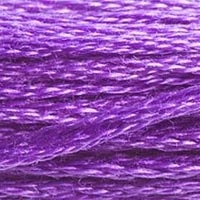
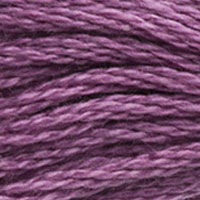
Suggested Palette
Shading Companions
Detailed Conversions
Where to Buy DMC 103
This section contains affiliate links. We may earn a small commission at no cost to you.
Related Guides
Free Printable Thread Conversion Chart
Pick a brand, enter your email, and we'll send you a printable chart mapping all 552 DMC colors to that brand's equivalents. Zero spam, one chart.
Thanks! Here's your free chart:
Download Your ChartOpens in a new tab. Use your browser's Print → Save as PDF.
No spam. Your email is stored securely and never shared.