
Quick Conversion Table
| Brand | Equivalent | Match |
|---|---|---|
| Anchor | 110 | exact |
| Madeira | 0804 | close |
| Cosmo ⚠ | 265 | close |
| Sullivans | 45040 | close |
| J&P Coats | 4301 | close |
| Dimensions | 14301 | close |
| Bucilla | 6137 | close |
The Foundation Stone of DMC's Lavender Family
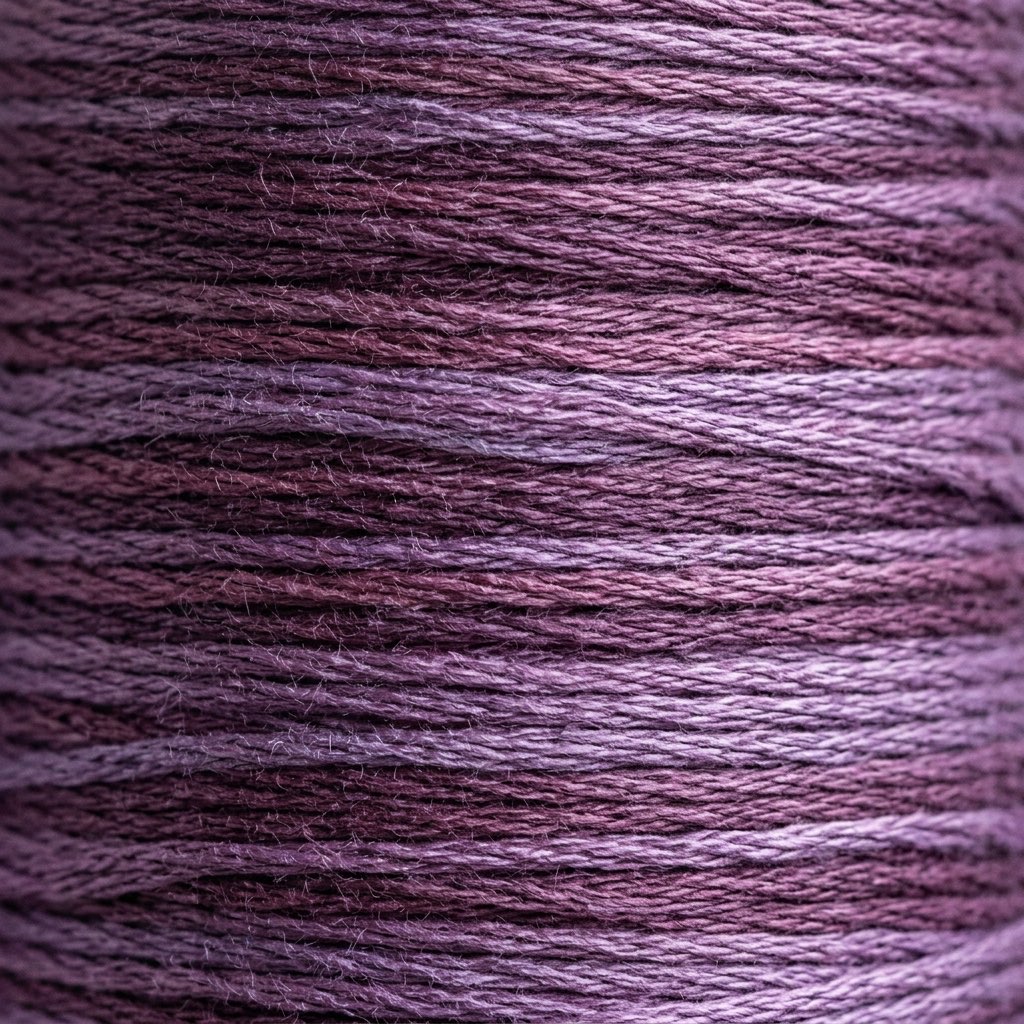
Every well-designed color family needs an anchor at its deep end — a shade dark enough to create shadow and contrast while still clearly belonging to its color family rather than disappearing into generic darkness. DMC 208 Very Dark Lavender is that anchor for the lavender sequence. At #835B8B, it is deep and saturated, unmistakably purple, with the warm, slightly pink-leaning undertone that defines the lavender family and distinguishes it from the cooler blue-violet group.
The 208-209-210-211 sequence is one of DMC's best-graded color families — four shades stepping evenly from deep to light, each one a convincing step lighter than the one before, with no awkward jumps or hue shifts along the way. Pattern designers rely on this family constantly, and for good reason. When a design calls for shaded purple flowers, grapes, robes, or decorative borders, these four threads deliver consistent, predictable results. And DMC 208 is where the sequence begins — the shadow, the depth, the anchor that gives the lighter lavenders something to contrast against.
Iris Accuracy and the Art of Botanical Stitching
If you have ever tried to match thread colors to a real iris bloom, you know the challenge. Irises are not one purple — they are five or six purples layered on top of each other, from deep purple-black at the base of the falls to translucent lavender at the petal edges. DMC 208 nails the mid-shadow zone of a bearded iris: the color you see in the slight hollows between the ruffled edges of the standards, the darker veining on the falls, the intensity where petals overlap and light cannot fully penetrate.
For a complete iris palette, start with 208 for the deepest petal shadows, step to DMC 209 (Dark Lavender) for the main petal body, use DMC 210 (Medium Lavender) for light-catching areas, and finish with DMC 211 (Light Lavender) at the translucent petal edges. Add DMC 3078 (Very Light Golden Yellow) for the beard and DMC 3345 (Dark Hunter Green) for the sword-shaped leaves. This six-thread palette handles the vast majority of purple iris designs, and the lavender family's consistent undertone means the petals read as a unified flower rather than as patches of different colors.
Technique Notes for Deep Lavender
At this saturation level, DMC 208 has excellent coverage — two strands on 14-count produces solid, opaque color with no fabric showing through. On 18-count, two strands still covers completely, and even on 25-count over two, the coverage is reliable. This matters because dark threads that do not cover fully look faded and patchy, which undermines the shadow effect you are trying to achieve.
208 also works well for backstitching when you want a colored outline rather than a black one. For purple florals — lavender sprigs, wisteria, lilacs — outlining in 208 rather than DMC 310 (Black) maintains the color harmony of the piece. The outline defines the shapes without introducing a jarring contrast that can make flowers look like coloring book illustrations. The key is to use a single strand for the backstitch and keep your tension firm enough that the line reads as crisp and defined rather than loose and wobbly.
One thing to be aware of: DMC 208 shifts noticeably under different lighting conditions. Under incandescent light, it warms up and reads almost as a dark orchid purple. Under cool fluorescent lighting, the blue undertones emerge and it can look more like a dark blue-violet. Under natural daylight — the most neutral light source — it reads as its true warm dark lavender. Always make your color decisions under the same lighting conditions where the finished piece will be displayed.
Anchoring a Family: Substitution at the Deep End
Anchor 110 is listed as an exact match, which makes substitution straightforward in single-thread applications. However, be aware that Anchor 110 also maps to other DMC shades in some conversion charts, so if your pattern uses multiple purples that all convert to Anchor 110, you will lose color distinctions. Always check the full conversion list for your pattern, not just individual threads.
Madeira 0804 is a close match. Madeira's version carries its characteristic extra sheen, which at this dark value can add a subtle richness — almost like the difference between matte and satin fabric. For designs depicting luxury items — velvet robes, formal flowers, ornate borders — that extra sheen can be an asset. For folk art or primitive designs where a matte finish is part of the aesthetic, it may feel slightly out of place.
Cosmo 265 is close. Cosmo's softer twist means the thread lies differently in the stitch, producing a marginally flatter surface that can affect how the dark lavender reads, particularly in areas adjacent to lighter shades. Sullivans 45040 is also rated close and generally provides adequate coverage at this dark value, though testing on your specific fabric is always worthwhile.
Within DMC, the nearest alternative is DMC 552 (Medium Violet). The two threads are close in value but differ in hue — 552 leans cooler and bluer, while 208 stays in the warmer lavender range. If your project uses 208 as part of the 208-211 lavender sequence, substituting 552 will introduce a hue inconsistency that may be visible in the gradient. If 208 is used independently as a dark purple accent, 552 is a reasonable alternative.
Reference quality
How We Validate This Color Record
Use this page as a reference card for DMC 208: the structured data, quick conversions, and long-form copy are all tied back to the same stored color record.
- Methodology
- This page renders DMC 208, its hex value, and every brand equivalent from the site's source-of-truth color record, then checks long-form body copy against those same stored fields.
- Verification status
- Source-field checked. The page content is audited against the stored DMC number, brand equivalents, and match-quality labels before publishing.
- Last reviewed
- 2026-04-20
- Approximation warning
- Screen hex values, thread photos, and cross-brand conversions are reference aids. Dye lots, thread sheen, and fabric color can still shift the result in hand.
Decision guide
When to use the DMC 208 reference page
This page should help you decide faster between palette planning, brand substitution, and shade comparison without turning the color record into a thin lookup page.
Best for
- + Palette planning when you want the stored DMC 208 Very Dark Lavender record, hex value #835B8B, and linked brand equivalents in one place.
- + Checking the quickest cross-brand shortlist before you buy floss, compare stash substitutes, or route into a more specific conversion page.
- + Finding nearby shades in the purples family before you commit to accents, shading, or background blends.
Watch for
- ! Screen previews are only reference aids. Very Dark Lavender can shift on real fabric because thread sheen, stitch coverage, and room lighting change how the color reads.
- ! A stored equivalent is still a shortlist, not a guarantee that two brands will disappear into each other in the same stitched motif.
- ! Older charts, discontinued kit floss, and dye-lot variation can all introduce small but visible differences that the page cannot detect for you.
Before you commit
- Confirm the role of DMC 208 Very Dark Lavender: decide whether you need an exact hero shade, a forgiving background, or a rough stash substitute.
- Compare on project fabric: view the skein or stitched sample on the same fabric count and color you will actually use.
- Use the linked conversion pages next: open the brand-specific pages when you need match-quality caveats before substituting away from the DMC reference.
DMC 208 FAQ
These questions appear on the page so the FAQ schema stays aligned with what visitors can actually read.
What is the Anchor equivalent of DMC 208?+
The closest Anchor equivalent to DMC 208 (Very Dark Lavender) is Anchor 110. This is an exact match.
What color is DMC 208?+
DMC 208 is called "Very Dark Lavender" and has a hex color value of #835B8B. It belongs to the purples color family.
What is the Madeira equivalent of DMC 208?+
The closest Madeira equivalent to DMC 208 (Very Dark Lavender) is Madeira 0804. This is a close match.
How DMC 208 Looks on Fabric
The same thread appears different depending on your fabric. Always test on your project fabric.
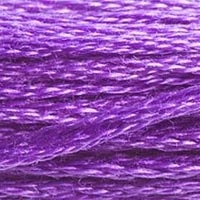
White Aida
Cream / Ecru
Black Aida
Pairs Well With
DMC colors commonly used alongside 208 Very Dark Lavender.
Suggested Palette
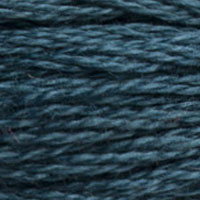
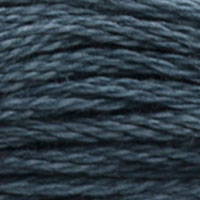
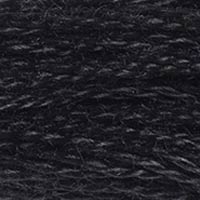
Shading Companions
Detailed Conversions
Where to Buy DMC 208
This section contains affiliate links. We may earn a small commission at no cost to you.
Related Guides
Free Printable Thread Conversion Chart
Pick a brand, enter your email, and we'll send you a printable chart mapping all 552 DMC colors to that brand's equivalents. Zero spam, one chart.
Thanks! Here's your free chart:
Download Your ChartOpens in a new tab. Use your browser's Print → Save as PDF.
No spam. Your email is stored securely and never shared.