
Quick Conversion Table
| Brand | Equivalent | Match |
|---|---|---|
| Anchor | 1039 | exact |
| Madeira | 1106 | close |
| Cosmo ⚠ | 2253 | close |
| Sullivans | 45115 | close |
| J&P Coats | 7161 | close |
| Dimensions | 6084 | close |
| Bucilla | 2712 | close |
| Candamar | 6084 | close |
Scandinavian Skies and Folk Art Heritage
There is a shade of blue that shows up in nearly every Scandinavian folk art tradition — painted on the panels of Norwegian rosemaling, woven into Swedish tapestries, printed onto Danish porcelain. It is not the bright, attention-seeking blue of a summer sky. It is cooler, greyer, more considered — a blue that has spent centuries under northern light and absorbed some of that silver-grey quality into itself. DMC 518 Light Wedgwood is that blue, and if you have ever tried to stitch a Nordic-inspired sampler or Scandinavian Christmas ornament and found yourself reaching for something that felt authentically northern, this is likely the thread you landed on.
The Wedgwood name tells you everything about the aesthetic lineage. Josiah Wedgwood's jasperware — those pale blue ceramic pieces with white classical reliefs — defined an entire visual vocabulary of refined, sophisticated blue in the 18th century. DMC 518 sits within that tradition: dusted, muted, civilized. It's the blue of a porcelain vase, not the blue of the ocean it was shipped across. There is restraint in this color, a quality of having been carefully mixed rather than found in nature.
The Swimming Pool Effect
Here is something worth knowing about 518 that the color card won't tell you: it is an almost perfect match for chlorinated swimming pool water seen from the deck on a slightly overcast day. Not the Caribbean-turquoise of a resort pool photograph, but the real color of real pool water in real residential backyards — that slightly grey-blue that shifts between blue and teal depending on the angle. If you're stitching a summer scene, a backyard design, or any piece that needs to represent realistic water rather than idealized water, 518 earns serious consideration over the brighter blues that first come to mind.
This quality extends to aviation themes too. The blue-grey of cockpit instruments, the color of sky at cruising altitude when you look straight ahead rather than straight up, the blue tint of aircraft windows — all of these live in 518's wheelhouse. It's a blue that knows something about grey, and that grey knowledge makes it more versatile than its more saturated cousins in the Wedgwood family.
Technique and Fabric Pairing
On white Aida at 14-count, 518 reads as a clean, definitive mid-tone blue — present without being pushy. On natural linen, the warmth of the fabric pulls out a slightly teal quality that's genuinely lovely, especially for heritage or folk art designs. If you're working a Hardanger or drawn-thread piece that calls for a colored thread rather than the traditional white, 518 on white evenweave provides just enough contrast to make the cut-thread areas dramatic without overwhelming the structural beauty of the technique.
For shading within the Wedgwood family, pair 518 with its darker sibling DMC 517 (Dark Wedgwood) and the lighter DMC 519 (Sky Blue) for a three-step gradient that handles everything from shadows to highlights in water, sky, or ceramic-themed designs. Extend downward with DMC 3765 (Very Dark Peacock Blue) for deep shadow areas, or push toward the light end with DMC 747 (Very Light Sky Blue) for ethereal highlights. This five-thread palette covers an enormous range of blue applications while maintaining the cool, sophisticated undertone that makes the Wedgwood family distinctive.
In mandala patterns and geometric designs, 518 excels as a mid-value fill that doesn't compete with the design's structural lines. Pair it with DMC 3799 (Very Dark Pewter Grey) or DMC 317 (Pewter Grey) for backstitch outlines and you get a clean, architectural quality — tile-like, almost mosaic-like — that emphasizes geometry over organic softness. It's a thread that respects structure rather than fighting it.
Matching the Wedgwood Grey-Blue Character
The Wedgwood blues occupy a specific territory — they're not pure blue, not teal, not grey, but a convergence of all three that's instantly recognizable and surprisingly hard to replicate if your substitute leans too far in any one direction. Anchor 1039 is an exact match and handles this balancing act beautifully. Of all the substitution options across this color family, the Anchor Wedgwood equivalents are among the most reliable brand-to-brand swaps in the entire thread spectrum.
Madeira 1106, also exact, delivers the same grey-blue balance with Madeira's characteristic slight sheen difference. The sheen is marginally higher than DMC's matte quality, but at this particular value and saturation the difference is negligible — the greyed-down character of the color absorbs surface finish variations more readily than a brighter or paler blue would.
Cosmo 2253, rated close, may introduce a hair more warmth than the DMC original. In a standalone application this won't register, but within a multi-thread Wedgwood gradient — 517, 518, 519 — the warmth could create a visible step where the color family should feel seamless. Test it in context before committing.
Sullivans 45115 covers the general territory. The key with any 518 substitute is to check it against grey. Hold a strand of your candidate next to a medium grey thread. If the blue is obviously dominant, your substitute is too saturated. In the real 518, the grey and blue coexist almost equally, and that equilibrium is the whole point of the Wedgwood character.
Reference quality
How We Validate This Color Record
Use this page as a reference card for DMC 518: the structured data, quick conversions, and long-form copy are all tied back to the same stored color record.
- Methodology
- This page renders DMC 518, its hex value, and every brand equivalent from the site's source-of-truth color record, then checks long-form body copy against those same stored fields.
- Verification status
- Source-field checked. The page content is audited against the stored DMC number, brand equivalents, and match-quality labels before publishing.
- Last reviewed
- 2026-04-20
- Approximation warning
- Screen hex values, thread photos, and cross-brand conversions are reference aids. Dye lots, thread sheen, and fabric color can still shift the result in hand.
Decision guide
When to use the DMC 518 reference page
This page should help you decide faster between palette planning, brand substitution, and shade comparison without turning the color record into a thin lookup page.
Best for
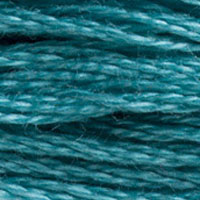
- + Palette planning when you want the stored DMC 518 Light Wedgwood record, hex value #4F93A7, and linked brand equivalents in one place.
- + Checking the quickest cross-brand shortlist before you buy floss, compare stash substitutes, or route into a more specific conversion page.
- + Finding nearby shades in the blues family before you commit to accents, shading, or background blends.
Watch for
- ! Screen previews are only reference aids. Light Wedgwood can shift on real fabric because thread sheen, stitch coverage, and room lighting change how the color reads.
- ! A stored equivalent is still a shortlist, not a guarantee that two brands will disappear into each other in the same stitched motif.
- ! Older charts, discontinued kit floss, and dye-lot variation can all introduce small but visible differences that the page cannot detect for you.
Before you commit
- Confirm the role of DMC 518 Light Wedgwood: decide whether you need an exact hero shade, a forgiving background, or a rough stash substitute.
- Compare on project fabric: view the skein or stitched sample on the same fabric count and color you will actually use.
- Use the linked conversion pages next: open the brand-specific pages when you need match-quality caveats before substituting away from the DMC reference.
DMC 518 FAQ
These questions appear on the page so the FAQ schema stays aligned with what visitors can actually read.
What is the Anchor equivalent of DMC 518?+
The closest Anchor equivalent to DMC 518 (Light Wedgwood) is Anchor 1039. This is an exact match.
What color is DMC 518?+
DMC 518 is called "Light Wedgwood" and has a hex color value of #4F93A7. It belongs to the blues color family.
What is the Madeira equivalent of DMC 518?+
The closest Madeira equivalent to DMC 518 (Light Wedgwood) is Madeira 1106. This is a close match.
How DMC 518 Looks on Fabric
The same thread appears different depending on your fabric. Always test on your project fabric.
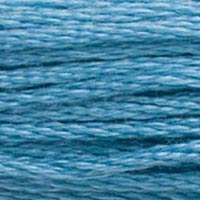
White Aida
Cream / Ecru
Black Aida
Pairs Well With
DMC colors commonly used alongside 518 Light Wedgwood.
Suggested Palette
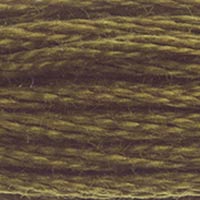
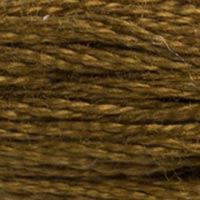
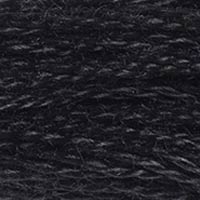
Shading Companions

Detailed Conversions
Where to Buy DMC 518
This section contains affiliate links. We may earn a small commission at no cost to you.
Related Guides
Free Printable Thread Conversion Chart
Pick a brand, enter your email, and we'll send you a printable chart mapping all 552 DMC colors to that brand's equivalents. Zero spam, one chart.
Thanks! Here's your free chart:
Download Your ChartOpens in a new tab. Use your browser's Print → Save as PDF.
No spam. Your email is stored securely and never shared.