
Quick Conversion Table
| Brand | Equivalent | Match |
|---|---|---|
| Anchor | 1066 | close |
| Madeira | 1108 | close |
| Cosmo ⚠ | 374 | close |
| Sullivans | 45407 | close |
| J&P Coats | 7168 | close |
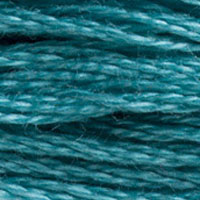
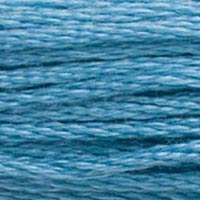
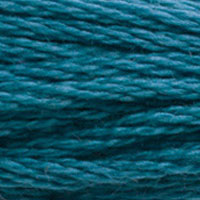
There's a debate among experienced stitchers about which thread in a gradient carries the most visual weight. Most assume it's the darkest value — the shadow anchor. But experienced colorists often argue it's the thread one step lighter than the darkest: the color that occupies the largest proportion of mid-to-dark area in a shaded design, the thread that the eye settles on as 'the color.' In the turquoise family, that thread is DMC 3810, Dark Turquoise. At hex #488E9A, it's a vivid, medium-dark turquoise-blue — saturated, clear, unmistakably turquoise — and in turquoise-heavy designs, it often carries more visual presence than any other thread in the sequence.
Where DMC 3808 (Ultra Very Dark Turquoise) and DMC 3809 (Very Dark Turquoise) provide depth and shadow, 3810 provides color identity. This is the turquoise that tells you the design is turquoise. It's bright enough that its blue-green balance is fully visible, dark enough that it reads as substantial rather than wispy or washed out.
Summer Themes and Coastal Designs
Summer cross-stitch — beach scenes, tropical motifs, ocean creatures, coastal cottage aesthetics — leans heavily on the turquoise range, and 3810 is typically the primary working thread in these palettes. The color of Mediterranean sea water, of a Caribbean reef lagoon seen from above, of well-used pool tiles in Mediterranean sunlight — 3810 reads as warm-weather water in a way that pure blues or pure greens don't quite achieve.
Marine life designs use this color in the water areas between animals, as the mid-depth water color in oceanscape backgrounds, and as one of the primary colors in turquoise-patterned fish like angel fish or parrotfish. Sea glass cross-stitch patterns — a popular theme in coastal and beach cottage design — use DMC 3810 as one of the characteristic sea glass colors, paired with DMC 3811 (Very Light Turquoise) and DMC 3761 (Light Sky Blue) for variation.
Design Characteristics at the Dark-Bright Threshold
What makes 3810 technically interesting is that it sits right at the threshold where a color can be both dark and bright simultaneously. Most truly dark colors have their brightness reduced by the darkness — they can be saturated, but they can't read as light. At 3810's value, you get both: the saturation of a fully-expressed color and enough value to cast shadow. This combination creates a luminous quality that lighter colors achieve through paleness and darker colors achieve through depth — but 3810 achieves it through a particular combination of both.
In thread painting and blended needle work, this quality makes 3810 useful as a mid-point in transitions that need to maintain the color's identity throughout the gradient. A strand of 3810 blended with a strand of DMC 3809 (Very Dark Turquoise) gives you an intermediate step that's clearly turquoise, clearly darker than 3810 alone, but not as shadowed as 3809 alone. This kind of granular value control is where the turquoise family's well-spaced steps earn their keep.
Stash quantity note: in large coastal or tropical-themed projects, 3810 is typically the thread that runs out first. Because it occupies the visual center of the turquoise range — the position the eye settles on as 'the turquoise color' — it gets used in the largest proportions. If you're planning a sizeable beach, mermaid, or underwater design, buying extra skeins of 3810 before you start saves the mid-project scramble of trying to find a matching dye lot. Two or three skeins for a medium-sized project is a reasonable precaution.
Anchor 1066, Madeira 1108, Cosmo 374, and Sullivans 45407 are all rated close for DMC 3810. No exact matches are available from any of the major brands in this position of the turquoise range, which is worth knowing if you're planning a project that will need multiple skeins of this color.
Anchor 1066 is the most frequently used substitute and generally reads well alongside DMC 3809. The Anchor equivalent tends to be accurate in value if not always perfectly matched in the exact blue-green balance — some lots read slightly more blue, others more green. In most designs, this within-turquoise variation is acceptable.
Madeira 1108 is close and is sometimes noted as slightly lighter than DMC 3810 in certain lots. If you're using Madeira as the substitute for the 'dark' in a three-step gradient, verify that it still reads darker than your mid-tone (which would be the Madeira equivalent of 3811). Cosmo 374 and Sullivans 45407 are workable, with Cosmo generally receiving slightly better comparative ratings from stitchers who've done systematic brand comparisons.
Within DMC, 3810's neighbors are 3809 (one step darker) and 3811 (one step lighter). If 3810 is unavailable and your design uses it as the main fill color, using a combination of 3809 and 3811 in alternating rows or as blended needle can approximate the missing value. It's more work, but it avoids the flat appearance of substituting a single non-matching thread.
Reference quality
How We Validate This Color Record
Use this page as a reference card for DMC 3810: the structured data, quick conversions, and long-form copy are all tied back to the same stored color record.
- Methodology
- This page renders DMC 3810, its hex value, and every brand equivalent from the site's source-of-truth color record, then checks long-form body copy against those same stored fields.
- Verification status
- Source-field checked. The page content is audited against the stored DMC number, brand equivalents, and match-quality labels before publishing.
- Last reviewed
- 2026-04-20
- Approximation warning
- Screen hex values, thread photos, and cross-brand conversions are reference aids. Dye lots, thread sheen, and fabric color can still shift the result in hand.
Decision guide
When to use the DMC 3810 reference page
This page should help you decide faster between palette planning, brand substitution, and shade comparison without turning the color record into a thin lookup page.
Best for
- + Palette planning when you want the stored DMC 3810 Dark Turquoise record, hex value #488E9A, and linked brand equivalents in one place.
- + Checking the quickest cross-brand shortlist before you buy floss, compare stash substitutes, or route into a more specific conversion page.
- + Finding nearby shades in the blues family before you commit to accents, shading, or background blends.
Watch for
- ! Screen previews are only reference aids. Dark Turquoise can shift on real fabric because thread sheen, stitch coverage, and room lighting change how the color reads.
- ! A stored equivalent is still a shortlist, not a guarantee that two brands will disappear into each other in the same stitched motif.
- ! Older charts, discontinued kit floss, and dye-lot variation can all introduce small but visible differences that the page cannot detect for you.
Before you commit
- Confirm the role of DMC 3810 Dark Turquoise: decide whether you need an exact hero shade, a forgiving background, or a rough stash substitute.
- Compare on project fabric: view the skein or stitched sample on the same fabric count and color you will actually use.
- Use the linked conversion pages next: open the brand-specific pages when you need match-quality caveats before substituting away from the DMC reference.
DMC 3810 FAQ
These questions appear on the page so the FAQ schema stays aligned with what visitors can actually read.
What is the Anchor equivalent of DMC 3810?+
The closest Anchor equivalent to DMC 3810 (Dark Turquoise) is Anchor 1066. This is a close match.
What color is DMC 3810?+
DMC 3810 is called "Dark Turquoise" and has a hex color value of #488E9A. It belongs to the blues color family.
What is the Madeira equivalent of DMC 3810?+
The closest Madeira equivalent to DMC 3810 (Dark Turquoise) is Madeira 1108. This is a close match.
How DMC 3810 Looks on Fabric
The same thread appears different depending on your fabric. Always test on your project fabric.
White Aida
Cream / Ecru
Black Aida
Pairs Well With
DMC colors commonly used alongside 3810 Dark Turquoise.
Suggested Palette
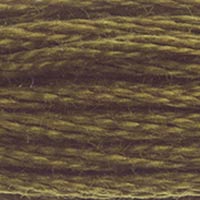
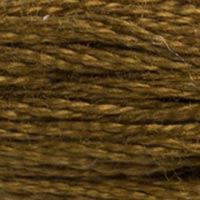
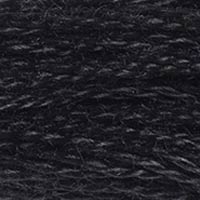
Shading Companions

Detailed Conversions
Where to Buy DMC 3810
This section contains affiliate links. We may earn a small commission at no cost to you.
Related Guides
Free Printable Thread Conversion Chart
Pick a brand, enter your email, and we'll send you a printable chart mapping all 552 DMC colors to that brand's equivalents. Zero spam, one chart.
Thanks! Here's your free chart:
Download Your ChartOpens in a new tab. Use your browser's Print → Save as PDF.
No spam. Your email is stored securely and never shared.