
Quick Conversion Table
| Brand | Equivalent | Match |
|---|---|---|
| Anchor | 267 | exact |
| Madeira | 1504 | close |
| Cosmo ⚠ | 633 | close |
| Sullivans | 45104 | close |
| J&P Coats | 6261 | close |
| Dimensions | 16261 | close |
| Candamar | 6071 | close |
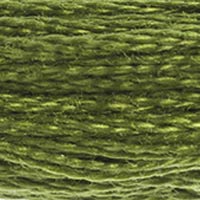
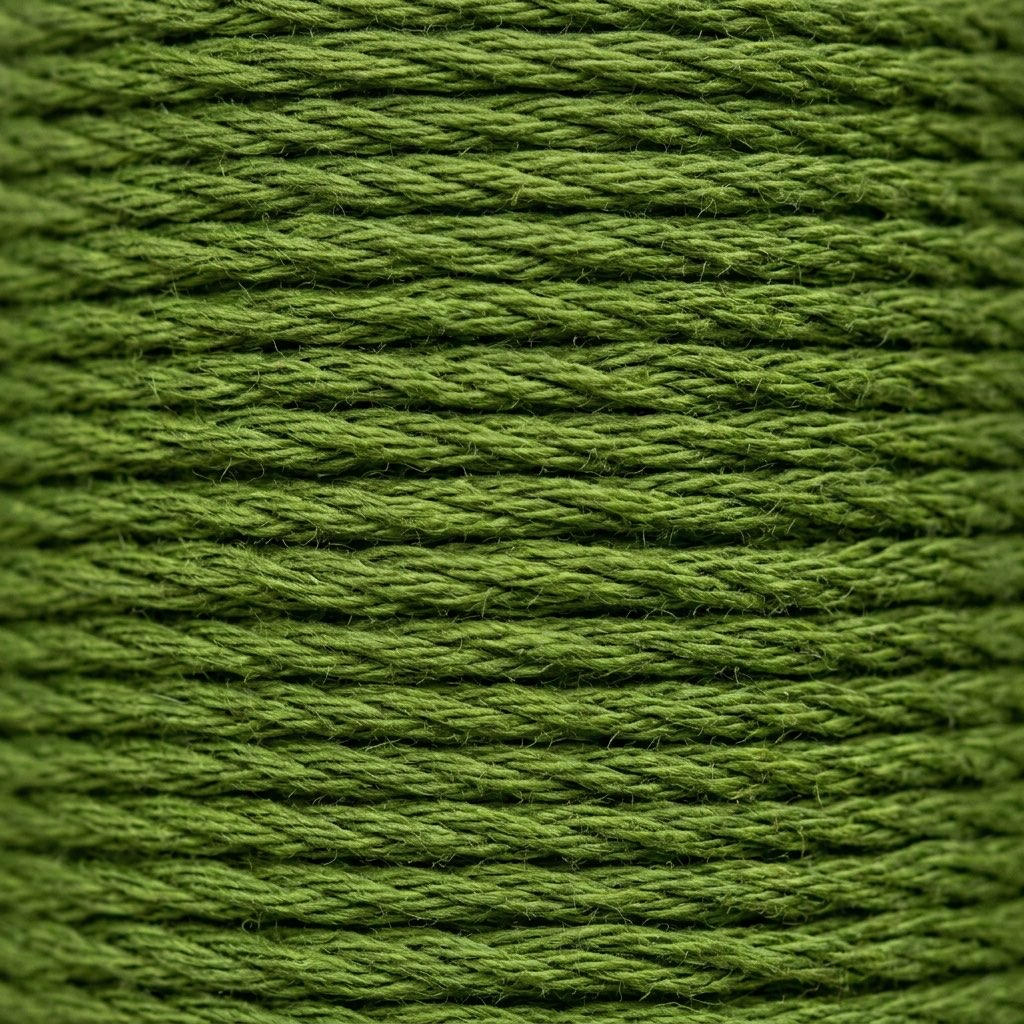
Few colors in the DMC catalog are as immediately, viscerally recognizable by name as Avocado Green. The name alone conjures the precise shade: the dark, slightly khaki green of avocado skin — not the flesh, not the pit, but the rough exterior of a just-ripe Hass avocado. It's a warm green with clear yellow and olive components, grounding rather than lively, sophisticated rather than cheerful. Stitchers who work extensively with naturalistic greens know that 469 is one of those colors that solves problems other greens can't.
The Avocado Family — Four Steps of a Distinguished Gradient
DMC has built an unusually complete gradient around the avocado concept, running from 469 (Avocado Green) as the darkest through DMC 470 (Light Avocado Green), DMC 471 (Very Light Avocado Green), and DMC 472 (Ultra Light Avocado Green) at the lightest end. This four-step family gives you an entire foliage range from deep shadow to bright highlight without ever leaving the warm yellow-green territory — a complete botanical palette tool that many experienced stitchers keep stocked in multiples.
The key characteristic that unites this family is the warm, slightly golden undertone that separates it from the cooler forest greens and the bluer-green celadon family. This warmth is what makes avocado greens read as "Mediterranean" — associated with olive trees, dry summer hillsides, herbs like rosemary and thyme, and the general quality of warm-climate vegetation. Where forest greens evoke cool, moist northern habitats, avocado greens suggest sun and dryness.
Where This Specific Shade (469) Excels
As the darkest of the avocado family, 469 functions in several important roles. In botanical illustrations of actual avocados, it's the obvious primary skin color. In olive branch designs, it's close enough to olive that it can carry the whole design as a single-thread choice when simplicity is desired. In herb and kitchen-themed designs — rosemary, sage, thyme, bay leaves — it suggests the color of dried and still-green herb bundles without looking artificially vivid.
Beyond its literal food and plant applications, 469 works beautifully in designs featuring military green, khaki, and olive drab color schemes. Cross-stitch patterns depicting vintage military imagery, WWII-era aircraft, or field equipment often use 469 as a primary fill color. It's also one of the better choices for lichen on tree bark in woodland designs — the olive-meets-green quality is nearly identical to certain common lichen species.
Working with Avocado Green in Practice
On white Aida, 469 reads clearly as a dark, warm, olive-influenced green. On natural linen, the warmth of the fabric enhances the olive component, pushing it toward a slightly richer khaki that many stitchers find more appealing than the starker white-Aida version. For pieces that benefit from an earthy, organic quality, linen is the right substrate for this thread family.
Backstitching with 469 on lighter avocado or yellow-green areas produces a softer, more naturalistic outline than using standard black or brown. Botanical designs that aim for a painted or watercolor quality often use darker versions of the dominant green for outlining — and 469 does exactly this job for the lighter members of its own family.
The exact match ratings from Anchor 267 and Madeira 1504 are the most reassuring thing about the substitution picture for 469. Both are well-documented, well-tested matches that stitchers have relied on for years. If you're a primarily Anchor stitcher, 267 should be genuinely interchangeable with 469 in the vast majority of applications.
Madeira 1504 is equally trustworthy. The Madeira avocado green family is well-made and the dye lot consistency is reliable. For large projects requiring multiple skeins, Madeira is a sound investment — you're unlikely to find visible variation between purchases.
Cosmo 633 is rated close and performs well, though it tends to read slightly more yellow-green and less olive-brown than the DMC original. This is a noticeable difference when threads are compared directly, but in practice, the question is whether this shift matters for your specific design. In purely botanical contexts where precise color accuracy is critical, the difference is worth considering. In decorative designs where "dark warm green" is the main requirement, Cosmo 633 is entirely adequate.
Sullivans 45104 is serviceable for general use. The avocado green range in Sullivans is reasonably well-matched and performs adequately for casual stitching. For large fill areas where cost is a significant factor, using Sullivans for 469 in background areas while using DMC for more visible foreground elements is a legitimate economy strategy.
Within DMC's range, DMC 730 (Very Dark Olive Green) is the closest alternative if 469 is unavailable — slightly more olive and less warm-green, but in the same general territory for most applications.
Reference quality
How We Validate This Color Record
Use this page as a reference card for DMC 469: the structured data, quick conversions, and long-form copy are all tied back to the same stored color record.
- Methodology
- This page renders DMC 469, its hex value, and every brand equivalent from the site's source-of-truth color record, then checks long-form body copy against those same stored fields.
- Verification status
- Source-field checked. The page content is audited against the stored DMC number, brand equivalents, and match-quality labels before publishing.
- Last reviewed
- 2026-04-20
- Approximation warning
- Screen hex values, thread photos, and cross-brand conversions are reference aids. Dye lots, thread sheen, and fabric color can still shift the result in hand.
Decision guide
When to use the DMC 469 reference page
This page should help you decide faster between palette planning, brand substitution, and shade comparison without turning the color record into a thin lookup page.
Best for
- + Palette planning when you want the stored DMC 469 Avocado Green record, hex value #72843C, and linked brand equivalents in one place.
- + Checking the quickest cross-brand shortlist before you buy floss, compare stash substitutes, or route into a more specific conversion page.
- + Finding nearby shades in the greens family before you commit to accents, shading, or background blends.
Watch for
- ! Screen previews are only reference aids. Avocado Green can shift on real fabric because thread sheen, stitch coverage, and room lighting change how the color reads.
- ! A stored equivalent is still a shortlist, not a guarantee that two brands will disappear into each other in the same stitched motif.
- ! Older charts, discontinued kit floss, and dye-lot variation can all introduce small but visible differences that the page cannot detect for you.
Before you commit
- Confirm the role of DMC 469 Avocado Green: decide whether you need an exact hero shade, a forgiving background, or a rough stash substitute.
- Compare on project fabric: view the skein or stitched sample on the same fabric count and color you will actually use.
- Use the linked conversion pages next: open the brand-specific pages when you need match-quality caveats before substituting away from the DMC reference.
DMC 469 FAQ
These questions appear on the page so the FAQ schema stays aligned with what visitors can actually read.
What is the Anchor equivalent of DMC 469?+
The closest Anchor equivalent to DMC 469 (Avocado Green) is Anchor 267. This is an exact match.
What color is DMC 469?+
DMC 469 is called "Avocado Green" and has a hex color value of #72843C. It belongs to the greens color family.
What is the Madeira equivalent of DMC 469?+
The closest Madeira equivalent to DMC 469 (Avocado Green) is Madeira 1504. This is a close match.
How DMC 469 Looks on Fabric
The same thread appears different depending on your fabric. Always test on your project fabric.
White Aida
Cream / Ecru
Black Aida
Pairs Well With
DMC colors commonly used alongside 469 Avocado Green.
Suggested Palette
Shading Companions
Detailed Conversions
Where to Buy DMC 469
This section contains affiliate links. We may earn a small commission at no cost to you.
Related Guides
Free Printable Thread Conversion Chart
Pick a brand, enter your email, and we'll send you a printable chart mapping all 552 DMC colors to that brand's equivalents. Zero spam, one chart.
Thanks! Here's your free chart:
Download Your ChartOpens in a new tab. Use your browser's Print → Save as PDF.
No spam. Your email is stored securely and never shared.