
DMC 122 — Variegated Grass Green
Greens family · Hex #608040
Quick Conversion Table
| Brand | Equivalent | Match |
|---|---|---|
| Anchor | 262 | close |
| Madeira | 1602 | close |
| Cosmo ⚠ | 2592 | close |
| Sullivans | 45317 | close |
A Meadow in a Skein
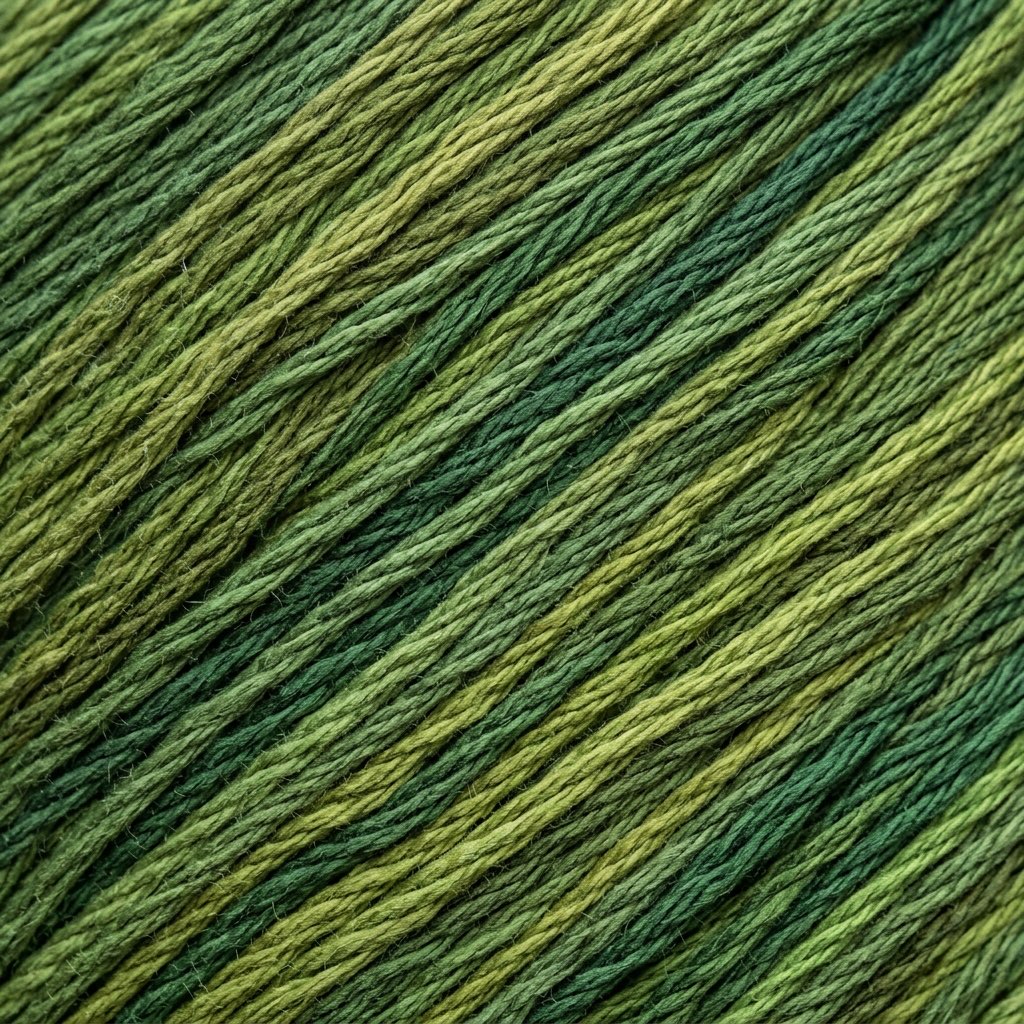
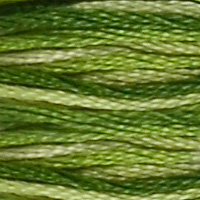
Pick a single blade of grass and really look at it. Not the platonic ideal of "green" — the actual thing. It's lighter near the tip where the sun bleaches it, deeper and richer where the blade thickens toward the base, sometimes almost yellowish where new growth emerges. A real meadow contains dozens of greens all tangled together, shifting with wind and light and season. DMC 122, Variegated Grass Green, captures that complexity in a way that no solid thread can.
This variegated moves through a range of warm, yellow-leaning greens — from a deeper olive-grass tone into a lighter, almost springy mid-green. The color range stays firmly in warm-green territory, never straying into blue-green or teal. That's significant because it means 122 plays beautifully with the earthy side of your palette: browns, golds, warm yellows, rusts. It's a variegated thread that feels grounded rather than decorative.
The warmth of this thread's green range deserves emphasis. Plenty of green threads in DMC's lineup lean cool — the teals, the emeralds, the blue-greens. DMC 122 lives in the opposite camp. It's the green of sunlit fields, of grass in July, of the olive groves you see in Tuscan landscape patterns. That warmth determines everything about how you use it: which companion threads work, which fabric colors enhance it, and what kinds of designs benefit most from its particular character.
Technique Notes for Variegated Greens in Nature Scenes
Landscape stitchers have a special relationship with variegated greens because they solve what might be the hardest problem in thread-based art: making foliage look alive. A tree stitched in a single green is a symbol of a tree. A tree stitched with DMC 122 starts to look like something that actually grows. The value shifts create an automatic sense of light and shadow within the canopy, and because the transitions happen organically rather than by your conscious placement, the result avoids that paint-by-numbers quality that plagues many cross-stitch landscapes.
That said, you still have to think about technique. Parking — where you leave your needle at the edge of each color area and pick it up later — works well with 122 if you want to control which value appears where. Start each parked thread at the same point in the color cycle, and you'll get more consistency. For looser, more impressionistic work, just grab your thread and go. The randomness is feature, not bug.
On Aida, 122 performs predictably and well. But try it on 32-count linen over two threads and something magical happens: the linen texture breaks up the color transitions even further, creating a pointillist quality that's stunning for meadow and hillside areas. The fabric becomes part of the palette, its natural cream filling the tiny gaps between stitches with warmth that enhances the thread's own warm-green character.
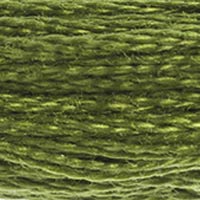
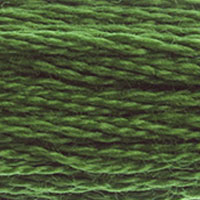
For palette building, anchor your variegated with solids on either side of its range. DMC 3363 (Medium Pine Green) provides a deeper, steadier version of 122's darkest tones for shadows and outlines. DMC 3348 (Light Yellow Green) extends the light end of the range into sunlit highlights. And DMC 3012 (Medium Khaki Green) offers a muted, brownish alternative for areas where the grass transitions into dried fields or autumn growth.
Matching the Warm Side of Green Variegation
Variegated greens are where substitution gets genuinely tricky, because the difference between a warm-green variegated and a cool-green variegated is the difference between a sun-drenched meadow and a shaded forest floor. DMC 122 sits firmly on the warm side, and any substitute needs to respect that.
Anchor 262 is a close match, though as with all variegated cross-brand comparisons, the repeat length and transition sharpness may differ. Anchor's version tends to have slightly shorter color cycles, which means more frequent transitions in a given stitched area — more "busy" on large fills, more interesting on small motifs. Test on your actual fabric before committing to a full project.
Madeira 1602 brings the typical Madeira sheen, which on a warm green variegated creates a lively, almost iridescent surface quality. For naturalistic landscapes this extra shine might feel too polished, but for decorative pieces — Celtic knots, botanical borders, abstract geometrics — it's a genuine enhancement.
If you can't source any variegated match and need to approximate with solids, a blended needle approach works surprisingly well here. Thread your needle with one strand of DMC 469 (Avocado Green) and one of DMC 471 (Very Light Avocado Green). The two strands twist together as you stitch, creating a muted, naturalistic variation that captures the spirit of 122's grass-green shifting without the formal repeat pattern of true variegation. It won't be identical, but for fill areas in landscape designs, most viewers won't notice the difference in the finished piece.
Reference quality
How We Validate This Color Record
Use this page as a reference card for DMC 122: the structured data, quick conversions, and long-form copy are all tied back to the same stored color record.
- Methodology
- This page renders DMC 122, its hex value, and every brand equivalent from the site's source-of-truth color record, then checks long-form body copy against those same stored fields.
- Verification status
- Source-field checked. The page content is audited against the stored DMC number, brand equivalents, and match-quality labels before publishing.
- Last reviewed
- 2026-04-20
- Approximation warning
- Screen hex values, thread photos, and cross-brand conversions are reference aids. Dye lots, thread sheen, and fabric color can still shift the result in hand.
Decision guide
When to use the DMC 122 reference page
This page should help you decide faster between palette planning, brand substitution, and shade comparison without turning the color record into a thin lookup page.
Best for
- + Palette planning when you want the stored DMC 122 Variegated Grass Green record, hex value #608040, and linked brand equivalents in one place.
- + Checking the quickest cross-brand shortlist before you buy floss, compare stash substitutes, or route into a more specific conversion page.
- + Finding nearby shades in the greens family before you commit to accents, shading, or background blends.
Watch for
- ! Screen previews are only reference aids. Variegated Grass Green can shift on real fabric because thread sheen, stitch coverage, and room lighting change how the color reads.
- ! A stored equivalent is still a shortlist, not a guarantee that two brands will disappear into each other in the same stitched motif.
- ! Older charts, discontinued kit floss, and dye-lot variation can all introduce small but visible differences that the page cannot detect for you.
Before you commit
- Confirm the role of DMC 122 Variegated Grass Green: decide whether you need an exact hero shade, a forgiving background, or a rough stash substitute.
- Compare on project fabric: view the skein or stitched sample on the same fabric count and color you will actually use.
- Use the linked conversion pages next: open the brand-specific pages when you need match-quality caveats before substituting away from the DMC reference.
DMC 122 FAQ
These questions appear on the page so the FAQ schema stays aligned with what visitors can actually read.
What is the Anchor equivalent of DMC 122?+
The closest Anchor equivalent to DMC 122 (Variegated Grass Green) is Anchor 262. This is a close match.
What color is DMC 122?+
DMC 122 is called "Variegated Grass Green" and has a hex color value of #608040. It belongs to the greens color family.
What is the Madeira equivalent of DMC 122?+
The closest Madeira equivalent to DMC 122 (Variegated Grass Green) is Madeira 1602. This is a close match.
How DMC 122 Looks on Fabric
The same thread appears different depending on your fabric. Always test on your project fabric.
White Aida
Cream / Ecru
Black Aida
Pairs Well With
DMC colors commonly used alongside 122 Variegated Grass Green.
Suggested Palette
Shading Companions
Detailed Conversions
Where to Buy DMC 122
This section contains affiliate links. We may earn a small commission at no cost to you.
Related Guides
Free Printable Thread Conversion Chart
Pick a brand, enter your email, and we'll send you a printable chart mapping all 552 DMC colors to that brand's equivalents. Zero spam, one chart.
Thanks! Here's your free chart:
Download Your ChartOpens in a new tab. Use your browser's Print → Save as PDF.
No spam. Your email is stored securely and never shared.