
Quick Conversion Table
| Brand | Equivalent | Match |
|---|---|---|
| Anchor | 267 | close |
| Madeira | 1405 | close |
| Cosmo ⚠ | 974 | close |
| Sullivans | 45319 | close |
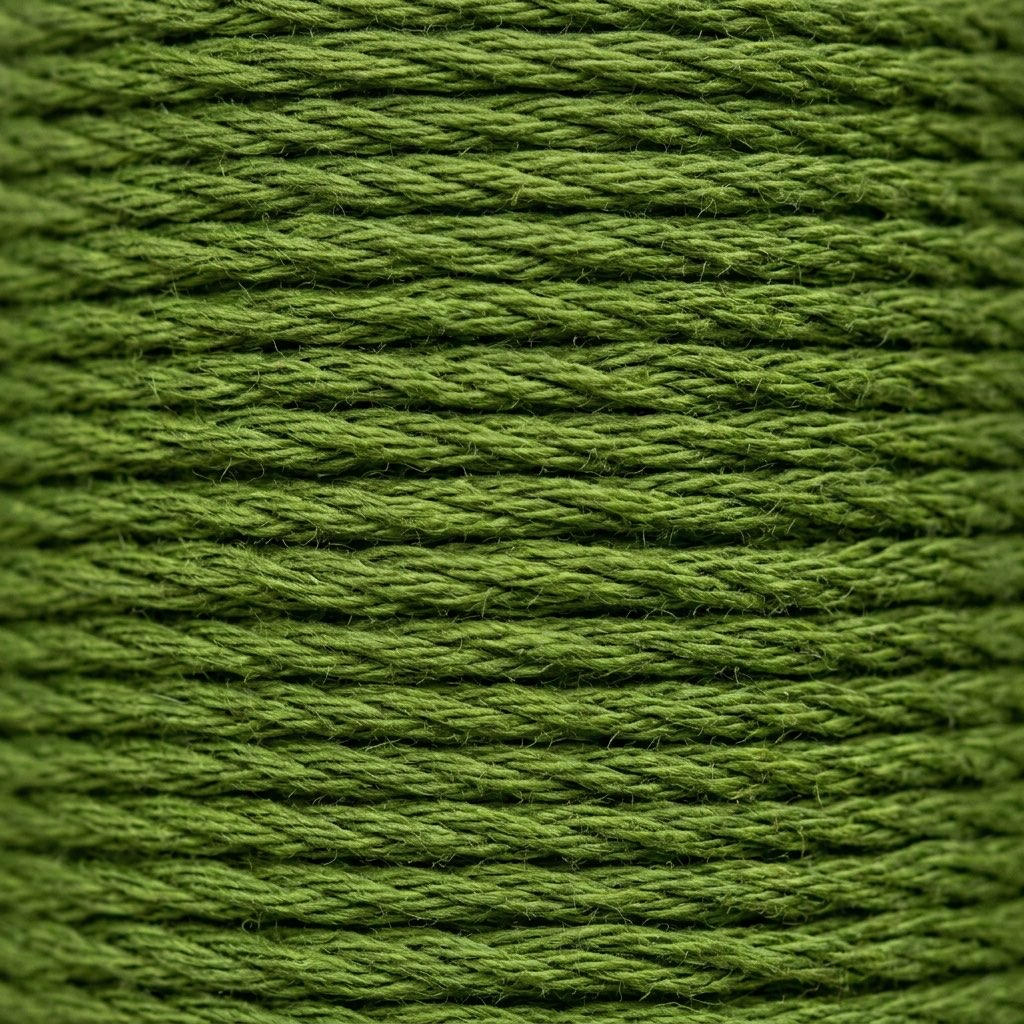
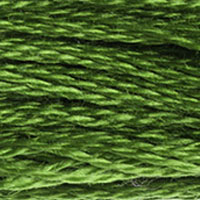
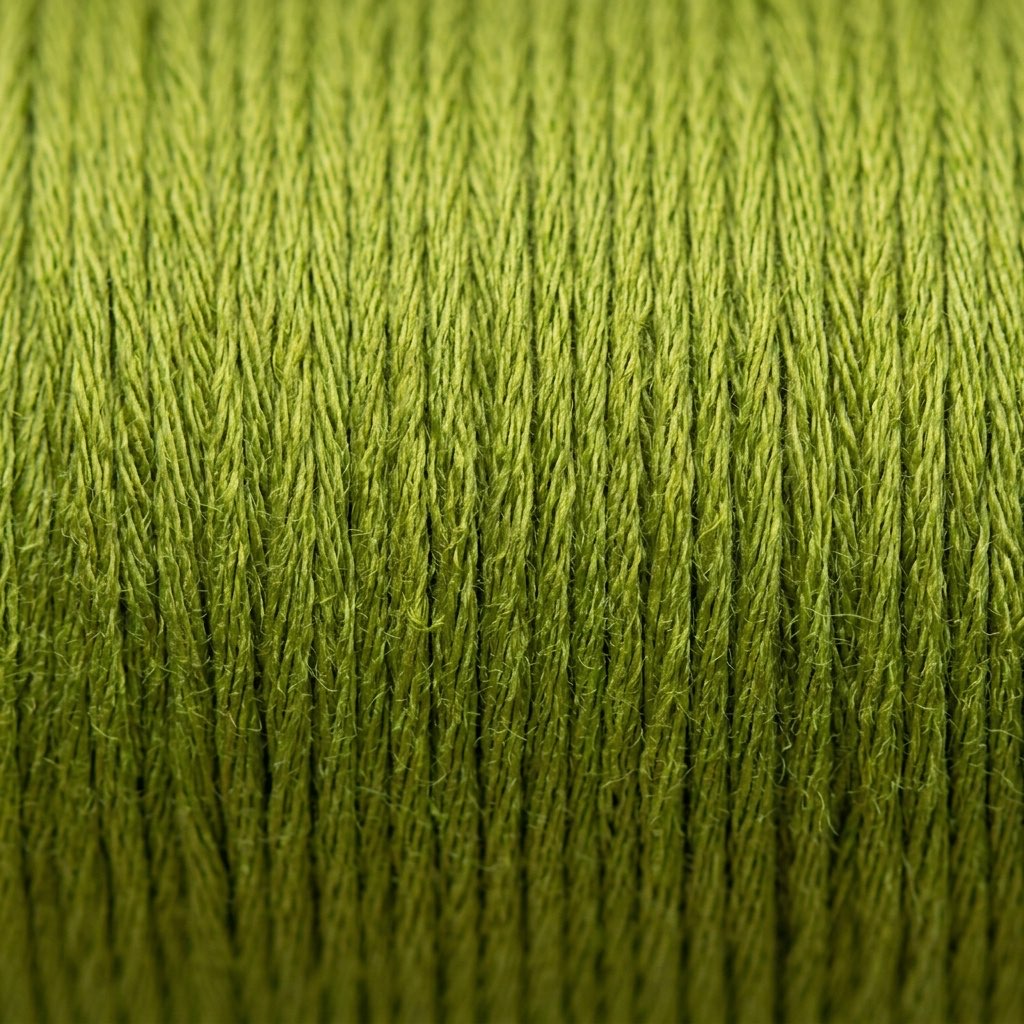
Mow a lawn and look at the cut section from the side: the still-standing grass at eye level shows a deep, rich green with clear yellow warmth — not as dark as the shadow zones below, not as bright as the sunlit tips above. This is the middle value of a grass gradient, and it's the value that does the most visual work in any rendering of vegetation. DMC 481 Dark Grass Green lives here. Despite the "dark" descriptor, at its actual hex value it's a fully readable, rich medium-dark green — the primary working color for anyone stitching grass, lawns, fields, or most kinds of leafy outdoor vegetation.
The Paradox of "Dark" in a Three-Value Family
When a three-value color family spans a complete value range (very dark, dark, and medium or light), the middle member often carries the largest share of the visual work. This is true for DMC 481 — while it's called "dark," it reads as the primary visual statement of the grass green family in most finished pieces. DMC 480 (Very Dark Grass Green) creates the shadow zones, and DMC 482 (Grass Green) provides the highlights and lighter sections, but 481 fills the body of any grass or foliage design and defines what that color family looks like overall.
Stitchers planning a landscape design with grassy areas should purchase more 481 than 480 or 482, even if the pattern counts are similar — large fill areas go through thread faster than highlights and shadows, and running out of your primary midtone halfway through a WIP is a specific kind of frustrating that experienced stitchers recognize immediately.
Versatility in Nature Designs
481 is one of those greens that manages to represent a wide variety of plant types convincingly. Real grass, certainly — but also the stems of many flowers, the veins and stems of large tropical leaves, the rough exterior of certain gourds and vegetables, the body coloration of grasshoppers and certain lizard species, and the general midtone of any design where "medium-dark green" is what's needed without particular warmth or coolness specificity. It avoids the yellowish olive quality of the avocado family and the cool, blue-influenced quality of the forest green and teal families, sitting in a clean, warm-but-not-extreme green zone that reads as simply, unambiguously green.
For stitchers working garden and allotment-themed designs — a growing genre thanks to the popularity of kitchen garden aesthetics in home decor — 481 is a natural primary green for vegetables, stems, and foliage backgrounds. Paired with DMC 733 (Medium Olive) for warm variety and DMC 3814 (Antique Teal) for cool contrast, it can anchor a complex kitchen garden palette.
Backstitch and Outlining
481 can serve as a backstitch color on lighter green fills — softer than black or dark brown, it creates visible but not harsh outlines on stems and leaf veins. This technique is particularly effective in floral designs where the goal is a hand-painted quality rather than a graphic, high-contrast look. Stitching a single strand of 481 as backstitch on areas filled with lighter greens like DMC 471 (Very Light Avocado Green) or DMC 3013 (Light Khaki Green) creates a cohesive, botanically accurate line quality.
Anchor 267 is a close match and a reliable substitute. This Anchor number sits in a well-stocked part of their green range, which means availability at both local needlework shops and online retailers is generally good. The color tracks 481 closely enough that switching to Anchor 267 for this shade in a larger project shouldn't create visible inconsistencies with DMC threads in surrounding areas.
Madeira 1405 performs well. As with the other grass green family members, Madeira's coverage and dye consistency in this zone are reliable. If you're purchasing thread for a large landscape project in this family, Madeira is worth considering as a primary source for the full grass green range rather than just a backup for one shade.
Cosmo 974 is a solid substitute. As noted in the 480 entry, the Cosmo grass green family (973–975) is internally well-matched, so if you're already using Cosmo for 480 in shadow areas, continuing with Cosmo 974 for 481 midtones maintains better internal consistency than switching to DMC for one shade.
Sullivans 45319 is appropriate for casual work and large-area fills where cost management is a priority. The mid-range grass greens in the Sullivans lineup are reasonable performers — not as precisely calibrated as the premium brands but sufficiently green for most stitching contexts.
Within DMC's own range, DMC 3347 (Medium Yellow Green) is in similar territory with a slightly more yellow push. DMC 733 (Medium Olive) is another dark warm green neighbor that can serve in a pinch with some color character trade-off.
Reference quality
How We Validate This Color Record
Use this page as a reference card for DMC 481: the structured data, quick conversions, and long-form copy are all tied back to the same stored color record.
- Methodology
- This page renders DMC 481, its hex value, and every brand equivalent from the site's source-of-truth color record, then checks long-form body copy against those same stored fields.
- Verification status
- Source-field checked. The page content is audited against the stored DMC number, brand equivalents, and match-quality labels before publishing.
- Last reviewed
- 2026-04-20
- Approximation warning
- Screen hex values, thread photos, and cross-brand conversions are reference aids. Dye lots, thread sheen, and fabric color can still shift the result in hand.
Decision guide
When to use the DMC 481 reference page
This page should help you decide faster between palette planning, brand substitution, and shade comparison without turning the color record into a thin lookup page.
Best for
- + Palette planning when you want the stored DMC 481 Dark Grass Green record, hex value #6A8820, and linked brand equivalents in one place.
- + Checking the quickest cross-brand shortlist before you buy floss, compare stash substitutes, or route into a more specific conversion page.
- + Finding nearby shades in the greens family before you commit to accents, shading, or background blends.
Watch for
- ! Screen previews are only reference aids. Dark Grass Green can shift on real fabric because thread sheen, stitch coverage, and room lighting change how the color reads.
- ! A stored equivalent is still a shortlist, not a guarantee that two brands will disappear into each other in the same stitched motif.
- ! Older charts, discontinued kit floss, and dye-lot variation can all introduce small but visible differences that the page cannot detect for you.
Before you commit
- Confirm the role of DMC 481 Dark Grass Green: decide whether you need an exact hero shade, a forgiving background, or a rough stash substitute.
- Compare on project fabric: view the skein or stitched sample on the same fabric count and color you will actually use.
- Use the linked conversion pages next: open the brand-specific pages when you need match-quality caveats before substituting away from the DMC reference.
DMC 481 FAQ
These questions appear on the page so the FAQ schema stays aligned with what visitors can actually read.
What is the Anchor equivalent of DMC 481?+
The closest Anchor equivalent to DMC 481 (Dark Grass Green) is Anchor 267. This is a close match.
What color is DMC 481?+
DMC 481 is called "Dark Grass Green" and has a hex color value of #6A8820. It belongs to the greens color family.
What is the Madeira equivalent of DMC 481?+
The closest Madeira equivalent to DMC 481 (Dark Grass Green) is Madeira 1405. This is a close match.
How DMC 481 Looks on Fabric
The same thread appears different depending on your fabric. Always test on your project fabric.
White Aida
Cream / Ecru
Black Aida
Pairs Well With
DMC colors commonly used alongside 481 Dark Grass Green.
Suggested Palette
Shading Companions
Detailed Conversions
Where to Buy DMC 481
This section contains affiliate links. We may earn a small commission at no cost to you.
Related Guides
Free Printable Thread Conversion Chart
Pick a brand, enter your email, and we'll send you a printable chart mapping all 552 DMC colors to that brand's equivalents. Zero spam, one chart.
Thanks! Here's your free chart:
Download Your ChartOpens in a new tab. Use your browser's Print → Save as PDF.
No spam. Your email is stored securely and never shared.