
Quick Conversion Table
| Brand | Equivalent | Match |
|---|---|---|
| Anchor | 243 | exact |
| Madeira | 1402 | close |
| Cosmo ⚠ | 318 | close |
| Sullivans | 45309 | close |
| J&P Coats | 6258 | close |
| Bucilla | 1988 | close |
If you could only own one forest green thread, DMC 988 Medium Forest Green would be the most defensible choice. It's positioned at the exact middle of the forest green value range — not so dark that it can only serve as a shadow color, not so light that it fails to ground foliage with genuine depth. This midpoint position is the most flexible in any value progression, and it means 988 can serve as the primary fill, the only green in a simplified palette, or the bridge between dark and light in a more complete shading sequence depending on what the design requires.
The color itself reads as a genuine, earthy, natural green — the kind of green that doesn't shout or perform, but simply convinces you that you're looking at actual forest. There's a slight olive undertone that prevents it from being purely vivid or saturated, and this naturalistic quality is what separates it from the more decorative Christmas greens (DMC 699, 700, 701) that read as holiday-coded rather than broadly natural.
The Most-Used Green in Botanical Work
Across botanical samplers, garden designs, floral bouquet pieces, and nature-inspired cross-stitch, DMC 988 is among the most-consumed single green threads. It handles leaf fills across a wide range of plant types — rose leaves, fern fronds, ivy vines, broad tropical leaves, grass areas — without the specificity that would limit it to one type of foliage. This generalism is a genuine strength.
In the forest green family progression (DMC 987, 988, 989), 988 is typically where the majority of design area falls. The darkest and lightest values (987 and 989) add shading definition, but 988 fills the body — the broad mid-lit leaf surfaces, the base of stems, the main visible area of a plant element that isn't in direct highlight or deep shadow.
Seasonal Ubiquity
Spring, summer, and Christmas designs all call on DMC 988. In spring and summer botanical work, it's the natural-feeling green that keeps foliage from reading as artificial or over-saturated. In Christmas pieces, it handles pine bough mid-tones, wreath base fill, and the areas of holly leaves between highlight and shadow. It appears in Hanukkah adjacent designs for foliage accents, in harvest autumn borders for the last green elements before the warm tones take over, and in St. Patrick's Day designs for shamrock fills.
Stitchers who track their thread consumption often find DMC 988 in their top five most-used threads of the year, even when they aren't specifically working on foliage-heavy designs — it simply appears on so many pattern lists as a supporting color that the accumulation across multiple projects is substantial.
For those new to the hobby who are building a starter stash, 988 belongs in the initial purchase alongside the neutrals, primary colors, and skin tones. It's one of those threads where not having it when you need it is reliably frustrating, because the substitution options in the same value range are either warmer (too olive), cooler (too blue-green), or more saturated (too vivid) than what DMC 988's natural, grounded quality provides.
Anchor 243 is an exact match and is among the better-supported conversions in the green family. The natural, slightly olive quality of DMC 988 is maintained in Anchor's version, making it a reliable substitute for botanical and foliage work where that naturalistic character is important. Anchor 243 is generally available wherever Anchor threads are stocked.
Madeira 1402 also matches exactly. Madeira's forest green range is consistently produced, and 1402 holds up well as a substitute for both general foliage work and holiday designs. Colorfastness is good, which matters for pieces that will be displayed in ambient light for long periods.
Cosmo 318 is close. For most botanical and foliage applications, Cosmo's interpretation of medium forest green works reliably. Slight differences in the olive undertone may appear on careful comparison, but these are unlikely to be noticeable in finished pieces at normal viewing distance.
Sullivans 45309 is close. For everyday stitching projects where the natural forest green character is the priority, Sullivans works well in this range.
- The 987-988-989 trio is the most natural three-value green progression for botanical and landscape work — having all three consistently stocked means you're never caught out on a foliage-heavy project.
- If you're building a single-green shortcut palette, DMC 988 is the one to choose — it covers more ground as a standalone green than either the darker 987 or the lighter 989 would alone.
Reference quality
How We Validate This Color Record
Use this page as a reference card for DMC 988: the structured data, quick conversions, and long-form copy are all tied back to the same stored color record.
- Methodology
- This page renders DMC 988, its hex value, and every brand equivalent from the site's source-of-truth color record, then checks long-form body copy against those same stored fields.
- Verification status
- Source-field checked. The page content is audited against the stored DMC number, brand equivalents, and match-quality labels before publishing.
- Last reviewed
- 2026-04-20
- Approximation warning
- Screen hex values, thread photos, and cross-brand conversions are reference aids. Dye lots, thread sheen, and fabric color can still shift the result in hand.
Decision guide
When to use the DMC 988 reference page
This page should help you decide faster between palette planning, brand substitution, and shade comparison without turning the color record into a thin lookup page.
Best for
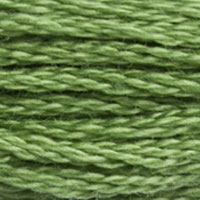
- + Palette planning when you want the stored DMC 988 Medium Forest Green record, hex value #738B5B, and linked brand equivalents in one place.
- + Checking the quickest cross-brand shortlist before you buy floss, compare stash substitutes, or route into a more specific conversion page.
- + Finding nearby shades in the greens family before you commit to accents, shading, or background blends.
Watch for
- ! Screen previews are only reference aids. Medium Forest Green can shift on real fabric because thread sheen, stitch coverage, and room lighting change how the color reads.
- ! A stored equivalent is still a shortlist, not a guarantee that two brands will disappear into each other in the same stitched motif.
- ! Older charts, discontinued kit floss, and dye-lot variation can all introduce small but visible differences that the page cannot detect for you.
Before you commit
- Confirm the role of DMC 988 Medium Forest Green: decide whether you need an exact hero shade, a forgiving background, or a rough stash substitute.
- Compare on project fabric: view the skein or stitched sample on the same fabric count and color you will actually use.
- Use the linked conversion pages next: open the brand-specific pages when you need match-quality caveats before substituting away from the DMC reference.
DMC 988 FAQ
These questions appear on the page so the FAQ schema stays aligned with what visitors can actually read.
What is the Anchor equivalent of DMC 988?+
The closest Anchor equivalent to DMC 988 (Medium Forest Green) is Anchor 243. This is an exact match.
What color is DMC 988?+
DMC 988 is called "Medium Forest Green" and has a hex color value of #738B5B. It belongs to the greens color family.
What is the Madeira equivalent of DMC 988?+
The closest Madeira equivalent to DMC 988 (Medium Forest Green) is Madeira 1402. This is a close match.
How DMC 988 Looks on Fabric
The same thread appears different depending on your fabric. Always test on your project fabric.
White Aida
Cream / Ecru
Black Aida
Pairs Well With
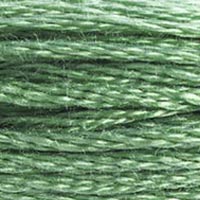
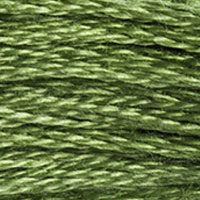
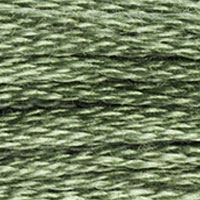
DMC colors commonly used alongside 988 Medium Forest Green.
Suggested Palette
Shading Companions
Detailed Conversions
Where to Buy DMC 988
This section contains affiliate links. We may earn a small commission at no cost to you.
Related Guides
Free Printable Thread Conversion Chart
Pick a brand, enter your email, and we'll send you a printable chart mapping all 552 DMC colors to that brand's equivalents. Zero spam, one chart.
Thanks! Here's your free chart:
Download Your ChartOpens in a new tab. Use your browser's Print → Save as PDF.
No spam. Your email is stored securely and never shared.