
Quick Conversion Table
| Brand | Equivalent | Match |
|---|---|---|
| Anchor | 164 | close |
| Madeira | 1010 | close |
| Cosmo ⚠ | 255 | close |
| Sullivans | 45440 | close |
| J&P Coats | 7182 | close |
| Dimensions | 6083 | close |
Wedgwood: A Color Named After Pottery, Perfect for Precision Work
The Wedgwood name in cross-stitch comes from the famous English pottery founded by Josiah Wedgwood in the 18th century — specifically from that pottery's signature blue-and-white jasperware, which became synonymous with a particular restrained, cool, slightly grayed blue. DMC 3842 Dark Wedgwood carries that heritage in its hex value: #32667C is a deep, teal-leaning blue-green that reads as sophisticated and controlled, the antithesis of a bright primary blue.
Dark Wedgwood sits at the darkest end of the Wedgwood family alongside DMC 518 (Light Wedgwood), DMC 519 (Sky Blue), and DMC 517 (Dark Wedgwood). The naming in DMC's range can be slightly confusing since there are multiple "Wedgwood" entries at different values — but 3842 is consistently the deepest, closest to a teal-navy. It has more green in it than pure navy and more blue than teal, sitting at that intersection where the water-depth reads change from blue to something more complex.
What makes this color particularly interesting from a historical standpoint is that it belongs to a tradition of restrained, civilized color that characterized 18th-century decorative arts. Wedgwood blue wasn't chosen for its flashiness but for its refinement. Using 3842 in a design carries a subtle visual weight that more saturated blues don't — it's a color that suggests heritage and quality without announcing itself.
Practical Uses in Cross-Stitch
DMC 3842 excels as a shadow color in any design that uses Wedgwood or teal-blue as a mid-tone. The jump from 3842 to DMC 518 (Light Wedgwood) is substantial, which means the two work well together as a two-value shorthand for shading without needing a bridge color in small-scale work. For larger, more detailed pieces, adding DMC 517 or DMC 519 in between gives the full gradient range.
Landscape stitchers use 3842 frequently for deep water reflections — the dark tones in a lake or ocean surface where the water is deep and the reflection comes from a shadowed sky. It's also effective for rendering cast shadows in scenes with water — the shadow areas under a dock or pier, for instance, where the water is darkened but not black.
On dark linen or evenweave, 3842 is rich enough to read clearly without disappearing. It maintains its teal-blue identity against backgrounds as dark as charcoal gray, which makes it useful for night-sky designs where water elements still need to read as blue rather than simply as dark.
From a technique perspective, 3842 stitches cleanly and provides consistent coverage. It's a good color for parking method in complex multi-color designs — its distinctive teal-navy is easy to identify in a line of parked needles, and it tends to be called in discrete, bounded areas rather than scattered single stitches, which makes managing it in-hoop relatively straightforward.
All conversions for DMC 3842 are rated close, which reflects the genuinely unusual position this color occupies on the blue-green spectrum — it's hard for any brand to hit exactly.
Anchor 164 is close. Anchor's version in this family reads as slightly more blue and slightly less teal than 3842. For most practical purposes this is an acceptable substitute, but if the design relies on the teal quality of 3842 to distinguish water from sky, the hue shift may be noticeable.
Madeira 1010 is close. Madeira's teal-blues tend to be reliable, and 1010 is a workable stand-in for 3842. Some stitchers report it reads as very slightly lighter in value than 3842, so if it's being used as the darkest color in a gradient, checking the value contrast against your lighter shade is worthwhile before starting.
Cosmo 255 is close. Like other Cosmo blues in this range, it may appear marginally brighter and more saturated than 3842's characteristically controlled, slightly muted quality.
Sullivans 45440 is close and suitable for standalone projects. The teal-blue family is one area where Sullivans performs reasonably well, though as always, checking lot consistency for larger purchases is recommended.
- For a step lighter in the same family, DMC 518 (Light Wedgwood) is the natural companion and provides excellent value contrast in two-shade gradients.
- For a darker, more navy alternative, DMC 336 (Navy Blue) moves away from the teal quality but provides additional depth if 3842 isn't dark enough for your design's shadow needs.
Reference quality
How We Validate This Color Record
Use this page as a reference card for DMC 3842: the structured data, quick conversions, and long-form copy are all tied back to the same stored color record.
- Methodology
- This page renders DMC 3842, its hex value, and every brand equivalent from the site's source-of-truth color record, then checks long-form body copy against those same stored fields.
- Verification status
- Source-field checked. The page content is audited against the stored DMC number, brand equivalents, and match-quality labels before publishing.
- Last reviewed
- 2026-04-20
- Approximation warning
- Screen hex values, thread photos, and cross-brand conversions are reference aids. Dye lots, thread sheen, and fabric color can still shift the result in hand.
Decision guide
When to use the DMC 3842 reference page
This page should help you decide faster between palette planning, brand substitution, and shade comparison without turning the color record into a thin lookup page.
Best for
- + Palette planning when you want the stored DMC 3842 Dark Wedgwood record, hex value #32667C, and linked brand equivalents in one place.
- + Checking the quickest cross-brand shortlist before you buy floss, compare stash substitutes, or route into a more specific conversion page.
- + Finding nearby shades in the blues family before you commit to accents, shading, or background blends.
Watch for
- ! Screen previews are only reference aids. Dark Wedgwood can shift on real fabric because thread sheen, stitch coverage, and room lighting change how the color reads.
- ! A stored equivalent is still a shortlist, not a guarantee that two brands will disappear into each other in the same stitched motif.
- ! Older charts, discontinued kit floss, and dye-lot variation can all introduce small but visible differences that the page cannot detect for you.
Before you commit
- Confirm the role of DMC 3842 Dark Wedgwood: decide whether you need an exact hero shade, a forgiving background, or a rough stash substitute.
- Compare on project fabric: view the skein or stitched sample on the same fabric count and color you will actually use.
- Use the linked conversion pages next: open the brand-specific pages when you need match-quality caveats before substituting away from the DMC reference.
DMC 3842 FAQ
These questions appear on the page so the FAQ schema stays aligned with what visitors can actually read.
What is the Anchor equivalent of DMC 3842?+
The closest Anchor equivalent to DMC 3842 (Dark Wedgwood) is Anchor 164. This is a close match.
What color is DMC 3842?+
DMC 3842 is called "Dark Wedgwood" and has a hex color value of #32667C. It belongs to the blues color family.
What is the Madeira equivalent of DMC 3842?+
The closest Madeira equivalent to DMC 3842 (Dark Wedgwood) is Madeira 1010. This is a close match.
How DMC 3842 Looks on Fabric
The same thread appears different depending on your fabric. Always test on your project fabric.
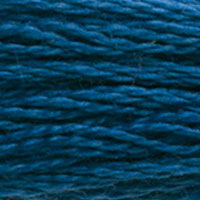
White Aida
Cream / Ecru
Black Aida
Pairs Well With
DMC colors commonly used alongside 3842 Dark Wedgwood.
Suggested Palette
Shading Companions
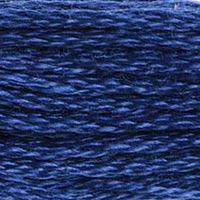
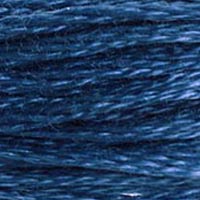
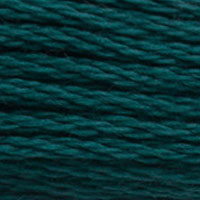
Detailed Conversions
Where to Buy DMC 3842
This section contains affiliate links. We may earn a small commission at no cost to you.
Related Guides
Free Printable Thread Conversion Chart
Pick a brand, enter your email, and we'll send you a printable chart mapping all 552 DMC colors to that brand's equivalents. Zero spam, one chart.
Thanks! Here's your free chart:
Download Your ChartOpens in a new tab. Use your browser's Print → Save as PDF.
No spam. Your email is stored securely and never shared.