
Quick Conversion Table
| Brand | Equivalent | Match |
|---|---|---|
| Anchor | 1074 | close |
| Madeira | 1109 | close |
| Cosmo ⚠ | 566 | close |
| Sullivans | 45446 | close |
| J&P Coats | 6187 | close |
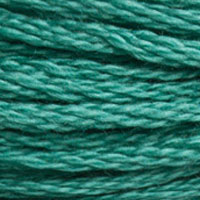
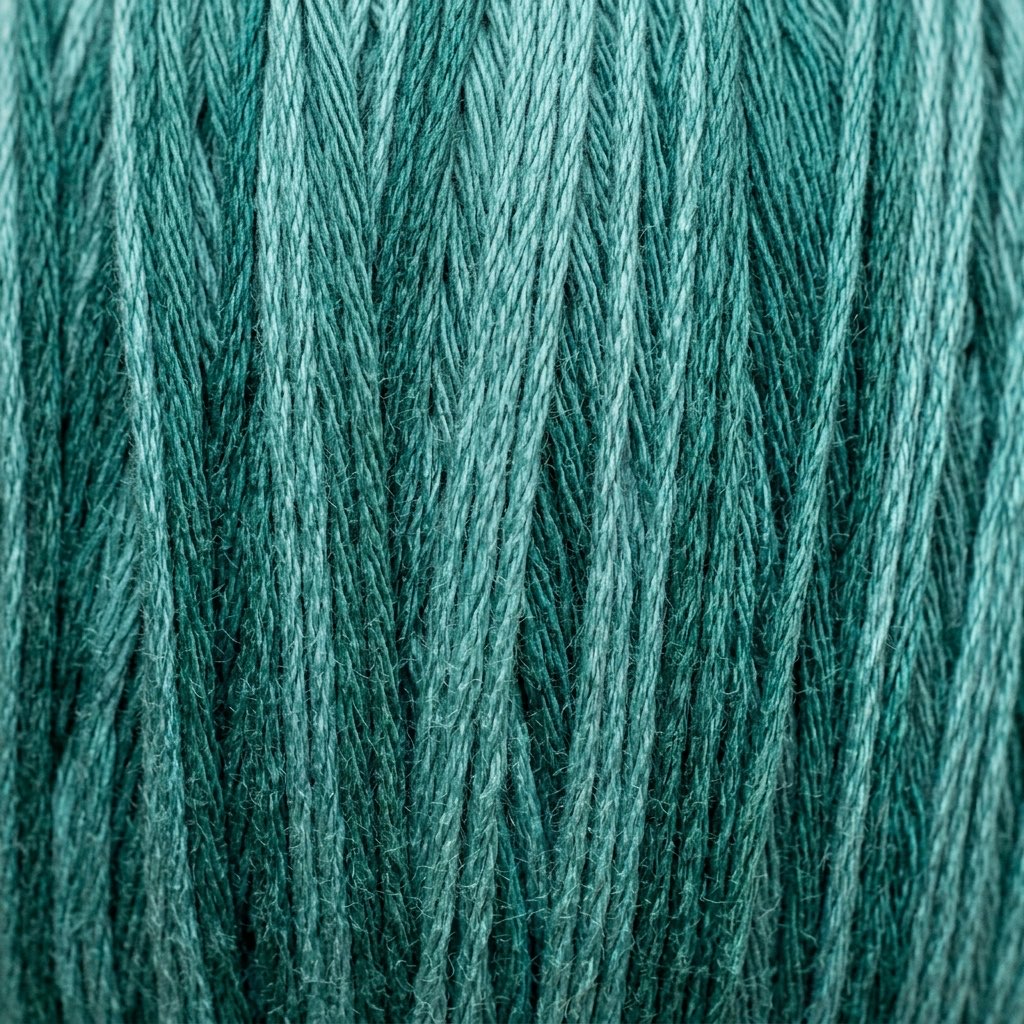
Ask a textile designer what color captures the word "sophistication" and they'll often reach for a muted teal — not the vivid turquoise of beach vacations, but the quieter, slightly grayed blue-green that appears in high-end interiors and contemporary fashion. DMC 3848 Medium Teal Green lives in that register. At #419392, it's a controlled, elegant teal with enough value to anchor a palette and enough subtlety to sit beside other colors without stealing the scene.
As the central value in the teal green family, 3848 does the communicative work that mid-tones always do: it establishes the color identity while DMC 3847 (Dark Teal Green) adds depth and DMC 3849 (Light Teal Green) provides the highlights. On its own, without shading, 3848 has a quiet sophistication that reads as well-chosen rather than default. It's the kind of color that makes a well-edited palette feel intentional.
Medium Teal in Botanical and Nature Designs
Botanical cross-stitch is one of Medium Teal Green's natural homes. Many period botanical illustrations — particularly 18th- and 19th-century herbals and scientific engravings — render foliage in cool blue-greens rather than warm greens, because the scientific illustration tradition prized accuracy over warmth. DMC 3848 captures that cool, precise quality beautifully. It's the color of the leaves in a Redouté botanical print, or the stems in an engraved herbal plate. For stitchers recreating this aesthetic, 3848 is frequently the cornerstone of the foliage palette.
In more contemporary botanical designs — the illustrated style popular in modern cross-stitch patterns for plants, herbs, and succulents — 3848 works as a mid-green for blue-green succulents like echeveria, for the cool gray-green of eucalyptus, and for the slightly silvered appearance of lavender stems and sage leaves. Paired with DMC 502 (Blue Green) and DMC 503 (Medium Blue Green), it fits naturally into a muted, sophisticated botanical palette without looking out of place.
Coverage on standard count fabrics is excellent. Two strands on 14-count Aida give dense, even fills. The color behaves well in parking method for complex multi-section designs, and its distinctive teal-green is easy to distinguish from adjacent colors in most WIP setups. For stitchers working large landscape backgrounds — particularly forest or undersea scenes — 3848 makes an effective background fill that reads as mid-value teal from viewing distance without the density of the darker family members.
One blending application worth exploring: a strand of 3848 with a strand of DMC 3849 creates a smooth intermediate that's useful when the two-shade jump feels too abrupt in detailed shading work. On 28-count evenweave over-two, this blend is particularly effective in small curved forms like fern fronds or spiral succulents.
Medium Teal Green sits in a value range where close matches are achievable but exact replication across brands is genuinely difficult due to the precise blue-green balance of the hue.
Anchor 1074 is close. Anchor's mid-value teal greens tend to lean slightly more green and slightly less blue than DMC's equivalent position. The difference is visible in direct comparison but not typically noticeable in finished pieces where the two brands aren't stitched side by side. For full-project Anchor substitution, 1074 is a dependable choice.
Madeira 1109 is close. Madeira's teal range in the mid-values is among their more reliably accurate color families. Some stitchers report 1109 reads as almost exactly matching 3848 in certain lighting conditions, while others note a very slight value difference. Testing against your specific project palette is recommended before committing.
Cosmo 566 is close. Cosmo's medium teal family tends to be slightly more muted and gray-toned than DMC's, which can read as either more sophisticated or more washed-out depending on the surrounding palette. For heritage and botanical designs, this quieter quality is often a good fit.
Sullivans 45446 is close. Suitable for standalone use with consistent lot sourcing.
- For a slightly warmer teal — more green-turquoise than blue-teal — DMC 959 (Medium Sea Green) shifts the balance toward warmer aqua while maintaining similar value.
- If the project calls for a lighter step in the same family, DMC 3849 (Light Teal Green) is the natural gradient partner.
Reference quality
How We Validate This Color Record
Use this page as a reference card for DMC 3848: the structured data, quick conversions, and long-form copy are all tied back to the same stored color record.
- Methodology
- This page renders DMC 3848, its hex value, and every brand equivalent from the site's source-of-truth color record, then checks long-form body copy against those same stored fields.
- Verification status
- Source-field checked. The page content is audited against the stored DMC number, brand equivalents, and match-quality labels before publishing.
- Last reviewed
- 2026-04-20
- Approximation warning
- Screen hex values, thread photos, and cross-brand conversions are reference aids. Dye lots, thread sheen, and fabric color can still shift the result in hand.
Decision guide
When to use the DMC 3848 reference page
This page should help you decide faster between palette planning, brand substitution, and shade comparison without turning the color record into a thin lookup page.
Best for
- + Palette planning when you want the stored DMC 3848 Medium Teal Green record, hex value #419392, and linked brand equivalents in one place.
- + Checking the quickest cross-brand shortlist before you buy floss, compare stash substitutes, or route into a more specific conversion page.
- + Finding nearby shades in the greens family before you commit to accents, shading, or background blends.
Watch for
- ! Screen previews are only reference aids. Medium Teal Green can shift on real fabric because thread sheen, stitch coverage, and room lighting change how the color reads.
- ! A stored equivalent is still a shortlist, not a guarantee that two brands will disappear into each other in the same stitched motif.
- ! Older charts, discontinued kit floss, and dye-lot variation can all introduce small but visible differences that the page cannot detect for you.
Before you commit
- Confirm the role of DMC 3848 Medium Teal Green: decide whether you need an exact hero shade, a forgiving background, or a rough stash substitute.
- Compare on project fabric: view the skein or stitched sample on the same fabric count and color you will actually use.
- Use the linked conversion pages next: open the brand-specific pages when you need match-quality caveats before substituting away from the DMC reference.
DMC 3848 FAQ
These questions appear on the page so the FAQ schema stays aligned with what visitors can actually read.
What is the Anchor equivalent of DMC 3848?+
The closest Anchor equivalent to DMC 3848 (Medium Teal Green) is Anchor 1074. This is a close match.
What color is DMC 3848?+
DMC 3848 is called "Medium Teal Green" and has a hex color value of #419392. It belongs to the greens color family.
What is the Madeira equivalent of DMC 3848?+
The closest Madeira equivalent to DMC 3848 (Medium Teal Green) is Madeira 1109. This is a close match.
How DMC 3848 Looks on Fabric
The same thread appears different depending on your fabric. Always test on your project fabric.
White Aida
Cream / Ecru
Black Aida
Pairs Well With
DMC colors commonly used alongside 3848 Medium Teal Green.
Suggested Palette
Shading Companions
Detailed Conversions
Where to Buy DMC 3848
This section contains affiliate links. We may earn a small commission at no cost to you.
Related Guides
Free Printable Thread Conversion Chart
Pick a brand, enter your email, and we'll send you a printable chart mapping all 552 DMC colors to that brand's equivalents. Zero spam, one chart.
Thanks! Here's your free chart:
Download Your ChartOpens in a new tab. Use your browser's Print → Save as PDF.
No spam. Your email is stored securely and never shared.