
Quick Conversion Table
| Brand | Equivalent | Match |
|---|---|---|
| Anchor | 189 | close |
| Madeira | 1113 | close |
| Cosmo ⚠ | 2590 | close |
| Sullivans | 45316 | close |
Variegation as Storytelling: What DMC 116 Actually Does
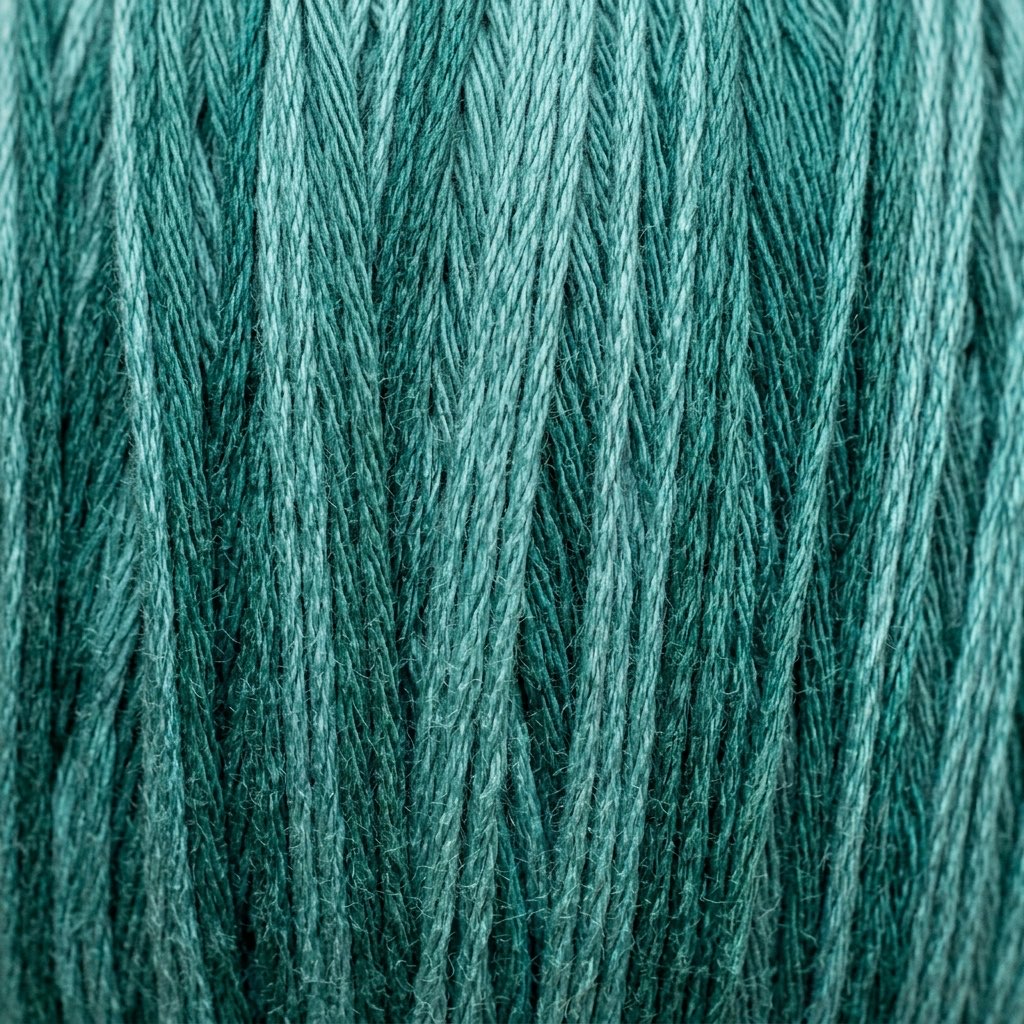
Variegated threads ask you to give up control, and most stitchers have complicated feelings about that. DMC 116 shifts through a range of teal values — from a deep, nearly oceanic blue-green down to a lighter, more aqua tone — within a single strand length. The effect on a finished piece is something you simply cannot achieve with solid threads, no matter how many blended needle combinations you try. It's watercolor behavior in cotton form, and it either thrills you or makes you deeply nervous. There is no in-between.
What makes 116 specifically interesting within DMC's variegated lineup is how tightly it stays within the teal family. Some variegated threads travel so far across the color wheel that they read as novelty — fun for bookmarks, chaotic for anything larger. DMC 116 doesn't do that. Its shifts are tonal rather than chromatic. Dark teal to medium teal to lighter teal and back, all within that cool blue-green territory that sits on the boundary between the green family and the blue family. The result is organic depth: think of light filtering through shallow coastal water onto a sandy bottom, the way teal deepens and lifts depending on depth and angle.
Cross-Country or Danish? How Technique Changes the Pattern
Here's where 116 gets genuinely interesting from a technical standpoint: the method you use to stitch changes the visual outcome dramatically. Cross-country stitching — where you complete each cross before moving to the next — distributes the color changes more randomly across your stitched area, producing a dappled, impressionistic effect. Danish method — completing a row of half-stitches then coming back — creates more visible diagonal color bands as the thread feeds through in sequence. Neither is wrong, but they produce fundamentally different looks.
On 14-count Aida, each cross uses roughly 1.5 cm of thread (give or take, depending on your tension), so a standard 8-meter skein gives you predictable repeat intervals. Stitchers who want to control where the color shifts land sometimes pre-measure their thread lengths, starting each needle-load at the same point in the color cycle. This is fiddly work, honestly, and half the community thinks it defeats the purpose of variegated thread entirely. The other half considers it an advanced technique worth mastering. You'll find your camp.
For smaller motifs — ornaments, coasters, small samplers — the natural variation in 116 creates instant visual interest without complex color planning. A simple geometric mandala stitched entirely in 116 develops a watery, rippling quality that reads as far more sophisticated than the pattern's stitch count would suggest. Pair it with a single solid — DMC 3810 (Dark Turquoise) for the darkest accents, or DMC 747 (Very Light Sky Blue) for a pale frame — and you have a complete palette from one variegated thread and one solid.
The Fabric Question: Why White Aida Isn't Your Only Option
Teal variegated thread on white Aida is fine. It's safe. It shows every color shift cleanly. But if you want 116 to really sing, stitch it on natural linen or oatmeal-colored evenweave. The warm base fabric transforms the cooler teal tones, adding a richness that white backgrounds strip away. On cream 28-count linen over two threads, DMC 116 looks like it belongs in a seaside cottage sampler — sophisticated, slightly weathered, and deeply appealing.
Black Aida is another option worth considering if you're feeling bold. The darker values in 116's range nearly vanish against black fabric, so only the lighter teal tones are clearly visible, creating a ghostly, bioluminescent effect that's stunning for ocean-themed projects. You'll want to use a full two strands for coverage and keep your tension even — variegated threads on dark fabric show every inconsistency in stitch formation because the fabric shows through any gaps.
For blended needle work, some stitchers combine one strand of 116 with one strand of DMC 3849 (Light Teal Green) or DMC 3848 (Medium Teal Green). This tames the variegation somewhat — the solid strand anchors the color while the variegated strand provides subtle movement. It's an excellent compromise if you find full variegation too busy for your design but want more life than a solid color provides.
The Variegated Problem: Why Matching DMC 116 Is Harder Than Matching Solids
Let's be honest about something upfront: substituting any variegated thread is a different challenge than substituting a solid. You're not matching a single color — you're matching a color range, a transition speed, and an overall impression. Two threads can hit the same endpoint colors and still look completely different based on how quickly they shift between values.
Anchor 189 is listed as a close match, but Anchor's variegated threads often have slightly different repeat lengths than DMC's, meaning the color banding pattern will differ even if the colors themselves are similar. For small projects — ornaments, bookmarks, single motifs — this rarely matters. For large fill areas where the repeat pattern becomes visible, stitch a test swatch before committing.
Madeira 1113 offers its characteristic silkier hand, which with a teal variegated can actually enhance the watery quality of the color shifts. The sheen catches light at different angles across the color transitions, adding dimension. If your project is decorative rather than utilitarian, this might be a substitution that genuinely improves the result.
Cosmo 2590 is worth testing, though Cosmo's variegated range sometimes handles the transitions slightly differently — softer gradients where DMC gives crisper shifts. For most cross-stitch applications the difference is subtle, but in needlepoint or crewel where more thread surface is exposed, you might notice it.
If you can't find any variegated match and need to replicate the effect with solid threads, consider alternating rows between DMC 3848 and DMC 3849, or using a blended needle of the two. You'll lose the organic randomness of true variegation, but you'll preserve the teal-on-teal depth that makes 116 worth using in the first place.
Reference quality
How We Validate This Color Record
Use this page as a reference card for DMC 116: the structured data, quick conversions, and long-form copy are all tied back to the same stored color record.
- Methodology
- This page renders DMC 116, its hex value, and every brand equivalent from the site's source-of-truth color record, then checks long-form body copy against those same stored fields.
- Verification status
- Source-field checked. The page content is audited against the stored DMC number, brand equivalents, and match-quality labels before publishing.
- Last reviewed
- 2026-04-20
- Approximation warning
- Screen hex values, thread photos, and cross-brand conversions are reference aids. Dye lots, thread sheen, and fabric color can still shift the result in hand.
Decision guide
When to use the DMC 116 reference page
This page should help you decide faster between palette planning, brand substitution, and shade comparison without turning the color record into a thin lookup page.
Best for
- + Palette planning when you want the stored DMC 116 Variegated Teal record, hex value #408888, and linked brand equivalents in one place.
- + Checking the quickest cross-brand shortlist before you buy floss, compare stash substitutes, or route into a more specific conversion page.
- + Finding nearby shades in the greens family before you commit to accents, shading, or background blends.
Watch for
- ! Screen previews are only reference aids. Variegated Teal can shift on real fabric because thread sheen, stitch coverage, and room lighting change how the color reads.
- ! A stored equivalent is still a shortlist, not a guarantee that two brands will disappear into each other in the same stitched motif.
- ! Older charts, discontinued kit floss, and dye-lot variation can all introduce small but visible differences that the page cannot detect for you.
Before you commit
- Confirm the role of DMC 116 Variegated Teal: decide whether you need an exact hero shade, a forgiving background, or a rough stash substitute.
- Compare on project fabric: view the skein or stitched sample on the same fabric count and color you will actually use.
- Use the linked conversion pages next: open the brand-specific pages when you need match-quality caveats before substituting away from the DMC reference.
DMC 116 FAQ
These questions appear on the page so the FAQ schema stays aligned with what visitors can actually read.
What is the Anchor equivalent of DMC 116?+
The closest Anchor equivalent to DMC 116 (Variegated Teal) is Anchor 189. This is a close match.
What color is DMC 116?+
DMC 116 is called "Variegated Teal" and has a hex color value of #408888. It belongs to the greens color family.
What is the Madeira equivalent of DMC 116?+
The closest Madeira equivalent to DMC 116 (Variegated Teal) is Madeira 1113. This is a close match.
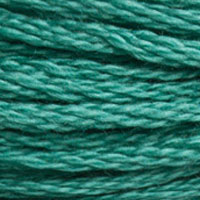
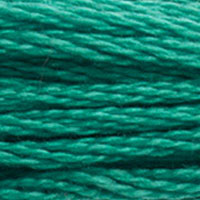
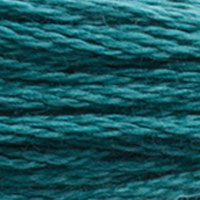
How DMC 116 Looks on Fabric
The same thread appears different depending on your fabric. Always test on your project fabric.
White Aida
Cream / Ecru
Black Aida
Pairs Well With
DMC colors commonly used alongside 116 Variegated Teal.
Suggested Palette
Shading Companions
Detailed Conversions
Where to Buy DMC 116
This section contains affiliate links. We may earn a small commission at no cost to you.
Related Guides
Free Printable Thread Conversion Chart
Pick a brand, enter your email, and we'll send you a printable chart mapping all 552 DMC colors to that brand's equivalents. Zero spam, one chart.
Thanks! Here's your free chart:
Download Your ChartOpens in a new tab. Use your browser's Print → Save as PDF.
No spam. Your email is stored securely and never shared.