
Quick Conversion Table
| Brand | Equivalent | Match |
|---|---|---|
| Anchor | 388 | close |
| Madeira | 1907 | close |
| Cosmo ⚠ | 366 | close |
| Sullivans | 45394 | close |
| J&P Coats | 5388 | close |
| Dimensions | 15388 | close |
| Bucilla | 3782 | close |
| Candamar | 6105 | close |
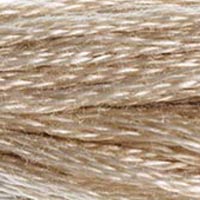
Light, warm beige-browns occupy a challenging position in the design world: too definite to be a neutral, too muted to be a statement color, they succeed only when they do their specific job impeccably. DMC 3782, Light Mocha Brown, does that job well. At hex #D2BCA6, it's a warm, soft tan-brown — more golden than beige, more earthy than honey, precisely the color of a café au lait or the pale highlights in a wood grain. It's a thread that spends its life as a supporting character and does it with quiet competence.
The mocha family's light end reads differently depending on context. Next to its darker companion DMC 3781 (Dark Mocha Brown), it's a highlight — the lit face of bark, the warm glow on a wooden surface. Next to pale creams and beiges, it reads as a mid-tone — adding warmth and substance without going dark. This contextual flexibility is what makes 3782 useful in such a variety of design types.
Linen and Fabric Textures
There's something particular about DMC 3782 on natural linen — the thread and the fabric share a warmth that creates a unified appearance that reads as genuinely antique. This makes 3782 ideal for reproduction sampler work: historical cross-stitch patterns intended to look like they belong to a different era benefit from thread colors that aren't vivid or modern-looking, and 3782 fulfills this perfectly. It's the color that suggests aged cream textile without going so far as to look dirty or worn.
For textile representation in cross-stitch — depicting fabric, woven surfaces, linen, burlap, or canvas in still-life or home goods themed patterns — 3782 does the highlighting work in natural-fiber colors. Combined with DMC 3781 (Dark Mocha Brown) for shadow and DMC 3774 (Very Light Desert Sand) for the lightest highlights, the three create a convincing woven-fabric texture.
Floral and Botanical Applications
Dried flower arrangements — strawflowers, thistles, seed heads, and the pale stems of dried botanical specimens — use 3782 as a primary color. It's the color of dried grasses in autumn, of wheat stalks before harvest, of bleached summer herbs. These themes have enormous cross-stitch appeal: modern farmhouse samplers, Scandinavian-inspired folk pieces, and simple botanical study pieces all call for exactly this quality of warm, dried-plant beige.
In fresh flower work, 3782 appears in the centers of pale florals — the stamens and inner details of cream roses, the center disc of chamomile or daisy designs, the warm highlight on a tulip petal edge. Stitchers working botanical studies from nature illustration references often find 3782 occupies several positions in complex flower structure work.
Animal subjects benefit from 3782 in the light areas of warm-toned fur. Fawn deer in highlight positions, the pale chin and belly of a rabbit, the light chest of a sparrow or wren — wherever a warm, not-quite-cream appears as the lightest note in a warm-brown animal, 3782 fills that space naturally.
On different fabric colors, 3782 changes character interestingly. On white Aida it reads as a soft, warm tan — clearly visible but gentle. On antique white or natural evenweave, it blends into the fabric's warmth, reading as more integrated and less distinct. On cream or ivory Aida, the two tones merge so closely that 3782 can nearly disappear — an effect that's actually useful in designs where you want the appearance of natural linen texture rather than filled coverage. Knowing how your fabric choice affects this thread helps you make intentional decisions about where to place it in your design.
No exact matches are available for DMC 3782 — Anchor 388, Madeira 1907, Cosmo 366, and Sullivans 45394 are all rated close. This is one of those colors where the closest substitute depends on your specific application, and testing is genuinely necessary rather than optional.
Anchor 388 is the most commonly substituted equivalent. It tends to read slightly warmer and sometimes slightly more golden than DMC 3782, which works fine in animal and botanical applications but can feel slightly off in reproduction sampler work where a more neutral warmth is preferred. In practice, the difference is subtle enough that most stitchers don't notice it in the finished piece.
Madeira 1907 is generally close and can be substituted in most uses. Like Anchor, it can read slightly differently in direct comparison but holds up well in context. Cosmo 366 and Sullivans 45394 are both acceptable close substitutes.
Within the DMC range, if 3782 isn't available, the nearest alternatives are DMC 3032 (Medium Mocha Brown) — which goes a step darker and slightly more neutral — and DMC 842 (Very Light Beige Brown) — which goes one step lighter with a slightly cooler, less warm quality. DMC 437 (Light Tan) and DMC 738 (Very Light Tan) both cover adjacent light warm-brown territory, with 437 sitting slightly darker and 738 paler than 3782. For a more golden alternative, DMC 3827 (Pale Golden Brown) is in the same light, warm, golden-tan neighborhood.
Reference quality
How We Validate This Color Record
Use this page as a reference card for DMC 3782: the structured data, quick conversions, and long-form copy are all tied back to the same stored color record.
- Methodology
- This page renders DMC 3782, its hex value, and every brand equivalent from the site's source-of-truth color record, then checks long-form body copy against those same stored fields.
- Verification status
- Source-field checked. The page content is audited against the stored DMC number, brand equivalents, and match-quality labels before publishing.
- Last reviewed
- 2026-04-20
- Approximation warning
- Screen hex values, thread photos, and cross-brand conversions are reference aids. Dye lots, thread sheen, and fabric color can still shift the result in hand.
Decision guide
When to use the DMC 3782 reference page
This page should help you decide faster between palette planning, brand substitution, and shade comparison without turning the color record into a thin lookup page.
Best for
- + Palette planning when you want the stored DMC 3782 Light Mocha Brown record, hex value #D2BCA6, and linked brand equivalents in one place.
- + Checking the quickest cross-brand shortlist before you buy floss, compare stash substitutes, or route into a more specific conversion page.
- + Finding nearby shades in the browns family before you commit to accents, shading, or background blends.
Watch for
- ! Screen previews are only reference aids. Light Mocha Brown can shift on real fabric because thread sheen, stitch coverage, and room lighting change how the color reads.
- ! A stored equivalent is still a shortlist, not a guarantee that two brands will disappear into each other in the same stitched motif.
- ! Older charts, discontinued kit floss, and dye-lot variation can all introduce small but visible differences that the page cannot detect for you.
Before you commit
- Confirm the role of DMC 3782 Light Mocha Brown: decide whether you need an exact hero shade, a forgiving background, or a rough stash substitute.
- Compare on project fabric: view the skein or stitched sample on the same fabric count and color you will actually use.
- Use the linked conversion pages next: open the brand-specific pages when you need match-quality caveats before substituting away from the DMC reference.
DMC 3782 FAQ
These questions appear on the page so the FAQ schema stays aligned with what visitors can actually read.
What is the Anchor equivalent of DMC 3782?+
The closest Anchor equivalent to DMC 3782 (Light Mocha Brown) is Anchor 388. This is a close match.
What color is DMC 3782?+
DMC 3782 is called "Light Mocha Brown" and has a hex color value of #D2BCA6. It belongs to the browns color family.
What is the Madeira equivalent of DMC 3782?+
The closest Madeira equivalent to DMC 3782 (Light Mocha Brown) is Madeira 1907. This is a close match.
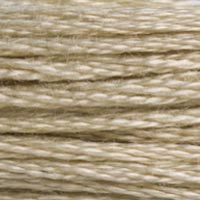
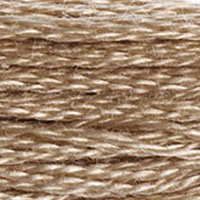
How DMC 3782 Looks on Fabric
The same thread appears different depending on your fabric. Always test on your project fabric.
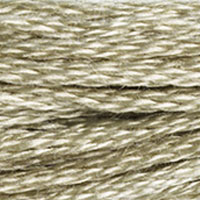
White Aida
Cream / Ecru
Black Aida
Pairs Well With
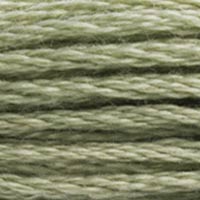
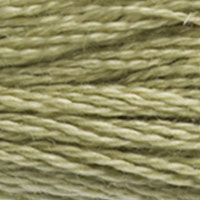
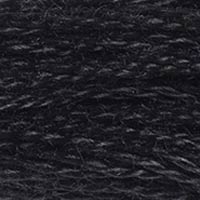
DMC colors commonly used alongside 3782 Light Mocha Brown.
Suggested Palette
Shading Companions
Detailed Conversions
Where to Buy DMC 3782
This section contains affiliate links. We may earn a small commission at no cost to you.
Related Guides
Free Printable Thread Conversion Chart
Pick a brand, enter your email, and we'll send you a printable chart mapping all 552 DMC colors to that brand's equivalents. Zero spam, one chart.
Thanks! Here's your free chart:
Download Your ChartOpens in a new tab. Use your browser's Print → Save as PDF.
No spam. Your email is stored securely and never shared.