
Quick Conversion Table
| Brand | Equivalent | Match |
|---|---|---|
| Anchor | 214 | close |
| Madeira | 1310 | close |
| Cosmo ⚠ | 2317 | close |
| J&P Coats | 6016 | close |
| Dimensions | 6051 | close |
| Bucilla | 1368 | close |
| Candamar | 6051 | close |
DMC 368 Light Pistachio Green: The Highlight That Makes Foliage Glow
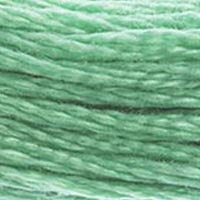
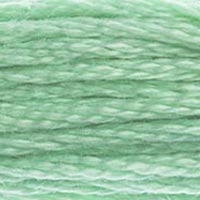
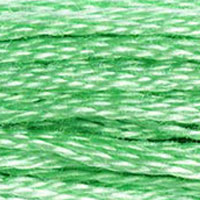
There's a specific moment in a botanical cross-stitch piece when it comes to life: when you add the highlight color to leaves that have been filled with mid-tones and shadows. DMC 368 Light Pistachio Green is the highlight color for a huge proportion of floral and nature designs, and for good reason. At hex #A6C298, it's a fresh, clear light green — bright without being harsh, warm without being yellow, with just enough intensity to create a convincing illusion of sunlight on leaf surfaces.
Light pistachio occupies the same chromatic position as the rest of its family — warm-green rather than cool-green or neutral-green — but at this lighter value, the warmth reads more as freshness than as earthiness. It has the quality of new spring leaves, the particular bright green of a backlit fern frond, or the color of a pistachio shell itself before it dries to a more muted tone. It's inherently cheerful without being aggressive.
The contexts where DMC 368 appears most frequently:
- Leaf highlights in botanical designs: The lit upper surfaces of leaves in a three-dimensional rendering use 368 for the highlight step, above the fill value of 320 and below the sky-reflection brightness of 369.
- Spring and Easter designs: The fresh, new-growth quality of 368 makes it perfect for spring-themed pieces. Easter egg fillers, spring garlands, baby shower designs — 368's brightness signals new life and the season.
- Lily of the valley and small flowers: The delicate stems and tiny leaves of miniature floral designs need a light green that reads at small scale. 368 provides enough saturation to be visible as green even when worked in a single strand on fine-count fabric.
- Vine and tendril accents: Wrapping vines and curling tendrils in decorative borders are often worked entirely in 368 as a bright accent against darker foliage.
In cross-stitch kits for floral designs, 368 and 369 are among the colors that run out fastest. The highlight and lightest values in gradient sequences get used in smaller quantities per stitch than shadow colors, but they appear in many places across the design — the bright tip of every leaf, every vine highlight, every unfurling tendril. If your kit includes only one skein of 368, use it efficiently: prioritize the most visible leaves in the focal area of the design before moving to background foliage.
DMC 368 also works well as a standalone non-gradient color. For designs that don't require the full five-step pistachio sequence — simple geometric patterns with a botanical theme, for instance, or quick holiday ornament kits — 368 alone can represent the entire green element with a pleasant freshness that neither too-dark nor too-light greens achieve.
Paired with pink tones, 368 is a classic combination in traditional cross-stitch. The pink-and-green pairing appears in everything from Victorian Berlin woolwork to modern pastel wedding samplers, and the specific combination of DMC 368 with mid-range pinks like DMC 3326 or DMC 776 is practically a signature of the genre.
Substituting DMC 368 Light Pistachio Green
Light warm greens need careful matching because at lighter values, small differences in temperature — cool versus warm — become more visible than they would be in mid-dark colors.
Anchor 214 is the standard conversion and a close match. It covers the light warm-green range adequately for the highlight and accent applications where 368 most commonly appears.
Madeira 1310 is a close match. Madeira's light greens are generally reliable, and 1310 should be suitable for botanical highlight work.
Cosmo 2317 is a close match (note: this Cosmo number is independent of DMC 317, which is a gray).
- At light values, the difference between a warm and a cool green becomes very visible. Before substituting 368, confirm the warmth of the alternative thread — a cool light green substituted for a warm one in a botanical design changes the whole character of the foliage.
- For spring-themed designs where 368 is a primary color rather than part of a gradient, finding a close match matters more than for shadow and fill positions. The highlight is where the eye naturally focuses.
Reference quality
How We Validate This Color Record
Use this page as a reference card for DMC 368: the structured data, quick conversions, and long-form copy are all tied back to the same stored color record.
- Methodology
- This page renders DMC 368, its hex value, and every brand equivalent from the site's source-of-truth color record, then checks long-form body copy against those same stored fields.
- Verification status
- Source-field checked. The page content is audited against the stored DMC number, brand equivalents, and match-quality labels before publishing.
- Last reviewed
- 2026-04-20
- Approximation warning
- Screen hex values, thread photos, and cross-brand conversions are reference aids. Dye lots, thread sheen, and fabric color can still shift the result in hand.
Decision guide
When to use the DMC 368 reference page
This page should help you decide faster between palette planning, brand substitution, and shade comparison without turning the color record into a thin lookup page.
Best for
- + Palette planning when you want the stored DMC 368 Light Pistachio Green record, hex value #A6C298, and linked brand equivalents in one place.
- + Checking the quickest cross-brand shortlist before you buy floss, compare stash substitutes, or route into a more specific conversion page.
- + Finding nearby shades in the greens family before you commit to accents, shading, or background blends.
Watch for
- ! Screen previews are only reference aids. Light Pistachio Green can shift on real fabric because thread sheen, stitch coverage, and room lighting change how the color reads.
- ! A stored equivalent is still a shortlist, not a guarantee that two brands will disappear into each other in the same stitched motif.
- ! Older charts, discontinued kit floss, and dye-lot variation can all introduce small but visible differences that the page cannot detect for you.
Before you commit
- Confirm the role of DMC 368 Light Pistachio Green: decide whether you need an exact hero shade, a forgiving background, or a rough stash substitute.
- Compare on project fabric: view the skein or stitched sample on the same fabric count and color you will actually use.
- Use the linked conversion pages next: open the brand-specific pages when you need match-quality caveats before substituting away from the DMC reference.
DMC 368 FAQ
These questions appear on the page so the FAQ schema stays aligned with what visitors can actually read.
What is the Anchor equivalent of DMC 368?+
The closest Anchor equivalent to DMC 368 (Light Pistachio Green) is Anchor 214. This is a close match.
What color is DMC 368?+
DMC 368 is called "Light Pistachio Green" and has a hex color value of #A6C298. It belongs to the greens color family.
What is the Madeira equivalent of DMC 368?+
The closest Madeira equivalent to DMC 368 (Light Pistachio Green) is Madeira 1310. This is a close match.
How DMC 368 Looks on Fabric
The same thread appears different depending on your fabric. Always test on your project fabric.
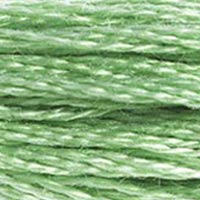
White Aida
Cream / Ecru
Black Aida
Pairs Well With
DMC colors commonly used alongside 368 Light Pistachio Green.
Suggested Palette
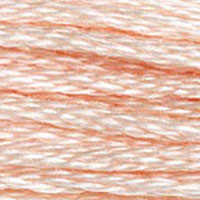
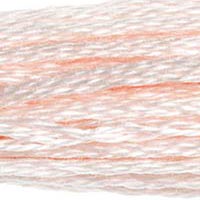
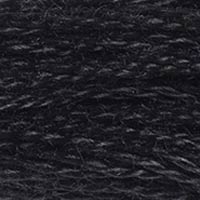
Shading Companions
Detailed Conversions
Where to Buy DMC 368
This section contains affiliate links. We may earn a small commission at no cost to you.
Related Guides
Free Printable Thread Conversion Chart
Pick a brand, enter your email, and we'll send you a printable chart mapping all 552 DMC colors to that brand's equivalents. Zero spam, one chart.
Thanks! Here's your free chart:
Download Your ChartOpens in a new tab. Use your browser's Print → Save as PDF.
No spam. Your email is stored securely and never shared.