
Quick Conversion Table
| Brand | Equivalent | Match |
|---|---|---|
| Anchor | 206 | exact |
| Madeira | 1209 | close |
| Cosmo ⚠ | 842 | close |
| Sullivans | 45130 | close |
| J&P Coats | 6209 | close |
| Dimensions | 16209 | close |
Baby Blankets, Wedding Gifts, and the Gentlest Green
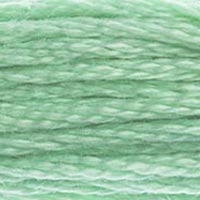
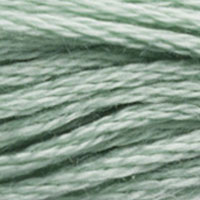
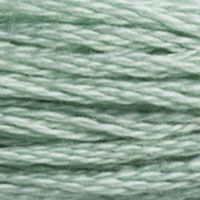
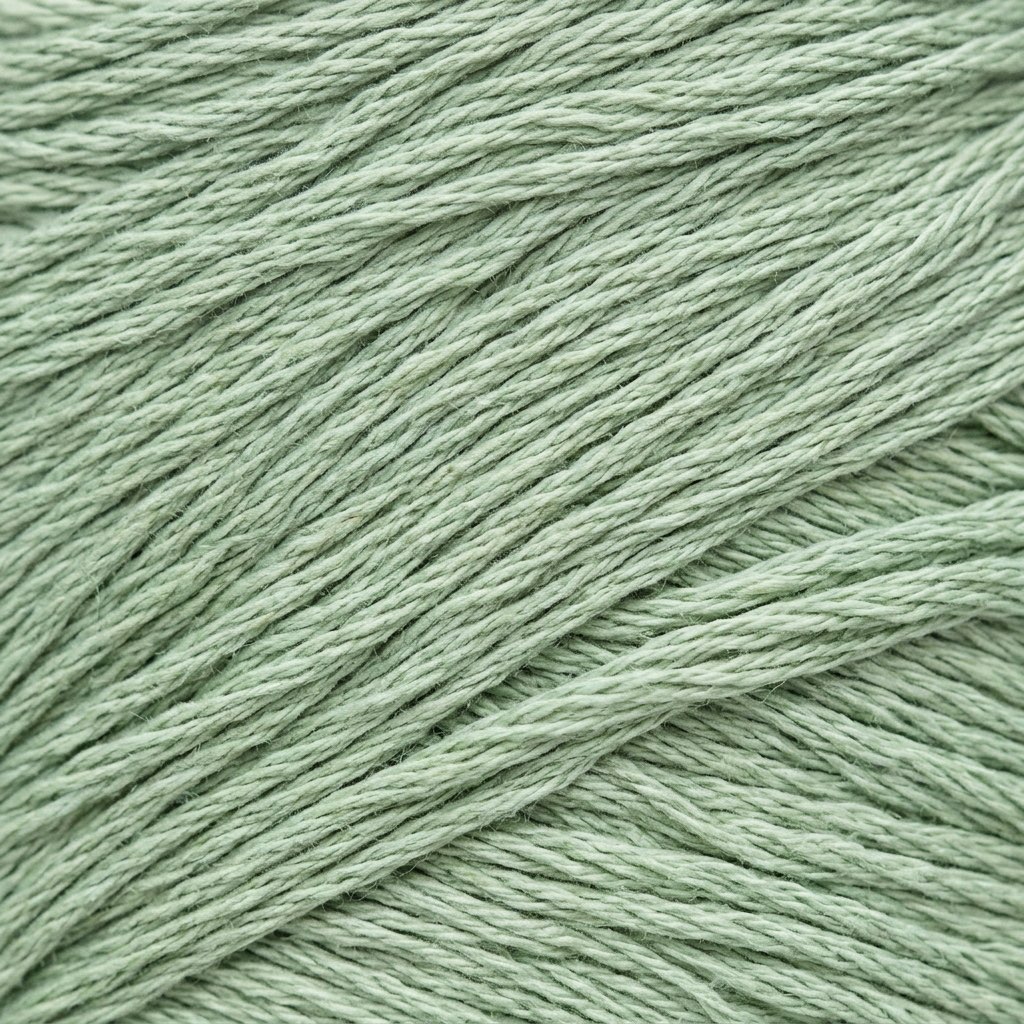
Every color family needs a thread that whispers, and DMC 564 is the jade family's softest voice. At hex #A7CDAF, this is a pale, cool mint-green that registers as barely more than a tint — the kind of color you might miss in a skein organizer but notice immediately in a finished piece, where it adds a delicate wash of color that elevates white-on-white designs without overpowering them.
This gentleness makes 564 the default choice for baby-themed projects in the green family. Baby samplers, nursery wall hangings, christening gifts — anywhere you need a green that reads as "soft" and "new" rather than "vivid" and "natural," DMC 564 delivers. It pairs effortlessly with DMC 818 (Baby Pink) and DMC 3756 (Ultra Very Light Baby Blue) for the classic pastel trio, or with DMC 746 (Off White) and DMC 3823 (Ultra Pale Yellow) for a warmer, more gender-neutral pastel palette.
The Disappearing Act on White Fabric
Here's the challenge with Very Light Jade: on white Aida or white evenweave, it can verge on invisible under certain lighting conditions. This isn't a flaw in the thread — it's physics. When your fabric and your thread are both high-value (close to white), the contrast between them diminishes, and your stitches can appear to fade into the ground. Under fluorescent lighting, which tends to wash out cool pastels, 564 on white can look like a ghost of a color.
The solutions are several. First, consider your fabric. On cream Aida or natural linen, 564 gains substantially more presence because the warmer, slightly darker fabric provides better contrast. On hand-dyed fabrics with a light tan or peach base, 564 looks distinctly and beautifully green. Second, consider your lighting — stitch under natural daylight or a high-CRI daylight lamp, and 564 will reward you with clear color definition that disappears under cheaper artificial light.
Third, consider your application. If 564 is serving as a fill color in a large area, the cumulative effect of many stitches creates more visible color than a single stitch would suggest. A single cross of 564 on white Aida looks like almost-white; a hundred crosses read as a clear, gentle green wash. The thread's power is in accumulation, not individual impact.
Highlight Work and Atmospheric Effects
In the jade gradient (561/562/563/564), DMC 564 is your highlight — the spot where light hits the surface directly and washes most of the pigment away. In gemstone motifs, 564 is the bright spot on a polished jade bead. In foliage, it's the leaf catching full sun. In water scenes, it's the foam at the crest of a wave or the shallow water over white sand.
But 564 also works outside its family for atmospheric effects. In landscape designs, a few stitches of 564 at the far horizon can suggest distant, misty fields — too green for sky, too pale for land, exactly right for that ambiguous zone where earth and atmosphere merge. This is a technique from watercolor painting: using very pale, slightly colored washes to suggest depth without detail. In cross stitch, a band of 564 between your foreground greens and your sky blues creates convincing aerial perspective.
For companion pairing, DMC 564 and DMC 3713 (Very Light Salmon) create one of the prettiest pastel combinations in the entire DMC range — cool mint against warm pink, both at whisper-light values. Use them together in spring designs, floral borders, or romantic samplers for a palette that feels fresh and sophisticated without a single bold color.
At this pale a value, substitution is both easier and harder than you'd expect. Easier because the differences between brands are subtle enough that most viewers won't notice. Harder because those subtle differences become your entire visual impression — when the color is this quiet, there's nothing else to look at.
Anchor 206 is an exact match and the safest swap. At pale values, Anchor's thread twist and coverage closely mirror DMC's, and the mint-jade character translates cleanly. Madeira 1209 is equally reliable, with a very slightly smoother finish that can enhance the delicate quality of the shade.
Cosmo 842 is close, but at this light value, a marginal shift in saturation or undertone is more perceptible than it would be in a darker shade. Some stitchers find Cosmo 842 reads fractionally warmer — a touch more green-yellow where the DMC is green-blue. For baby projects and pastels where precise color matching is less critical than overall softness, this difference is academic. For gradient work within the jade family, it could disrupt the consistency of the undertone.
Sullivans 45130 enters the right territory and works as a general substitute. Within DMC's own catalog, be careful not to confuse 564 with DMC 955 (Light Nile Green) or DMC 966 (Medium Baby Green) — all three are pale greens, but each has a distinct personality. 564 is the coolest and most blue of the three, 955 is warmer and more saturated, and 966 is the most neutral. Swapping between them changes the mood more than you'd guess from looking at them individually.
Reference quality
How We Validate This Color Record
Use this page as a reference card for DMC 564: the structured data, quick conversions, and long-form copy are all tied back to the same stored color record.
- Methodology
- This page renders DMC 564, its hex value, and every brand equivalent from the site's source-of-truth color record, then checks long-form body copy against those same stored fields.
- Verification status
- Source-field checked. The page content is audited against the stored DMC number, brand equivalents, and match-quality labels before publishing.
- Last reviewed
- 2026-04-20
- Approximation warning
- Screen hex values, thread photos, and cross-brand conversions are reference aids. Dye lots, thread sheen, and fabric color can still shift the result in hand.
Decision guide
When to use the DMC 564 reference page
This page should help you decide faster between palette planning, brand substitution, and shade comparison without turning the color record into a thin lookup page.
Best for
- + Palette planning when you want the stored DMC 564 Very Light Jade record, hex value #A7CDAF, and linked brand equivalents in one place.
- + Checking the quickest cross-brand shortlist before you buy floss, compare stash substitutes, or route into a more specific conversion page.
- + Finding nearby shades in the greens family before you commit to accents, shading, or background blends.
Watch for
- ! Screen previews are only reference aids. Very Light Jade can shift on real fabric because thread sheen, stitch coverage, and room lighting change how the color reads.
- ! A stored equivalent is still a shortlist, not a guarantee that two brands will disappear into each other in the same stitched motif.
- ! Older charts, discontinued kit floss, and dye-lot variation can all introduce small but visible differences that the page cannot detect for you.
Before you commit
- Confirm the role of DMC 564 Very Light Jade: decide whether you need an exact hero shade, a forgiving background, or a rough stash substitute.
- Compare on project fabric: view the skein or stitched sample on the same fabric count and color you will actually use.
- Use the linked conversion pages next: open the brand-specific pages when you need match-quality caveats before substituting away from the DMC reference.
DMC 564 FAQ
These questions appear on the page so the FAQ schema stays aligned with what visitors can actually read.
What is the Anchor equivalent of DMC 564?+
The closest Anchor equivalent to DMC 564 (Very Light Jade) is Anchor 206. This is an exact match.
What color is DMC 564?+
DMC 564 is called "Very Light Jade" and has a hex color value of #A7CDAF. It belongs to the greens color family.
What is the Madeira equivalent of DMC 564?+
The closest Madeira equivalent to DMC 564 (Very Light Jade) is Madeira 1209. This is a close match.
How DMC 564 Looks on Fabric
The same thread appears different depending on your fabric. Always test on your project fabric.
White Aida
Cream / Ecru
Black Aida
Pairs Well With
DMC colors commonly used alongside 564 Very Light Jade.
Suggested Palette
Shading Companions
Detailed Conversions
Where to Buy DMC 564
This section contains affiliate links. We may earn a small commission at no cost to you.
Related Guides
Free Printable Thread Conversion Chart
Pick a brand, enter your email, and we'll send you a printable chart mapping all 552 DMC colors to that brand's equivalents. Zero spam, one chart.
Thanks! Here's your free chart:
Download Your ChartOpens in a new tab. Use your browser's Print → Save as PDF.
No spam. Your email is stored securely and never shared.