
Quick Conversion Table
| Brand | Equivalent | Match |
|---|---|---|
| Anchor | 240 | close |
| Madeira | 1310 | close |
| Cosmo ⚠ | 981 | close |
| Sullivans | 45326 | close |
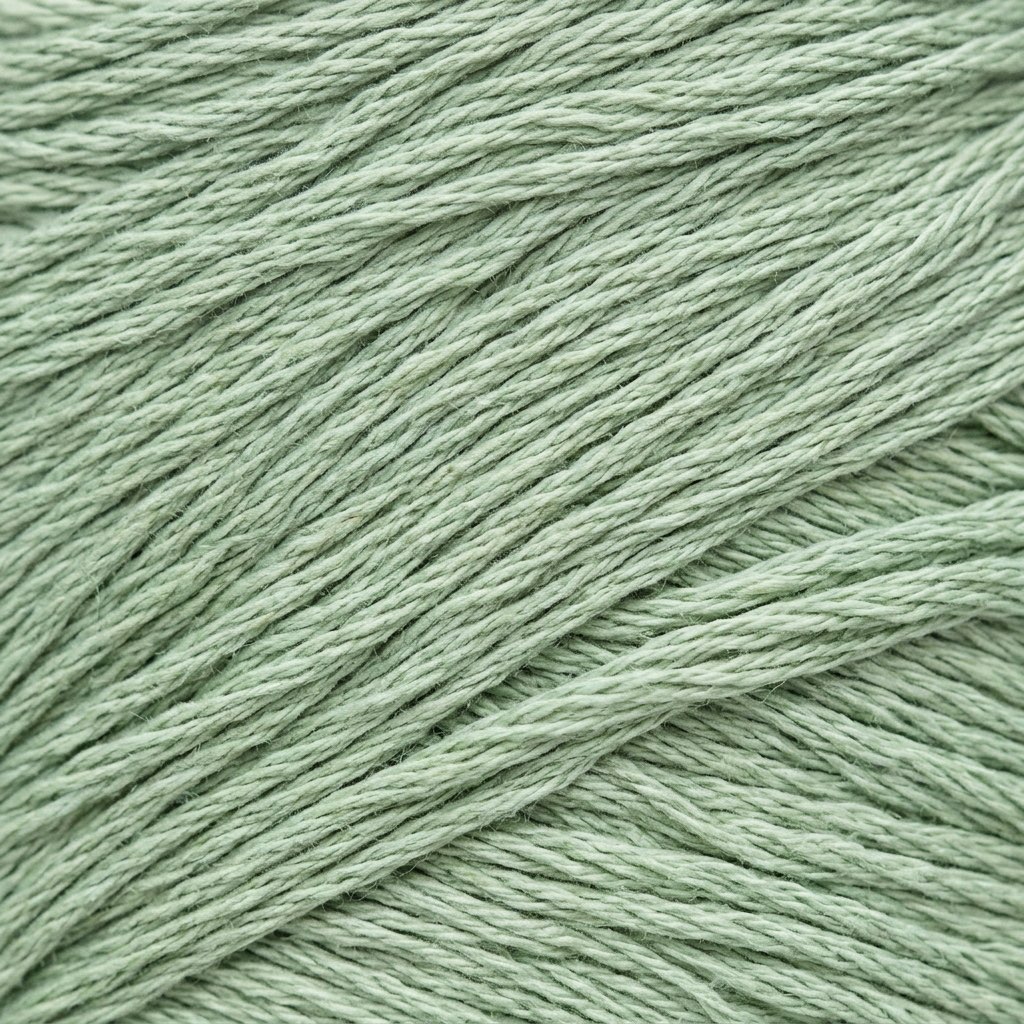
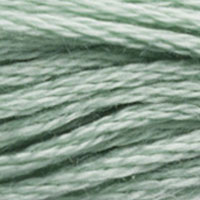
Sage is having a moment in interior design right now, and cross-stitch is following the trend — but stitchers who've worked with the sage family for years know that a well-chosen sage green thread is genuinely timeless rather than trendy. DMC 3956 Pale Sage sits in the quieter, more muted end of the sage spectrum: greyer than a spring green, softer than a forest green, warm enough to feel earthy rather than cold. It's the color of dried herb bundles, certain linen tablecloths, and the interior of Scandinavian ceramics.
What Makes Sage Different from Other Light Greens
The key characteristic of sage green is its grey component. True sage is never clean or vivid — it's always been in the sun too long, always slightly dusty, always more complex than it appears. This is precisely what makes it so versatile: the grey takes the edge off any palette it enters, mediating between warm and cool colors without fully committing to either. DMC 3956 does this particularly well because it sits at a value light enough to function as a highlight or secondary color without calling attention to itself.
Compare it to DMC 3813 (Light Blue Green), which is clearly cool, or DMC 471 (Very Light Avocado Green), which is clearly warm — 3956 splits the difference, useful in compositions that need a green presence without forcing a warm-or-cool decision. This makes it a workhorse in the background and midground of complex botanical pieces where the design needs visual rest.
Sampler and Historical Reproduction Work
Pale Sage earns a consistent mention in discussions about historical sampler reproduction. Antique samplers from the 17th through 19th centuries used plant-based dyes that have often faded toward this exact dusty, muted sage over the centuries — what may have been a more vivid green when the piece was stitched has aged into something closer to 3956. For stitchers working from antique sampler charts or creating designs that deliberately evoke historical needlework, Pale Sage is more accurate to what finished aged pieces look like than any currently vivid green thread would be.
Band samplers in particular rely heavily on muted greens for their vine-and-leaf borders, and 3956 is a natural fit alongside DMC 3052 (Medium Green Grey) and DMC 3053 (Green Grey) — all of which share the dusty, aged quality. Working these borders in the English method rather than cross-country can give cleaner line definition for the smaller leaf motifs.
Contemporary Applications
Outside historical reproduction, 3956 appears in modern designs featuring sage-painted furniture, herb garden illustrations, botanical watercolor-style pieces, and farmhouse aesthetic imagery. The current popularity of botanical and nature-themed home decor cross-stitch has been very good for the sage family of threads — stitchers are actively seeking out this exact quality of muted, sophisticated green for pieces that will live with neutral-toned interiors.
In wildlife designs, pale sage appears in moth wing gradients, lichen textures on tree bark, and the undersides of certain leaves where the color pales and becomes slightly silvery. It's one of those colors that becomes more recognizable in context than in the skein — you may not know you need it until you're building a palette and find that nothing else quite bridges the gap the same way.
Finding a good substitute for dusty, muted shades like Pale Sage requires extra attention because the grey component — the key to sage's character — varies noticeably between manufacturers. Anchor 240 is the recommended match and performs reasonably well, though it may run slightly greener (less grey) than the DMC original. The gap is noticeable when you hold the threads side by side, less so in a finished piece viewed at arm's length.
Madeira 1310 is a well-regarded option in this zone. Madeira's muted, grey-influenced greens tend to track the dusty quality fairly well, and 1310 is a reliable close match for 3956 applications. The slight difference in thread weight compared to DMC is worth testing on your specific fabric count before committing to a full project purchase.
Cosmo 981 is available and workable, though Cosmo's sage range sometimes runs a touch more blue-grey than warm-grey compared to the DMC original. In many design contexts this is imperceptible, but for historical reproduction work where the warm-neutral quality of sage is specifically important, the small difference is worth checking against your existing threads.
Sullivans 45326 is suitable for casual and practice use. The Sullivans sage tones are serviceable — adequately muted, reasonable coverage — but lack some of the nuanced warmth-grey balance that makes the DMC original work so well in complex palettes. For wall pieces that will be viewed closely, the premium thread quality is worth it.
Within DMC's own range, DMC 3053 (Green Grey) is the closest emergency substitute — similar muted quality but one step darker in value. DMC 522 (Fern Green) is another option if you need something with slightly more warmth.
Reference quality
How We Validate This Color Record
Use this page as a reference card for DMC 3956: the structured data, quick conversions, and long-form copy are all tied back to the same stored color record.
- Methodology
- This page renders DMC 3956, its hex value, and every brand equivalent from the site's source-of-truth color record, then checks long-form body copy against those same stored fields.
- Verification status
- Source-field checked. The page content is audited against the stored DMC number, brand equivalents, and match-quality labels before publishing.
- Last reviewed
- 2026-04-20
- Approximation warning
- Screen hex values, thread photos, and cross-brand conversions are reference aids. Dye lots, thread sheen, and fabric color can still shift the result in hand.
Decision guide
When to use the DMC 3956 reference page
This page should help you decide faster between palette planning, brand substitution, and shade comparison without turning the color record into a thin lookup page.
Best for
- + Palette planning when you want the stored DMC 3956 Pale Sage record, hex value #B8D8B8, and linked brand equivalents in one place.
- + Checking the quickest cross-brand shortlist before you buy floss, compare stash substitutes, or route into a more specific conversion page.
- + Finding nearby shades in the greens family before you commit to accents, shading, or background blends.
Watch for
- ! Screen previews are only reference aids. Pale Sage can shift on real fabric because thread sheen, stitch coverage, and room lighting change how the color reads.
- ! A stored equivalent is still a shortlist, not a guarantee that two brands will disappear into each other in the same stitched motif.
- ! Older charts, discontinued kit floss, and dye-lot variation can all introduce small but visible differences that the page cannot detect for you.
Before you commit
- Confirm the role of DMC 3956 Pale Sage: decide whether you need an exact hero shade, a forgiving background, or a rough stash substitute.
- Compare on project fabric: view the skein or stitched sample on the same fabric count and color you will actually use.
- Use the linked conversion pages next: open the brand-specific pages when you need match-quality caveats before substituting away from the DMC reference.
DMC 3956 FAQ
These questions appear on the page so the FAQ schema stays aligned with what visitors can actually read.
What is the Anchor equivalent of DMC 3956?+
The closest Anchor equivalent to DMC 3956 (Pale Sage) is Anchor 240. This is a close match.
What color is DMC 3956?+
DMC 3956 is called "Pale Sage" and has a hex color value of #B8D8B8. It belongs to the greens color family.
What is the Madeira equivalent of DMC 3956?+
The closest Madeira equivalent to DMC 3956 (Pale Sage) is Madeira 1310. This is a close match.
How DMC 3956 Looks on Fabric
The same thread appears different depending on your fabric. Always test on your project fabric.
White Aida
Cream / Ecru
Black Aida
Pairs Well With
DMC colors commonly used alongside 3956 Pale Sage.
Suggested Palette
Shading Companions

Detailed Conversions
Where to Buy DMC 3956
This section contains affiliate links. We may earn a small commission at no cost to you.
Related Guides
Free Printable Thread Conversion Chart
Pick a brand, enter your email, and we'll send you a printable chart mapping all 552 DMC colors to that brand's equivalents. Zero spam, one chart.
Thanks! Here's your free chart:
Download Your ChartOpens in a new tab. Use your browser's Print → Save as PDF.
No spam. Your email is stored securely and never shared.