
Quick Conversion Table
| Brand | Equivalent | Match |
|---|---|---|
| Anchor | 108 | close |
| Madeira | 0802 | close |
| Cosmo ⚠ | 2584 | close |
| Sullivans | 45422 | close |
Lavender Fields in Thread Form
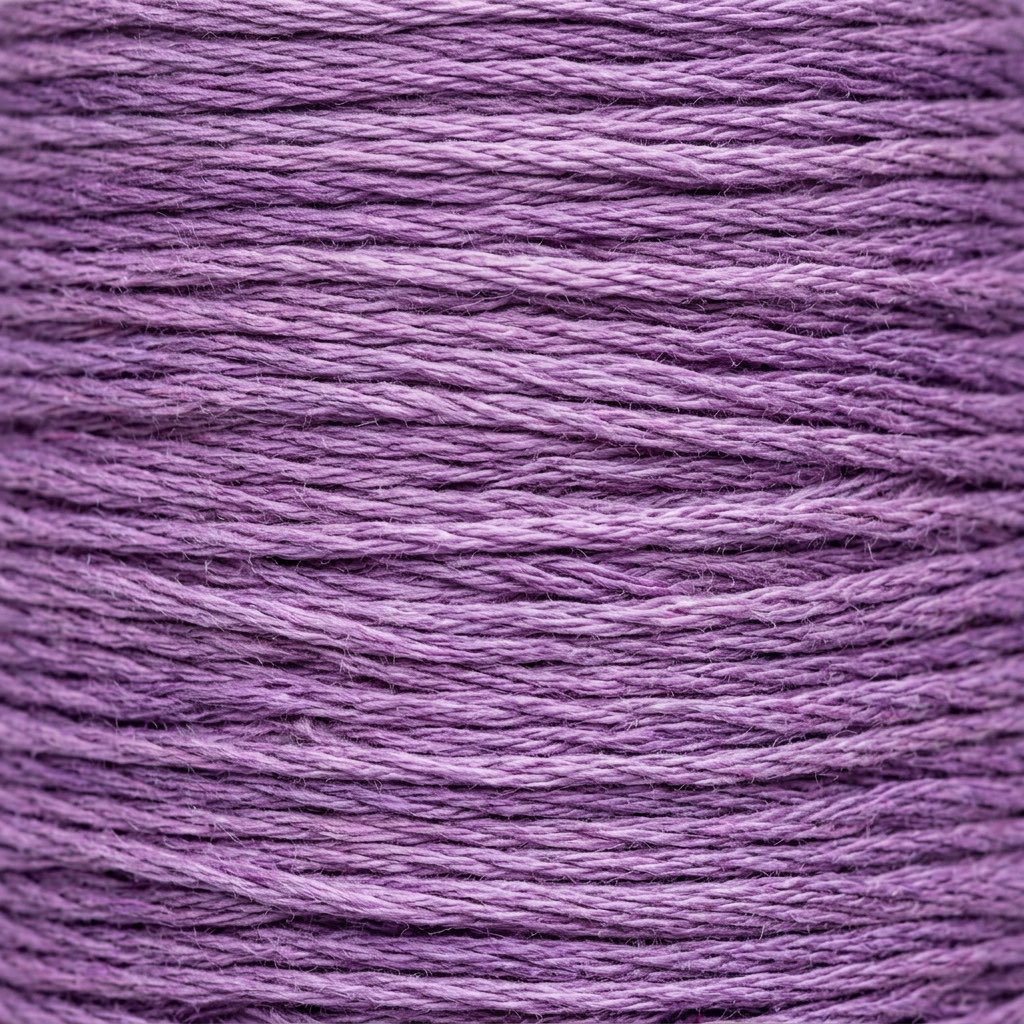
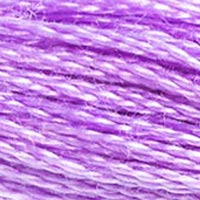
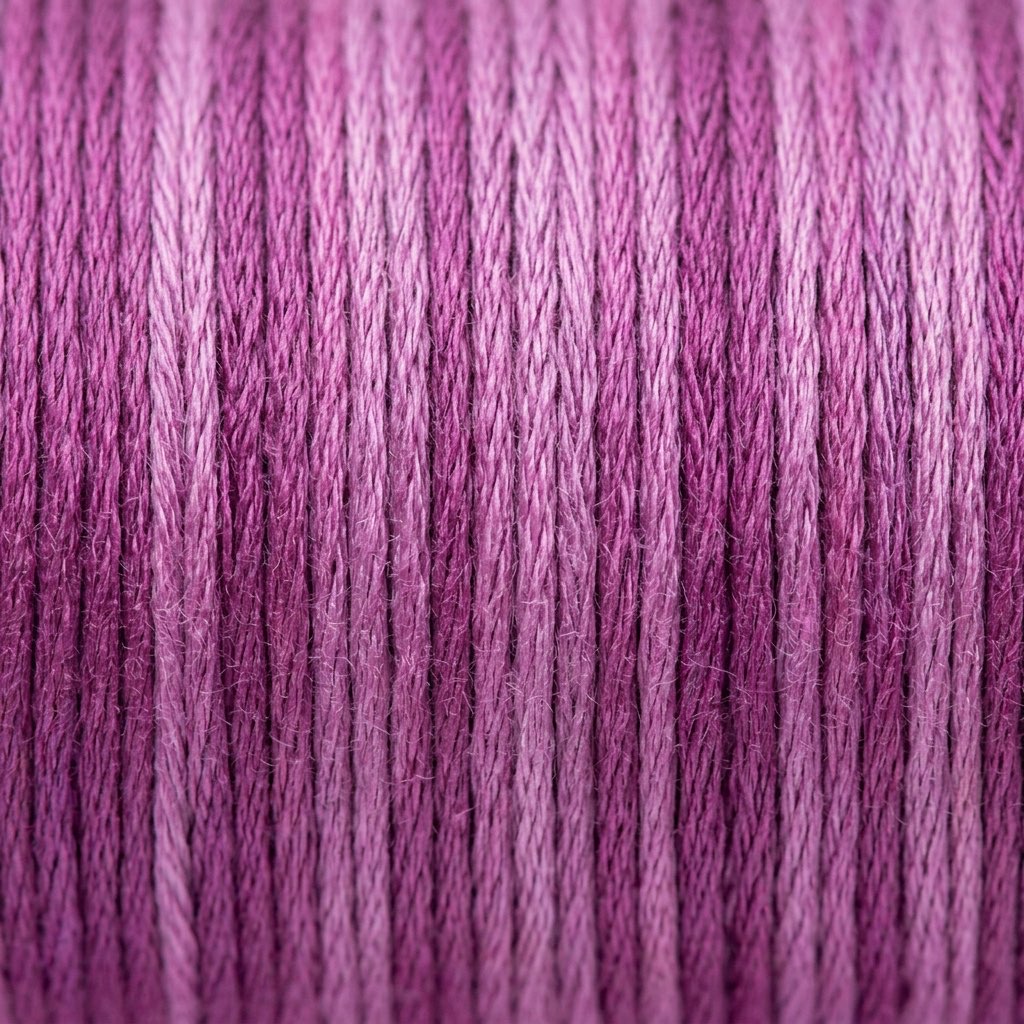
Walk through a lavender field in Provence and you will notice something the photographs never capture: the color is not uniform. Every stalk holds blooms at different stages — freshly opened flowers lean toward a brighter violet, mature blooms settle into a dusty mauve, and the unopened buds at each spike's tip show a deeper, more concentrated purple. DMC 108 Variegated Lavender replicates this natural variation within a single thread, shifting through lighter and deeper lavender tones with the kind of organic inconsistency that makes botanical subjects look genuinely alive rather than flat and illustrative.
Its hex midpoint sits at #AC78B8, a warm-leaning lavender with noticeable pink undertones. This is not the cool, blue-leaning lavender of dried arrangements or sachets — it is the living-plant lavender, still carrying the warmth of Mediterranean sun. That warmth is what separates DMC 108 from the other purple variegated threads in the DMC lineup. Where DMC 104 (Variegated Lavender Blue) tilts toward blue and DMC 103 (Variegated Plum) goes dustier and more muted, 108 stays in the sweet spot of true lavender — that balanced point where pink and blue meet in the violet spectrum.
Aromatherapy for Your Stitch Basket
Lavender carries cultural weight beyond its visual beauty. For centuries, it has been associated with calm, rest, and comfort — which might explain why so many cross-stitch designs featuring lavender sprigs are intended for bedrooms, nurseries, and quiet spaces. DMC 108's variegated quality enhances these designs by adding visual softness that matches lavender's emotional associations. A solid purple, no matter how well chosen, reads as graphic and defined. A variegated lavender reads as gentle, diffused, and — there is no other word for it — soothing.
Sachets and small pillows embroidered with lavender sprigs are one of the most popular beginner projects in France's cross-stitch tradition, and 108 is tailor-made for them. A simple design of three or five lavender stalks on natural linen, stitched with 108 for the flowers and DMC 3013 (Light Khaki Green) for the stems, creates a finished piece that looks far more accomplished than its stitch count suggests. The variegation does the heavy lifting, providing depth and visual interest that would otherwise require multiple thread changes and careful shading.
Working with the Variegation
One strand of 108 blended with one strand of DMC 210 (Medium Lavender) creates a partially stabilized lavender that still moves but stays closer to the midpoint value. This is useful when you want the organic quality of variegation but need more consistency across a larger area — a lavender sky background, for instance, where full variegation might create distracting banding but a flat solid would look dead.
For full lavender field scenes, consider using 108 for the flower masses in the middle ground, DMC 209 (Dark Lavender) for the deeper shadows and foreground detail, and DMC 211 (Light Lavender) for the highlights where light catches the tops of the flower rows. The variegation in 108 adds enough complexity to the middle ground that you can use just three threads to create a convincing sense of depth and distance — the distant fields read as a unified mass of shifting purple, exactly as real lavender fields appear from a distance.
Fabric choice matters particularly with this thread. On white Aida, 108 appears brighter and more saturated, with the contrast emphasizing each color shift. On natural linen, the warm base fabric harmonizes with the pink undertones in the lavender, creating a cohesive, vintage feel. On cream or ecru evenweave, the effect is especially lovely — like a faded botanical illustration brought to life, with just enough color variation to suggest real observation rather than idealization.
One practical consideration: because 108 spans a range of values, it can be difficult to photograph accurately. The lighter sections tend to wash out in flash photography while the darker sections retain detail, making finished pieces look less uniform in photos than they do in person. If you are photographing a completed project using 108, natural diffused daylight — overcast sky, north-facing window — gives the most accurate representation. Artificial light tends to push the thread either warmer or cooler than it reads to the naked eye.
Navigating the Lavender Variegated Swap
Anchor 108 shares the same number, which is a coincidence that might make you think matching is straightforward. It is not. The number overlap means nothing about color accuracy — Anchor and DMC use completely independent numbering systems. That said, Anchor 108 is rated as a close match and generally captures the warm lavender range that defines DMC 108. The transition pattern may differ, so test on a scrap if your project involves large filled areas where banding patterns become visible.
Madeira 0802 is a close match with Madeira's slightly higher sheen. For lavender specifically, the extra sheen can mimic the way real lavender flowers catch and reflect sunlight — those tiny individual blooms on each spike are slightly waxy and reflective. Whether this helps your project depends on the design, but it is worth knowing that the substitution may add a quality that DMC's matte cotton does not provide.
Cosmo 2584 offers a close match in a softer hand. Cosmo threads tend to lie flatter in the stitch, which can reduce the visibility of color transitions in variegated threads. If you find DMC 108's variegation slightly too dramatic, Cosmo's version might actually be preferable — the softer transitions create a more blended effect that some stitchers prefer for delicate floral work.
If you need to replicate the effect with solid DMC threads, use DMC 210 (Medium Lavender) as your base and occasionally substitute DMC 209 (Dark Lavender) for darker sections and DMC 211 (Light Lavender) for lighter areas. This manual approach gives you control over exactly where the color shifts fall but requires more planning and more thread changes. The 208-209-210-211 lavender family is one of DMC's best-graded color sequences, so the transitions between adjacent shades are smooth and convincing.
Reference quality
How We Validate This Color Record
Use this page as a reference card for DMC 108: the structured data, quick conversions, and long-form copy are all tied back to the same stored color record.
- Methodology
- This page renders DMC 108, its hex value, and every brand equivalent from the site's source-of-truth color record, then checks long-form body copy against those same stored fields.
- Verification status
- Source-field checked. The page content is audited against the stored DMC number, brand equivalents, and match-quality labels before publishing.
- Last reviewed
- 2026-04-20
- Approximation warning
- Screen hex values, thread photos, and cross-brand conversions are reference aids. Dye lots, thread sheen, and fabric color can still shift the result in hand.
Decision guide
When to use the DMC 108 reference page
This page should help you decide faster between palette planning, brand substitution, and shade comparison without turning the color record into a thin lookup page.
Best for
- + Palette planning when you want the stored DMC 108 Variegated Lavender record, hex value #AC78B8, and linked brand equivalents in one place.
- + Checking the quickest cross-brand shortlist before you buy floss, compare stash substitutes, or route into a more specific conversion page.
- + Finding nearby shades in the purples family before you commit to accents, shading, or background blends.
Watch for
- ! Screen previews are only reference aids. Variegated Lavender can shift on real fabric because thread sheen, stitch coverage, and room lighting change how the color reads.
- ! A stored equivalent is still a shortlist, not a guarantee that two brands will disappear into each other in the same stitched motif.
- ! Older charts, discontinued kit floss, and dye-lot variation can all introduce small but visible differences that the page cannot detect for you.
Before you commit
- Confirm the role of DMC 108 Variegated Lavender: decide whether you need an exact hero shade, a forgiving background, or a rough stash substitute.
- Compare on project fabric: view the skein or stitched sample on the same fabric count and color you will actually use.
- Use the linked conversion pages next: open the brand-specific pages when you need match-quality caveats before substituting away from the DMC reference.
DMC 108 FAQ
These questions appear on the page so the FAQ schema stays aligned with what visitors can actually read.
What is the Anchor equivalent of DMC 108?+
The closest Anchor equivalent to DMC 108 (Variegated Lavender) is Anchor 108. This is a close match.
What color is DMC 108?+
DMC 108 is called "Variegated Lavender" and has a hex color value of #AC78B8. It belongs to the purples color family.
What is the Madeira equivalent of DMC 108?+
The closest Madeira equivalent to DMC 108 (Variegated Lavender) is Madeira 0802. This is a close match.
How DMC 108 Looks on Fabric
The same thread appears different depending on your fabric. Always test on your project fabric.
White Aida
Cream / Ecru
Black Aida
Pairs Well With
DMC colors commonly used alongside 108 Variegated Lavender.
Suggested Palette
Shading Companions
Detailed Conversions
Where to Buy DMC 108
This section contains affiliate links. We may earn a small commission at no cost to you.
Related Guides
Free Printable Thread Conversion Chart
Pick a brand, enter your email, and we'll send you a printable chart mapping all 552 DMC colors to that brand's equivalents. Zero spam, one chart.
Thanks! Here's your free chart:
Download Your ChartOpens in a new tab. Use your browser's Print → Save as PDF.
No spam. Your email is stored securely and never shared.