
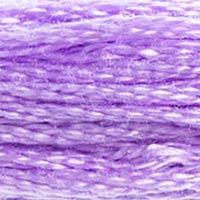
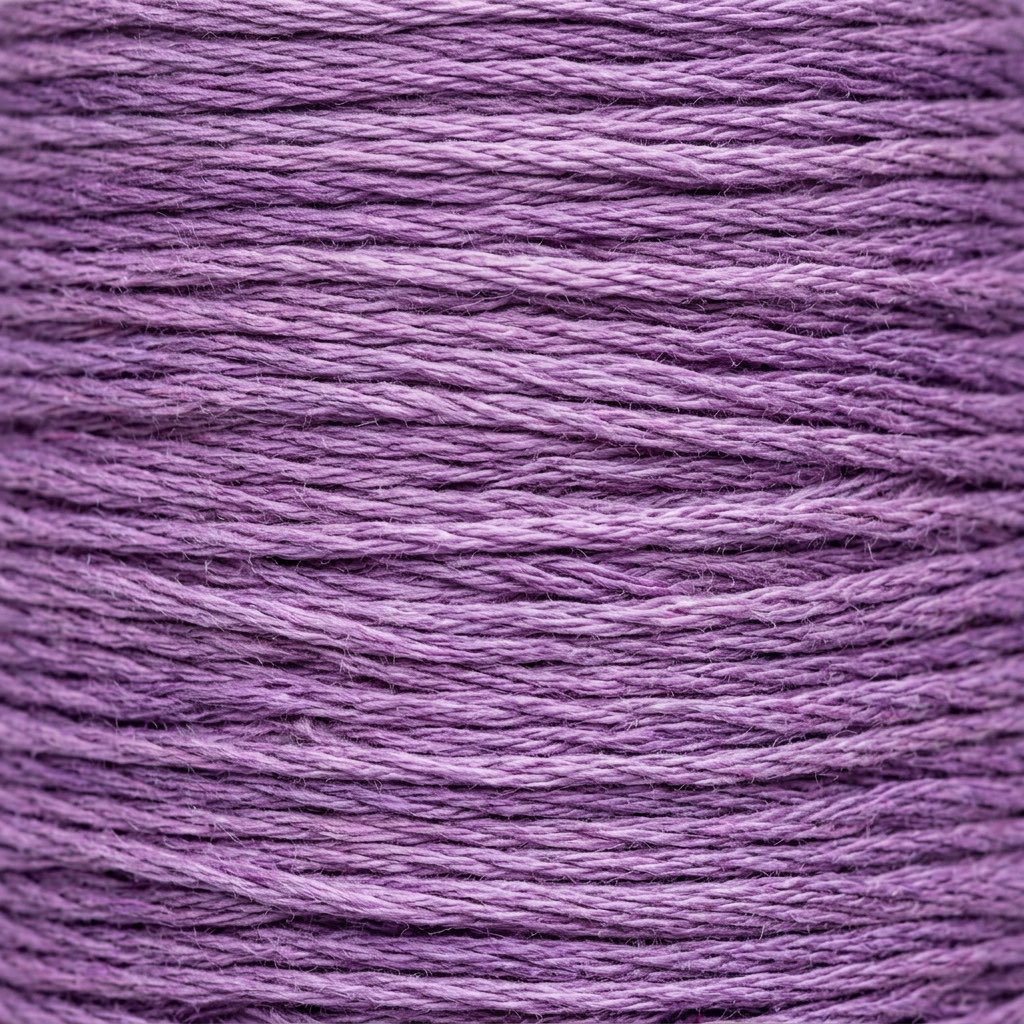
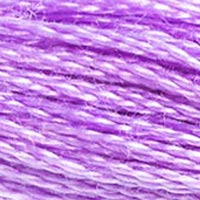
DMC 90 — Variegated Pale Orchid
Purples family · Hex #C888C0
Quick Conversion Table
| Brand | Equivalent | Match |
|---|---|---|
| Anchor | 1217 | close |
| Madeira | 0710 | close |
| Cosmo ⚠ | 2639 | close |
| Sullivans | 45430 | close |
Variegated threads occupy a special category in the cross-stitch world, and they generate opinions. Some stitchers adore them; others distrust them; many have a complicated relationship with them that's evolved through specific project experiences. DMC 90 — Variegated Pale Orchid — is one of the more beautiful and genuinely versatile entries in DMC's variegated line, cycling through soft lavender, pale orchid, and soft purple tones that together create a dreamy, atmospheric quality no single-color thread can replicate.
How Variegated Thread Actually Works
Understanding variegated thread's behavior is essential to using it successfully. Unlike solid-color thread, variegated thread changes color at regular intervals along the skein. The color transition happens at a fixed repeat length — in DMC's variegated line, the repeats are generally long enough that individual stitches don't cycle through the full color range, but a row of stitches will visibly progress through the color sequence.
This means that the design's stitch density and the fabric count interact directly with how the variegated pattern appears in the finished work. On 14-count Aida with average stitch size, the color shifts are gradual and atmospheric — soft halos of color blending into each other. On 28-count evenweave over-two, the same thread produces finer, more defined color zones because the repeat doesn't cover as many stitches per interval. Understanding this interaction before starting a project saves the unpleasant surprise of a variegated result that looks completely different from what you expected.
The Cross-Country Versus Parking Debate
This is where variegated threads generate the most community discussion. Cross-country stitching — completing each stitch before moving to the next, working across the design in rows — produces a more predictable, gradient-like result with variegated thread. The color flows in one direction across the work, creating a soft wash effect. Parking technique — where you advance multiple needles through the design, parking them while working surrounding areas — creates a very different result with variegated thread: the color distribution depends on when each parked needle is returned to, which can create patchy or irregular color effects rather than smooth gradients.
Most experienced variegated-thread users recommend cross-country stitching for variegated colors specifically, or at least understanding that parking will create a more random, less controlled color distribution. Some stitchers actually prefer the random quality — it looks more spontaneous and impressionistic. But if you're expecting the smooth gradient wash of a cross-country approach, discovering mid-project that your parking technique has created a patchwork effect is genuinely frustrating.
Specific Applications for Pale Orchid Variegated
DMC 90's pale orchid range — cycling from soft lavender through orchid to pale purple — lends itself to specific subject matter particularly well. Wisteria is perhaps the obvious choice: the cascading, slightly irregular color distribution of variegated thread approximates the natural color variation of wisteria blossoms beautifully. A wisteria cross-stitch worked entirely in 90 would read as remarkably natural without requiring multiple purple thread colors or complex color management.
Lilac, lavender fields, iris flowers, and any subject involving massed purple-lavender florals benefits from 90's color range. The pale, soft quality of the orchid tones means 90 reads as romantic and dreamy rather than vivid and graphic. For greeting-card style ornaments, bookmark designs, and small romantic pieces, 90 as a primary color can produce charming results with minimal design complexity.
Sky and atmosphere in an artistic or impressionistic rather than realistic style can use 90 for the quality of purple-pink light that appears at dawn and dusk — the liminal light that isn't quite pink and isn't quite blue-purple. Abstract or artistic cross-stitch designs that don't need to represent specific subjects convincingly can use 90 for its atmospheric, color-transitioning quality.
All brand equivalents for DMC 90 earn close rather than exact ratings, which reflects the inherent challenge of matching variegated threads across brands. The specific color sequence — which shades appear, in what order, and at what repeat length — is a proprietary design choice that varies by manufacturer. Anchor 1217, Madeira 0710, Cosmo 2639, and Sullivans 45430 all offer variegated threads in a similar pale orchid-purple range, but the specific color sequence, the length of each color's appearance in the repeat, and the transition sharpness between colors will all differ.
This means "close" in the variegated context is a more significant caveat than "close" for solid threads. With a solid thread, close means the color is slightly different. With a variegated thread, close means the overall color family is similar but the specific effect in your stitched piece will be visibly different from DMC 90's effect — potentially quite different, depending on how the alternatives cycle through their colors.
If you're committed to using variegated thread for a specific design effect and can't source DMC 90, the practical approach is to buy a skein of the closest available alternative and stitch a test swatch before committing. A 2cm by 2cm square of stitching will show you how that thread's variegation distributes at your chosen fabric count, which is the only reliable way to know if the alternative serves your design intent.
Within DMC, if you want a non-variegated alternative that approximates 90's dominant mid-purple character, DMC 210 (Medium Lavender) and DMC 211 (Light Lavender) together cover a similar color range in solid form. You lose the automatic color variation but gain full control over color placement — a trade-off that works well for stitchers who find variegated results unpredictable.
Reference quality
How We Validate This Color Record
Use this page as a reference card for DMC 90: the structured data, quick conversions, and long-form copy are all tied back to the same stored color record.
- Methodology
- This page renders DMC 90, its hex value, and every brand equivalent from the site's source-of-truth color record, then checks long-form body copy against those same stored fields.
- Verification status
- Source-field checked. The page content is audited against the stored DMC number, brand equivalents, and match-quality labels before publishing.
- Last reviewed
- 2026-04-20
- Approximation warning
- Screen hex values, thread photos, and cross-brand conversions are reference aids. Dye lots, thread sheen, and fabric color can still shift the result in hand.
Decision guide
When to use the DMC 90 reference page
This page should help you decide faster between palette planning, brand substitution, and shade comparison without turning the color record into a thin lookup page.
Best for
- + Palette planning when you want the stored DMC 90 Variegated Pale Orchid record, hex value #C888C0, and linked brand equivalents in one place.
- + Checking the quickest cross-brand shortlist before you buy floss, compare stash substitutes, or route into a more specific conversion page.
- + Finding nearby shades in the purples family before you commit to accents, shading, or background blends.
Watch for
- ! Screen previews are only reference aids. Variegated Pale Orchid can shift on real fabric because thread sheen, stitch coverage, and room lighting change how the color reads.
- ! A stored equivalent is still a shortlist, not a guarantee that two brands will disappear into each other in the same stitched motif.
- ! Older charts, discontinued kit floss, and dye-lot variation can all introduce small but visible differences that the page cannot detect for you.
Before you commit
- Confirm the role of DMC 90 Variegated Pale Orchid: decide whether you need an exact hero shade, a forgiving background, or a rough stash substitute.
- Compare on project fabric: view the skein or stitched sample on the same fabric count and color you will actually use.
- Use the linked conversion pages next: open the brand-specific pages when you need match-quality caveats before substituting away from the DMC reference.
DMC 90 FAQ
These questions appear on the page so the FAQ schema stays aligned with what visitors can actually read.
What is the Anchor equivalent of DMC 90?+
The closest Anchor equivalent to DMC 90 (Variegated Pale Orchid) is Anchor 1217. This is a close match.
What color is DMC 90?+
DMC 90 is called "Variegated Pale Orchid" and has a hex color value of #C888C0. It belongs to the purples color family.
What is the Madeira equivalent of DMC 90?+
The closest Madeira equivalent to DMC 90 (Variegated Pale Orchid) is Madeira 0710. This is a close match.
Small, freestanding floral motifs — single flowers, small sprigs, bookmark-sized botanical designs — are perhaps the ideal showcase for DMC 90. In a small piece, the full color repeat of the variegated thread cycles through visibly within the design boundaries, which creates an intentional, designed-looking color effect rather than the accidental-looking patchwork that can appear when variegated thread is used in small portions of a large design.
Wisteria cross-stitch is a natural pairing: the cascading, irregular clusters of wisteria blossoms mirror the organic color variation of variegated thread. Using 90 for the flower clusters with DMC 3053 (Green Gray) or DMC 3052 (Medium Green Gray) for foliage and DMC 642 (Dark Beige Gray) or DMC 3866 (Ultra Very Light Mocha Brown) for stems produces a wisteria piece that reads as delicately botanical with surprisingly little color management effort.
For SAL groups working on the same design, using variegated threads like 90 ensures that each participant's piece will look subtly different despite following the same pattern — the color distribution variation creates natural individuality without any design modification. This makes 90 and other variegated threads popular choices for SAL organizers who want participants to finish with related but visually distinct pieces.
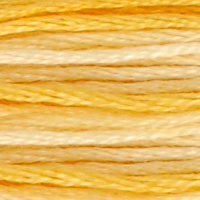
How DMC 90 Looks on Fabric
The same thread appears different depending on your fabric. Always test on your project fabric.
White Aida
Cream / Ecru
Black Aida
Pairs Well With
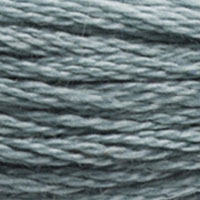
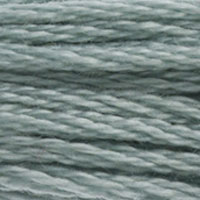
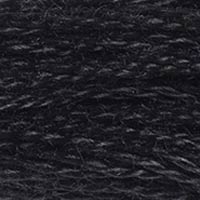
DMC colors commonly used alongside 90 Variegated Pale Orchid.
Suggested Palette
Shading Companions
Detailed Conversions
Where to Buy DMC 90
This section contains affiliate links. We may earn a small commission at no cost to you.
Related Guides
Free Printable Thread Conversion Chart
Pick a brand, enter your email, and we'll send you a printable chart mapping all 552 DMC colors to that brand's equivalents. Zero spam, one chart.
Thanks! Here's your free chart:
Download Your ChartOpens in a new tab. Use your browser's Print → Save as PDF.
No spam. Your email is stored securely and never shared.