
Quick Conversion Table
| Brand | Equivalent | Match |
|---|---|---|
| Anchor | 1209 | close |
| Madeira | 1213 | close |
| Cosmo ⚠ | 2643 | close |
| Sullivans | 45344 | close |
What Variegated Thread Actually Does to Your Stitching
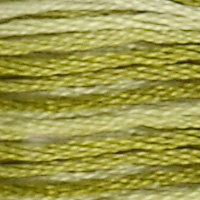
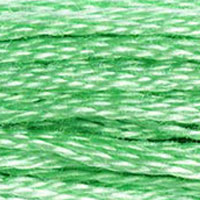
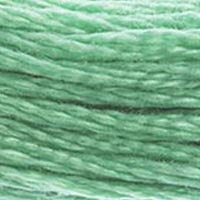
DMC 94 Variegated Nile Green occupies a fascinating and slightly unpredictable corner of the DMC range. Unlike solid-dyed threads where what you see on the skein is what you get, variegated threads shift through multiple shades as they run through the fabric. DMC 94 moves through a family of green tones — from a lighter mint-influenced green to a deeper, fuller Nile green — creating gentle value transitions within a single strand.
The result looks different depending almost entirely on how you work it. If you stitch cross-country, covering the whole design area in a sweeping pass, the color shifts play out as broad gradients across the piece. If you complete each stitch individually before moving to the next, you get a denser, more peppered effect where the lights and darks appear as flecks rather than sweeps. Neither is wrong — they're just different effects, and experienced stitchers often choose their method deliberately based on the look they want.
Where This Color Finds Its Best Use
Foliage is the obvious home for DMC 94. The graduated green tones mimic the way real leaves catch light differently across a canopy — some in full sun, some in partial shade. Nature-themed designs, botanical samplers, and garden scenes benefit enormously from this naturalistic shading without requiring the stitcher to manage multiple separate thread colors for depth.
Water is another natural pairing. Nile Green has just enough blue-green undertone to suggest the play of light across shallow water, particularly for tropical or freshwater scenes. Pair it with DMC 993 (Light Aquamarine) or DMC 964 (Light Seagreen) for water effects that feel layered and alive.
The color also turns up in floral work — specifically for stems, leaves, and calyx details — where its variegation prevents the flatness that a solid green would produce at small scale. Pairing DMC 94 with a coordinating solid like DMC 954 (Nile Green) or DMC 955 (Light Nile Green) lets you anchor the variegated effect while keeping the palette cohesive.
The Tension Challenge with Variegated Threads
Here's the honest truth about working with DMC 94 and variegated threads in general: tension consistency matters more than usual. Because the color itself varies, any irregularity in your stitch tension becomes doubly visible — the strand catches light differently depending on how tightly it's pulled through the fabric. Railroading (spreading the two plies of your strand apart with your needle before completing each stitch) helps the thread lay flatter and more evenly, which keeps the color transitions looking intentional rather than chaotic.
On evenweave or linen stitched over-two, DMC 94 tends to read more elegantly than on Aida, because the finer weave allows the color gradations to blend more smoothly across the ground fabric. On 14-count Aida the variegation can sometimes read as a slightly speckled texture, which some stitchers love and others find busy. If you want a preview before committing, stitch a small test swatch in your intended method before starting your WIP.
Dye lot consistency is worth mentioning for variegated threads: because the shifts are intentional and part of the product, minor lot-to-lot variation in where the light and dark sections fall is expected and acceptable. Buy all the skeins you need at once to minimize any visible difference.
Substituting a variegated thread is inherently approximate, because no two brands position their color shifts in exactly the same sequence or with the same spacing. Anchor 1209 is the recommended conversion for DMC 94, but Anchor's variegated range uses slightly different interval lengths, meaning the shift from lighter to darker tones will occur at different points along the thread. The overall color family stays in the Nile green range, but the pattern of shifts won't align stitch-for-stitch with DMC 94.
Madeira 1213 falls in a similar category — a close visual match to the green family, but with Madeira's characteristic slightly higher sheen. In pieces where the thread catches light, Madeira's variegated version will read a touch brighter at the lighter end of its range. Some stitchers prefer this; others find it slightly less naturalistic for foliage work.
Cosmo 2643 is a close match, and Cosmo's variegated threads are known for having slightly longer color runs between shifts, which produces broader, more gradual color sweeps. If you're stitching cross-country on a large piece, this can actually be an advantage.
One useful workaround when an exact match isn't available: blend two solid strands from DMC 954 (Nile Green) and DMC 955 (Light Nile Green) in a single needle. You won't get the same continuous shift, but the blended needle creates a similar two-value effect that reads as natural from normal viewing distance.
- Never mix two skeins of a variegated thread from different dye lots in the same stitched area — the shift intervals will visibly clash.
- For smaller motifs, consider using only solid companion colors if the variegation would be lost at the scale of the design.
Reference quality
How We Validate This Color Record
Use this page as a reference card for DMC 94: the structured data, quick conversions, and long-form copy are all tied back to the same stored color record.
- Methodology
- This page renders DMC 94, its hex value, and every brand equivalent from the site's source-of-truth color record, then checks long-form body copy against those same stored fields.
- Verification status
- Source-field checked. The page content is audited against the stored DMC number, brand equivalents, and match-quality labels before publishing.
- Last reviewed
- 2026-04-20
- Approximation warning
- Screen hex values, thread photos, and cross-brand conversions are reference aids. Dye lots, thread sheen, and fabric color can still shift the result in hand.
Decision guide
When to use the DMC 94 reference page
This page should help you decide faster between palette planning, brand substitution, and shade comparison without turning the color record into a thin lookup page.
Best for
- + Palette planning when you want the stored DMC 94 Variegated Nile Green record, hex value #7ABE90, and linked brand equivalents in one place.
- + Checking the quickest cross-brand shortlist before you buy floss, compare stash substitutes, or route into a more specific conversion page.
- + Finding nearby shades in the greens family before you commit to accents, shading, or background blends.
Watch for
- ! Screen previews are only reference aids. Variegated Nile Green can shift on real fabric because thread sheen, stitch coverage, and room lighting change how the color reads.
- ! A stored equivalent is still a shortlist, not a guarantee that two brands will disappear into each other in the same stitched motif.
- ! Older charts, discontinued kit floss, and dye-lot variation can all introduce small but visible differences that the page cannot detect for you.
Before you commit
- Confirm the role of DMC 94 Variegated Nile Green: decide whether you need an exact hero shade, a forgiving background, or a rough stash substitute.
- Compare on project fabric: view the skein or stitched sample on the same fabric count and color you will actually use.
- Use the linked conversion pages next: open the brand-specific pages when you need match-quality caveats before substituting away from the DMC reference.
DMC 94 FAQ
These questions appear on the page so the FAQ schema stays aligned with what visitors can actually read.
What is the Anchor equivalent of DMC 94?+
The closest Anchor equivalent to DMC 94 (Variegated Nile Green) is Anchor 1209. This is a close match.
What color is DMC 94?+
DMC 94 is called "Variegated Nile Green" and has a hex color value of #7ABE90. It belongs to the greens color family.
What is the Madeira equivalent of DMC 94?+
The closest Madeira equivalent to DMC 94 (Variegated Nile Green) is Madeira 1213. This is a close match.
How DMC 94 Looks on Fabric
The same thread appears different depending on your fabric. Always test on your project fabric.
White Aida
Cream / Ecru
Black Aida
Pairs Well With
DMC colors commonly used alongside 94 Variegated Nile Green.
Suggested Palette
Shading Companions
Detailed Conversions
Where to Buy DMC 94
This section contains affiliate links. We may earn a small commission at no cost to you.
Related Guides
Free Printable Thread Conversion Chart
Pick a brand, enter your email, and we'll send you a printable chart mapping all 552 DMC colors to that brand's equivalents. Zero spam, one chart.
Thanks! Here's your free chart:
Download Your ChartOpens in a new tab. Use your browser's Print → Save as PDF.
No spam. Your email is stored securely and never shared.