
DMC 844 — Ultra Dark Beaver Gray
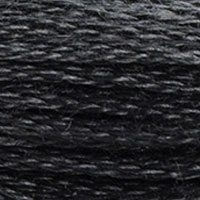
Neutrals family · Hex #484848
Quick Conversion Table
| Brand | Equivalent | Match |
|---|---|---|
| Anchor | 1041 | close |
| Madeira | 1810 | close |
| Cosmo ⚠ | 895 | close |
| Sullivans | 45241 | close |
| J&P Coats | 8501 | close |
| Dimensions | 18501 | close |
| Bucilla | 844 | close |
| Candamar | 6239 | close |
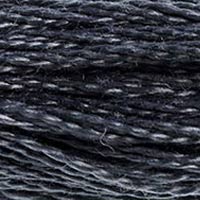
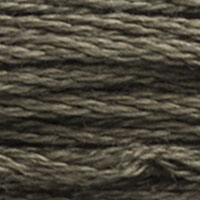
The name "beaver gray" doesn't exactly conjure vivid design inspiration, but the color itself is remarkably useful. DMC 844 — Ultra Dark Beaver Gray at hex #484848 — is a deep, warm-neutral gray that reads as genuinely dark without the starkness of charcoal or black. The "warm" is subtle at this value, but it's real: 844 reads as slightly brown-toned compared to a purely cool dark gray, which gives it a more organic, less mechanical quality. This is the dark gray that works in the natural world.
What Warm Dark Gray Does That Cool Dark Gray Cannot
The difference between a warm dark gray and a cool dark gray is most visible in two contexts: animal subjects and architectural subjects. An elephant, a rhinoceros, a seal, or a storm-cloud gray horse rendered in warm dark gray reads as alive and organic — the slight brown undertone suggests skin, hide, and fur rather than metal or stone. The same subjects rendered in a cool dark gray feel slightly wrong in a way that's difficult to articulate but immediately perceptible.
In architecture, stone walls, concrete, aged slate, and weathered granite all have a warm undertone in their darker areas. The gray of old English limestone, the dark tones of fieldstone walls, and the aged concrete of historic buildings all lean warm-neutral rather than cool-neutral. 844 handles these subjects more authentically than a cooler alternative.
Animal Subjects and Wildlife
Gray animals in cross-stitch use 844 as their darkest tone frequently. Elephants, the deepest shadow areas of gray wolf fur, storm-gray horse coloring, and gray cat breeds all reach for 844 in their shadow zones. Paired with DMC 414 (Dark Steel Gray) for mid-dark gray areas and DMC 762 (Very Light Pearl Gray) for highlights, 844 anchors a warm-neutral gray system that handles most gray animal rendering.
For specifically the elephant — a subject with a devoted cross-stitch following, appearing in everything from children's sampler designs to museum-quality wildlife portraits — 844 is essential. Elephant skin has a distinctive wrinkled texture that requires strong value contrast to read convincingly, and 844 provides the darkest point in the wrinkle-shadow areas while remaining warm enough to feel like skin rather than metal.
Graphic Design and Typography Applications
Cross-stitch that references graphic design elements — monograms, text pieces, pattern borders in a sophisticated palette — often uses dark grays rather than black for a softer, more contemporary look. 844 in this context provides the darkest element of a gray palette that might include DMC 317 (Pewter Gray) for mid-gray and DMC 762 (Very Light Pearl Gray) for the lightest accent. The warm undertone keeps the palette from reading as purely industrial or cold.
Japanese-inspired designs and Scandinavian minimalist cross-stitch both use sophisticated gray palettes, and 844 contributes to those aesthetics as the deepest dark accent. The color reads as both modern and natural — a versatile combination for design-forward needlework pieces that want to feel contemporary rather than traditionally rustic.
Best Uses for Ultra Dark Beaver Gray (DMC 844)
Cross stitch projects featuring DMC 844 benefit from its unique tonal qualities. When selecting the best cross stitch thread for your design, keep Ultra Dark Beaver Gray in mind as a versatile choice that blends perfectly with other shades.
Madeira 1810 earns an exact match, while Anchor 1041 is listed as close. This is notable — Anchor typically matches DMC dark grays well, so the close rather than exact rating for 1041 suggests there's a visible undertone or value difference. Stitchers report that Anchor 1041 may read slightly cooler or slightly different in the warm-neutral balance compared to DMC 844's characteristic warmth. For designs where the warm character of 844 is doing important work — animal subjects, organic textures — the Anchor equivalent should be tested before committing.
Cosmo 895 and Sullivans 45241 are both close matches. The warm-neutral quality of 844 is one of the harder characteristics to replicate exactly across brands, as it depends on a specific balance of undertones that different manufacturers calibrate differently. In most practical applications the difference is acceptable, but in side-by-side comparison with DMC 844, close matches tend to read either slightly cooler or slightly different in depth.
Within DMC, the beaver gray family extends in both lighter directions: DMC 317 (Pewter Gray) is a step lighter and slightly cooler, while DMC 413 (Dark Pewter Gray) is another close neighbor in the gray family. None are identical to 844's specific warm-very-dark character. For the darkest warm gray position that 844 occupies, DMC 3799 (Very Dark Pewter Gray) is worth comparing — it's in the same dark gray zone but with its own undertone character. Testing in your fabric and lighting conditions is the most reliable way to find an acceptable substitute if 844 is unavailable.
Reference quality
How We Validate This Color Record
Use this page as a reference card for DMC 844: the structured data, quick conversions, and long-form copy are all tied back to the same stored color record.
- Methodology
- This page renders DMC 844, its hex value, and every brand equivalent from the site's source-of-truth color record, then checks long-form body copy against those same stored fields.
- Verification status
- Source-field checked. The page content is audited against the stored DMC number, brand equivalents, and match-quality labels before publishing.
- Last reviewed
- 2026-04-20
- Approximation warning
- Screen hex values, thread photos, and cross-brand conversions are reference aids. Dye lots, thread sheen, and fabric color can still shift the result in hand.
Decision guide
When to use the DMC 844 reference page
This page should help you decide faster between palette planning, brand substitution, and shade comparison without turning the color record into a thin lookup page.
Best for
- + Palette planning when you want the stored DMC 844 Ultra Dark Beaver Gray record, hex value #484848, and linked brand equivalents in one place.
- + Checking the quickest cross-brand shortlist before you buy floss, compare stash substitutes, or route into a more specific conversion page.
- + Finding nearby shades in the neutrals family before you commit to accents, shading, or background blends.
Watch for
- ! Screen previews are only reference aids. Ultra Dark Beaver Gray can shift on real fabric because thread sheen, stitch coverage, and room lighting change how the color reads.
- ! A stored equivalent is still a shortlist, not a guarantee that two brands will disappear into each other in the same stitched motif.
- ! Older charts, discontinued kit floss, and dye-lot variation can all introduce small but visible differences that the page cannot detect for you.
Before you commit
- Confirm the role of DMC 844 Ultra Dark Beaver Gray: decide whether you need an exact hero shade, a forgiving background, or a rough stash substitute.
- Compare on project fabric: view the skein or stitched sample on the same fabric count and color you will actually use.
- Use the linked conversion pages next: open the brand-specific pages when you need match-quality caveats before substituting away from the DMC reference.
DMC 844 FAQ
These questions appear on the page so the FAQ schema stays aligned with what visitors can actually read.
What is the Anchor equivalent of DMC 844?+
The closest Anchor equivalent to DMC 844 (Ultra Dark Beaver Gray) is Anchor 1041. This is a close match.
What color is DMC 844?+
DMC 844 is called "Ultra Dark Beaver Gray" and has a hex color value of #484848. It belongs to the neutrals color family.
What is the Madeira equivalent of DMC 844?+
The closest Madeira equivalent to DMC 844 (Ultra Dark Beaver Gray) is Madeira 1810. This is a close match.
How DMC 844 Looks on Fabric
The same thread appears different depending on your fabric. Always test on your project fabric.
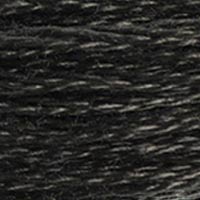
White Aida
Cream / Ecru
Black Aida
Pairs Well With
DMC colors commonly used alongside 844 Ultra Dark Beaver Gray.
Suggested Palette
Shading Companions
Detailed Conversions
Where to Buy DMC 844
This section contains affiliate links. We may earn a small commission at no cost to you.
Related Guides
Free Printable Thread Conversion Chart
Pick a brand, enter your email, and we'll send you a printable chart mapping all 552 DMC colors to that brand's equivalents. Zero spam, one chart.
Thanks! Here's your free chart:
Download Your ChartOpens in a new tab. Use your browser's Print → Save as PDF.
No spam. Your email is stored securely and never shared.