
Quick Conversion Table
| Brand | Equivalent | Match |
|---|---|---|
| Anchor | 161 | exact |
| Madeira | 1711 | close |
| Cosmo ⚠ | 253 | close |
| Sullivans | 45215 | close |
| J&P Coats | 7161 | close |
| Bucilla | 813 | close |
| Candamar | 6009 | close |
A common stitching dilemma: you need a blue that reads as sky, as water, as a certain softness — but every pale blue in the collection either looks too washed-out on your fabric or too cold in the context of your palette. DMC 813 Light Blue exists precisely to solve this problem. It's the blue that reads clearly as blue without demanding attention, a warm-to-neutral light blue that works in dozens of design contexts with minimal friction.
The Classic "Sky Blue" Solution
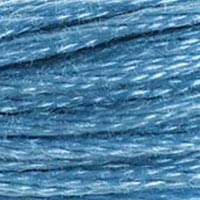
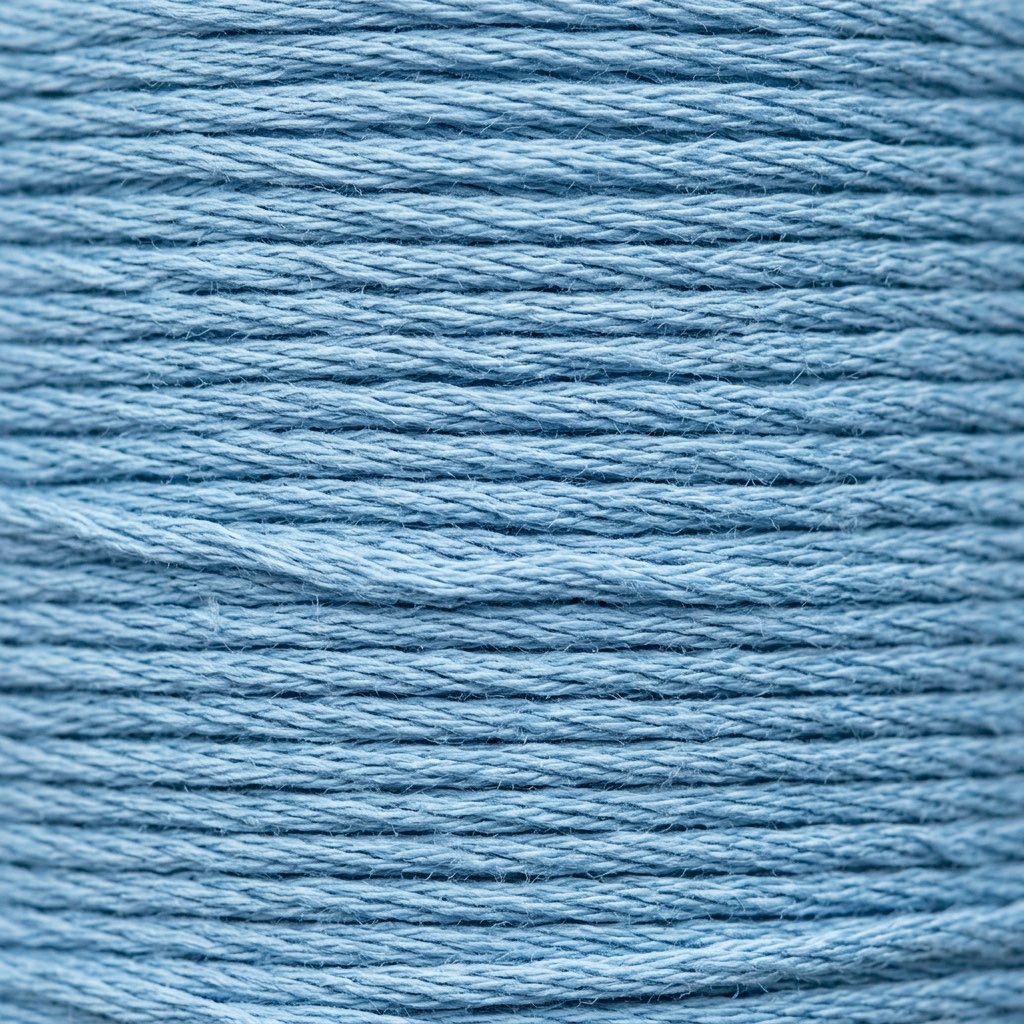
Of all the blues in the DMC range in the light-to-medium value territory, 813 is the one most consistently described by stitchers as "sky blue" — not the deep sky blue of cerulean, not the near-white pale sky of early morning, but the clear, uncomplicated light blue of a fine afternoon. Its hex value of #A1C2D7 places it at a medium-light saturation that registers clearly as blue on virtually any fabric color without the effort needed to make paler blues show up, and without the assertiveness that makes deeper blues dominate a palette.
For landscape designs where sky areas need to be stitched (rather than left as fabric ground), 813 is a natural first choice for the upper-sky zone. Paired with DMC 800 (Pale Delft Blue) for the horizon haze and DMC 809 (Delft Blue) for any deep sky areas, 813 creates a simple, effective sky gradient without requiring a complete set of specialty sky colors.
Blue Clothing and Fabric-in-Design
Cross-stitch patterns featuring figures in light blue clothing — historically common in 18th and 19th century sampler traditions, and still popular in nursery and folk art designs — use 813 extensively for the lighter mid-tone blue fabric color. Light blue dresses, shirts, and accessories in cross-stitch figures typically use 813 as the primary fill with DMC 826 (Medium Blue) or DMC 825 (Dark Blue) for shadow areas and pleats.
Quilting patterns that include fabric-inspired designs — patchwork cross-stitch, quilting basket designs, or sampler blocks imitating quilt square patterns — often use 813 for the light blue fabric patches in classic blue-and-white or blue-yellow-white quilt colorways.
Baby Blue and Gender Associations
The cultural association between light blue and baby-themed design is longstanding, and 813 occupies the slightly richer end of the baby blue spectrum — richer than pastel baby blues like DMC 3756 or 747, but still clearly in the soft, gentle register that reads as nursery-appropriate. Birth samplers for boys traditionally use this kind of clear medium-light blue, and 813 provides it without the slightly cold quality that paler blues can have.
Contemporary design has moved away from strictly gendered palettes, but 813's soft quality makes it useful in any nursery design regardless of association — it reads as gentle and welcoming in the context of birth and baby themes without being as strongly gendered as a more saturated blue would appear.
Complementary Color Relationships
In color theory, blue and orange are complementary colors, meaning they create maximum contrast when placed together. DMC 813 Light Blue paired with DMC 741 (Medium Tangerine) or DMC 742 (Light Tangerine) creates a vibrant, high-contrast complementary pair that's energetic and visually engaging without the harshness of a dark-blue/bright-orange combination. This pairing appears in summer seasonal designs, nautical themes, and any design where an active, optimistic palette is called for.
Anchor 161 and Madeira 1711 are both exact-rated for DMC 813, making both reliable substitutions. Light blue is one of the more consistently matched color ranges across brands — the reduced saturation and clear hue make brand-to-brand variation less significant than in more complex or muted colors. Either brand swap should integrate without disruption in most designs.
Cosmo 253 and Sullivans 45215 are close-rated. For large fill areas like sky backgrounds where 813 is used in significant quantity, checking dye lot consistency within the substituting brand is still advisable — even well-matched light blues can show subtle batch variation in large stitched areas that reads as more significant than expected.
Within DMC, DMC 826 (Medium Blue) is one step deeper and slightly less light-blue and more medium-blue — useful as a substitute in areas where slightly more depth is needed. DMC 827 (Very Light Blue) is one step lighter and can substitute in highlight areas where 813 currently functions as a mid-value. For an emergency substitute that maintains the general light-blue impression without staying in the same DMC blue numbering family, DMC 800 (Pale Delft Blue) is similar in value but with a slightly grayer quality that shifts the palette toward the Delft register rather than the clean light blue of 813.
Reference quality
How We Validate This Color Record
Use this page as a reference card for DMC 813: the structured data, quick conversions, and long-form copy are all tied back to the same stored color record.
- Methodology
- This page renders DMC 813, its hex value, and every brand equivalent from the site's source-of-truth color record, then checks long-form body copy against those same stored fields.
- Verification status
- Source-field checked. The page content is audited against the stored DMC number, brand equivalents, and match-quality labels before publishing.
- Last reviewed
- 2026-04-20
- Approximation warning
- Screen hex values, thread photos, and cross-brand conversions are reference aids. Dye lots, thread sheen, and fabric color can still shift the result in hand.
Decision guide
When to use the DMC 813 reference page
This page should help you decide faster between palette planning, brand substitution, and shade comparison without turning the color record into a thin lookup page.
Best for
- + Palette planning when you want the stored DMC 813 Light Blue record, hex value #A1C2D7, and linked brand equivalents in one place.
- + Checking the quickest cross-brand shortlist before you buy floss, compare stash substitutes, or route into a more specific conversion page.
- + Finding nearby shades in the blues family before you commit to accents, shading, or background blends.
Watch for
- ! Screen previews are only reference aids. Light Blue can shift on real fabric because thread sheen, stitch coverage, and room lighting change how the color reads.
- ! A stored equivalent is still a shortlist, not a guarantee that two brands will disappear into each other in the same stitched motif.
- ! Older charts, discontinued kit floss, and dye-lot variation can all introduce small but visible differences that the page cannot detect for you.
Before you commit
- Confirm the role of DMC 813 Light Blue: decide whether you need an exact hero shade, a forgiving background, or a rough stash substitute.
- Compare on project fabric: view the skein or stitched sample on the same fabric count and color you will actually use.
- Use the linked conversion pages next: open the brand-specific pages when you need match-quality caveats before substituting away from the DMC reference.
DMC 813 FAQ
These questions appear on the page so the FAQ schema stays aligned with what visitors can actually read.
What is the Anchor equivalent of DMC 813?+
The closest Anchor equivalent to DMC 813 (Light Blue) is Anchor 161. This is an exact match.
What color is DMC 813?+
DMC 813 is called "Light Blue" and has a hex color value of #A1C2D7. It belongs to the blues color family.
What is the Madeira equivalent of DMC 813?+
The closest Madeira equivalent to DMC 813 (Light Blue) is Madeira 1711. This is a close match.
How DMC 813 Looks on Fabric
The same thread appears different depending on your fabric. Always test on your project fabric.
White Aida
Cream / Ecru
Black Aida
Pairs Well With
DMC colors commonly used alongside 813 Light Blue.
Suggested Palette
Shading Companions


Detailed Conversions
Where to Buy DMC 813
This section contains affiliate links. We may earn a small commission at no cost to you.
Related Guides
Free Printable Thread Conversion Chart
Pick a brand, enter your email, and we'll send you a printable chart mapping all 552 DMC colors to that brand's equivalents. Zero spam, one chart.
Thanks! Here's your free chart:
Download Your ChartOpens in a new tab. Use your browser's Print → Save as PDF.
No spam. Your email is stored securely and never shared.