
Quick Conversion Table
| Brand | Equivalent | Match |
|---|---|---|
| Anchor | 128 | close |
| Madeira | 1016 | close |
| Cosmo ⚠ | 177 | close |
| Sullivans | 45205 | close |
Blue in the Shadows of Skin
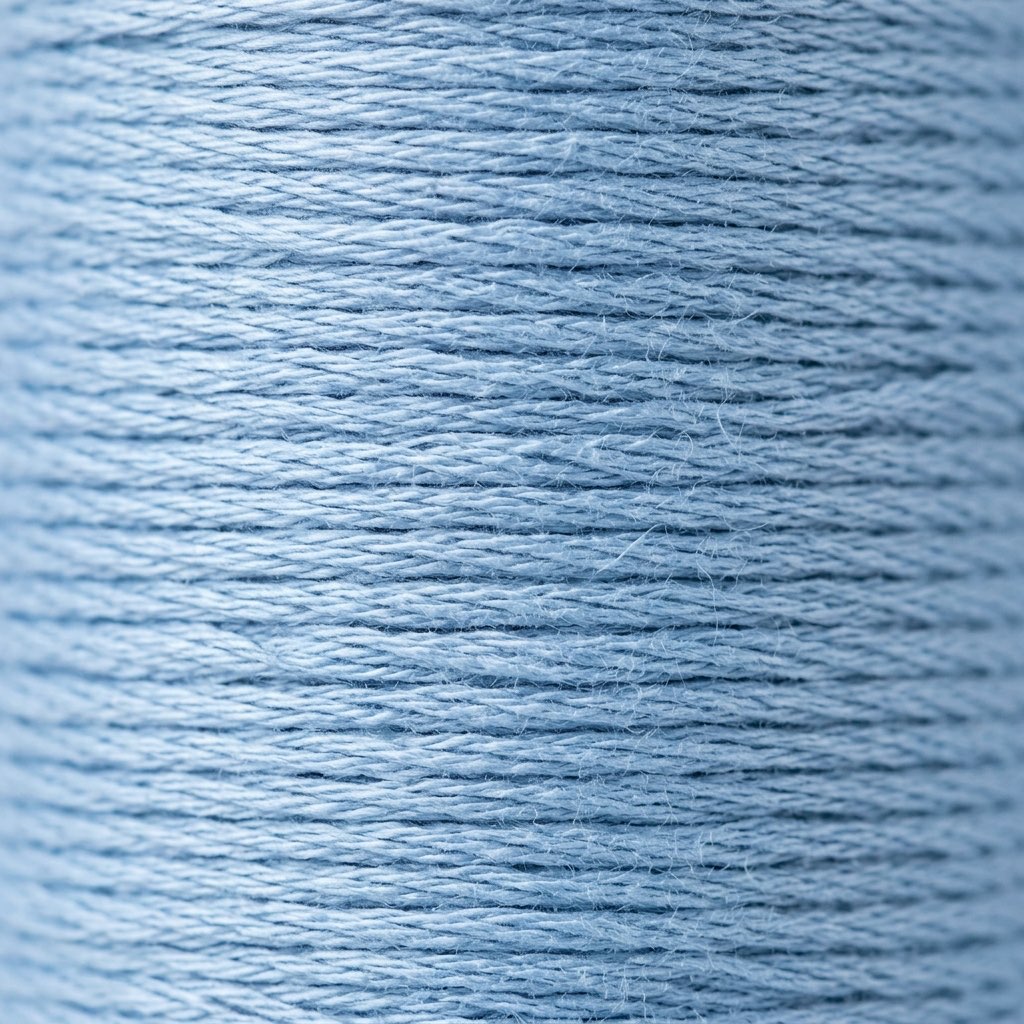
Portrait stitchers develop an eye for colors that nobody else notices. The blue shadow under a jawline. The faint blue-grey along the bridge of a nose in three-quarter lighting. The delicate blue tracery of veins visible through fair skin at the inside of a wrist. These are the colors that separate competent portrait cross-stitch from work that genuinely captures how a human face actually looks — and DMC 547 Pale Blue is one of the threads that makes that difference possible.
On high-count fabric — 28-count linen over one, or 25-count evenweave — a single strand of 547 can suggest the cool shadow areas of skin with remarkable naturalism. The key is that 547 is pale enough to read as a shadow rather than a color. In a portrait stitched primarily with skin-tone threads from the peach and beige families, 547 doesn't announce itself as blue. Instead, it cools the surrounding warmth, the way real shadow cools real skin. Your eye processes it not as "that's a blue stitch" but as "that area is in shadow," which is exactly the perception you want.
Aviation Blue and Altitude
Pilots and frequent flyers know this shade. At cruising altitude, when you look out the window and the sky seems impossibly pale and clean, stripped of the haze and dust that warm and darken it closer to the ground — that's 547. It is the blue of altitude, the blue of thin air, the blue that only exists above thirty thousand feet. This makes it invaluable for aviation-themed cross-stitch, which is a niche but passionate corner of the hobby. Airplane silhouettes, airport scenes, aviation badges, pilot-themed gifts — all of these benefit from a sky blue that says "high up" rather than "nice day at ground level."
The distinction matters more than you might think. Lower-altitude sky blues tend to be warmer, more saturated, often with a hint of green from atmospheric moisture. The blue at altitude is purer, paler, and colder, and 547 captures this precisely. For a design that shows an airplane against sky, stitching the background in 547 instantly communicates height in a way that a warmer, deeper blue wouldn't.
Working with Pale Values
Pale threads have a visibility problem that darker threads never face: they can disappear on white fabric. DMC 547, with its hex value of #B8D0E8, has enough presence to maintain legibility on white Aida at 14-count, but just barely. If your design relies on 547 being clearly visible — as a fill color, say, rather than a subtle shadow accent — consider your fabric choice carefully. On cream, ecru, or natural linen, 547 gains contrast and presence. On white, it risks looking like it's not quite committed to being there.
This near-invisibility on white fabric can be a feature rather than a bug. For background fills in designs where the pattern should seem to float against an ethereal blue wash, 547 provides exactly that barely-there quality. Snowflake designs, angel patterns, cloud formations — all benefit from a blue that whispers rather than speaks. Pair it with DMC 828 (Ultra Very Light Blue) and DMC 775 (Very Light Baby Blue) for a three-thread progression so subtle it almost functions as white-space modulation rather than color.
For bolder applications, combine 547 with its family members DMC 546 (Medium Baby Blue) and DMC 545 (Light Wedgwood Blue) to build a blue gradient that starts soft and gains conviction. Adding DMC 930 (Dark Antique Blue) at the dark end creates a four-thread atmospheric perspective sequence — perfect for sky backgrounds that need to darken toward the zenith while staying pale near the horizon.
Sourcing Alternatives for a Subtle Shade
Every substitute for 547 is rated "close" rather than exact, reflecting the thread's position in a sparsely populated corner of color space. Pale blues with this specific lavender-grey quality aren't well represented in every brand's lineup, making accurate substitution more challenging than it would be for a mid-value or saturated blue.
Anchor 128 is the nearest option and handles the value correctly. Where it may diverge is in temperature — some stitchers report that Anchor 128 leans slightly warmer, which at this pale value translates to a barely perceptible shift toward lilac. In portrait shadow work, where temperature precision matters, test it on your actual fabric under your actual lighting before committing to the swap.
Madeira 1016 (also the equivalent listed for DMC 545, which tells you something about how closely the two DMC shades sit) offers a reasonable approximation. The overlap in Madeira equivalents means you should be especially careful if your project uses both 545 and 547 — substituting both with Madeira threads may collapse the distinction between them.
Cosmo 177 provides a serviceable alternative for standalone applications. If 547 is one blue among many in a piece and isn't part of a precise gradient, Cosmo 177 will fill its role without issue. But if 547's specific value placement within a gradient is critical to the design, buy the DMC original — this is one of those colors where the specific shade matters more than the general neighborhood.
Reference quality
How We Validate This Color Record
Use this page as a reference card for DMC 547: the structured data, quick conversions, and long-form copy are all tied back to the same stored color record.
- Methodology
- This page renders DMC 547, its hex value, and every brand equivalent from the site's source-of-truth color record, then checks long-form body copy against those same stored fields.
- Verification status
- Source-field checked. The page content is audited against the stored DMC number, brand equivalents, and match-quality labels before publishing.
- Last reviewed
- 2026-04-20
- Approximation warning
- Screen hex values, thread photos, and cross-brand conversions are reference aids. Dye lots, thread sheen, and fabric color can still shift the result in hand.
Decision guide
When to use the DMC 547 reference page
This page should help you decide faster between palette planning, brand substitution, and shade comparison without turning the color record into a thin lookup page.
Best for
- + Palette planning when you want the stored DMC 547 Pale Blue record, hex value #B8D0E8, and linked brand equivalents in one place.
- + Checking the quickest cross-brand shortlist before you buy floss, compare stash substitutes, or route into a more specific conversion page.
- + Finding nearby shades in the blues family before you commit to accents, shading, or background blends.
Watch for
- ! Screen previews are only reference aids. Pale Blue can shift on real fabric because thread sheen, stitch coverage, and room lighting change how the color reads.
- ! A stored equivalent is still a shortlist, not a guarantee that two brands will disappear into each other in the same stitched motif.
- ! Older charts, discontinued kit floss, and dye-lot variation can all introduce small but visible differences that the page cannot detect for you.
Before you commit
- Confirm the role of DMC 547 Pale Blue: decide whether you need an exact hero shade, a forgiving background, or a rough stash substitute.
- Compare on project fabric: view the skein or stitched sample on the same fabric count and color you will actually use.
- Use the linked conversion pages next: open the brand-specific pages when you need match-quality caveats before substituting away from the DMC reference.
DMC 547 FAQ
These questions appear on the page so the FAQ schema stays aligned with what visitors can actually read.
What is the Anchor equivalent of DMC 547?+
The closest Anchor equivalent to DMC 547 (Pale Blue) is Anchor 128. This is a close match.
What color is DMC 547?+
DMC 547 is called "Pale Blue" and has a hex color value of #B8D0E8. It belongs to the blues color family.
What is the Madeira equivalent of DMC 547?+
The closest Madeira equivalent to DMC 547 (Pale Blue) is Madeira 1016. This is a close match.
How DMC 547 Looks on Fabric
The same thread appears different depending on your fabric. Always test on your project fabric.
White Aida
Cream / Ecru
Black Aida
Pairs Well With
DMC colors commonly used alongside 547 Pale Blue.
Suggested Palette
Shading Companions
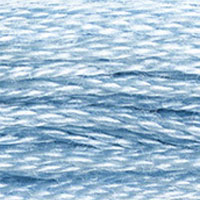
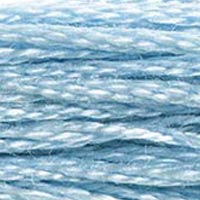
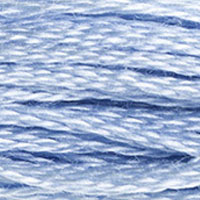
Detailed Conversions
Where to Buy DMC 547
This section contains affiliate links. We may earn a small commission at no cost to you.
Related Guides
Free Printable Thread Conversion Chart
Pick a brand, enter your email, and we'll send you a printable chart mapping all 552 DMC colors to that brand's equivalents. Zero spam, one chart.
Thanks! Here's your free chart:
Download Your ChartOpens in a new tab. Use your browser's Print → Save as PDF.
No spam. Your email is stored securely and never shared.