
Quick Conversion Table
| Brand | Equivalent | Match |
|---|---|---|
| Anchor | 129 | exact |
| Madeira | 0909 | close |
| Cosmo ⚠ | 163 | close |
| Sullivans | 45337 | close |
| J&P Coats | 7976 | close |
| Dimensions | 17976 | close |
| Bucilla | 3325 | close |
The Birth Sampler Blue
Some threads earn their reputation through the sheer volume of projects they appear in, and DMC 3325 might be the most-stitched baby blue in the history of counted cross-stitch. Pull up any collection of baby birth samplers, christening records, or nursery wall hangings, and 3325 is there — the default light blue for baby blanket borders, rattle motifs, alphabet letters, and those tiny stitched booties that appear on every other announcement pattern published in the last three decades.
There's a reason for this ubiquity, and it isn't laziness on designers' parts. DMC 3325 hits a sweet spot that's genuinely difficult to replicate: light enough to read as soft and gentle (essential for baby-themed work), blue enough to be unmistakably blue (no ambiguity about what color you're looking at), and clean enough in undertone to pair with virtually any other pastel. It's the blue equivalent of that one recipe everyone brings to potlucks — reliable, universally liked, and somehow never stale.
Gradient Building: The Middle of the Journey
The baby blue progression in the DMC range — 3756, 3841, 3325, 334, 322, 312 — runs from barely-there ice to deep sky blue, and 3325 sits right in the middle of that journey. It's the shade where baby blue stops being a pale wash and starts having actual presence, the value where the color becomes the subject rather than the background.
This middle position makes 3325 the bridge shade in any gradient. Transitioning from the ethereal paleness of DMC 3756 (Ultra Very Light Baby Blue) to the substantive medium of DMC 334 (Medium Baby Blue) requires a step in between, and 3325 fills that role perfectly. Without it, you get a visible jump in value that reads as two colors rather than a smooth progression. With it, the gradient flows naturally, each shade blending into its neighbors.
For sky work, 3325 handles the middle horizon — not the pale, bleached-out area right at the horizon line, and not the saturated blue overhead, but the transitional zone between. In a landscape with a well-developed sky, this might be the single largest area of blue, which means you'll use more 3325 than any other blue in the palette. Plan your thread purchases accordingly.
Cultural Blue: From European Tradition to Universal Appeal
The association between light blue and baby boys is relatively recent in historical terms — dating roughly to the mid-20th century, and even then varying by culture. Before that, blue carried religious significance (the Virgin Mary's mantle), royal authority (the bleu de France), and working-class practicality (indigo-dyed work clothes). DMC 3325 exists in that interesting cultural space where one shade carries multiple meanings depending entirely on context.
In a sampler surrounded by baby motifs, 3325 is unambiguously "baby blue." In a seascape, it's the color of calm, shallow coastal water — the turquoise-tinged blue of a Mediterranean cove. In a floral design, it's the paler petals of a hydrangea or the lightest blooms in a forget-me-not cluster. In a winter scene, it's the coldest part of a clear sky. The thread itself doesn't change; the context tells the viewer what they're looking at.
This versatility extends to fabric pairing. On white Aida, 3325 reads fresh and clean — perfect for baby items and spring designs. On natural linen, it takes on a slightly vintage quality that works well in traditional samplers and heritage patterns. On black or very dark fabric, it glows with surprising intensity, making it an unexpected choice for dramatic night-sky effects or high-contrast modern designs.
For stitchers building a basic thread stash, 3325 belongs in the starter collection. It's one of those threads you'll reach for across project types and seasons, and having a skein on hand saves you from that frustrating mid-project trip to the craft store when you realize the pattern calls for a light blue you don't have.
An Exact Match and Several Good Options
Anchor 129 is an exact match — swap with confidence. The color, value, and overall character are consistent between the two brands, and even in side-by-side stitching (if you're combining leftover Anchor from one project with DMC from another), the difference is negligible.
Madeira 0909 is a close match that works well in all the same applications. The slight difference in thread construction might produce a minimally different sheen, but at this light, clean value, sheen variations are hard to detect in the finished piece. Cosmo 163 captures the baby blue quality and is a perfectly serviceable substitute. Sullivans 45337 lands in the same territory.
Where substitution gets interesting is within the DMC range itself. DMC 3841 (Pale Baby Blue) is lighter and greyer — if you substitute it for 3325, your gradient will shift and the area that should read as "light baby blue" will instead read as "barely blue." Going darker, DMC 334 (Medium Baby Blue) adds too much saturation and visual weight. In a gradient or shading sequence, 3325 is 3325 — its specific value position matters, and there's no other DMC shade that occupies exactly the same spot.
One practical note: because 3325 is so commonly specified in patterns, it tends to be consistently available at craft stores — one of the easier DMC numbers to find in stock. If you're having trouble sourcing it, try a different retailer before resorting to a substitute, because the original is almost certainly findable.
Reference quality
How We Validate This Color Record
Use this page as a reference card for DMC 3325: the structured data, quick conversions, and long-form copy are all tied back to the same stored color record.
- Methodology
- This page renders DMC 3325, its hex value, and every brand equivalent from the site's source-of-truth color record, then checks long-form body copy against those same stored fields.
- Verification status
- Source-field checked. The page content is audited against the stored DMC number, brand equivalents, and match-quality labels before publishing.
- Last reviewed
- 2026-04-20
- Approximation warning
- Screen hex values, thread photos, and cross-brand conversions are reference aids. Dye lots, thread sheen, and fabric color can still shift the result in hand.
Decision guide
When to use the DMC 3325 reference page
This page should help you decide faster between palette planning, brand substitution, and shade comparison without turning the color record into a thin lookup page.
Best for
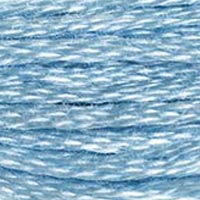
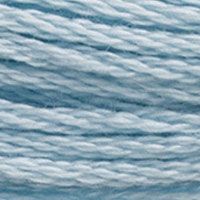
- + Palette planning when you want the stored DMC 3325 Light Baby Blue record, hex value #B8D2E6, and linked brand equivalents in one place.
- + Checking the quickest cross-brand shortlist before you buy floss, compare stash substitutes, or route into a more specific conversion page.
- + Finding nearby shades in the blues family before you commit to accents, shading, or background blends.
Watch for
- ! Screen previews are only reference aids. Light Baby Blue can shift on real fabric because thread sheen, stitch coverage, and room lighting change how the color reads.
- ! A stored equivalent is still a shortlist, not a guarantee that two brands will disappear into each other in the same stitched motif.
- ! Older charts, discontinued kit floss, and dye-lot variation can all introduce small but visible differences that the page cannot detect for you.
Before you commit
- Confirm the role of DMC 3325 Light Baby Blue: decide whether you need an exact hero shade, a forgiving background, or a rough stash substitute.
- Compare on project fabric: view the skein or stitched sample on the same fabric count and color you will actually use.
- Use the linked conversion pages next: open the brand-specific pages when you need match-quality caveats before substituting away from the DMC reference.
DMC 3325 FAQ
These questions appear on the page so the FAQ schema stays aligned with what visitors can actually read.
What is the Anchor equivalent of DMC 3325?+
The closest Anchor equivalent to DMC 3325 (Light Baby Blue) is Anchor 129. This is an exact match.
What color is DMC 3325?+
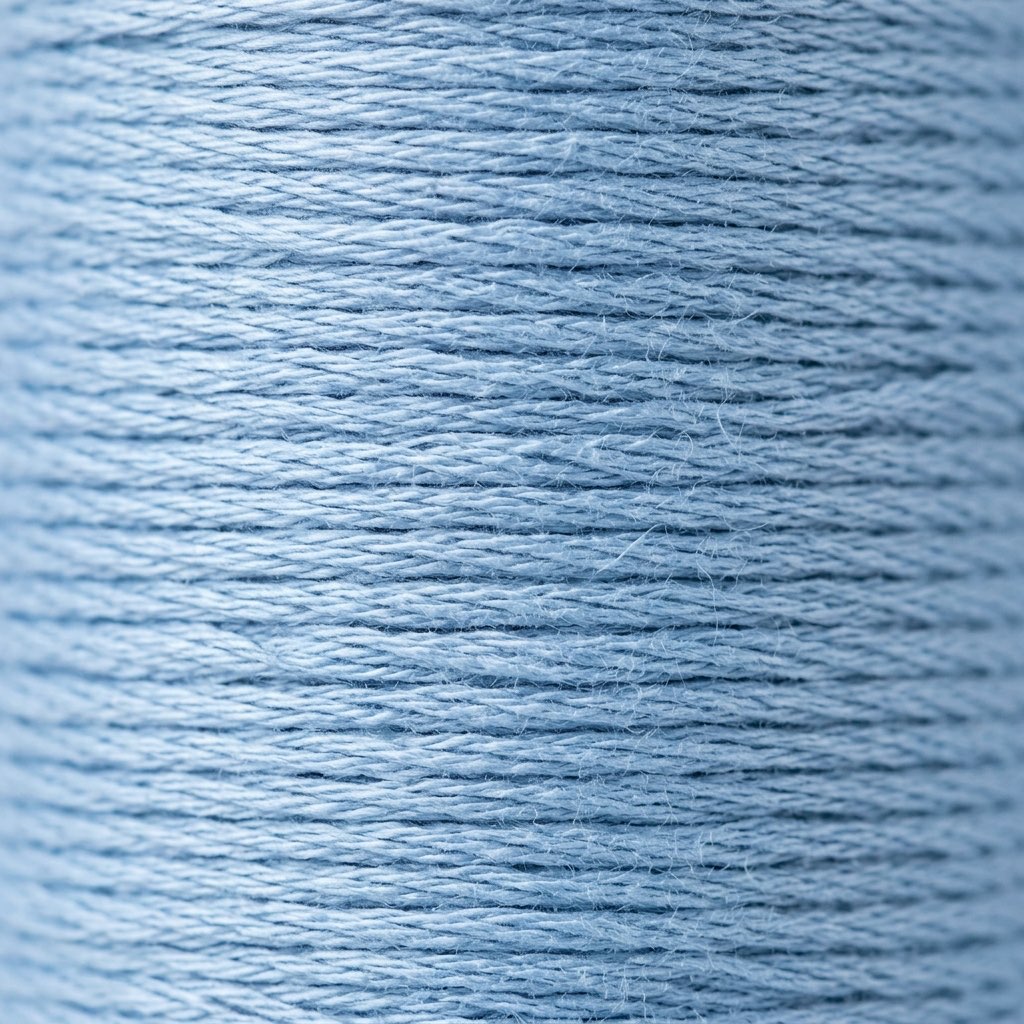
DMC 3325 is called "Light Baby Blue" and has a hex color value of #B8D2E6. It belongs to the blues color family.
What is the Madeira equivalent of DMC 3325?+
The closest Madeira equivalent to DMC 3325 (Light Baby Blue) is Madeira 0909. This is a close match.
How DMC 3325 Looks on Fabric
The same thread appears different depending on your fabric. Always test on your project fabric.

White Aida
Cream / Ecru
Black Aida
Pairs Well With
DMC colors commonly used alongside 3325 Light Baby Blue.
Winter & Ice

Pastel Baby
Shading Companions
Detailed Conversions
Where to Buy DMC 3325
This section contains affiliate links. We may earn a small commission at no cost to you.
Related Guides
Free Printable Thread Conversion Chart
Pick a brand, enter your email, and we'll send you a printable chart mapping all 552 DMC colors to that brand's equivalents. Zero spam, one chart.
Thanks! Here's your free chart:
Download Your ChartOpens in a new tab. Use your browser's Print → Save as PDF.
No spam. Your email is stored securely and never shared.