
Quick Conversion Table
| Brand | Equivalent | Match |
|---|---|---|
| Anchor | 386 | close |
| Madeira | 2512 | close |
| Cosmo ⚠ | 141 | close |
| Sullivans | 45420 | close |
| J&P Coats | 2386 | close |
| Dimensions | 12386 | close |
| Candamar | 6255 | close |
Is It Yellow? Is It White? The Existential Question of DMC 3823
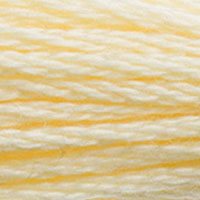
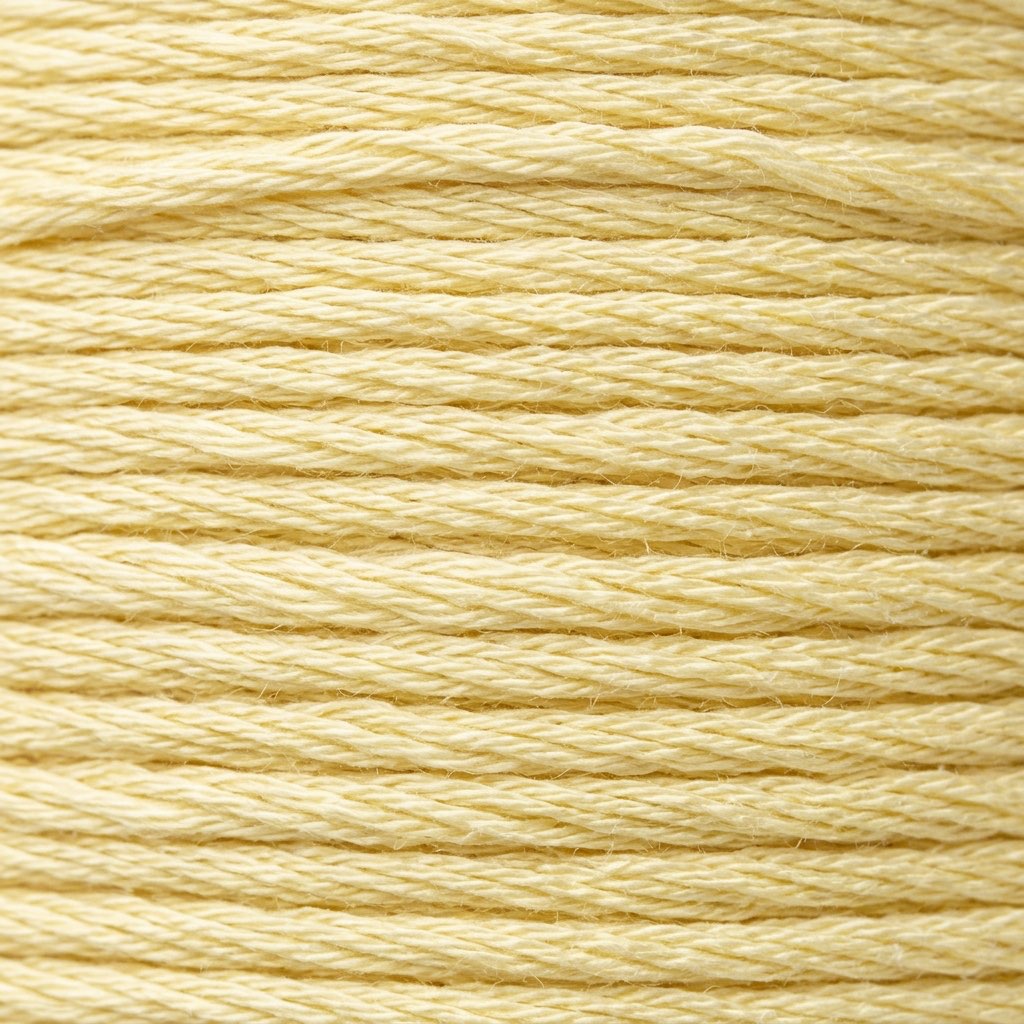
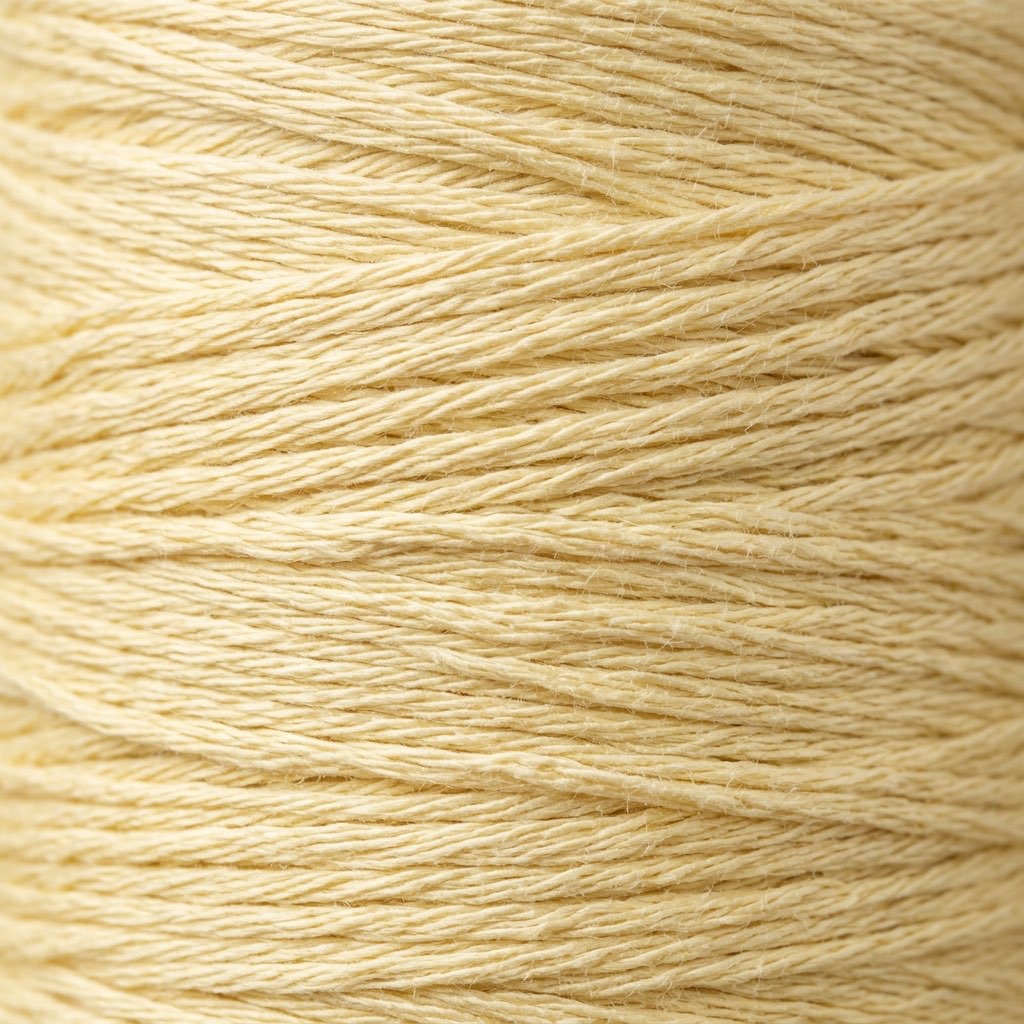
Every stitcher has held a skein of DMC 3823 Ultra Pale Yellow up to the light and asked the same question: is this actually yellow? At hex #FFFDE3, this thread is so pale it sits right on the border between the faintest whisper of yellow and what most people would simply call cream or ivory. On a white color card, you can see the warmth. On cream fabric, it practically disappears. That ambiguity is, paradoxically, exactly what makes it useful.
DMC 3823 occupies the same conceptual space as a pianissimo marking in music — it's the instruction to be as quiet as possible while still technically being there. When a pattern calls for a highlight that's softer than even DMC 3078 (Very Light Golden Yellow), when you need the absolute lightest value in a yellow gradient, when you want the barest suggestion of warmth without any visible color, 3823 is the answer.
Stars and Celestial Glow Effects
One of the most effective uses of DMC 3823 is in creating the glow around celestial objects. Stitch a bright star using DMC 726 (Light Topaz) or DMC 743 (Medium Yellow) for the core, surround it with a few stitches of DMC 745 (Light Pale Yellow), then add an outer halo of 3823. On white Aida, that outermost ring reads as barely-there warmth — the way starlight actually diffuses at the edges. The star appears to genuinely radiate rather than just sitting as a bright shape against the fabric.
This technique works for Christmas star designs, nativity scenes, and celestial-themed samplers. It also translates to moonlight effects — the soft, silvery-warm glow that moonlight casts is closer to very pale yellow than most people realize, and 3823 captures it without looking overtly yellow.
The Coverage Reality
Here's the hard truth: DMC 3823 is brutally difficult to get even coverage with. At this extreme pale value, the thread is essentially translucent. Your fabric shows through every stitch, and any variation in tension or strand positioning is magnified. On white Aida, this is less of a problem because the fabric behind the stitches is close to the thread color anyway. On cream or natural fabric, you'll see the fabric texture through your stitches no matter what you do.
Some strategies that help: railroad every single stitch (use your needle to keep strands parallel and flat). Use fresh, unkinked thread — re-threading frequently helps keep the strands in order. And consider using three strands instead of two on 14-count if you need more opacity, though be aware this can make stitches puffy on tighter weave fabrics. On 18-count, three strands is almost mandatory for visible coverage.
Honestly, for many projects, the near-invisibility of 3823 on white fabric is a feature rather than a bug. In halo effects, gradient endpoints, and transitional blending, you want the thread to merge with the fabric. That seamless fade is the entire point.
White Fabric vs. Cream: A Critical Decision
Fabric choice affects DMC 3823 more dramatically than perhaps any other color in the DMC range. On bright white Aida or evenweave, 3823 is visible as a distinct pale yellow — subtle, but there. On cream Aida, the thread and fabric are nearly identical in color, and your stitches will be essentially invisible. On natural linen, the fabric is actually darker than the thread, creating a reverse effect where 3823 looks like a lighter spot. Each of these outcomes might be exactly what you want, depending on the design — but you need to choose deliberately.
Best Uses for Ultra Pale Yellow (DMC 3823)
Cross stitch projects featuring DMC 3823 benefit from its unique tonal qualities. When selecting the best cross stitch thread for your design, keep Ultra Pale Yellow in mind as a versatile choice that blends perfectly with other shades.
Replacing DMC 3823 Ultra Pale Yellow
At this extreme end of the color spectrum, the line between "pale yellow" and "not quite white" is paper-thin, and substitution choices become almost philosophical.
Anchor 386 is a close match. Anchor's interpretation is similarly pale but may carry a fractionally cooler cast — more cream than butter. In most applications, this difference is academic, since both threads are so close to white that undertone distinctions are barely perceptible.
Madeira 2512 is an exact match and the surest bet for a seamless swap. Madeira's version has comparable transparency and warmth, and the thread handles similarly in the needle.
Cosmo 141 is a close match. Cosmo's ultra-pale yellows can lean very slightly more ivory than the DMC version, which on white fabric reads as marginally warmer. On cream fabric, the difference evaporates.
The real question with substituting 3823 is often whether you need it at all. Consider these DMC alternatives based on context:
- If you want more visible yellow: Step up to DMC 3078 (Very Light Golden Yellow), which is noticeably more saturated while still being quite pale.
- If you're blending to white: DMC 746 (Off White) serves a similar transitional role but from the white side of the spectrum rather than the yellow side.
- If you're stitching on cream fabric: Consider whether Blanc (White) would actually give you the result you're looking for, since 3823 on cream is nearly invisible.
Reference quality
How We Validate This Color Record
Use this page as a reference card for DMC 3823: the structured data, quick conversions, and long-form copy are all tied back to the same stored color record.
- Methodology
- This page renders DMC 3823, its hex value, and every brand equivalent from the site's source-of-truth color record, then checks long-form body copy against those same stored fields.
- Verification status
- Source-field checked. The page content is audited against the stored DMC number, brand equivalents, and match-quality labels before publishing.
- Last reviewed
- 2026-04-20
- Approximation warning
- Screen hex values, thread photos, and cross-brand conversions are reference aids. Dye lots, thread sheen, and fabric color can still shift the result in hand.
Decision guide
When to use the DMC 3823 reference page
This page should help you decide faster between palette planning, brand substitution, and shade comparison without turning the color record into a thin lookup page.
Best for
- + Palette planning when you want the stored DMC 3823 Ultra Pale Yellow record, hex value #FFFDE3, and linked brand equivalents in one place.
- + Checking the quickest cross-brand shortlist before you buy floss, compare stash substitutes, or route into a more specific conversion page.
- + Finding nearby shades in the yellows family before you commit to accents, shading, or background blends.
Watch for
- ! Screen previews are only reference aids. Ultra Pale Yellow can shift on real fabric because thread sheen, stitch coverage, and room lighting change how the color reads.
- ! A stored equivalent is still a shortlist, not a guarantee that two brands will disappear into each other in the same stitched motif.
- ! Older charts, discontinued kit floss, and dye-lot variation can all introduce small but visible differences that the page cannot detect for you.
Before you commit
- Confirm the role of DMC 3823 Ultra Pale Yellow: decide whether you need an exact hero shade, a forgiving background, or a rough stash substitute.
- Compare on project fabric: view the skein or stitched sample on the same fabric count and color you will actually use.
- Use the linked conversion pages next: open the brand-specific pages when you need match-quality caveats before substituting away from the DMC reference.
DMC 3823 FAQ
These questions appear on the page so the FAQ schema stays aligned with what visitors can actually read.
What is the Anchor equivalent of DMC 3823?+
The closest Anchor equivalent to DMC 3823 (Ultra Pale Yellow) is Anchor 386. This is a close match.
What color is DMC 3823?+
DMC 3823 is called "Ultra Pale Yellow" and has a hex color value of #FFFDE3. It belongs to the yellows color family.
What is the Madeira equivalent of DMC 3823?+
The closest Madeira equivalent to DMC 3823 (Ultra Pale Yellow) is Madeira 2512. This is a close match.
How DMC 3823 Looks on Fabric
The same thread appears different depending on your fabric. Always test on your project fabric.
White Aida
Cream / Ecru
Black Aida
Pairs Well With
DMC colors commonly used alongside 3823 Ultra Pale Yellow.
Suggested Palette
Shading Companions
Detailed Conversions
Where to Buy DMC 3823
This section contains affiliate links. We may earn a small commission at no cost to you.
Related Guides
Free Printable Thread Conversion Chart
Pick a brand, enter your email, and we'll send you a printable chart mapping all 552 DMC colors to that brand's equivalents. Zero spam, one chart.
Thanks! Here's your free chart:
Download Your ChartOpens in a new tab. Use your browser's Print → Save as PDF.
No spam. Your email is stored securely and never shared.