
Quick Conversion Table
| Brand | Equivalent | Match |
|---|---|---|
| Anchor | 1033 | exact |
| Madeira | 1710 | close |
| Cosmo ⚠ | 732 | close |
| Sullivans | 45275 | close |
| J&P Coats | 7050 | close |
| Dimensions | 6165 | close |
| Bucilla | 969 | close |
| Candamar | 6165 | close |
One of the most specific problems in cross-stitch color management is the "highlight blue" problem: you need a pale blue that works as a light value in a gradient, but most pale blues are either too bright and clean (reads as baby blue) or too gray and muddy (reads as flat). DMC 932 Light Antique Blue solves this elegantly. At #A2B5C6, it's pale enough to function as a genuine light value while maintaining enough gray content to keep the "antique" quality of the family intact. It doesn't scream highlight; it whispers it.
As the lightest step in the three-shade Antique Blue family, 932 handles the brightest surfaces: the lit face of a stitch design element that uses 930 and 931 for its darker zones, the pale sky areas in coastal landscape pieces, the highlight on water in maritime designs. It's also useful as a standalone background color in designs that want a pale, muted blue without committing to a brighter shade — for samplers, historical reproductions, and bluework-adjacent pieces where the background needs to feel period-appropriate.
The Pale Blue Problem in Heritage Design
Historical needlework from the 18th and 19th centuries often used colors that were significantly less saturated than modern thread colors — the dye technologies available produced softer, more complex hues that have since faded further in existing museum pieces. When stitchers try to reproduce historical samplers or period-appropriate designs using modern thread, the challenge is finding colors that read as historically plausible rather than as anachronistically bright.
DMC 932 occupies a useful position in this historical recreation problem. It reads as a blue that could plausibly have been produced by historical dyeing methods and aged further with time. Paired with DMC 3865 (Winter White) and DMC 225 (Ultra Very Light Shell Pink), 932 builds a palette that reads as genuinely period — the kind of color combination you'd see in an 18th-century English or American sampler under museum glass.
Contemporary and Practical Uses
Beyond its historical applications, 932 finds use as a background or large-area fill in designs that want a quiet, sophisticated blue. Contemporary aesthetic trends in cross-stitch design — the influence of Scandinavian minimalism, the popularity of monochromatic and near-monochromatic pieces — have made colors like 932 popular precisely because they don't compete with other design elements. A piece framed on the wall reads differently when its main color is 932 versus when it's DMC 799 (Medium Delft Blue) — both are blue, but the antique version fits a wider range of interior contexts.
Baby and nursery-themed pieces where blue is wanted without the conventional blue of DMC 809 (Delft Blue) or 800 (Pale Delft Blue) often reach for 932. The muted, sophisticated quality reads as considered rather than gendered, which aligns with contemporary sensibilities in baby gifts and birth samplers.
For stitchers who practice the Danish method across large fill areas in 932, the color progression and sheen behavior are consistent. The thread performs well at standard lengths and doesn't show the fraying problems that some pale threads develop.
Anchor 1033 and Madeira 1710 both carry exact ratings, completing the full Antique Blue family's reliable brand conversion record. Both are dependable substitutes that maintain the light antique blue character of the DMC original. The full Anchor sequence (1035, 1034, 1033) for the three-shade family allows complete gradient work in Anchor thread.
At light values, exact-rated equivalents carry more practical significance than they do at dark or mid values. Pale colors where a slight saturation or hue shift would affect how the color reads against adjacent pale tones or white fabric benefit more from the precision an exact rating provides. Both Anchor 1033 and Madeira 1710 have earned that rating, and stitchers report consistent results.
Cosmo 732 and Sullivans 45275 carry close ratings. As with other pale colors in this guide, testing close-rated substitutes against your specific fabric and adjacent colors is good practice. The antique quality — the gray that makes 932 distinctive — may be slightly more or less present in close-rated alternatives.
Within DMC, if 932 is unavailable, DMC 931 (Medium Antique Blue, one step darker) is the obvious family substitute. For a standalone pale blue accent, DMC 3753 (Ultra Very Light Antique Blue) is even paler and worth considering as a lighter alternative. DMC 3325 (Light Baby Blue) covers comparable lightness but without the antique/gray quality — more conventionally pastel in character.
Reference quality
How We Validate This Color Record
Use this page as a reference card for DMC 932: the structured data, quick conversions, and long-form copy are all tied back to the same stored color record.
- Methodology
- This page renders DMC 932, its hex value, and every brand equivalent from the site's source-of-truth color record, then checks long-form body copy against those same stored fields.
- Verification status
- Source-field checked. The page content is audited against the stored DMC number, brand equivalents, and match-quality labels before publishing.
- Last reviewed
- 2026-04-20
- Approximation warning
- Screen hex values, thread photos, and cross-brand conversions are reference aids. Dye lots, thread sheen, and fabric color can still shift the result in hand.
Decision guide
When to use the DMC 932 reference page
This page should help you decide faster between palette planning, brand substitution, and shade comparison without turning the color record into a thin lookup page.
Best for
- + Palette planning when you want the stored DMC 932 Light Antique Blue record, hex value #A2B5C6, and linked brand equivalents in one place.
- + Checking the quickest cross-brand shortlist before you buy floss, compare stash substitutes, or route into a more specific conversion page.
- + Finding nearby shades in the blues family before you commit to accents, shading, or background blends.
Watch for
- ! Screen previews are only reference aids. Light Antique Blue can shift on real fabric because thread sheen, stitch coverage, and room lighting change how the color reads.
- ! A stored equivalent is still a shortlist, not a guarantee that two brands will disappear into each other in the same stitched motif.
- ! Older charts, discontinued kit floss, and dye-lot variation can all introduce small but visible differences that the page cannot detect for you.
Before you commit
- Confirm the role of DMC 932 Light Antique Blue: decide whether you need an exact hero shade, a forgiving background, or a rough stash substitute.
- Compare on project fabric: view the skein or stitched sample on the same fabric count and color you will actually use.
- Use the linked conversion pages next: open the brand-specific pages when you need match-quality caveats before substituting away from the DMC reference.
DMC 932 FAQ
These questions appear on the page so the FAQ schema stays aligned with what visitors can actually read.
What is the Anchor equivalent of DMC 932?+
The closest Anchor equivalent to DMC 932 (Light Antique Blue) is Anchor 1033. This is an exact match.
What color is DMC 932?+
DMC 932 is called "Light Antique Blue" and has a hex color value of #A2B5C6. It belongs to the blues color family.
What is the Madeira equivalent of DMC 932?+
The closest Madeira equivalent to DMC 932 (Light Antique Blue) is Madeira 1710. This is a close match.
How DMC 932 Looks on Fabric
The same thread appears different depending on your fabric. Always test on your project fabric.
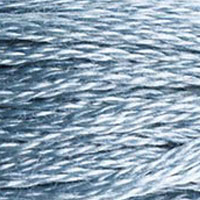
White Aida
Cream / Ecru
Black Aida
Pairs Well With
DMC colors commonly used alongside 932 Light Antique Blue.
Suggested Palette
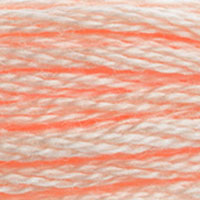
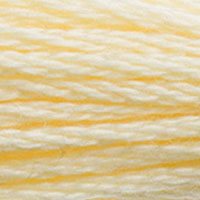
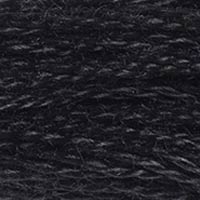
Shading Companions

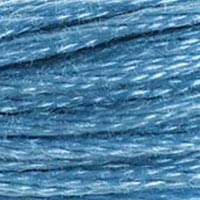
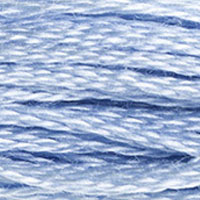
Detailed Conversions
Where to Buy DMC 932
This section contains affiliate links. We may earn a small commission at no cost to you.
Related Guides
Free Printable Thread Conversion Chart
Pick a brand, enter your email, and we'll send you a printable chart mapping all 552 DMC colors to that brand's equivalents. Zero spam, one chart.
Thanks! Here's your free chart:
Download Your ChartOpens in a new tab. Use your browser's Print → Save as PDF.
No spam. Your email is stored securely and never shared.