
Quick Conversion Table
| Brand | Equivalent | Match |
|---|---|---|
| Anchor | 158 | exact |
| Madeira | 1104 | close |
| Cosmo ⚠ | 562 | close |
| Sullivans | 45188 | close |
| J&P Coats | 7053 | close |
| Dimensions | 17053 | close |
| Bucilla | 1747 | close |
| Candamar | 6222 | close |
Ice, Light, and the Barely Blue
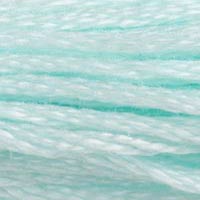
Hold a skein of DMC 747 against white paper and you might wonder if you're looking at a blue thread or a very pale teal. The hex value — #E5FCFD — tells the story: equal parts blue and green at an extremely pale value, producing a shade that reads less as "blue" and more as "the idea of cold." This is the color of thin ice over a puddle on a January morning. The color of glacial meltwater in a stream too shallow to have real depth. The color of breath visible in freezing air, if breath had color.
That ice-like quality makes 747 one of the most season-specific threads in the DMC range. In winter-themed cross-stitch — snowflakes, frost patterns, polar landscapes, ice castles — 747 provides the cool blue tint that tells the viewer the air temperature is below freezing without needing any representational content to make the point. Stitch an abstract pattern in 747 on white Aida and it reads as "winter" before your conscious mind even processes the individual stitches.
The Teal Whisper and Where Blue-Green Boundaries Blur
At this extreme pale value, the distinction between blue and green-blue nearly collapses. DMC 747 is classified as blue, but that equal green component in the hex value means it's functionally on the border. Look at it next to DMC 775 (Very Light Baby Blue) — a pure pale blue — and you'll immediately see the green influence in 747. Look at it next to DMC 964 (Light Seagreen) and you'll see that it's not green enough to be a true sea-green either. It exists in the borderland, and that's a genuinely useful place for a thread to live.
In color theory terms, 747 leans toward cyan — that theoretical halfway point between blue and green that exists perfectly in light (the C in CMYK printing) but almost never appears in natural pigments or dyes without a fight. The fact that DMC has achieved it at this pale, delicate value is quietly impressive. Cyan at high saturation would be jarring; at this whisper-pale value, it reads as natural and calm, closer to the way thin sky light actually looks than any pure blue could achieve.
Practical Stitching and Palette Building
The biggest practical challenge with 747 is the same one that faces all near-white threads: visibility on white fabric. On white Aida, 747 is all but invisible from more than a few inches away. This can be deliberately used — for subtle background texturing or for areas that should read as almost-white-but-not-quite — but it also means you need to check your work carefully as you go, because missed or miscounted stitches are nearly impossible to catch by visual inspection once you've moved on.
On cream, ecru, or natural linen, 747 gains enormously. Suddenly that cool cyan whisper has something warm to play against, and the contrast — subtle as it is — gives the thread real presence. For antique-style pieces on tea-dyed fabric, 747 provides a ghostly blue that reads as faded, aged, and atmospheric. On black or navy Aida, 747 glows with unexpected intensity, the pale thread catching light and appearing almost luminescent against the dark ground.
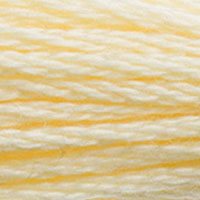
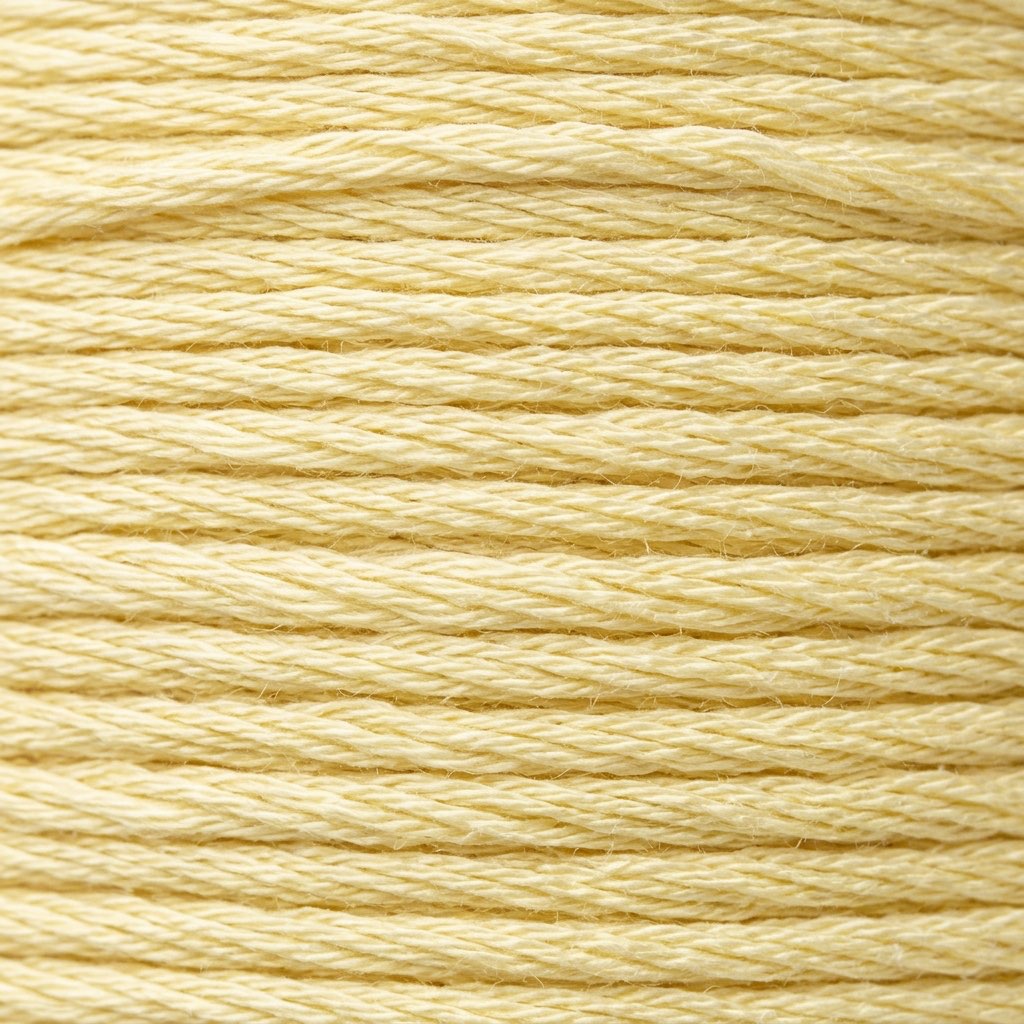
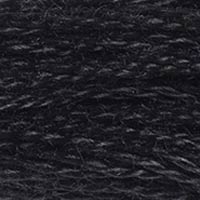
Build a gradient from 747 through DMC 519 (Sky Blue) and into DMC 518 (Light Wedgwood) for a three-step sky progression from horizon to mid-altitude. Extend to DMC 517 (Dark Wedgwood) for a four-thread palette that handles complete sky backgrounds in landscape pieces. Alternatively, pair 747 with DMC 828 (Ultra Very Light Blue) and DMC 3756 (Ultra Very Light Baby Blue) for a trio of near-whites that provide barely perceptible variation across large background areas — the cross-stitch equivalent of watercolor washes so dilute they're almost water.
Matching Ice-Water Cyan at Extreme Pale Values
Anchor 158 is rated exact and delivers well — the cool, faintly teal quality of 747 translates cleanly. For pattern conversions that include 747 as a background or highlight thread, Anchor 158 is a confident swap. Madeira 1104, also exact, captures the same territory. At these extreme pale values, brand differences in sheen and twist are minimized because there's so little color to carry those distinctions.
Cosmo 562, rated close, may lean slightly warmer or slightly more purely blue, losing a touch of the green component that gives 747 its cyan identity. In a design where 747 serves as a single highlight touch, this won't matter. In a design where it fills a significant background area and the cool-cyan temperature defines the mood — winter scenes, ice-themed pieces — the warmth shift could undermine the atmospheric intent.
The biggest substitution risk with 747 is confusing it with DMC 775 (Very Light Baby Blue). They sit at similar values and can look identical on a color card, but 747 is cooler and greener while 775 is warmer and purer blue. The difference is most visible on cream or natural fabric, where 747 reads as cool against the warm ground and 775 blends more harmoniously. On white fabric, they converge to near-indistinguishable — which means that on white fabric, swapping one for the other is functionally irrelevant, but on colored grounds, it matters.
Reference quality
How We Validate This Color Record
Use this page as a reference card for DMC 747: the structured data, quick conversions, and long-form copy are all tied back to the same stored color record.
- Methodology
- This page renders DMC 747, its hex value, and every brand equivalent from the site's source-of-truth color record, then checks long-form body copy against those same stored fields.
- Verification status
- Source-field checked. The page content is audited against the stored DMC number, brand equivalents, and match-quality labels before publishing.
- Last reviewed
- 2026-04-20
- Approximation warning
- Screen hex values, thread photos, and cross-brand conversions are reference aids. Dye lots, thread sheen, and fabric color can still shift the result in hand.
Decision guide
When to use the DMC 747 reference page
This page should help you decide faster between palette planning, brand substitution, and shade comparison without turning the color record into a thin lookup page.
Best for
- + Palette planning when you want the stored DMC 747 Very Light Sky Blue record, hex value #E5FCFD, and linked brand equivalents in one place.
- + Checking the quickest cross-brand shortlist before you buy floss, compare stash substitutes, or route into a more specific conversion page.
- + Finding nearby shades in the blues family before you commit to accents, shading, or background blends.
Watch for
- ! Screen previews are only reference aids. Very Light Sky Blue can shift on real fabric because thread sheen, stitch coverage, and room lighting change how the color reads.
- ! A stored equivalent is still a shortlist, not a guarantee that two brands will disappear into each other in the same stitched motif.
- ! Older charts, discontinued kit floss, and dye-lot variation can all introduce small but visible differences that the page cannot detect for you.
Before you commit
- Confirm the role of DMC 747 Very Light Sky Blue: decide whether you need an exact hero shade, a forgiving background, or a rough stash substitute.
- Compare on project fabric: view the skein or stitched sample on the same fabric count and color you will actually use.
- Use the linked conversion pages next: open the brand-specific pages when you need match-quality caveats before substituting away from the DMC reference.
DMC 747 FAQ
These questions appear on the page so the FAQ schema stays aligned with what visitors can actually read.
What is the Anchor equivalent of DMC 747?+
The closest Anchor equivalent to DMC 747 (Very Light Sky Blue) is Anchor 158. This is an exact match.
What color is DMC 747?+
DMC 747 is called "Very Light Sky Blue" and has a hex color value of #E5FCFD. It belongs to the blues color family.
What is the Madeira equivalent of DMC 747?+
The closest Madeira equivalent to DMC 747 (Very Light Sky Blue) is Madeira 1104. This is a close match.
How DMC 747 Looks on Fabric
The same thread appears different depending on your fabric. Always test on your project fabric.
White Aida
Cream / Ecru
Black Aida
Pairs Well With
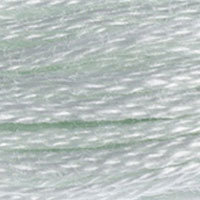
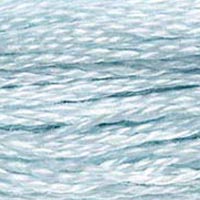
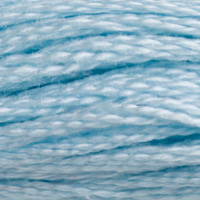
DMC colors commonly used alongside 747 Very Light Sky Blue.
Suggested Palette
Detailed Conversions
Where to Buy DMC 747
This section contains affiliate links. We may earn a small commission at no cost to you.
Related Guides
Free Printable Thread Conversion Chart
Pick a brand, enter your email, and we'll send you a printable chart mapping all 552 DMC colors to that brand's equivalents. Zero spam, one chart.
Thanks! Here's your free chart:
Download Your ChartOpens in a new tab. Use your browser's Print → Save as PDF.
No spam. Your email is stored securely and never shared.