
Quick Conversion Table
| Brand | Equivalent | Match |
|---|---|---|
| Anchor | 304 | exact |
| Madeira | 0201 | close |
| Cosmo ⚠ | 146 | close |
| Sullivans | 45182 | close |
| J&P Coats | 2314 | close |
| Dimensions | 6119 | close |
| Bucilla | 2664 | close |
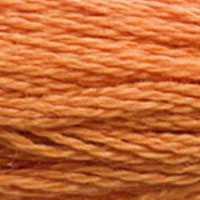
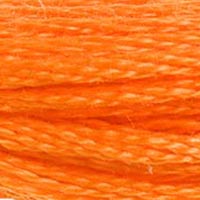
Halloween designers, autumn sampler makers, and anyone building a warm harvest palette will tell you the same thing: there's a moment when you pull DMC 741 Medium Tangerine from your stash and everything clicks. This is the orange that looks orange — not brick, not gold, not the murky rust that reads as brown on certain fabrics — but a clear, saturated tangerine that holds its identity even in the densest full-coverage piece.
The Warm Undertone Difference
Orange threads occupy a tricky middle ground in color theory. Lean too yellow and they become golden; lean too red and you're into pumpkin-spice-gone-wrong territory. DMC 741 lands in the sweet spot: a warm amber-orange with just enough yellow to keep it energetic without tipping into the territory of its brighter relative, DMC 740 Tangerine. That single step up the value scale makes 741 the workhorse — where 740 is the pop, 741 is the substance.
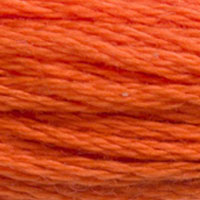
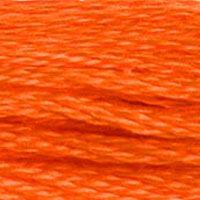
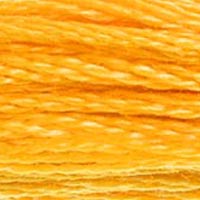
For shading work, 741 sits beautifully between DMC 740 (Tangerine, brighter and more saturated) and DMC 742 (Light Tangerine, the softened step down), with DMC 743 (Medium Yellow) serving as a natural highlight partner when you're building lit-edge effects on sunflowers, citrus, or autumn foliage. The progression from 743 through 742 to 741 to 740 is one of those gradient sequences that just works without any second-guessing.
Autumn and Halloween: Where 741 Earns Its Keep
Seasonal cross-stitch is probably where most stitchers accumulate significant yardage of 741. Pumpkin patches, jack-o-lanterns, fall leaf borders, harvest wreaths — if October is in the design, 741 is almost certainly in the pattern. It reads as the idealized pumpkin color under most lighting conditions, which is why designers reach for it even when slightly more muted options might be more botanically accurate. Stitchers working on Halloween SALs often go through a full skein just on a single large pumpkin motif stitched over-two on linen.
For Thanksgiving and harvest themes, 741 pairs naturally with DMC 433 (Medium Brown) for stems and vines, DMC 832 (Golden Olive) for late-season foliage, and DMC 3853 (Dark Autumn Gold) for deepening shadows on gourds. This four-color combination handles most autumn still-life work without reaching for anything exotic.
Fabric and Coverage Behavior
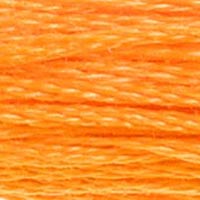
On white 14-count Aida, DMC 741 projects strongly — almost jewel-like. On natural linen or antique white evenweave, the warm undertone of the fabric pulls the orange slightly toward amber, which usually reads as more sophisticated for country-style or vintage designs. If you're working a piece where 741 feels a touch aggressive, stitching with a single strand blended with one strand of DMC 742 in a blended needle technique gives you a softer version without changing thread colors mid-project.
Full-coverage work in 741 benefits from consistent railroading to keep the strands lying flat and parallel — orange threads are forgiving in terms of twist visibility, but uneven coverage in a large fill area will catch the light differently and create subtle streaking that shows in finished photographs.
Beyond Autumn: Tropical and Everyday Uses
It would be a mistake to stash 741 away from October to September. Tropical bird designs — particularly toucans, orioles, and birds of paradise — rely heavily on this orange range. Flame imagery, koi fish scales, tiger fur, and orange butterfly wings all benefit from 741 as either the primary fill or the mid-tone in a three-value shading sequence. Citrus cross-stitch (oranges, clementines, persimmons) almost always includes 741 somewhere in the orange flesh. And if you're stitching any food designs where warmth and appetite appeal matter, this shade photographs better than most oranges under artificial lighting.
Anchor 304 is the published match, and in practice it's one of the more reliable orange conversions in the cross-brand comparison — the hue and value are close enough that you won't notice a difference in most designs unless they're placed directly side by side. Madeira 0201 is also an exact-rated match and has a slightly silkier finish that some stitchers prefer for high-sheen decorative work.
Cosmo 146 and Sullivans 45182 are both rated close rather than exact. Cosmo 146 tends slightly warmer and more amber, which can actually work in your favor for autumn pieces where you want a slightly more muted orange. Sullivans 45182 runs a touch brighter, closer to a yellow-orange, so if your design needs 741's characteristic medium depth, Sullivans may read a shade lighter than expected.
Within the DMC range itself, if you're mid-project and run short, DMC 742 (Light Tangerine) is one step lighter and works as a substitute in areas that would naturally receive more light. Going the other direction, DMC 740 (Tangerine) is usable if you need more saturation, though it photographs quite differently. For anyone working on a vintage pattern that calls for discontinued orange shades, 741 is frequently the recommended modern equivalent — its formula has been consistent for decades, making it a safe choice for historical pattern reproduction.
Reference quality
How We Validate This Color Record
Use this page as a reference card for DMC 741: the structured data, quick conversions, and long-form copy are all tied back to the same stored color record.
- Methodology
- This page renders DMC 741, its hex value, and every brand equivalent from the site's source-of-truth color record, then checks long-form body copy against those same stored fields.
- Verification status
- Source-field checked. The page content is audited against the stored DMC number, brand equivalents, and match-quality labels before publishing.
- Last reviewed
- 2026-04-20
- Approximation warning
- Screen hex values, thread photos, and cross-brand conversions are reference aids. Dye lots, thread sheen, and fabric color can still shift the result in hand.
Decision guide
When to use the DMC 741 reference page
This page should help you decide faster between palette planning, brand substitution, and shade comparison without turning the color record into a thin lookup page.
Best for
- + Palette planning when you want the stored DMC 741 Medium Tangerine record, hex value #FFA32B, and linked brand equivalents in one place.
- + Checking the quickest cross-brand shortlist before you buy floss, compare stash substitutes, or route into a more specific conversion page.
- + Finding nearby shades in the oranges family before you commit to accents, shading, or background blends.
Watch for
- ! Screen previews are only reference aids. Medium Tangerine can shift on real fabric because thread sheen, stitch coverage, and room lighting change how the color reads.
- ! A stored equivalent is still a shortlist, not a guarantee that two brands will disappear into each other in the same stitched motif.
- ! Older charts, discontinued kit floss, and dye-lot variation can all introduce small but visible differences that the page cannot detect for you.
Before you commit
- Confirm the role of DMC 741 Medium Tangerine: decide whether you need an exact hero shade, a forgiving background, or a rough stash substitute.
- Compare on project fabric: view the skein or stitched sample on the same fabric count and color you will actually use.
- Use the linked conversion pages next: open the brand-specific pages when you need match-quality caveats before substituting away from the DMC reference.
DMC 741 FAQ
These questions appear on the page so the FAQ schema stays aligned with what visitors can actually read.
What is the Anchor equivalent of DMC 741?+
The closest Anchor equivalent to DMC 741 (Medium Tangerine) is Anchor 304. This is an exact match.
What color is DMC 741?+
DMC 741 is called "Medium Tangerine" and has a hex color value of #FFA32B. It belongs to the oranges color family.
What is the Madeira equivalent of DMC 741?+
The closest Madeira equivalent to DMC 741 (Medium Tangerine) is Madeira 0201. This is a close match.
Autumn wreath samplers are the canonical home for DMC 741 — a single large decorative wreath design with pumpkins, acorns, and turning leaves can easily consume a full skein. Halloween patterns with glowing jack-o-lanterns use 741 for the face areas, sometimes blended with DMC 740 for the lit sections closest to an imaginary candle source. If you're working a year-long sampler with seasonal blocks, the October section almost certainly has 741 in the palette.
For wildlife designs, oriole birds in their breeding plumage, monarch butterfly wing fills, and koi fish body panels all make excellent use of 741 as the dominant orange. Tropical fish designs often combine 741 with DMC 444 (Dark Lemon) for electric tropical colorways. If you're newer to cross-stitch and want to practice shading with a forgiving color, a simple autumn leaf pattern using the 740-741-742-743 gradient is genuinely satisfying and produces results that look far more polished than a beginner piece has any right to look.
How DMC 741 Looks on Fabric
The same thread appears different depending on your fabric. Always test on your project fabric.
White Aida
Cream / Ecru
Black Aida
Pairs Well With
DMC colors commonly used alongside 741 Medium Tangerine.
Detailed Conversions
Where to Buy DMC 741
This section contains affiliate links. We may earn a small commission at no cost to you.
Related Guides
Free Printable Thread Conversion Chart
Pick a brand, enter your email, and we'll send you a printable chart mapping all 552 DMC colors to that brand's equivalents. Zero spam, one chart.
Thanks! Here's your free chart:
Download Your ChartOpens in a new tab. Use your browser's Print → Save as PDF.
No spam. Your email is stored securely and never shared.