
Quick Conversion Table
| Brand | Equivalent | Match |
|---|---|---|
| Anchor | 332 | close |
| Madeira | 0207 | close |
| Cosmo ⚠ | 445 | close |
| Sullivans | 45284 | close |
| J&P Coats | 2332 | close |
| Bucilla | 12666 | close |
Understanding Burnt Orange: Neither Brown Nor Bright
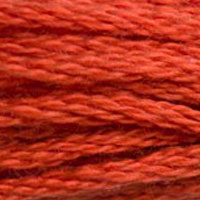
Burnt orange occupies a specific, peculiar territory in the color spectrum that confuses people who haven't worked with it before. It isn't the cheerful, clean orange of a traffic cone or a Halloween candy wrapper. It isn't brown. It's the color of embers — fire that's lost its pure flame and settled into something hotter and deeper, almost aggressive in its warmth. DMC 946 Medium Burnt Orange captures that quality precisely.
The "burnt" in the name has a real chromatic meaning: this is a color where some of the yellow component has been literally darkened, creating an orange with depth rather than brilliance. On the skein it reads as almost russet. In a finished piece, against lighter colors or neutrals, it asserts itself with real intensity. It's not a background color — it demands to be noticed.
Where This Color Belongs in a Palette
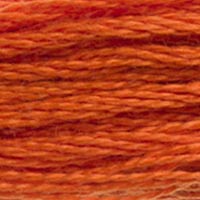
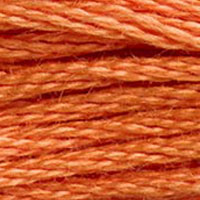
Autumn is the obvious and deserved home territory for DMC 946. The full-coverage fall foliage palette typically runs from DMC 972 (Deep Canary) through the orange family down toward the deep rusts, and 946 sits in the middle of that progression — the color of a turning maple leaf that hasn't quite made up its mind between orange and red. Pair it with DMC 947 (Burnt Orange) for a lighter neighbor, DMC 900 (Dark Burnt Orange) for the deeper anchor of the progression, and DMC 3826 (Golden Brown) for the warm-neutral transitions.
In animal designs, DMC 946 is precisely the color you need for autumn foxes, red squirrels, and the warm orange-brown patches on a tabby cat's coat. It also turns up in tiger stripes — not the full orange of the pale sections, but the darker orange of the stripe-adjacent tones where the contrasting bands blend.
Seasonal holiday designs use this color heavily for pumpkins and gourds. In pumpkin stitching, the typical progression runs from DMC 971 (Pumpkin) as the lighter body color through DMC 946 for shaded areas and down toward DMC 400 (Dark Mahogany) for the deepest shadows. The naturalistic depth this creates is significantly better than a flat, single-color pumpkin.
Technique Notes for Deep, Saturated Colors
Colors in the DMC 946 range — deep, saturated, warm — behave differently on fabric than pale colors do. They show stitch tension irregularities more clearly because the color itself is so assertive that any variation in how the thread sits in the fabric becomes more visible. If you're filling a large area with 946, consistent tension is especially important. The parking method, where you park multiple needles at strategic points and complete each section methodically, helps ensure even coverage.
On 14-count Aida with two strands, DMC 946 covers solidly and looks rich. On evenweave over-two, it reads slightly more saturated due to the finer ground. For backstitching, a single strand of 946 is vivid enough to create a warm, visible outline over areas of lighter orange or tan — it can sometimes substitute for the typical DMC 310 backstitch in warm-colored designs where a pure black outline would feel too harsh.
The burnt orange range is one where brand differences become genuinely noticeable, because slight shifts in the orange-to-brown balance can push the color to read more warmly orange or more darkly russet. Anchor 332 is listed as close rather than exact — it tends to run slightly brighter and more purely orange than DMC 946's darker, more burnt quality. In autumn palettes where 946's depth is what you're specifically after, the Anchor version may need to be used alongside a slightly darker shade to compensate.
Madeira 0207 is an exact match and is one of the more reliable Madeira conversions in the orange range. The color hue and value are well-matched, and Madeira's thread has a slightly silkier hand that can make large fill areas of this color look particularly rich.
Cosmo 445 is close but some stitchers report it reading slightly more red-inflected than DMC 946. In a pumpkin or foliage palette where the distinction between orange and rust matters, check the actual thread against your design's other colors before committing.
When no substitute is available, DMC 947 (Burnt Orange) provides a lighter alternative that shares the color family's character, while DMC 900 (Dark Burnt Orange) provides a deeper option — splitting the difference between these two adjacent colors with a blended needle can sometimes approximate the middle value of DMC 946.
- Keep DMC 946 away from cool-toned thread families in your storage — it will make those colors look dull by contrast, which can lead you to misjudge your palette when planning.
- For backstitching over warm designs, a single strand of 946 can serve as a less harsh alternative to black outlining.
Reference quality
How We Validate This Color Record
Use this page as a reference card for DMC 946: the structured data, quick conversions, and long-form copy are all tied back to the same stored color record.
- Methodology
- This page renders DMC 946, its hex value, and every brand equivalent from the site's source-of-truth color record, then checks long-form body copy against those same stored fields.
- Verification status
- Source-field checked. The page content is audited against the stored DMC number, brand equivalents, and match-quality labels before publishing.
- Last reviewed
- 2026-04-20
- Approximation warning
- Screen hex values, thread photos, and cross-brand conversions are reference aids. Dye lots, thread sheen, and fabric color can still shift the result in hand.
Decision guide
When to use the DMC 946 reference page
This page should help you decide faster between palette planning, brand substitution, and shade comparison without turning the color record into a thin lookup page.
Best for
- + Palette planning when you want the stored DMC 946 Medium Burnt Orange record, hex value #EB6307, and linked brand equivalents in one place.
- + Checking the quickest cross-brand shortlist before you buy floss, compare stash substitutes, or route into a more specific conversion page.
- + Finding nearby shades in the oranges family before you commit to accents, shading, or background blends.
Watch for
- ! Screen previews are only reference aids. Medium Burnt Orange can shift on real fabric because thread sheen, stitch coverage, and room lighting change how the color reads.
- ! A stored equivalent is still a shortlist, not a guarantee that two brands will disappear into each other in the same stitched motif.
- ! Older charts, discontinued kit floss, and dye-lot variation can all introduce small but visible differences that the page cannot detect for you.
Before you commit
- Confirm the role of DMC 946 Medium Burnt Orange: decide whether you need an exact hero shade, a forgiving background, or a rough stash substitute.
- Compare on project fabric: view the skein or stitched sample on the same fabric count and color you will actually use.
- Use the linked conversion pages next: open the brand-specific pages when you need match-quality caveats before substituting away from the DMC reference.
DMC 946 FAQ
These questions appear on the page so the FAQ schema stays aligned with what visitors can actually read.
What is the Anchor equivalent of DMC 946?+
The closest Anchor equivalent to DMC 946 (Medium Burnt Orange) is Anchor 332. This is a close match.
What color is DMC 946?+
DMC 946 is called "Medium Burnt Orange" and has a hex color value of #EB6307. It belongs to the oranges color family.
What is the Madeira equivalent of DMC 946?+
The closest Madeira equivalent to DMC 946 (Medium Burnt Orange) is Madeira 0207. This is a close match.
How DMC 946 Looks on Fabric
The same thread appears different depending on your fabric. Always test on your project fabric.
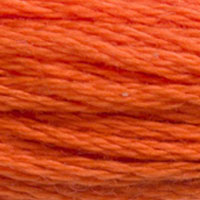
White Aida
Cream / Ecru
Black Aida
Pairs Well With
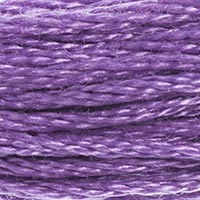
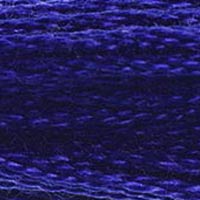
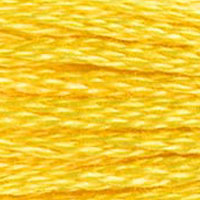
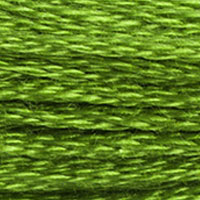
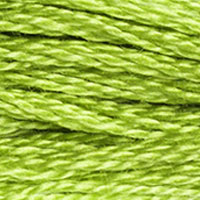
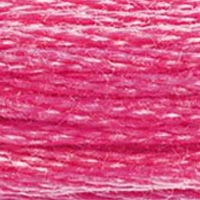
DMC colors commonly used alongside 946 Medium Burnt Orange.
Sunset Sky
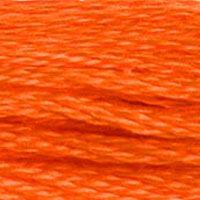
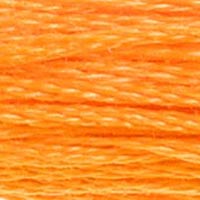
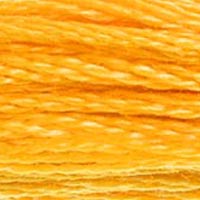
Tropical Paradise
Shading Companions
Detailed Conversions
Where to Buy DMC 946
This section contains affiliate links. We may earn a small commission at no cost to you.
Related Guides
Free Printable Thread Conversion Chart
Pick a brand, enter your email, and we'll send you a printable chart mapping all 552 DMC colors to that brand's equivalents. Zero spam, one chart.
Thanks! Here's your free chart:
Download Your ChartOpens in a new tab. Use your browser's Print → Save as PDF.
No spam. Your email is stored securely and never shared.