
DMC 640 — Very Dark Beige Gray
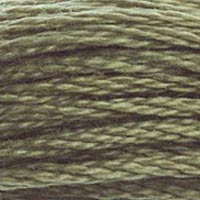
Neutrals family · Hex #857B61
Quick Conversion Table
| Brand | Equivalent | Match |
|---|---|---|
| Anchor | 393 | exact |
| Madeira | 1813 | close |
| Cosmo ⚠ | 716 | close |
| Sullivans | 45148 | close |
| J&P Coats | 5393 | close |
| Dimensions | 6103 | close |
| Bucilla | 2754 | close |
Color theory has a concept called a "bridge tone" — a color that sits between warm and cool on the temperature spectrum and therefore plays well with both. DMC 640 Very Dark Beige Gray is one of embroidery's best bridge tones. Its hex value (#857B61) tells the story: roughly balanced green, red, and blue components with the red slightly dominant, creating a gray with a gentle warmth that prevents it from ever reading cold or clinical. It sits in a zone between the beige grays and the blue-grays that most other brands struggle to replicate exactly.
The Beige Gray Family
DMC runs a complete sequence of beige grays from the very dark 640 through 642 Dark Beige Gray, 644 Medium Beige Gray, and 822 Light Beige Gray all the way to 3033 Very Light Mocha Brown at the pale end. Within this family, 640 is the anchor — the darkest value that establishes the shadow floor. In shading sequences, it's typically used only in the deepest recesses, with 642 and 644 carrying the mid-tones where most of the fill work happens.
The family is particularly popular for stone, parchment, aged linen, and architectural work because the warm-gray balance creates a convincing aged-material effect. Many samplers that aim for an antique or heritage feel use the beige gray family as their primary neutral rather than the cooler Beaver Gray sequence (645–648).
Where Very Dark Carries the Work
DMC 640 is the thread you reach for when you need shadow without blue and depth without warmth dominating. Fabric textures — burlap in a still life, the shadow side of stone wall blocks, the dark grooves in aged wood — frequently call for exactly this quality. In hardanger and pulled thread work where the drawn fabric creates strong shadows, 640 adds natural-looking depth that neither the golden browns nor the cool grays can achieve.
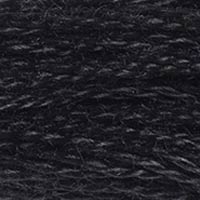
Blackwork borders sometimes use 640 in combination with DMC 310 when the designer wants the overall piece to read warm rather than stark. The 640 appears in areas where full black would be too heavy, providing a softer version of definition. Similarly, in voided work on linen, using 640 for the shadow elements rather than true black keeps the piece from feeling harsh.
Portrait work on fabric — both human and animal — benefits from 640 in the shadow areas of gray, white, or silver subjects. A white rabbit's ear shadow, a gray cat's underside shading, or the shadow beneath a silver bowl all benefit from 640's warmth-tinged depth. Pure cool grays often read purple in these contexts, particularly on warm linen grounds.
Pairing and Contrast Notes
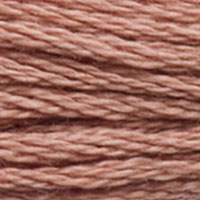
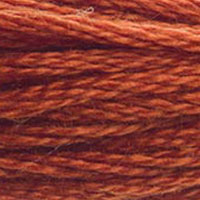
When working full-coverage pieces with the beige gray family, 640 usually pairs with DMC 642 and DMC 644 for a three-tone shading sequence. Adding DMC 822 as a fourth tone creates excellent range for anything that needs subtle, extended shading. Against this family, DMC 3865 or DMC 712 provide the highlight end. For backstitch outline when the fill is the beige gray family, 640 itself often serves — its darkness relative to 642 and 644 provides enough contrast to define edges without requiring a separate outline color.
Anchor 393 and Madeira 1813 both earn exact match ratings here, which gives you good flexibility across brands without color-checking every purchase. Stitchers who maintain both DMC and Anchor kits can treat these as true equivalents in most applications.
Cosmo 716 and Sullivans 45148 rate as close. The Cosmo tends slightly cooler — it reads a bit more gray and less beige than DMC 640, which matters if you're building a warm-toned neutral palette. Sullivans 45148 is also close but may vary slightly between dye lots. For large fill areas where this is the primary shadow tone, pulling a length of Cosmo 716 next to your DMC 642 and 644 is worthwhile before committing to a substitute.
Within the DMC range, there's no single ideal substitute for 640. DMC 3787 Dark Brown Gray is a reasonable neighbor — slightly more brown and less beige — and works in a pinch. DMC 3021 Very Dark Brown Gray is darker and cooler, suitable only if you need more shadow depth than 640 provides. Going the other direction, DMC 642 is the obvious step up but loses the shadow intensity you may be counting on. If you're mid-WIP and truly stuck, one strand of 640 blended with one strand of 642 in a needle reads remarkably close to 640 at full weight.
Reference quality
How We Validate This Color Record
Use this page as a reference card for DMC 640: the structured data, quick conversions, and long-form copy are all tied back to the same stored color record.
- Methodology
- This page renders DMC 640, its hex value, and every brand equivalent from the site's source-of-truth color record, then checks long-form body copy against those same stored fields.
- Verification status
- Source-field checked. The page content is audited against the stored DMC number, brand equivalents, and match-quality labels before publishing.
- Last reviewed
- 2026-04-20
- Approximation warning
- Screen hex values, thread photos, and cross-brand conversions are reference aids. Dye lots, thread sheen, and fabric color can still shift the result in hand.
Decision guide
When to use the DMC 640 reference page
This page should help you decide faster between palette planning, brand substitution, and shade comparison without turning the color record into a thin lookup page.
Best for
- + Palette planning when you want the stored DMC 640 Very Dark Beige Gray record, hex value #857B61, and linked brand equivalents in one place.
- + Checking the quickest cross-brand shortlist before you buy floss, compare stash substitutes, or route into a more specific conversion page.
- + Finding nearby shades in the neutrals family before you commit to accents, shading, or background blends.
Watch for
- ! Screen previews are only reference aids. Very Dark Beige Gray can shift on real fabric because thread sheen, stitch coverage, and room lighting change how the color reads.
- ! A stored equivalent is still a shortlist, not a guarantee that two brands will disappear into each other in the same stitched motif.
- ! Older charts, discontinued kit floss, and dye-lot variation can all introduce small but visible differences that the page cannot detect for you.
Before you commit
- Confirm the role of DMC 640 Very Dark Beige Gray: decide whether you need an exact hero shade, a forgiving background, or a rough stash substitute.
- Compare on project fabric: view the skein or stitched sample on the same fabric count and color you will actually use.
- Use the linked conversion pages next: open the brand-specific pages when you need match-quality caveats before substituting away from the DMC reference.
DMC 640 FAQ
These questions appear on the page so the FAQ schema stays aligned with what visitors can actually read.
What is the Anchor equivalent of DMC 640?+
The closest Anchor equivalent to DMC 640 (Very Dark Beige Gray) is Anchor 393. This is an exact match.
What color is DMC 640?+
DMC 640 is called "Very Dark Beige Gray" and has a hex color value of #857B61. It belongs to the neutrals color family.
What is the Madeira equivalent of DMC 640?+
The closest Madeira equivalent to DMC 640 (Very Dark Beige Gray) is Madeira 1813. This is a close match.
How DMC 640 Looks on Fabric
The same thread appears different depending on your fabric. Always test on your project fabric.
White Aida
Cream / Ecru
Black Aida
Pairs Well With
DMC colors commonly used alongside 640 Very Dark Beige Gray.
Suggested Palette
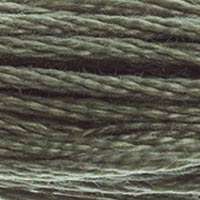
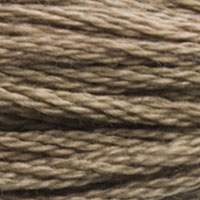
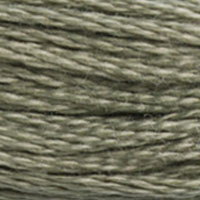
Shading Companions
Detailed Conversions
Where to Buy DMC 640
This section contains affiliate links. We may earn a small commission at no cost to you.
Related Guides
Free Printable Thread Conversion Chart
Pick a brand, enter your email, and we'll send you a printable chart mapping all 552 DMC colors to that brand's equivalents. Zero spam, one chart.
Thanks! Here's your free chart:
Download Your ChartOpens in a new tab. Use your browser's Print → Save as PDF.
No spam. Your email is stored securely and never shared.