
Quick Conversion Table
| Brand | Equivalent | Match |
|---|---|---|
| Anchor | 144 | exact |
| Madeira | 0908 | close |
| Cosmo ⚠ | 212 | close |
| Sullivans | 45210 | close |
| J&P Coats | 7020 | close |
| Dimensions | 6800 | close |
| Bucilla | 301 | close |
| Candamar | 6299 | close |
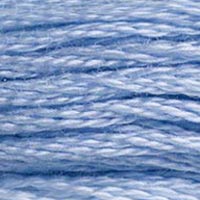
The color of a winter sky seen through thin cloud, of certain blue-glazed pottery sitting in the afternoon light, of the pale blue sections of a Delft tile scene — DMC 800 Pale Delft Blue occupies the quietest, most luminous position in the Delft family. It's a color that doesn't demand attention but rewards it: subtle, sophisticated, and genuinely beautiful in ways that more saturated blues sometimes aren't.
Pale Blues and Atmospheric Quality
Pale blue threads have a unique atmospheric quality in cross-stitch — they read as light and distance, as the far end of a perspective gradient, as sky seen through a haze. DMC 800 specifically has a slightly grayed quality that keeps it from reading as a crisp, cold pale blue and instead gives it the softened look of air itself — the impressionistic quality of sky color in a slightly humid climate, or the look of blue glaze that's been diluted to near-translucency.
In landscape designs, 800 handles the pale sky areas near the horizon where the atmosphere thickens and the blue lightens. In seascape designs, it can serve as the lightest water highlight where sunlight reflects strongly. In any design with a significant atmospheric or spatial dimension, 800 provides the tonal note that reads as light and distance.
Highlight Position in the Delft Family
As the palest member of the DMC Delft family, 800 serves as the highlight value in Delft-inspired designs. On traditional Delftware pottery, the blue-on-white aesthetic means the white areas are literally the ceramic ground — in cross-stitch reproductions, white areas are usually left unstitched or stitched in Blanc. But where a stitched pale value is needed for blue areas in direct light, 800 provides that function.
In Delft scene designs featuring Dutch landscapes, windmills, and canal scenes, 800 might represent the sky areas, the lit surfaces of white-painted buildings that still have a slight blue tint from atmospheric reflection, or the lightest areas of figures' clothing. The relationship between 800 and DMC 798 (Dark Delft Blue) creates the visible contrast range that makes Delft-inspired designs read as dimensional.
Quilting and Textile Heritage Designs
Blue-and-white quilting patterns have a long American tradition, and cross-stitch designs inspired by this heritage often use the Delft blue family to capture the specific quality of classic blue-and-white fabric. Grandmother's Flower Garden patterns, traditional geometric quilt designs in blue-and-white, and similar reproduction textile cross-stitch pieces find the Delft blue family — with 800 as its lightest expression — an accurate color reference.
Baby Blue Territory with Character
DMC 800 sits at the intersection of Delft blue and baby blue, and can function in either design context. It's slightly deeper and more sophisticated than the lightest baby blues (DMC 3756, DMC 747), which gives it more character in baby and nursery designs while still reading as soft and gentle enough for that context. For birth sampler designs that want a more interesting blue than standard baby blue — a slightly more nuanced, less obviously pastel blue — 800 is a useful alternative to consider alongside DMC 827 (Very Light Blue) and DMC 813 (Light Blue).
Anchor 144 and Madeira 0908 are both exact-rated for DMC 800. Both provide reliable substitutions in the pale Delft blue range. Cosmo 212 and Sullivans 45210 are close-rated.
Pale blues can show subtle batch-to-batch variation in photographs even when the threads look matching in hand. For large fill areas — sky backgrounds, large clothing sections — checking dye lot numbers when purchasing multiple skeins of 800 or its substitutes is worthwhile. The slight gray quality that defines 800's particular character can shift toward more clearly blue or more clearly gray in different lots, affecting how it reads against the rest of the palette.
Within DMC, DMC 809 (Delft Blue) is one step deeper in the same family and is the natural substitute if you need 800 to read with slightly more presence and color depth. DMC 827 (Very Light Blue) is a close neighbor in the pale blue range with a slightly cooler, less Delft-gray quality. For designs where 800's specific grayed-blue character isn't critical, either neighbor can substitute gracefully in most applications.
Reference quality
How We Validate This Color Record
Use this page as a reference card for DMC 800: the structured data, quick conversions, and long-form copy are all tied back to the same stored color record.
- Methodology
- This page renders DMC 800, its hex value, and every brand equivalent from the site's source-of-truth color record, then checks long-form body copy against those same stored fields.
- Verification status
- Source-field checked. The page content is audited against the stored DMC number, brand equivalents, and match-quality labels before publishing.
- Last reviewed
- 2026-04-20
- Approximation warning
- Screen hex values, thread photos, and cross-brand conversions are reference aids. Dye lots, thread sheen, and fabric color can still shift the result in hand.
Decision guide
When to use the DMC 800 reference page
This page should help you decide faster between palette planning, brand substitution, and shade comparison without turning the color record into a thin lookup page.
Best for
- + Palette planning when you want the stored DMC 800 Pale Delft Blue record, hex value #C0CCDE, and linked brand equivalents in one place.
- + Checking the quickest cross-brand shortlist before you buy floss, compare stash substitutes, or route into a more specific conversion page.
- + Finding nearby shades in the blues family before you commit to accents, shading, or background blends.
Watch for
- ! Screen previews are only reference aids. Pale Delft Blue can shift on real fabric because thread sheen, stitch coverage, and room lighting change how the color reads.
- ! A stored equivalent is still a shortlist, not a guarantee that two brands will disappear into each other in the same stitched motif.
- ! Older charts, discontinued kit floss, and dye-lot variation can all introduce small but visible differences that the page cannot detect for you.
Before you commit
- Confirm the role of DMC 800 Pale Delft Blue: decide whether you need an exact hero shade, a forgiving background, or a rough stash substitute.
- Compare on project fabric: view the skein or stitched sample on the same fabric count and color you will actually use.
- Use the linked conversion pages next: open the brand-specific pages when you need match-quality caveats before substituting away from the DMC reference.
DMC 800 FAQ
These questions appear on the page so the FAQ schema stays aligned with what visitors can actually read.
What is the Anchor equivalent of DMC 800?+
The closest Anchor equivalent to DMC 800 (Pale Delft Blue) is Anchor 144. This is an exact match.
What color is DMC 800?+
DMC 800 is called "Pale Delft Blue" and has a hex color value of #C0CCDE. It belongs to the blues color family.
What is the Madeira equivalent of DMC 800?+
The closest Madeira equivalent to DMC 800 (Pale Delft Blue) is Madeira 0908. This is a close match.
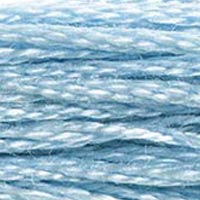
How DMC 800 Looks on Fabric
The same thread appears different depending on your fabric. Always test on your project fabric.
White Aida
Cream / Ecru
Black Aida
Pairs Well With
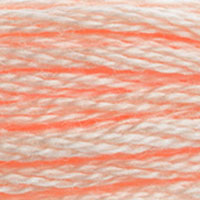
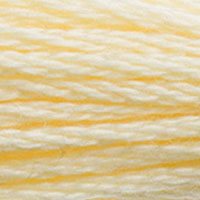
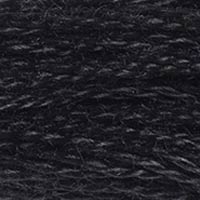
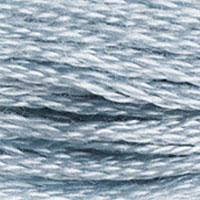
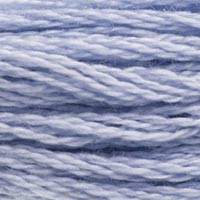
DMC colors commonly used alongside 800 Pale Delft Blue.
Suggested Palette
Detailed Conversions
Where to Buy DMC 800
This section contains affiliate links. We may earn a small commission at no cost to you.
Related Guides
Free Printable Thread Conversion Chart
Pick a brand, enter your email, and we'll send you a printable chart mapping all 552 DMC colors to that brand's equivalents. Zero spam, one chart.
Thanks! Here's your free chart:
Download Your ChartOpens in a new tab. Use your browser's Print → Save as PDF.
No spam. Your email is stored securely and never shared.