
Quick Conversion Table
| Brand | Equivalent | Match |
|---|---|---|
| Anchor | 281 | close |
| Madeira | 1616 | close |
| Cosmo ⚠ | 983 | close |
| Sullivans | 45328 | close |
The Olive Oil Shade: Mediterranean Warmth in Thread
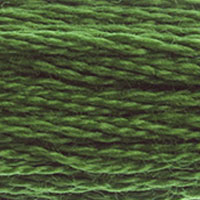
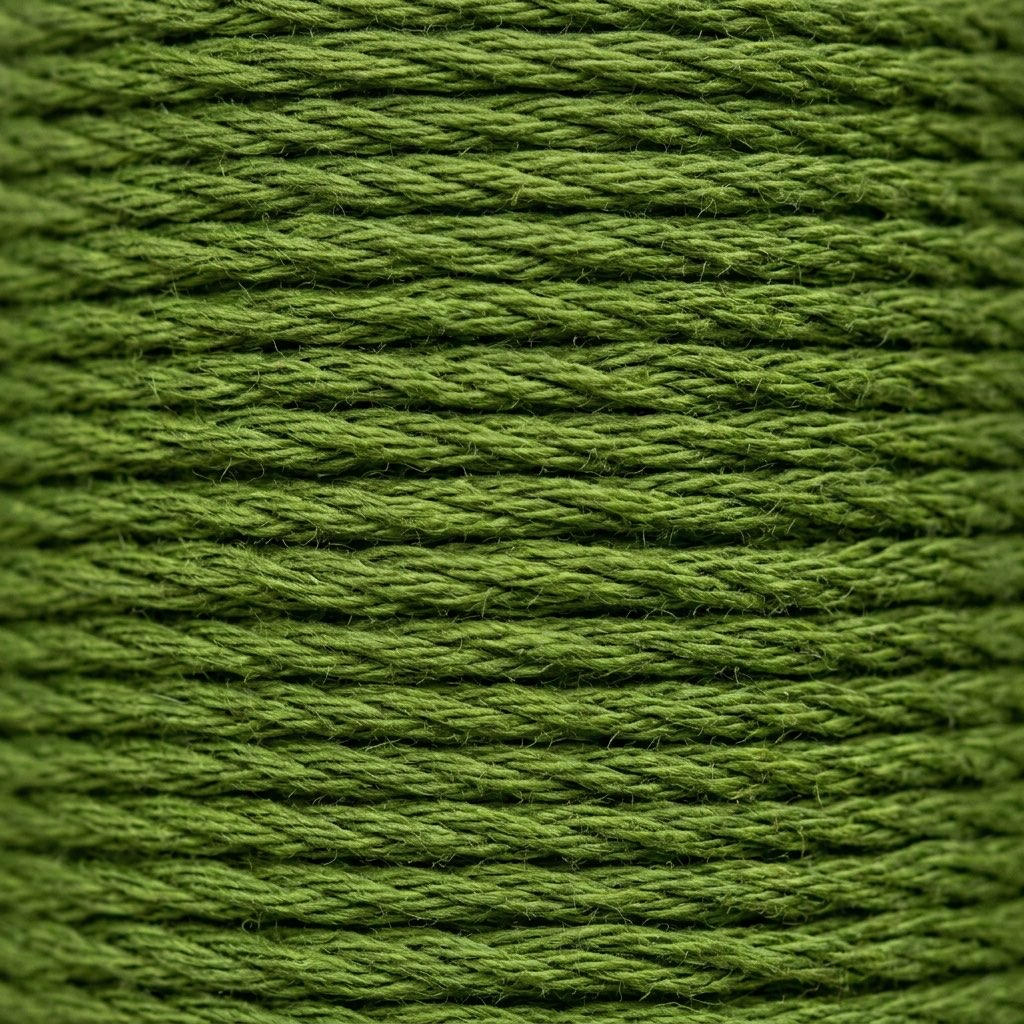
Pour a stream of good extra-virgin olive oil into a white bowl and look at the color pooled at the edges — not the golden center, but the deep greenish ring where the oil is thickest. That's DMC 281. It's the color that Mediterranean cultures have built entire visual identities around: the shade of mature olive leaves on their dark upper surfaces, of pressed olives before processing, of the landscape in Provence and Tuscany and Andalusia where olive groves stretch to the horizon under hot sun.
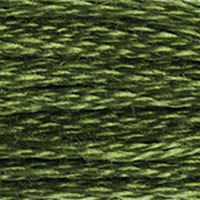
Within the DMC range, 281 occupies the critical middle position between DMC 280 (Very Dark Yellow Green) and DMC 282 (Medium Yellow Green). It's the linking shade — dark enough to carry shadow work but light enough to clearly read as green rather than near-black. This middle-value role makes it arguably the most versatile of the three. While 280 is limited to deep shadows and 282 to midtones, 281 can function as either, depending on what surrounds it.
Warm Green Palettes: Where Yellow-Greens Earn Their Keep
Yellow-greens are the warm side of the green family, and stitchers who primarily work with cool greens (teals, emeralds, mints) sometimes overlook them. That's a missed opportunity. Warm greens ground a design in earth and sun in a way that cool greens — which evoke water, shade, and distance — simply don't. DMC 281 is warm green with conviction: there's genuine yellow energy in this thread, even at its relatively dark value.
For landscape work, that warmth determines season. Cool greens say spring and summer — new growth, shade, moisture. Warm greens like 281 say late summer and early autumn — mature foliage, dried grasses starting to show through, sun-baked hillsides. A rolling landscape stitched with DMC 281 as the dominant green reads as August or September without you needing to add a single autumn leaf. Pair it with DMC 3012 (Medium Khaki Green) and DMC 3013 (Light Khaki Green) for a palette that practically smells like hay.
In sampler contexts, 281 offers a handsome alternative to the more commonly used pure greens for vine and floral motifs. Historical samplers often feature olive and khaki greens because those were the dye colors available from natural sources — weld, woad, various lichen combinations. Using 281 in a reproduction sampler immediately signals historical awareness, even if the rest of your thread choices are standard DMC.
For botanical cross-stitch, 281 works exceptionally well for herb illustrations. Rosemary, thyme, bay leaves, olive branches — all the culinary herbs associated with warm climates are this exact shade of dark olive-green. Stitch a kitchen herb sampler using 281 for the mature leaf areas, with DMC 282 for younger leaves and DMC 471 (Very Light Avocado Green) for the freshest new growth, and you have a piece that belongs in a farmhouse kitchen.
Anchor 281 — yes, same number, which at least makes it easy to remember — is a close match that generally satisfies. Some stitchers find Anchor's version carries a fraction more brown, pulling toward raw umber territory rather than pure olive. In isolation this is nearly invisible, but stitched alongside DMC 280 and 282, the family resemblance might weaken slightly. Test in context if you're using the full trio.
Madeira 1616 is also close and brings its characteristic smoother finish. On a dark olive-green at this value, Madeira's sheen difference is minimal — dark threads absorb so much light that finish differences are far less obvious than they would be on a light or bright shade. This makes Madeira 1616 a comfortable swap for most projects.
Cosmo 983 tends to read very slightly greener and less yellow than DMC 281, which may or may not matter depending on your palette. If your design uses 281 specifically for its warm olive character — Mediterranean scenes, herb gardens, military motifs — that warmth is non-negotiable. If it's simply a dark green in a varied forest palette, the slight cool shift probably disappears among the surrounding colors.
Within DMC, resist the temptation to substitute DMC 469 (Avocado Green). They share the warm yellow-green family, but 469 is lighter and more distinctly avocado-toned. Similarly, DMC 3011 (Dark Khaki Green) overlaps in value but carries more grey muting than 281's cleaner olive quality. For true olive warmth at this depth, 281 stands fairly alone in the range.
Reference quality
How We Validate This Color Record
Use this page as a reference card for DMC 281: the structured data, quick conversions, and long-form copy are all tied back to the same stored color record.
- Methodology
- This page renders DMC 281, its hex value, and every brand equivalent from the site's source-of-truth color record, then checks long-form body copy against those same stored fields.
- Verification status
- Source-field checked. The page content is audited against the stored DMC number, brand equivalents, and match-quality labels before publishing.
- Last reviewed
- 2026-04-20
- Approximation warning
- Screen hex values, thread photos, and cross-brand conversions are reference aids. Dye lots, thread sheen, and fabric color can still shift the result in hand.
Decision guide
When to use the DMC 281 reference page
This page should help you decide faster between palette planning, brand substitution, and shade comparison without turning the color record into a thin lookup page.
Best for
- + Palette planning when you want the stored DMC 281 Dark Yellow Green record, hex value #607800, and linked brand equivalents in one place.
- + Checking the quickest cross-brand shortlist before you buy floss, compare stash substitutes, or route into a more specific conversion page.
- + Finding nearby shades in the greens family before you commit to accents, shading, or background blends.
Watch for
- ! Screen previews are only reference aids. Dark Yellow Green can shift on real fabric because thread sheen, stitch coverage, and room lighting change how the color reads.
- ! A stored equivalent is still a shortlist, not a guarantee that two brands will disappear into each other in the same stitched motif.
- ! Older charts, discontinued kit floss, and dye-lot variation can all introduce small but visible differences that the page cannot detect for you.
Before you commit
- Confirm the role of DMC 281 Dark Yellow Green: decide whether you need an exact hero shade, a forgiving background, or a rough stash substitute.
- Compare on project fabric: view the skein or stitched sample on the same fabric count and color you will actually use.
- Use the linked conversion pages next: open the brand-specific pages when you need match-quality caveats before substituting away from the DMC reference.
DMC 281 FAQ
These questions appear on the page so the FAQ schema stays aligned with what visitors can actually read.
What is the Anchor equivalent of DMC 281?+
The closest Anchor equivalent to DMC 281 (Dark Yellow Green) is Anchor 281. This is a close match.
What color is DMC 281?+
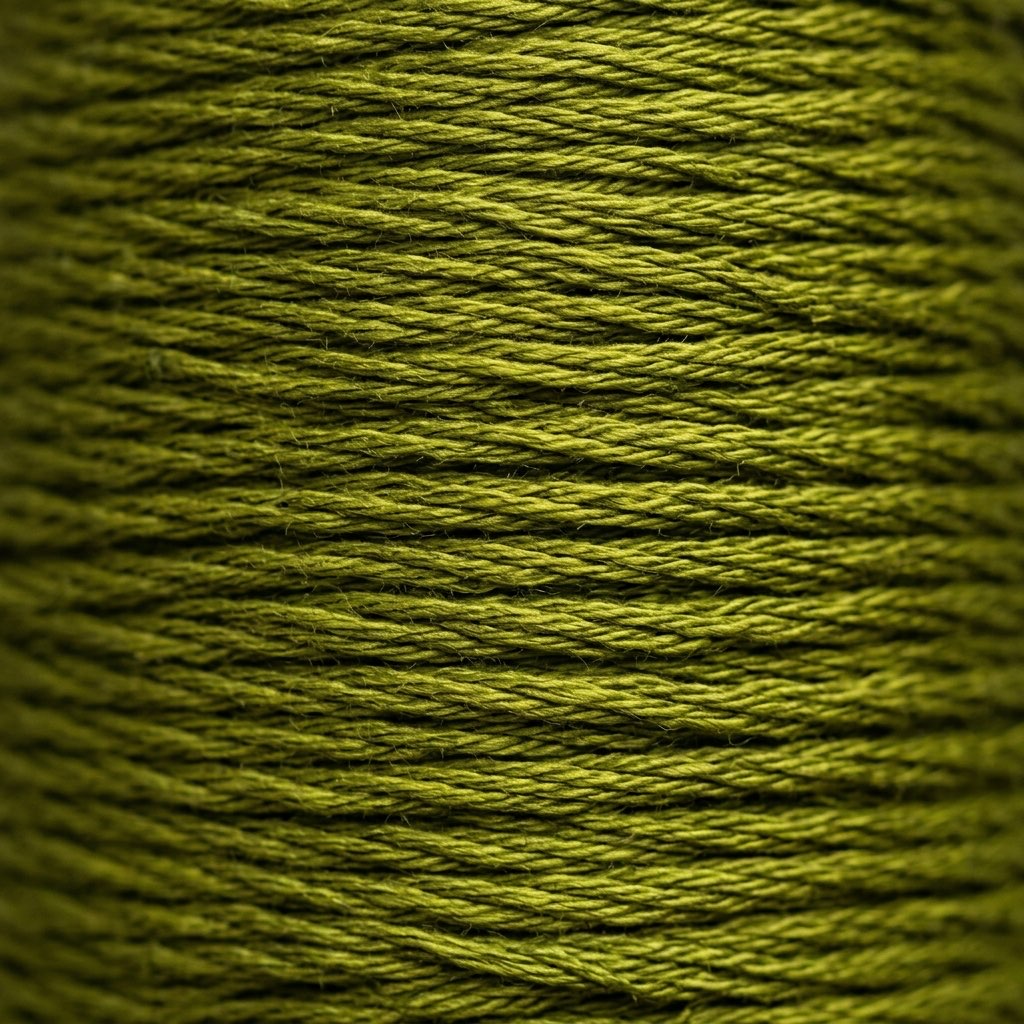
DMC 281 is called "Dark Yellow Green" and has a hex color value of #607800. It belongs to the greens color family.
What is the Madeira equivalent of DMC 281?+
The closest Madeira equivalent to DMC 281 (Dark Yellow Green) is Madeira 1616. This is a close match.
How DMC 281 Looks on Fabric
The same thread appears different depending on your fabric. Always test on your project fabric.
White Aida
Cream / Ecru
Black Aida
Pairs Well With
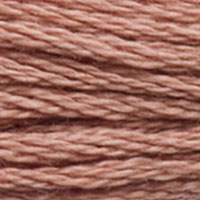
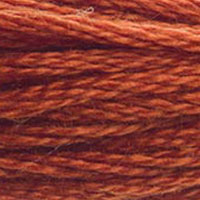
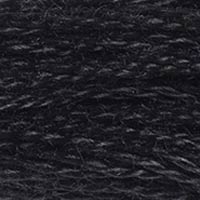
DMC colors commonly used alongside 281 Dark Yellow Green.
Suggested Palette
Shading Companions
Detailed Conversions
Where to Buy DMC 281
This section contains affiliate links. We may earn a small commission at no cost to you.
Related Guides
Free Printable Thread Conversion Chart
Pick a brand, enter your email, and we'll send you a printable chart mapping all 552 DMC colors to that brand's equivalents. Zero spam, one chart.
Thanks! Here's your free chart:
Download Your ChartOpens in a new tab. Use your browser's Print → Save as PDF.
No spam. Your email is stored securely and never shared.