
Quick Conversion Table
| Brand | Equivalent | Match |
|---|---|---|
| Anchor | 278 | exact |
| Madeira | 2703 | close |
| Cosmo ⚠ | 325 | close |
| Sullivans | 45416 | close |
| J&P Coats | 6253 | close |
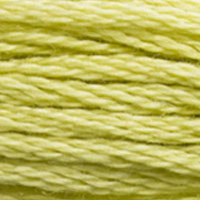
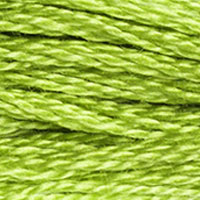
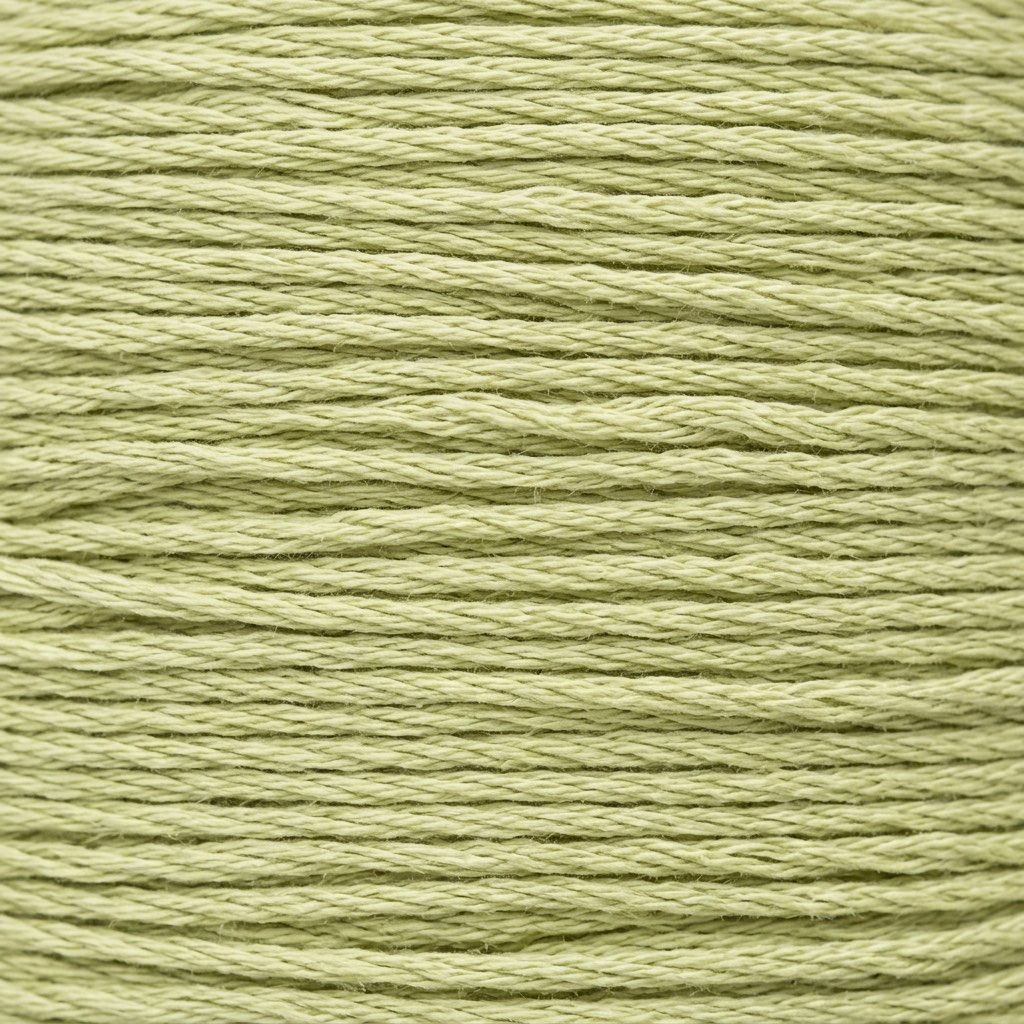
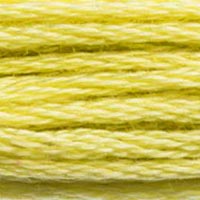
Some threads cause arguments. DMC 3819, Light Moss Green, is one of them — but the argument is about whether it's genius or a mistake. At hex #E0E868, it reads as a bright, almost acidic yellow-green: chartreuse territory, significantly more yellow than any green normally described as 'moss.' Actual moss comes in softer, cooler tones. This is the color of fresh spring lichen, of the brightest inner leaf of a sprouting plant, of the particular yellow-green that nature produces in its most vigorously growing moments.
The 'moss' label creates confusion because the color looks nothing like most people's mental image of moss. But the community has reached a kind of peace with this: whatever it's called, 3819 is genuinely useful in a specific way. It's the yellow-green highlight value that makes spring foliage look alive, that creates the sunlit-grass quality in landscape work, that provides the botanical vibrancy that muted greens can never achieve on their own.
Spring and Fresh-Growth Themes
The specific moment in early spring when new leaves are small, bright, and almost translucent with yellow-green light is exactly what 3819 captures. Easter cross-stitch, spring floral designs, and garden-themed seasonal pieces lean on this color for the freshest, most newly-grown element of the palette. Pair it with DMC 166 (Medium Light Moss Green) or DMC 907 (Light Parrot Green) for a graduated spring-green effect, then anchor the palette with something deeper like DMC 3815 (Dark Celadon Green) to prevent the design from floating away into all-yellow-green.
For frog designs — genuinely popular in cross-stitch, both the literal amphibians and the 'frogging your mistakes' humor genre — bright yellow-green is the characteristic body color of tree frogs and certain dart frog species. DMC 3819 captures the almost luminous quality of a tree frog's skin in bright light, which no muted green manages.
Color Theory: The Chartreuse Effect
Chartreuse and yellow-green serve a specific color theory function: they advance aggressively in a composition. Where blues and muted greens tend to recede, yellow-greens push forward, demanding attention. This makes 3819 potentially overwhelming in large quantities but extremely powerful in small accents. A few stitches of 3819 as a sunlit leaf tip or a sprouting stem accent in an otherwise conventional green palette can make the whole design seem to vibrate with life.
On linen, 3819 reads differently than on white Aida — the warm undertone of the fabric shifts the yellow-green toward a slightly warmer quality, reducing its chartreuse intensity slightly. Some stitchers who find 3819 too aggressive on white Aida find it perfect on natural linen for exactly this reason. If you're uncertain about committing to 3819, stitching a test swatch on both fabrics can reveal which context suits your design.
Community debate also exists about whether 3819 or DMC 907 (Light Parrot Green) better serves the 'vivid yellow-green highlight' role. They're close but distinct: 3819 is lighter and slightly more yellow; 907 is a touch deeper and slightly more balanced between yellow and green. In most gradient situations, 3819 belongs one step lighter than 907 in the value sequence.
Anchor 278 is an exact match for DMC 3819 — good news for a color where the specific yellow-green balance matters enough that 'close' might not be close enough. Anchor 278 replicates the characteristic chartreuse quality reliably, making it the recommended first substitute.
Madeira 2703 is rated close and tends to be a fair substitute in most conditions. Madeira's equivalent in this yellow-green range can sometimes read slightly more yellow or slightly more muted depending on the dye lot — for a color as specific as 3819, a quick comparison swatch is worthwhile before committing.
Cosmo 325 and Sullivans 45416 are rated close. Cosmo 325 tends to be fairly accurate in comparative reviews. Sullivans 45416 is acceptable with the usual dye lot caveat.
Within the DMC range, if 3819 is unavailable, understanding its position helps in selecting alternatives. DMC 166 (Medium Light Moss Green) is darker and slightly more muted — useful if 3819's brightness is what you're trying to approximate but one step down. DMC 907 (Light Parrot Green) is a touch deeper and more balanced yellow-green — the nearest alternative that maintains the vivid yellow-green character. DMC 471 (Very Light Avocado Green) goes in a more olive direction and is quite different in character. For a slightly softer yellow-green, DMC 733 (Medium Olive Green) goes in the olive direction and may substitute in some landscape contexts.
Reference quality
How We Validate This Color Record
Use this page as a reference card for DMC 3819: the structured data, quick conversions, and long-form copy are all tied back to the same stored color record.
- Methodology
- This page renders DMC 3819, its hex value, and every brand equivalent from the site's source-of-truth color record, then checks long-form body copy against those same stored fields.
- Verification status
- Source-field checked. The page content is audited against the stored DMC number, brand equivalents, and match-quality labels before publishing.
- Last reviewed
- 2026-04-20
- Approximation warning
- Screen hex values, thread photos, and cross-brand conversions are reference aids. Dye lots, thread sheen, and fabric color can still shift the result in hand.
Decision guide
When to use the DMC 3819 reference page
This page should help you decide faster between palette planning, brand substitution, and shade comparison without turning the color record into a thin lookup page.
Best for
- + Palette planning when you want the stored DMC 3819 Light Moss Green record, hex value #E0E868, and linked brand equivalents in one place.
- + Checking the quickest cross-brand shortlist before you buy floss, compare stash substitutes, or route into a more specific conversion page.
- + Finding nearby shades in the greens family before you commit to accents, shading, or background blends.
Watch for
- ! Screen previews are only reference aids. Light Moss Green can shift on real fabric because thread sheen, stitch coverage, and room lighting change how the color reads.
- ! A stored equivalent is still a shortlist, not a guarantee that two brands will disappear into each other in the same stitched motif.
- ! Older charts, discontinued kit floss, and dye-lot variation can all introduce small but visible differences that the page cannot detect for you.
Before you commit
- Confirm the role of DMC 3819 Light Moss Green: decide whether you need an exact hero shade, a forgiving background, or a rough stash substitute.
- Compare on project fabric: view the skein or stitched sample on the same fabric count and color you will actually use.
- Use the linked conversion pages next: open the brand-specific pages when you need match-quality caveats before substituting away from the DMC reference.
DMC 3819 FAQ
These questions appear on the page so the FAQ schema stays aligned with what visitors can actually read.
What is the Anchor equivalent of DMC 3819?+
The closest Anchor equivalent to DMC 3819 (Light Moss Green) is Anchor 278. This is an exact match.
What color is DMC 3819?+
DMC 3819 is called "Light Moss Green" and has a hex color value of #E0E868. It belongs to the greens color family.
What is the Madeira equivalent of DMC 3819?+
The closest Madeira equivalent to DMC 3819 (Light Moss Green) is Madeira 2703. This is a close match.
How DMC 3819 Looks on Fabric
The same thread appears different depending on your fabric. Always test on your project fabric.
White Aida
Cream / Ecru
Black Aida
Pairs Well With
DMC colors commonly used alongside 3819 Light Moss Green.
Suggested Palette
Shading Companions
Detailed Conversions
Where to Buy DMC 3819
This section contains affiliate links. We may earn a small commission at no cost to you.
Related Guides
Free Printable Thread Conversion Chart
Pick a brand, enter your email, and we'll send you a printable chart mapping all 552 DMC colors to that brand's equivalents. Zero spam, one chart.
Thanks! Here's your free chart:
Download Your ChartOpens in a new tab. Use your browser's Print → Save as PDF.
No spam. Your email is stored securely and never shared.