
Quick Conversion Table
| Brand | Equivalent | Match |
|---|---|---|
| Anchor | 150 | exact |
| Madeira | 1007 | close |
| Cosmo ⚠ | 168 | close |
| Sullivans | 45069 | close |
| J&P Coats | 7981 | close |
| Dimensions | 17981 | close |
| Candamar | 6002 | close |
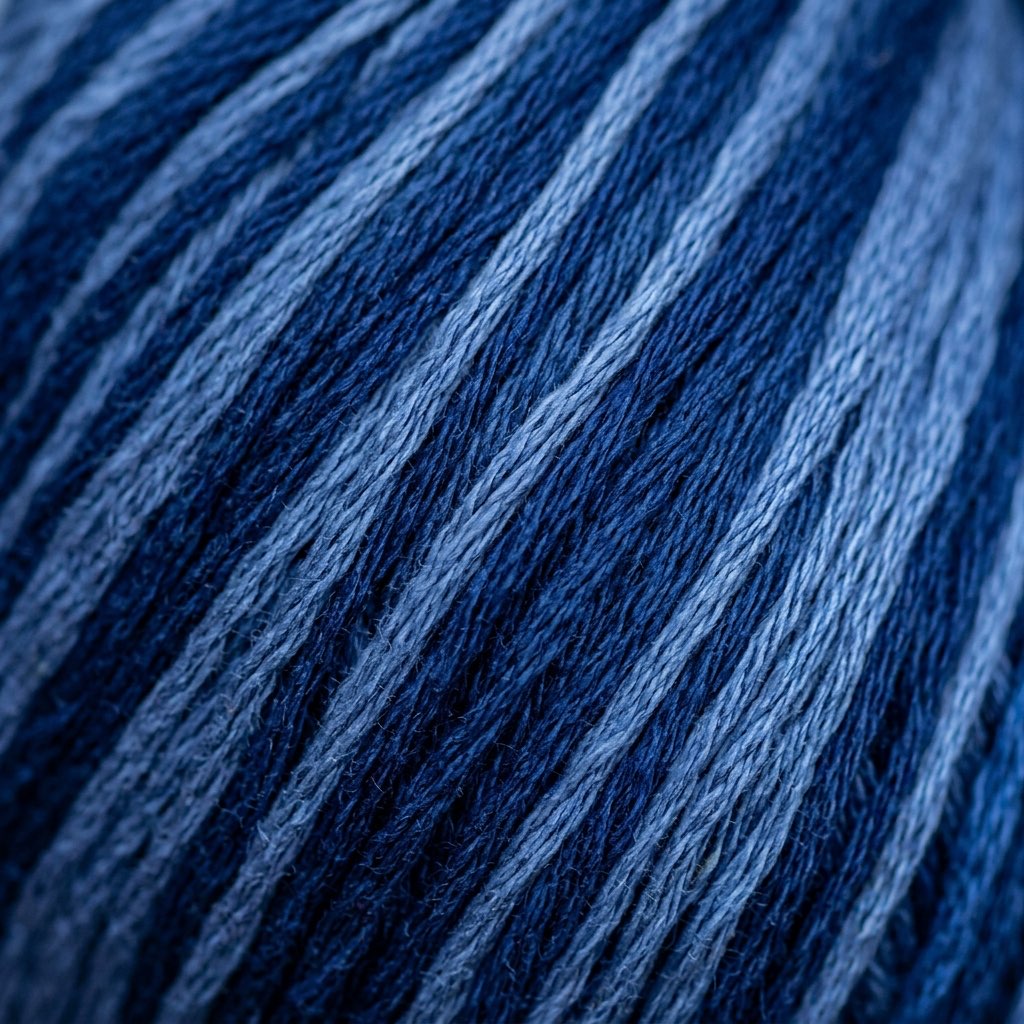
Navy blue is one of those colors with a story. The British Royal Navy standardized the deep blue color for officers' uniforms in 1748, and within a generation the color was so strongly associated with naval authority that it became known simply as "navy." Centuries later, it's still one of the most universally recognized and used color names in Western culture. DMC 336 Navy Blue carries that tradition into thread form — a deep, serious, authoritative blue with a slight red warmth that prevents it from reading as cold or harsh. It's a color that means business without being aggressive about it.
Technical Properties: What Makes Navy Useful
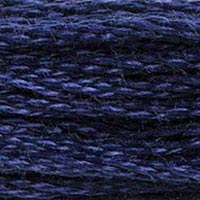
At hex #253B73, DMC 336 is dark enough to function as an outline and backstitch color in blue-dominant palettes, but it's not so dark that it disappears into black at normal viewing distance. This makes it more versatile than the near-black DMC 823 (Dark Navy Blue) — 336 can backstitch, fill shadow areas, and work as a stand-alone design color all in the same project.
The slight warm (red-leaning) undertone in DMC 336 is what distinguishes good navy from the cold, gray-shifted blues that look flat and harsh. It gives the thread a richness and depth that reads as genuinely saturated rather than simply dark. Side-by-side with DMC 334 (Medium Baby Blue) and DMC 322 (Dark Baby Blue), DMC 336 creates the deepest anchor in a blue gradient that maintains warmth throughout the value range — important for skies, water, and fabric-surface designs where a cold, lifeless blue would undermine the visual effect.
Design Categories Where Navy Earns Its Reputation
Nautical and maritime designs are an obvious fit — anchors, rope, sailing ships, coastal birds, lighthouse designs — but navy's design applications run much further. Heritage, heraldic, and historical designs from British, French, and American traditions use navy as one of the primary palette colors. Traditional cross-stitch band samplers and heritage alphabet designs frequently specify navy for lettering and primary geometric elements.
Denim and textile-inspired designs, which have grown in popularity with the broader interest in craft and artisanal aesthetics, use DMC 336 for realistic denim rendering — the mid-dark blue of well-worn denim fabric before it fades to lighter indigo. Combined with DMC 334 (Medium Baby Blue), DMC 322 (Dark Baby Blue), and DMC 3756 (Ultra Very Light Baby Blue), a denim gradient uses the full baby blue family with 336 as the dark foundation.
Contemporary cross-stitch design has embraced bold color palettes, and DMC 336 appears frequently in designs that pair navy with coral, white, and gold for fresh, energetic combinations that feel modern and confident. Cross-stitch bookmarks, wall hangings with text, and geometric designs all benefit from navy's clean authority — it holds its shape and edge definition even in small, intricate stitch patterns.
Coverage and Practical Notes
Dark threads like DMC 336 can bleed color during washing if not properly set — pre-rinsing the skein in cold water before use is a precaution some experienced stitchers take with deep blue threads. The dye in dark blues is among the less colorfast in the thread industry generally, though DMC's quality control has improved significantly over the decades. If you're making a piece that will be washed regularly, this one step is worth adding to your process.
Anchor 150 is an exact match for DMC 336 — a reliable conversion for one of the most commonly used dark blues in cross-stitch. If you're working in Anchor, 150 is the straightforward answer. Madeira 1007 is listed as close; Madeira's navy equivalents are generally solid, but the exact warm-cool balance of the blue can vary slightly from the DMC original.
Cosmo 168 and Sullivans 45069 are close. Dark blues are one category where brand differences tend to be more visible than in lighter colors — deep, saturated blues reveal even small hue differences clearly when threads are placed adjacent on fabric. If mixing brands in a project where DMC 336 appears alongside other blues in a gradient, checking all threads together under natural daylight before committing is the safest approach.
Within the DMC range, DMC 823 (Dark Navy Blue) is notably darker and more toward the blue-black end of the spectrum — useful when you need a very deep anchor but too dark to substitute directly for 336 in most contexts. DMC 820 (Very Dark Royal Blue) is darker and slightly more red-shifted than 336. For lighter alternatives, DMC 334 (Medium Baby Blue) or DMC 322 (Dark Baby Blue) can substitute in designs where a medium-dark rather than dark blue is functionally acceptable. Navy is one of those colors worth keeping in stock — it appears too frequently across too many design categories to be left out of any well-rounded thread stash.
Reference quality
How We Validate This Color Record
Use this page as a reference card for DMC 336: the structured data, quick conversions, and long-form copy are all tied back to the same stored color record.
- Methodology
- This page renders DMC 336, its hex value, and every brand equivalent from the site's source-of-truth color record, then checks long-form body copy against those same stored fields.
- Verification status
- Source-field checked. The page content is audited against the stored DMC number, brand equivalents, and match-quality labels before publishing.
- Last reviewed
- 2026-04-20
- Approximation warning
- Screen hex values, thread photos, and cross-brand conversions are reference aids. Dye lots, thread sheen, and fabric color can still shift the result in hand.
Decision guide
When to use the DMC 336 reference page
This page should help you decide faster between palette planning, brand substitution, and shade comparison without turning the color record into a thin lookup page.
Best for
- + Palette planning when you want the stored DMC 336 Navy Blue record, hex value #253B73, and linked brand equivalents in one place.
- + Checking the quickest cross-brand shortlist before you buy floss, compare stash substitutes, or route into a more specific conversion page.
- + Finding nearby shades in the blues family before you commit to accents, shading, or background blends.
Watch for
- ! Screen previews are only reference aids. Navy Blue can shift on real fabric because thread sheen, stitch coverage, and room lighting change how the color reads.
- ! A stored equivalent is still a shortlist, not a guarantee that two brands will disappear into each other in the same stitched motif.
- ! Older charts, discontinued kit floss, and dye-lot variation can all introduce small but visible differences that the page cannot detect for you.
Before you commit
- Confirm the role of DMC 336 Navy Blue: decide whether you need an exact hero shade, a forgiving background, or a rough stash substitute.
- Compare on project fabric: view the skein or stitched sample on the same fabric count and color you will actually use.
- Use the linked conversion pages next: open the brand-specific pages when you need match-quality caveats before substituting away from the DMC reference.
DMC 336 FAQ
These questions appear on the page so the FAQ schema stays aligned with what visitors can actually read.
What is the Anchor equivalent of DMC 336?+
The closest Anchor equivalent to DMC 336 (Navy Blue) is Anchor 150. This is an exact match.
What color is DMC 336?+
DMC 336 is called "Navy Blue" and has a hex color value of #253B73. It belongs to the blues color family.
What is the Madeira equivalent of DMC 336?+
The closest Madeira equivalent to DMC 336 (Navy Blue) is Madeira 1007. This is a close match.
DMC 336 Navy Blue shows up across an extraordinary range of project types, which speaks to the color's fundamental utility. Maritime and coastal designs — perhaps the most obvious category — use it for ocean depths, sailor uniforms, signal flags, and the dark blue of deep water contrasted against wave foam or sandy beach tones. These designs are perennial bestsellers in the cross-stitch pattern market, and DMC 336 is a core component of nearly all of them.
Heritage and commemorative pieces — regimental badges, national flag designs, family heraldry — use navy with considerable frequency as one of the traditional colors of authority and tradition. The thread's rich, authoritative character suits these weighty design categories well. For stitchers who work text-heavy designs (quotes, book covers, typographic pieces), navy is one of the most readable and elegant text colors on off-white or ecru fabric — dark enough to read clearly at a distance, sophisticated enough to not feel harsh. Birth samplers and family record pieces often use navy for the border and framing elements for exactly this reason.
How DMC 336 Looks on Fabric
The same thread appears different depending on your fabric. Always test on your project fabric.
White Aida
Cream / Ecru
Black Aida
Pairs Well With
DMC colors commonly used alongside 336 Navy Blue.
Suggested Palette
Shading Companions
Detailed Conversions
Where to Buy DMC 336
This section contains affiliate links. We may earn a small commission at no cost to you.
Related Guides
Free Printable Thread Conversion Chart
Pick a brand, enter your email, and we'll send you a printable chart mapping all 552 DMC colors to that brand's equivalents. Zero spam, one chart.
Thanks! Here's your free chart:
Download Your ChartOpens in a new tab. Use your browser's Print → Save as PDF.
No spam. Your email is stored securely and never shared.